
A gas-to-electric conversion is a coordinated project, not one appliance swap. The cost depends on which gas loads are removed, the home’s electrical capacity, heating and water-heating choices, gas-line and venting treatment, utility policy, and whether work is phased. US and Canadian prices must be quoted independently; there is no defensible universal conversion average.
Define “all-electric”
List gas heating, water heating, cooking, drying, fireplaces, and any other connected load. Decide whether the goal is to remove all gas equipment or simply replace the largest loads while keeping service. A fireplace or range retained for occasional use can keep a customer charge and a line-retirement decision alive.
The main cost layers
Budget separately for assessment and capacity planning, heating, water heating, cooking, electrical circuits or service work, equipment locations, demolition, gas-line capping or other retirement work, venting and chimney consequences, disposal, restoration, permits and inspections where applicable, and utility or meter work. Heat-pump and water-heater equipment remain detailed decisions in their owning categories; this article addresses their interaction in a whole-home package.
The panel may be only part of the electrical project. A service entrance, meter, conductors, transformer, or utility schedule can add cost or delay. Ask the utility what it owns, what the customer owns, what the application requires, and whether the proposed loads are available.
Three conversion cases
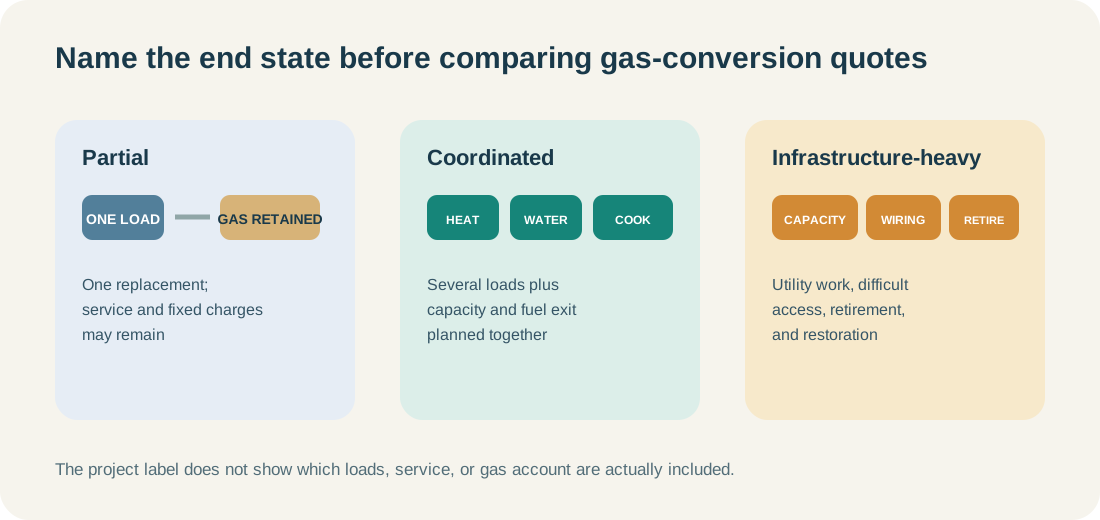
- Partial, replacement-cycle conversion: one failed or obsolete gas appliance changes, with gas service retained.
- Coordinated conversion: heating, water heating, and cooking change during one planned project, with capacity and fuel retirement resolved together.
- Infrastructure-heavy conversion: multiple loads, service or utility work, difficult wiring, venting removal, restoration, and cold-climate backup are included.
Do not compare a partial equipment quote with a complete conversion budget. A low total may simply exclude the work that connects the equipment to the house.
Operating-cost and fixed-charge effects
The operating result depends on local electricity and gas rates, equipment performance, climate, building load, backup heat, and household behavior. Replacing gas appliances can reduce gas consumption without eliminating the monthly customer charge. Include the cost to replace the final load and terminate service, but verify current tariff and utility policies before using a break-even calculation.
US rebate programs are administered through states, territories, and Tribes; availability and eligibility are current local questions. Canadian programs require separate verification. Treat incentives as a possible net-cost modifier, not guaranteed project funding.
If a utility-funded offer is part of the conversion quote, count its co-pay and continuing bill charge alongside the gas retirement and electrical work. The guide to utility-funded home electrification helps separate project funding from rebates and energy charges.
Questions before canceling gas
Ask who will cap or remove lines, what happens to vents and chimneys, whether the utility or supplier must disconnect the meter, what permits and inspections apply, whether any appliance remains, and who restores opened finishes. Confirm equipment capacity before retiring a reliable backup. If the plan depends on a smart control or managed load, verify its listing and acceptance.
The best gas-conversion quote makes the future state explicit, separates required and optional work, shows the capacity evidence, and gives a path for a phased conversion if the complete package is not economical today.
Partial versus complete conversion
A partial conversion can be the right first phase when a water heater or range is at its replacement point and the heating system is sound. Price the remaining gas service honestly: fixed charges, maintenance, future conversion, and the cost of returning to the work. A complete conversion is more attractive when several loads are ready, a service project is already required, or gas retirement and restoration can be done once.
Do not use a “whole-home” label to imply that every appliance must be changed. A household may retain a gas fireplace or dryer for preference, but that choice has a measurable fixed-service consequence. Conversely, replacing a final small load solely to cancel service may not make sense if its electric alternative requires substantial capacity work.
Separate conversion from optional improvement
Keep enclosure work, duct changes, kitchen finishes, EV pathways, solar, and storage as separate options unless the selected system cannot work without them. This lets the homeowner see the minimum cost to retire gas and the additional cost of improving the property at the same time. It also makes phased execution possible if capacity or utility work takes longer than expected.
Decision cases
Choose a phased case when one appliance is ready and the rest of the gas system is sound. Choose coordinated work when several loads, access windows, or a service project overlap. Choose full retirement when the remaining gas charge, equipment condition, and retirement cost justify closing the fuel path. The quote should state which case it assumes.
A better contract structure
Ask for a base conversion, explicit options, and a difficult-condition allowance. The base should state existing fuel loads, future electric loads, equipment, capacity, gas-line and vent treatment, utility responsibility, permit assumptions, restoration, and commissioning. Options can include enclosure, premium equipment, EV pathways, or fuel-service retirement when those are not required for the base.
Plan the gas-service exit as its own scope
Removing combustion equipment and ending a gas account are separate tasks. A contractor may disconnect and cap appliance piping, while the gas utility controls the meter, account, and any utility-owned service line. Ask who is responsible for each point, whether the meter remains active for another appliance, and what written confirmation is needed before billing or service status changes. Do not assume that removal of the furnace ends the monthly customer charge.
FortisBC provides one bounded British Columbia example: its published process says physical service-line removal typically takes two to six weeks after a request, with complex planning taking longer, and says there is no fee for that line-removal service. A line move has a different stated timeline. This is a utility-specific physical-work example, not a general gas cancellation rule, price, or North American schedule. Check your provider’s current policy and distinguish a service-line removal from account closure, meter removal, appliance disconnection, or permanent termination.
This matters to the project calendar. If the heat pump is commissioned before the gas system is retired, the home may temporarily carry both systems and both fixed charges. If line removal requires planning, submit the request early enough that exterior restoration and landscaping can be coordinated with other work. Ask whether the utility requires a licensed contractor, access to the meter or property, a site visit, or a final inspection.
Keep the removal quote separate from the heating conversion quote. It should identify appliance isolation, piping or vent work, meter or line work, disposal, wall and roof repair, and any utility coordination. If the utility provides a no-fee removal, confirm what the no-fee scope excludes so private piping, restoration, or contractor charges are not overlooked. This avoids treating one local policy as proof that every retirement step is free.
Decide what counts as complete conversion
Define the handover condition for the project. Does “gas to electric” mean the furnace has been replaced, every gas appliance has been removed, customer piping has been capped, the meter is removed, the physical service line is retired, or the gas account is closed? These are different outcomes, and not every household needs all of them. If gas remains for one appliance, the conversion is partial and fixed charges may continue.
Ask for the operational date when the new heating system is ready, the date the old appliance is isolated, and the expected utility line-removal date if requested. If those dates differ, include any period of parallel ownership in the budget and explain why it is needed. Keep the request confirmation and final utility record with the project documents.
This definition helps compare contractor offers. One quote may cover only the furnace and electrical circuit; another may also include chimney closure, piping, gas-account coordination, and patching. Request a list of final conditions and exclusions rather than relying on the package name.
Compare the retained-fuel case with the full-exit case
A partial conversion may cost less initially if a gas water heater, fireplace, or range remains, but it can preserve the fixed service charge and a future replacement decision. A full exit may require additional appliance purchases and wiring now, while avoiding a second contractor visit and simplifying later service. Estimate both end states over the same ownership period.
Ask each contractor to mark optional appliance replacement separately from work needed to safely convert the heating system. The household can then decide whether the value of ending gas service justifies advancing an appliance that still works. The right budget does not hide that tradeoff inside a single all-electric package. At the end of the job, reconcile the contractor’s completed scope with the utility’s account status. Confirm final meter reading, billing end date, remaining appliance connections, and any physical line work requested. Keep the final bills and utility correspondence with the equipment warranties.
A conversion budget is complete only when the homeowner knows which costs recur and which were one-time retirement work. This is especially important when service remains active for a minor end use after the main heating system changes.