
It can, but the outcome is not guaranteed. Electrification changes both the amount and the price of energy used. The result depends on the fuel being displaced, equipment performance, climate, building load, electricity tariff, fixed charges, backup heat, and household behavior. A credible comparison models those inputs instead of promising a bill reduction from the technology label.
Establish the baseline
Use at least a year of electricity and fuel bills when possible. Record delivered fuel, seasonal variation, equipment efficiency, thermostat settings, hot-water use, and unusual loads. Separate the cost of the appliance from the cost of the fuel service. A home can use less gas while retaining a fixed monthly charge, or consume more electricity while eliminating a second bill.
Convert energy into useful service
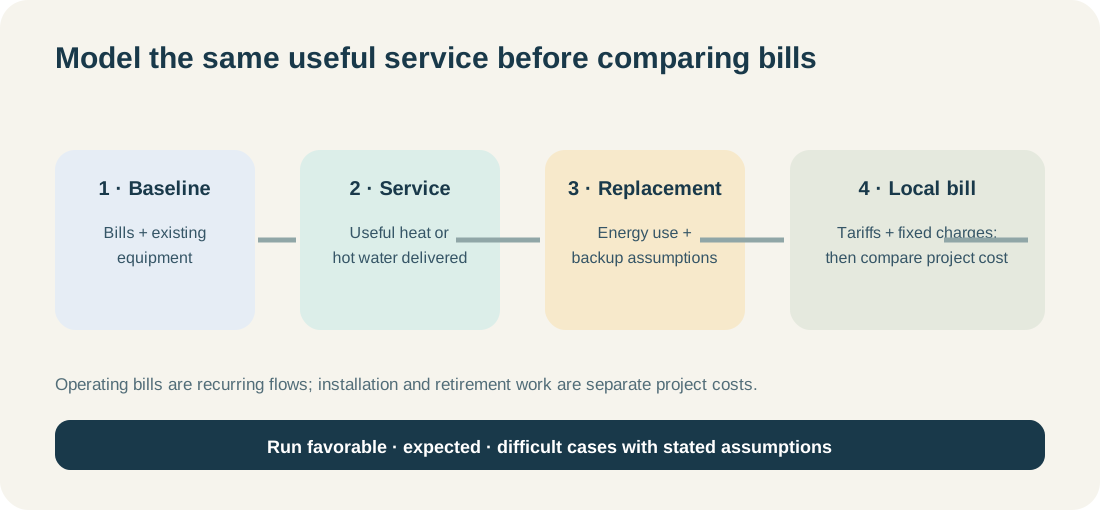
Raw units are not comparable. A furnace or boiler does not deliver every unit of fuel energy into the home, and a heat pump’s electricity use depends on operating conditions and seasonal performance. For a simple planning model:
- Estimate the useful heat delivered by the existing system.
- Estimate the electricity required to deliver that service with the proposed system.
- Apply the actual local rates and fixed charges.
- Add backup heat, maintenance, and any remaining fuel-service costs.
This is a model, not a guarantee. NRCan explains that modeled household use can differ from utility bills because standardized weather, operating conditions, and atypical loads differ from real life.
Test scenarios, not one answer
Run a low-cost, expected, and difficult case. Change electricity and fuel rates, cold-weather performance, backup operation, and annual load within reasonable local assumptions. Oil and propane comparisons are especially sensitive to dated regional prices; the EIA publishes US seasonal series that should not be treated as Canadian pricing.
DOE modeled examples indicate that savings can be more favorable for oil, propane, or older electric systems than for some gas-heated homes, but averages do not establish an individual result. Use the comparison as a reason to model—not as a promise.
Include the project economics
Lower annual bills do not automatically make a conversion financially attractive. Add installation, service or panel work, enclosure work, fuel retirement, restoration, financing, incentives that are actually available, and the value of the existing equipment. Compare the total ownership cost over the years you expect to remain in the home.
If the project is paired with a utility-funded offer, model the savings and its separate monthly charge together. A lower energy bill does not by itself show that the total utility bill or full project cash flow will be lower; see the guide to utility-funded retrofit offers.
If a heat pump needs frequent resistance backup or the household retains gas for one appliance, the result changes. If envelope work reduces the load, the equipment and service assumptions may change. Show those dependencies rather than burying them in an average.
A practical worksheet
Use separate lines for electricity consumption, electricity tariff, fuel consumption, fuel price, fixed charges, backup fuel, maintenance, capital cost, incentives, and financing. Record the date and source for each rate. Re-run the worksheet when rates, equipment, or household plans change. Do not convert a US result into CAD with an exchange rate.
The honest conclusion may be “bill savings are possible but not robust under these rate cases.” That is still useful: it tells you whether the decision is primarily about resilience, comfort, fuel retirement, emissions, maintenance, or long-term economics rather than a guaranteed monthly saving.
Check the model against the quote
Ask whether the modeled system is the system being quoted. A heat-pump estimate can assume one seasonal performance while the proposal uses another model. A bill model can remove all gas consumption while the household retains a fireplace. A service or control project can change the capital cost without changing annual energy use. Reconcile these differences before calculating payback.
Separate bill savings from project savings
Lower annual energy spending is a flow; installation, financing, fuel retirement, and service work are upfront costs. Compare them over the ownership period and show the result if rates or performance are less favorable. Include maintenance and the value of cooling or comfort only when the alternative would otherwise incur those costs.
If the conclusion changes with a modest rate or backup assumption, call it sensitive. That tells the homeowner to base the decision on the full set of goals rather than a savings promise.
Treat the result as a range
Present a favorable, expected, and difficult operating case and identify the assumption behind each. If the result is robust across current local rates and reasonable performance, bill impact can be a meaningful benefit. If it reverses easily, use comfort, maintenance, resilience, fuel retirement, or timing as explicit decision inputs rather than promising payback.
Use actual bills carefully
Compare the first representative season with the model, but separate weather, occupancy, thermostat settings, and added loads from equipment performance. A higher bill may reflect a colder winter or a new EV rather than a failed conversion. If results differ materially, revisit backup, controls, distribution, hot-water use, rate plan, and remaining fuel assumptions.
Use dated averages only as a reason to model your tariff
The U.S. Energy Information Administration’s September 2026 outlook included national residential price scenarios for 2026 and 2027: electricity at 18.20 and 18.59 cents per kilowatt-hour, natural gas at USD 15.93 and USD 14.08 per thousand cubic feet, heating oil at USD 5.10 and USD 4.31 per gallon, and residential propane at USD 2.28 per gallon for 2026 only. These are U.S. national outlook inputs, mixing recent estimates and forecasts. They are not a customer’s tariff or delivered-fuel quote, do not capture local taxes and fixed charges, and provide no propane value for 2027 in that table. Do not apply them to a Canadian home or present them as guaranteed future prices.
For a U.S. screening model, the outlook can serve as one dated middle case if the homeowner also runs lower and higher local-price scenarios. For a decision, replace it with the actual tariff and invoices for the utility territory. A July 2026 EIA table separately reported the U.S. average residential electricity price at 18.31 cents per kilowatt-hour, compared with 17.45 a year earlier, with preliminary state averages ranging widely. That historical average is also not a marginal tariff rate. It helps explain why local inputs matter; it does not forecast a particular bill.
Keep the physics and pricing separate. Estimate annual useful heat or hot-water service from the existing bills and equipment, then model how much delivered fuel each option needs. Apply local price components and account for fixed charges only when the customer can truly remove them. Include cooling if a heat pump adds service that the old system did not provide. Finally compare annual operating cost with capital cost, incentives that are verified for the property, maintenance, and equipment replacement timing.
The answer should be a range with stated drivers: weather, system performance, backup use, thermostat behavior, rates, and fixed charges. Re-run it if those inputs change. National averages are helpful context, but they cannot substitute for the bills and equipment schedule that determine the household’s result.
Compare bills on the same basis
Use a full year if possible so heating, cooling, and seasonal delivery patterns are represented. Normalize for occupancy changes, unusually mild or severe weather, and billing periods that cross price changes. If the home has multiple fuels, separate space heating from water heating and cooking where records allow. If not, state how you estimated the split.
Convert each proposed system into annual delivered electricity or fuel before applying the price. Keep fixed service charges separate from usage charges and include them only when the service can actually be ended. Include additional cooling or comfort that the new system supplies, but show it as a separate outcome rather than calling it a bill saving.
The model should show the bill impact and the project cost side by side, not subtract one from the other without explaining the time period. This keeps a lower annual bill from being mistaken for an immediate financial payback.
Identify what would reverse the result
A useful analysis tells the homeowner which input matters most. If the result changes mainly with electricity price, compare rate plans and the household’s time-of-use profile. If cold-weather backup dominates, ask for a professional design review. If fixed gas charges decide the result, confirm that the gas account can actually close. If the outcome depends on future fuel prices, show that as uncertainty rather than selecting a favorable forecast.
This sensitivity test turns a broad “will bills fall?” conclusion into a practical checklist. It also prevents a small modeled difference from being treated as certain when the input range is larger than the apparent saving. After installation, compare actual bills with the model only after adjusting for weather, occupancy, and billing periods. Check whether the equipment delivered the assumed comfort and whether backup ran more often than expected. If the result differs, investigate the changed input rather than assuming the equipment alone caused the difference.
The first-year comparison is feedback for maintenance and settings, not proof of long-term savings. Keep invoices and operating records so later rate changes can be separated from system performance.