
Propane is delivered and locally priced, while electricity is billed through a tariff. Compare the useful heat each system provides using current regional inputs. Include furnace or boiler efficiency, heat-pump seasonal performance, cold-weather backup, tank and service costs, and the electrical constraints of the property.
Use delivered propane cost
Record the price actually paid, delivery fees, annual use, equipment efficiency, and any tank rental or minimum service charge. EIA’s propane data provides US regional and seasonal context, not a universal or Canadian price. A single national number can conceal the rural delivery premium that controls the decision.
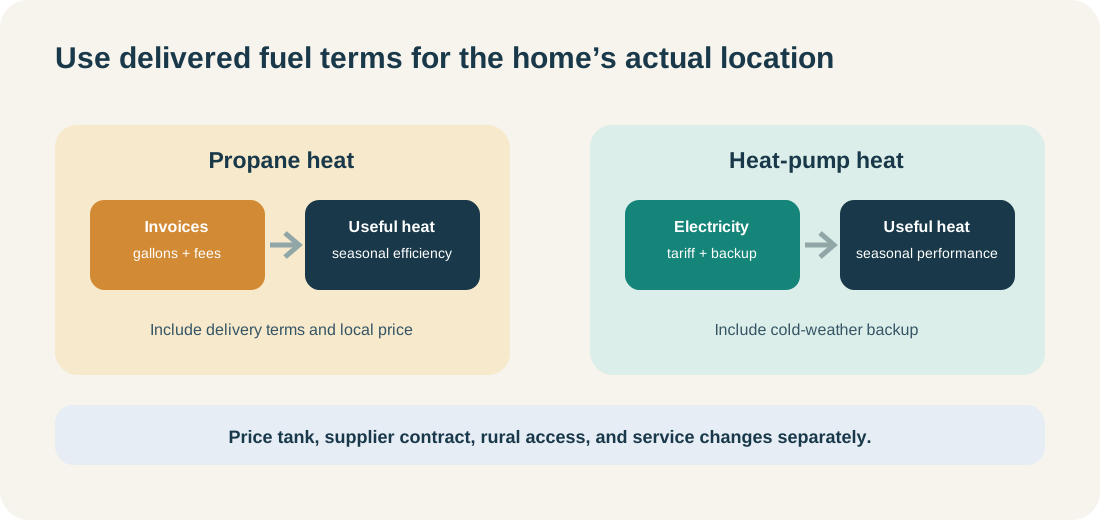
Estimate useful heat from propane, then model electricity for the proposed heat pump. Use performance data for the actual equipment and climate. Do not compare a propane gallon directly with a kilowatt-hour or assume the heat pump will never use backup heat.
Include rural constraints
Remote properties can face longer contractor travel, equipment delivery, utility-service limitations, and fewer repair options. These may change installed cost or make a dual-fuel plan more practical. Tank ownership and supplier contracts also affect the cost of going all-electric; operating savings do not automatically remove exit obligations.
Scenario model
- Favorable electric case: high delivered propane cost, moderate electricity price, good heat-pump performance, and minimal backup.
- Close case: similar delivered cost after efficiency, with tank service and capital cost deciding the horizon.
- Difficult case: high winter electricity cost, frequent backup, constrained service, or a large electrical project.
Use separate US and Canadian rates and date every input. Run the result again if the household retains propane for water heating or a generator.
Beyond the utility bill
Add conversion equipment, electrical capacity, distribution changes, tank and line treatment, restoration, financing, and current incentives if eligible. A heat pump may lower annual heating cost but still have a long capital recovery period. A planned tank or heating replacement can alter that balance.
Ask the contractor to state the design load, low-temperature performance, backup control, proposed capacity, and tank responsibility. The economically stronger choice is the one that meets the property’s load with acceptable installed and ownership costs, not the one with the cheapest isolated fuel unit.
A delivered-cost worksheet
Record propane price per delivery, fees, annual use, system efficiency, electricity tariff, heat-pump performance, backup use, and fixed tank or service charges. Convert both systems to useful heat before comparison. Use the same weather and load assumption for both. The model should show a date because delivered propane and electricity rates change.
Account for a changing propane relationship
If the heat pump replaces only space heating, propane may remain for water heating or cooking and the tank and delivery relationship continues. If all propane loads disappear, the household may face pickup, cancellation, residual-fuel, or removal questions. Ask for those costs separately from heating savings.
Run a case in which electricity is expensive during the coldest hours and a case in which propane delivery rises. If the preferred result reverses easily, choose based on capacity, backup, maintenance, and ownership horizon as well as the bill. This matters most for remote homes with fewer emergency service options.
Check the complete quote
Compare the heat pump, electrical capacity, controls, distribution, tank, service, and restoration scope before declaring a fuel winner. If the electric path needs a utility upgrade or the propane path retains a fixed delivery obligation, those costs belong beside the annual bill.
Sensitivity and decision threshold
If the heat pump is cheaper to run only under an optimistic rate or performance assumption, treat that as a sensitive result. Retain propane when backup, limited service, or fuel flexibility has real value; favor all-electric when the complete conversion is already being done and the remaining service cost is material. Document the assumption that would change the choice.
When dual fuel is sensible
Retaining propane may reduce electrical-capacity work or provide backup while the house is improved. It also retains tank, delivery, maintenance, and fixed-service costs. Going all-electric may simplify the home but require capacity, tank retirement, and cold-weather backup. Compare those complete paths over the ownership horizon rather than using the first month’s bill.
Use actual delivered propane cost
Propane economics depend on more than a posted price per gallon. Review invoices for delivery charge, minimum order, tank lease, hazmat or other fees, taxes, and any supplier-specific contract terms. If the tank is leased, determine whether the rate depends on exclusivity or a minimum annual purchase. If the household has a customer-owned tank, include maintenance and eventual replacement. A lower per-gallon offer may not be the lower annual cost.
Use the Energy Information Administration’s September 2026 outlook only as a dated U.S. scenario input. It showed USD 2.28 per gallon for residential propane in 2026; the cited table did not provide a 2027 residential propane value. This is a national forecast, not a delivered local price and not a Canadian benchmark. For the primary case, use the household’s invoices and supplier terms. If deliveries vary widely by season, model a lower and higher price rather than assuming that one summer fill price lasts all winter.
Calculate heat delivered by the existing propane system with a stated seasonal efficiency assumption. Compare it with the heat pump’s expected seasonal performance and electricity tariff, including likely backup. Separate space-heating gallons from propane used for cooking, hot water, fireplaces, or generators. A retained appliance can keep the tank and supplier relationship active even if the main heating load moves to electricity.
The operating comparison also differs from the capital decision. A heat pump may lower annual fuel cost but require a new circuit, service review, outdoor-unit site work, duct changes, or tank exit costs. Conversely, retaining propane may avoid immediate work but preserve deliveries, service charges, and combustion maintenance. Model at least a low, expected, and high delivered propane price with cold-weather backup sensitivity. This gives a useful decision threshold: the price and performance combination at which annual cost changes direction.
Do not infer a savings percentage from two national average fuel prices. The equipment efficiencies, delivery basis, local tariff, household load, and system boundary are different.
Reconcile delivery records with the heated area
A propane statement may show deliveries, while the appliance burns fuel between deliveries. Reconcile the billed gallons with tank-level changes and note any fuel carried into the next year. If propane also serves a fireplace, kitchen range, water heater, or generator, estimate those uses separately or show a range rather than assigning every gallon to space heating.
Check the heating footprint. A central propane furnace may heat the whole home, while a ductless heat pump may serve only selected rooms. Supplemental resistance heat or retained propane in unserved areas can materially affect both energy use and comfort. The comparison should describe the same rooms and indoor temperature target.
These details matter more than a national propane price. A model with precise cents per gallon but a mismatched service boundary can produce a false conclusion.
Calculate the break-even delivered propane price
Hold the home’s useful heat demand constant and compare the delivered propane price at which annual propane expense equals the heat pump’s electricity expense. The propane side should include only gallons attributable to space heating and the system’s seasonal efficiency. The heat-pump side should include seasonal performance, local electricity charges, and backup use. If gas service charges or tank fees remain, list them separately and include them only in the scenario where the customer keeps the account or tank.
Then test low and high values for delivered propane, electricity, and seasonal performance. EIA’s national 2026 scenario is one possible U.S. reference input, not the break-even answer. The household’s contract, location, and equipment control the result. If the price relationship is close, get actual supplier terms before making a capital decision.
A break-even model does not say which system is better overall. Add installation, maintenance, tank retirement, equipment life, and the household’s value for backup or fuel independence as separate decision factors. If the result is close, use the model to decide what quote to request next rather than forcing a yes-or-no recommendation. A precise delivered-propane invoice, a heat-pump seasonal performance estimate for the local climate, or a clear fixed-charge amount may resolve the uncertainty. Revisit the calculation if the household changes the backup strategy or keeps propane for another appliance. The homeowner should keep the input table with the conclusion: delivered propane price, electricity tariff, estimated heating load, equipment performance, backup use, and retained service charges. If any of those values changes materially, recalculate before drawing a new conclusion.
This is more durable than keeping only a savings estimate, because it shows whether the old answer still describes the home and contract. A break-even result should be reported as an input threshold: the delivered propane price, electricity rate, or heat-pump seasonal performance at which annual variable cost changes direction. If the expected local values sit close to the threshold, request a current supplier quote and a climate-appropriate performance estimate before acting. The EIA national scenario supplies context only.
Keep tank and account charges visible in a second comparison. They may remain if the household keeps propane for another appliance, but they are not part of the heat delivered by the heating system itself. Showing these items separately makes the operating model easier to update if the homeowner later retires all propane uses.