
Waiting for failure can preserve the value of equipment you already own, but it can also create an emergency replacement, missed access window, or rushed fuel decision. Proactive electrification buys planning time and may coordinate several systems, but it asks you to replace usable equipment and commit capital earlier. The answer is a lifecycle comparison, not an age-based rule.
The case for acting now
Act early when several systems are near end of life, a remodel will expose useful pathways, a capacity or utility application has a long lead time, or a fuel-retirement decision affects multiple loads. Planned work lets you compare installers, select equipment for the actual building, and separate required infrastructure from optional upgrades.
It can also avoid paying twice for access. A circuit, raceway, panel arrangement, or equipment location installed while walls are open may reduce future demolition. But preparation is worthwhile only when the future load and route are credible.
The case for waiting
Waiting can be rational when equipment is reliable, the proposed replacement is uncertain, the household may move soon, or a major envelope or remodel decision will change the system design. It avoids discarding remaining useful life and keeps capital available for higher-priority repairs. The risk is that “wait” becomes “replace whatever is available during a breakdown.”
Create a failure plan: identify replacement options, capacity constraints, temporary service, contractor availability, and any fuel or utility decisions that cannot be made safely in an emergency. This converts passive waiting into managed timing.
Compare the economics
For each option, include the replacement price, remaining maintenance and fuel costs, expected emergency premium, energy-cost difference, financing, incentives that are actually available, disruption, and the cost of later enabling work. Include a contingency for uncertain remaining life; a ten-year-old system is not a guaranteed ten-year asset.
Use a short, medium, and long ownership horizon. A proactive conversion may not recover its capital before a near-term sale, while a long-term owner may value planned replacement, lower maintenance exposure, or avoiding repeated fuel-service charges. Resale value is not a guaranteed credit; buyers may value different systems and local market evidence matters.
What is often worth doing before failure
An assessment, future-load inventory, capacity review, and accessible pathway may be worthwhile before equipment fails. They preserve options without forcing every final purchase now. If an existing system is unsafe, leaking, or unable to provide required service, urgency and professional advice take priority over the general sequence.
Decide by trigger, not slogan
Act now if a real dependency, access window, or imminent failure makes delay expensive. Wait if the equipment is sound and a near-term building or ownership decision could materially improve the next design. In either case, write down the condition that would trigger the next phase and the assumptions behind the budget.
The decision is complete when the household has a planned replacement path, a known capacity question, and a cost comparison that includes both the value of remaining equipment and the cost of being forced into an emergency choice.
Make “wait” a managed phase
Record equipment age, service history, warning signs, parts availability, and a realistic temporary plan. Get a capacity review before the emergency if an electric replacement would depend on it. Ask for a preliminary equipment and electrical pathway so a failure does not force the household back into the old fuel by default.
Compare the calendar, not just the equipment
Ask how long a planned assessment, utility review, equipment order, and permit may take in the local market. A decision made before failure can preserve a choice of systems and installers. A decision made during a breakdown may require temporary work or a different fuel, then create a second mobilization. The schedule is part of the economic comparison.
Model the timing cases
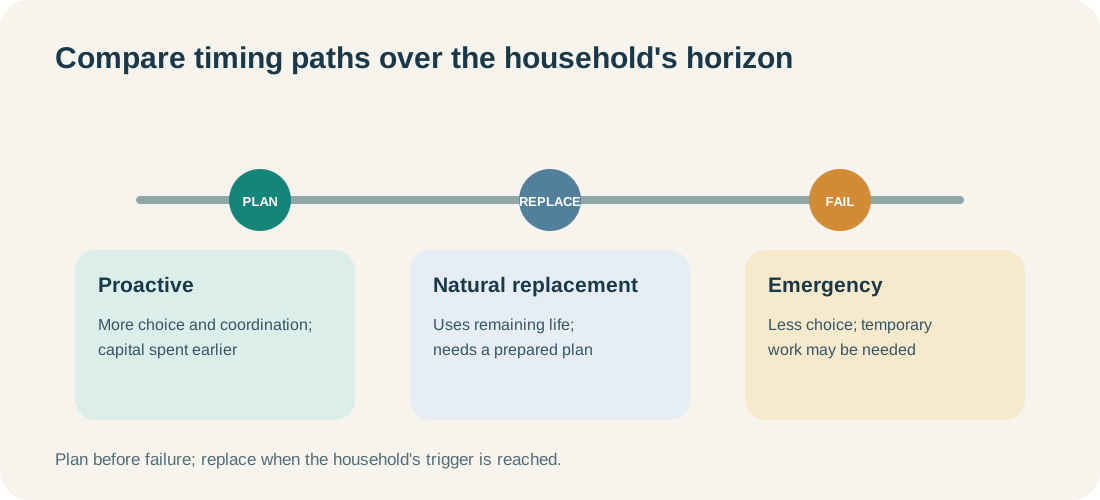
- Proactive: capital is spent now, but the household gains choice, coordinated access, and possible fuel-service savings.
- Natural replacement: existing equipment provides useful service, then the planned replacement uses the roadmap at end of life.
- Emergency: failure forces temporary work, reduced choice, expedited labor, and possible duplicated infrastructure.
Compare these cases over the actual ownership horizon. Do not assign a guaranteed emergency premium or payback; ask contractors how lead time, season, and access affect the local quote. A rebate or utility program can also expire or change, so it is a risk variable, not a guaranteed reason to act.
Turn waiting into a planned option
Waiting is a real strategy only when the household knows what would trigger action and how long a replacement can be arranged. Record the equipment’s age, service history, visible condition, parts availability, and any professional finding about safe remaining operation. A system that is functioning today can still fail during the season when replacement is hardest to schedule. A system that is old but maintained may provide time to collect bids and resolve service questions. Age alone does not set a replacement date.
Create two calendars. The planned calendar gives enough lead time for assessment, capacity review, utility inquiry, and non-emergency equipment selection. The failure calendar asks what happens if the system stops next week: which installer is available, whether temporary heat is practical, whether the replacement must fit the old fuel, and which decisions would be made under pressure. Include the premium or lost flexibility associated with the emergency path as a risk, not a certain dollar amount.
Some enabling steps can be completed while waiting without forcing an early equipment purchase. Keep panel and utility records, obtain an assessment, resolve a likely service constraint, and identify routes that would be costly to add after a remodel. Do not install controls or oversize the service simply because a later project is imaginable. Each preparation should have a named future use and a modest cost relative to the failure risk it reduces.
Review incentives and lead times only when they affect the decision and verify current availability before including them in the budget. A program that may close is a scenario, not guaranteed savings. Also compare the old system’s next repair, its likely remaining life, and the cost of repeated temporary fixes with the proposed replacement path.
Set a review date before the next heating or cooling season and a clear trigger such as a major repair, a service constraint, a committed remodel, or equipment performance falling below an agreed threshold. This preserves the option to wait while avoiding a rushed decision later.
Make the failure branch financially credible
Ask the current service company for the likely cost and scope of the next repair, but do not assume the quote is a complete prediction of remaining life. A repair estimate, parts availability, safety finding, and recent failure history are separate evidence. For a system near end of life, one inexpensive repair may buy useful planning time; repeated repairs may instead consume capital that would have supported a planned transition.
Build a reserve scenario for urgent failure. Include a replacement selected from what can be installed quickly, any temporary heat, overtime or seasonal scheduling constraints, and whether capacity or utility work can be completed in time. The reserve need not predict an exact emergency premium. It should identify the expensive decisions the household might be forced to make without preparation.
Compare the reserve with the cost of planning ahead: assessment, load calculation, utility inquiry, and a nonbinding set of replacement scopes. If those steps do not require replacing healthy equipment or committing to a final system, they can reduce urgency risk while preserving the option to wait.
Record the household’s acceptable service interruption, available backup, and decision-maker contact process. Equipment failure often happens when household members are away or contractors are busy. A written plan prevents a rushed choice from being mistaken for the household’s long-term preference.
Avoid paying twice for an interim choice
When a system may fail before the preferred transition is ready, ask whether a temporary repair or replacement can be retained in the final design. A compatible interim unit might reduce urgency; a unit that must be removed soon may create duplicate installation and disposal cost. The answer depends on equipment, distribution, fuel, and electrical capacity, so it belongs in a contractor discussion rather than a generic rule.
If the household chooses to wait, keep the assessment, utility response, and preferred equipment path current. Reconfirm prices and availability before purchase. A plan from last year may no longer reflect current models, labor schedules, tariffs, or program status. Choose a review date that occurs before the system is most likely to be needed, not after the first emergency call. At that review, confirm current repair condition, contractor availability, utility lead time, and the household’s intended replacement. If nothing material has changed, continuing to wait can remain reasonable.
A trigger-based plan reduces unnecessary early replacement while preserving enough time to compare alternatives. It also makes “wait” a deliberate choice with a fallback, rather than a decision to postpone all planning.