
There is no universal sequence. The best order protects safety and comfort, avoids stranded work, respects equipment failure, and keeps future loads and utility lead times visible. A useful roadmap begins with information, identifies bottlenecks, then chooses the next project that creates the most durable option for the least duplicated work.
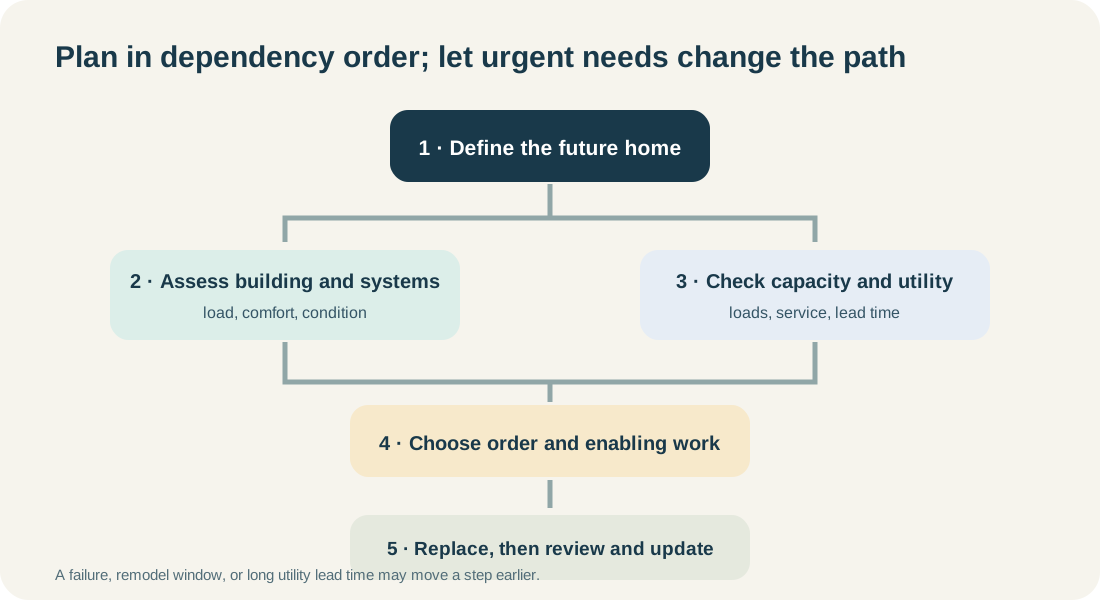
1. Define the future home
List current fuels and major loads, desired comfort, hot-water needs, cooking, drying, EV plans, solar or storage plans, remodels, and the years you expect to own the home. Mark each load as immediate, likely, or optional. This prevents a broad “electrify everything” label from driving unnecessary work.
2. Assess the building and systems
An energy assessment can examine the enclosure, airtightness, insulation, windows, heating and cooling, water heating, and ventilation. It can reveal whether comfort or high use is primarily an equipment issue, a building-load issue, or both. A Canadian EnerGuide report may provide modeled energy use and upgrade recommendations, but modeled results are not a promise of the future utility bill.
Record equipment condition and replacement timing. A failed furnace changes the sequence; a reliable one creates planning time. Also identify moisture, ventilation, or combustion concerns that should not be deferred while chasing energy savings.
3. Identify capacity bottlenecks
Have proposed loads assessed together. Service rating, panel space, calculated demand, equipment choice, backup heat, managed loads, and utility constraints interact. Do this before ordering equipment or closing remodel walls. A service review may show that no major upgrade is needed, that a pathway should be installed now, or that utility work will control the schedule.
4. Decide whether enclosure work changes the answer
Insulation and air sealing can reduce loads and improve comfort, but “envelope first” is not an absolute rule. If equipment is failing, waiting for a deep retrofit may force an emergency replacement. If a future load reduction could materially change sizing, coordinate the assessment and design before buying oversized equipment. Keep enclosure work in its own category while using its effect on the electrification decision.
5. Perform enabling work
Prioritize work with a closing access window or long lead time: capacity applications, future pathways, panel-space strategy, equipment locations, and any utility process. A small readiness step can be valuable; a speculative service expansion may not be.
6. Replace equipment at the right moment
Replace urgent or end-of-life systems first, but select them within the future plan. Water heating, cooking, and EV charging may be independent opportunities; heating may control winter capacity and comfort. Avoid a choice that solves today’s bill but creates a future compatibility or service problem.
7. Recheck the roadmap after each phase
Actual bills, comfort, equipment performance, and contractor findings update the model. A home that needed major capacity before an enclosure project may need less after it; a household that adds an EV may need more. Recalculate rather than treating the original roadmap as permanent.
Three sequences that commonly make sense
- Planned remodel: assess, coordinate capacity and pathways, perform accessible enclosure or readiness work, then install equipment as the remodel exposes dependencies.
- End-of-life heating: obtain an assessment and capacity answer quickly, choose suitable replacement equipment, and phase less urgent loads.
- Long-horizon transition: map all loads, perform low-disruption enabling work, replace systems at their natural decision points, and retire fuel service only after the final load is addressed.
The best order is the one that makes dependencies explicit. It should show what must happen first, what can happen in parallel, what can wait, and which assumption would cause the sequence to change.
Rank work by dependency and opportunity
Do first the work that controls safety, winter comfort, utility availability, or a closing access window. Do next the work that improves the next equipment choice. Defer work whose value depends on an uncertain future load or program. This ranking is often more durable than a fixed list of technologies.
When an offer bundles measures with utility funding, confirm whether it supports the sequence the home needs or requires a larger package now. Compare its prerequisites and bill charge with the utility-funded retrofit decision guide.
A load review may happen before an equipment quote, while an audit and utility inquiry happen in parallel. A pathway can be installed during a remodel, while final EV equipment waits. A heat pump may be selected before deep enclosure work if failure controls the schedule, provided sizing assumptions are documented. After each phase, compare actual bills and comfort with the model and update the next decision.
A roadmap should show alternatives
For each major step, record the preferred path, a lower-disruption alternative, and the condition that would make the alternative preferable. That might be retained fuel during a utility delay, a pathway instead of a final circuit, or targeted enclosure work instead of a full retrofit. This keeps the sequence useful when budgets or equipment availability change.
What to ask each trade
Ask the assessor which findings affect load, the electrician which future loads affect capacity, the HVAC professional what sizing and backup assume, the plumber what location and condensate work are needed, and the utility what capacity and lead time it can confirm. Have one roadmap identify conflicts; otherwise each quote may optimize its own trade while leaving the homeowner to discover the system-level cost.
Draw the dependency chain before choosing dates
A sequence is more reliable when each step has a clear input and output. Start with goals, utility bills, equipment ages, comfort problems, and a list of plausible future loads. A building assessment can then reveal whether heat loss, airflow, moisture, or distribution could change equipment sizing. A load review can show whether the service, panel, or managed-load design is a dependency. Utility confirmation may be needed before service work is priced as fixed. Only after those questions are understood should the household lock equipment models and installation dates.
The chain is not always strictly linear. A failing water heater may need replacement before a full roadmap is ready, while an upcoming remodel can make pathway installation urgent even when the future heat pump is years away. Separate decisions that can proceed from decisions that depend on a later answer. For example, documenting the panel and reserving an accessible route may be low-regret; ordering a service upgrade before the future loads are chosen may be premature.
For each phase, record the reason it comes now, the information it must provide, and the later choice it unlocks. A capacity calculation should identify the loads it considered. An envelope project should produce a revised design load if it materially changes heating demand. A utility response should specify whether it is preliminary or sufficient to order customer work. An installer’s quote should state assumptions that would force redesign.
Then identify the critical path: the longest lead-time or approval item that could delay the work. Utility service design, equipment delivery, permit review, remediation, or seasonal access may control the schedule. Start that investigation before the household’s replacement deadline, even if installation comes later.
Review the sequence after each phase. New bills, equipment choices, utility information, or a changed remodel scope can make the original order obsolete. A roadmap should be a decision record that can change, not a fixed list of products.
Compare sequences by reversibility
Some decisions are easy to change; others lock in infrastructure. Collecting bills, documenting equipment, and asking for a utility response preserve options. Installing an expensive service arrangement, selecting equipment that assumes no future envelope work, or permanently retiring a fuel source can be harder to reverse. When timing is flexible, complete high-information, low-regret steps before choices that commit the home to one path.
A failed appliance changes this logic because comfort and safety may require quick action. Prepare a replacement branch in the roadmap: which equipment can be installed as an interim solution, whether it can be retained in a later system, and what extra cost a temporary choice could create. An interim action is not necessarily a mistake if the homeowner understands the tradeoff and avoids blocking a planned capacity or distribution change.
Ask the assessor to distinguish must-do prerequisites from recommended order. The best sequence is the one that protects household function, coordinates scarce access windows, and delays irreversible choices until the information needed to make them is available.
End each phase with a decision record
After a phase, capture the finding, the choice it supports, unresolved questions, and the condition that would reopen the decision. A load calculation might conclude that the current plan fits only with controlled charging; a utility response may say that a service change requires design; an audit may identify enclosure work that changes equipment sizing. The homeowner can then update the next phase without restarting from scattered notes.
This record is also useful when different contractors take over. Share the assumptions and exclusions, not only the recommendation. It reduces conflicting bids and prevents a later installer from treating an early planning estimate as a final specification. A simple project record can be a dated page with current equipment, target future loads, completed work, open decisions, and the next review trigger. Store it with permits, utility correspondence, warranties, and equipment data. This is particularly valuable when the household changes contractors between phases or sells the home before every system is replaced.
The record should state who is responsible for each unresolved item. A utility question, a load calculation, and an equipment quote are different tasks; assigning all three to “the contractor” can leave each unfinished.