
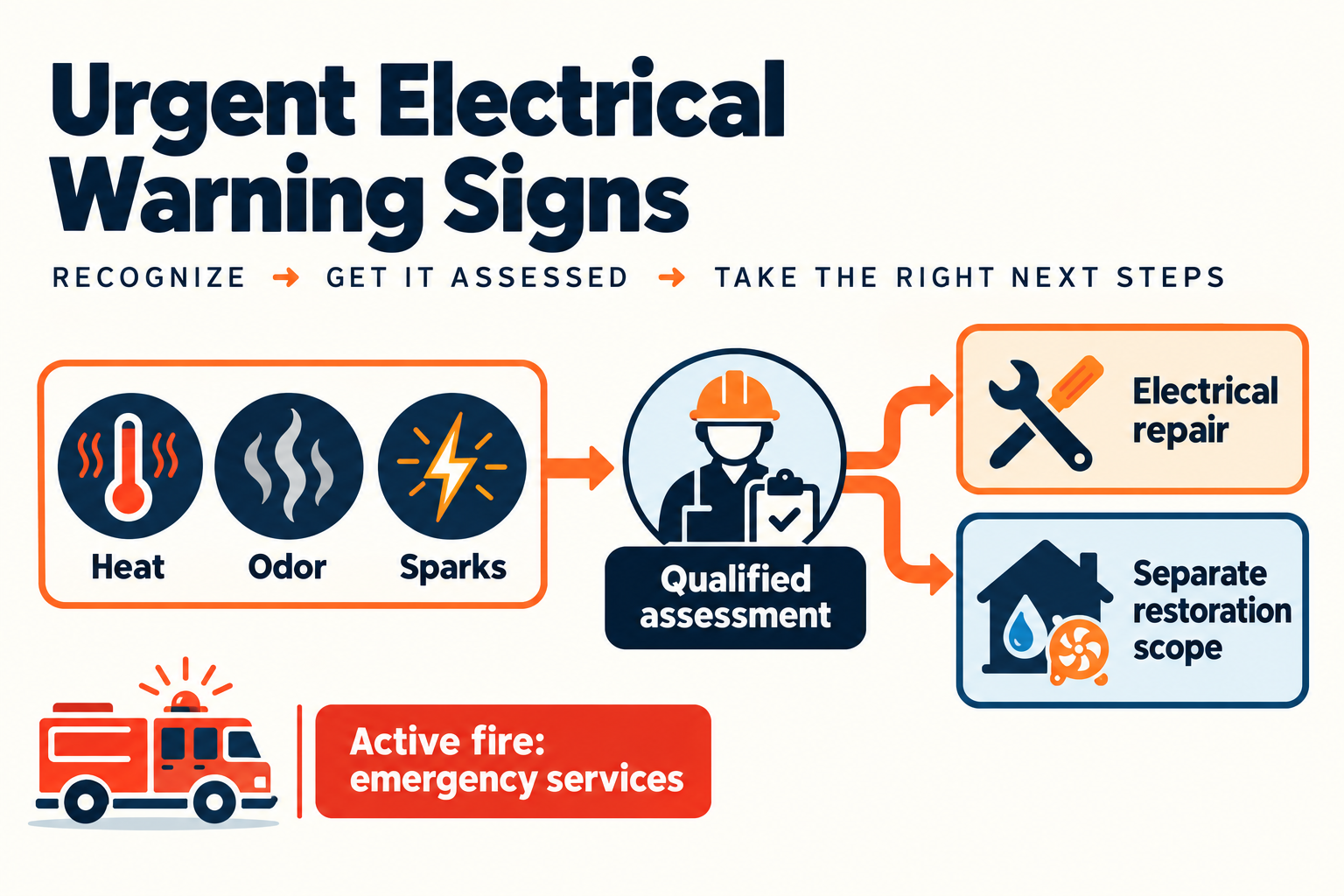
Burning-plastic odor, visible sparking, scorch marks, crackling, smoke, or an electrical device that becomes unusually hot should not be budgeted as a routine outlet or switch replacement. These signs can indicate an overheating connection, arcing, damaged device, branch-circuit fault, panel problem, or legacy-wiring issue. CPSC identifies warm faceplates, burning-plastic odor, and unexplained flickering as warning signs associated with aluminum-wire connection problems, while its home-wiring guidance distinguishes fire-related arc faults from shock-related ground faults.
If there is active smoke, flame, or immediate danger, leave the area and contact emergency services. Otherwise, stop using the affected device or circuit and seek qualified electrical help. Do not remove covers, open a panel, pull a receptacle out of the wall, or perform energized tests to improve the diagnosis.
Why the price is uncertain
The first cost is often an urgent electrician service call. A scheduled visit may have a lower minimum than nights, weekends, storm response, or same-day dispatch, but delaying work because the rate is higher can be a poor trade if the condition is actively worsening. There is no defensible universal emergency multiplier. Ask what the response fee covers and whether it is an assessment, temporary make-safe work, or a complete repair.
The eventual project may be small or substantial:
- Device or termination: A damaged receptacle, switch, connection, or accessible box is replaced after the cause is assessed.
- Branch-circuit damage: Conductors, boxes, or concealed connections need repair, with access and finish restoration.
- Panel or service equipment: Heat or damage at distribution equipment requires a panel/service scope and may involve utility coordination.
- Legacy wiring: Aluminum branch wiring, altered older systems, or fuse equipment may require specialized assessment and a remediation or rewire decision.
- Post-loss restoration: Fire, smoke, flood, or major storm damage can become a restoration project rather than an ordinary electrical repair.
Low, expected, and difficult cases
Contained: One device shows a clear failure, the circuit is accessible, and the electrician confirms that surrounding wiring and equipment are not damaged. The cost may remain near an urgent service minimum plus the device and labor.
Typical: Heat has affected a connection or short circuit section. The quote includes diagnosis, replacement materials, access, testing, and possibly patching. The visible device is only one line of the scope.
Difficult: Damage extends into a concealed run, panel, service entrance, legacy wiring, or adjacent finish. A temporary safe boundary may precede a full quote. Emergency attendance does not eliminate the need for a measured repair scope.
What information helps
Tell the electrician where the symptom occurred, whether the breaker or protection device tripped, what was operating, when the smell or heat began, whether there was water or a storm, and whether the property contains known aluminum, knob-and-tube, or fuse wiring. Provide photographs only from a safe position. Do not keep turning the circuit back on to reproduce the condition.
Separate electrical repair from restoration
An electrician’s work may stop after the electrical hazard is corrected. Replacing charred drywall, cleaning smoke residue, drying water-damaged assemblies, rebuilding cabinets, or making an insurance claim belongs to a related restoration scope. Ask for the boundary so an electrical quote is not mistaken for a complete post-loss budget.
Questions before approving the work
Ask what condition was found, what is being replaced, whether the quote includes hidden-damage allowances, what access and finish repair are included, whether the circuit or panel needs further evaluation, and whether permits, notifications, inspections, or utility disconnects apply. For aluminum-wiring or obsolete-equipment recommendations, ask for the exact method and documentation rather than accepting a generic brand or age conclusion.
The governing decision is safety first and price second: obtain professional assessment, then compare the defined repair with any broader project it reveals. A cheap cosmetic device swap is not a saving if it leaves the overheating cause in place.
What an urgent quote should distinguish
Ask whether the electrician is providing emergency attendance, temporary make-safe work, a complete repair, or only diagnosis. Those are different purchases. A temporary boundary may stop use of the affected circuit while parts, utility coordination, access, or restoration are arranged. It should not be mistaken for confirmation that the underlying system has been fully repaired.
The quote should identify the observed heat or damage, affected device or circuit, panel/service interaction, access, materials, testing, permit or notification, and what remains unknown. If a wall, ceiling, panel, or service component must be opened, ask how concealed damage will be documented and authorized. Emergency pricing may reflect availability rather than the eventual complexity of the work.
Electrical repair versus fire or water loss
Heat, smoke, or water can affect finishes and adjacent systems beyond the electrician’s scope. Electrical repair may make the circuit safe while drywall, cabinets, insulation, structural members, cleaning, drying, or insurance documentation require separate trades. Ask who is coordinating those boundaries and whether temporary power or a return inspection is included.
An older aluminum or knob-and-tube system deserves an assessment, not an automatic replacement conclusion. A short-horizon repair can be reasonable only when the cause is documented and the retained wiring is addressed. A longer project may be economically justified when damage is distributed or the same access would otherwise be repeated. The urgent symptom establishes priority; it does not determine the final scope by itself.
Separate urgency from the eventual project size
An urgent response may first make the area safe, isolate or correct an accessible device or connection, and determine whether a larger repair is required. That first response may not include complete rewiring, finish restoration, fire investigation, or replacement of every related component. Ask what work is being authorized immediately and what evidence will decide the next scope.
When a hot or scorched device is found, the quote should identify the affected location, observed damage, replacement or connection work, testing, and any remaining uncertainty. If the condition involves aluminum wiring, panel damage, moisture, or a branch-circuit fault, ask for the relevant assessment rather than accepting a cosmetic replacement as the final answer. Do not open equipment or attempt energized testing to reduce the service bill.
For a scheduled correction, ordinary access and planned materials may keep the work contained. For an emergency, availability, temporary protection, night or weekend timing, and return visits can dominate the first invoice. If smoke, fire, or water damage is involved, keep restoration and insurance documentation as a separate coordinated scope.
Set the approval boundary
Ask the electrician to separate emergency attendance, temporary safe isolation, diagnosis, repair, and restoration. Set an approval threshold for opening walls or expanding into panel/service work. Request photographs and a written description of the affected condition where safe to provide. If the quote relies on an insurer, utility, or authority decision, name that dependency.
A careful scope may cost more at the start because it investigates the cause. That is preferable to a low cosmetic replacement that leaves heat or arcing unresolved. Once the condition is documented, compare a contained repair with partial circuit work, a panel project, or restoration over the ownership horizon.