
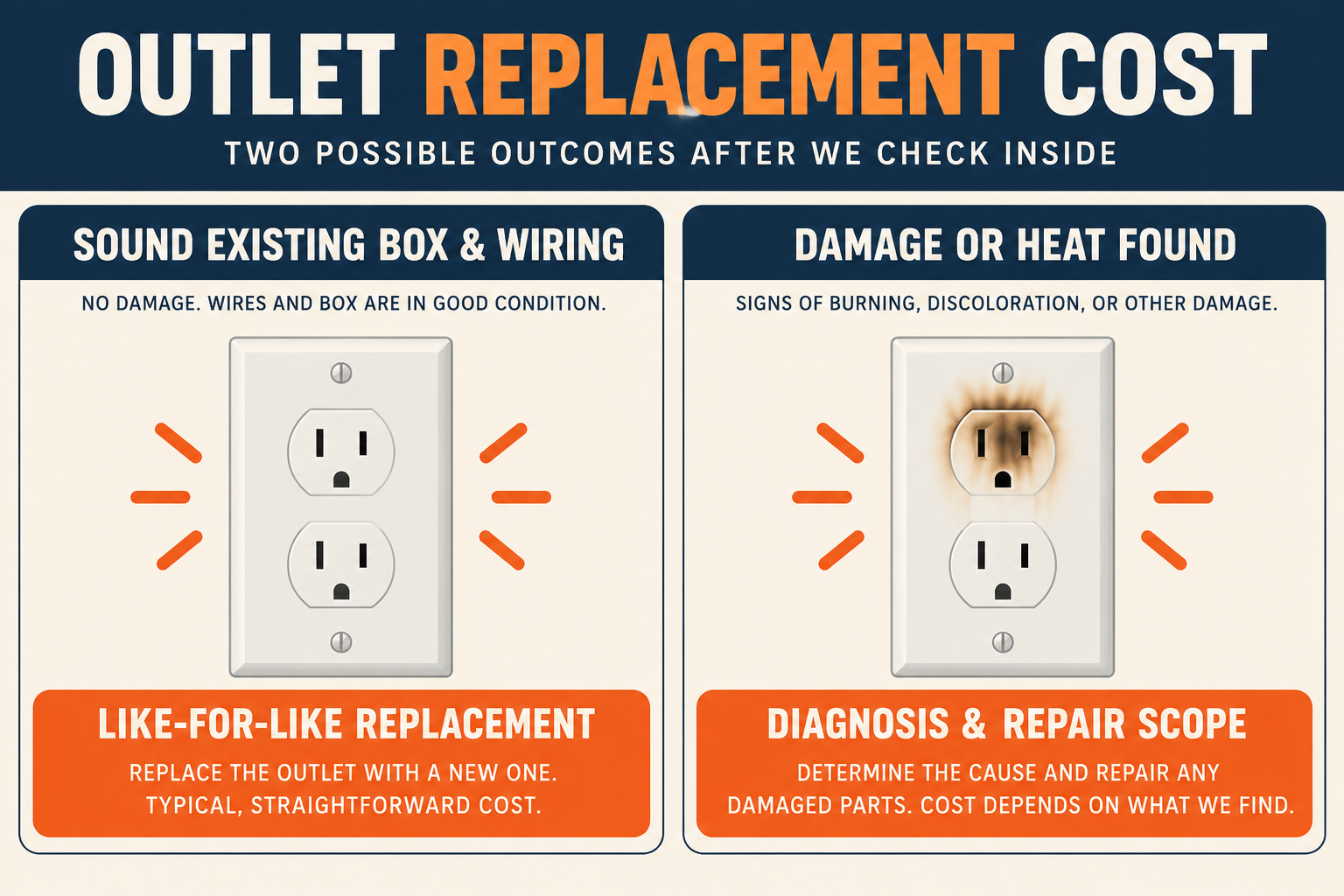
U.S. specialist observations place a standard existing-outlet replacement around $80–$150, with broader single-outlet examples around $80–$200. Angi’s 2026 guide reports $150–$350 per outlet, with a $200 average. These published observations do not form one reconciled national range; confirm whether service-call minimums, diagnosis, or specialty-device work are included. A Canadian specialist guide reports CAD $80–$200 for representative outlet replacement. These figures assume an existing box and serviceable wiring. A service-call minimum may matter more than the device, and heat, damaged conductors, an undersized box, aluminum wiring, or protection changes can turn replacement into repair.
Replacement versus a larger repair
A routine replacement uses an existing location. It should not be treated as routine when the device is warm, scorched, loose, buzzing, sparking, wet, or associated with an odor or repeated trip. CPSC identifies warm faceplates and burning-plastic odor as warning signs in its aluminum-wiring guidance and directs untrained people away from wiring inspection.
The electrician may find a damaged receptacle, loose connection, deteriorated conductors, a box problem, an ungrounded circuit, aluminum termination, or a failed protective device. Ask for the condition and proposed correction rather than authorizing a cosmetic swap.
Cost drivers
- one location versus a group of outlets;
- service-call minimum and travel;
- standard, GFCI, AFCI, tamper-resistant, outdoor, or specialty device;
- existing box and conductor condition;
- aluminum or legacy wiring compatibility;
- access and wall restoration;
- panel or circuit diagnosis;
- permit, notification, inspection, and testing where applicable.
Replacing several devices during one planned visit may reduce duplicated minimum charges. It does not make a damaged circuit safe to bundle blindly; each problem should be listed.
Scenarios
Simple replacement: The box and conductors are sound, the device is ordinary and compatible, and the electrician confirms no wider issue. Budget the minimum visit, device, labor, and testing.
Protection replacement: A GFCI or other specialty device is involved. The function and local applicability must be verified; the price includes correct device selection and testing, not just a faceplate.
Wiring escalation: Heat, damaged conductors, an unstable box, aluminum wiring, or a repeated trip is found. The quote may include connection repair, circuit work, access, and restoration.
Compare quotes for the same condition
Ask whether the quote includes diagnosis, device, compatible equipment, box repair, wiring, grounding, protection, access, testing, permit or inspection, and wall repair. A low material price does not answer whether the circuit condition was assessed. Have the electrician identify the supplied device and whether the work is a like-for-like replacement or changes a protective function; GFCI, AFCI, and tamper-resistant devices are different choices, and local requirements and the existing installation determine what is suitable. Ontario’s ESA guidance illustrates some Canadian distinctions but is not a complete national code inventory.
For several outlets, request a location-by-location count, the price for the first device and each additional one, and a separate diagnosis allowance for any uncertain or damaged location. Per-device pricing is comparable only when access, device type, and installation condition are similar. A warm, scorched, loose, wet, buzzing, sparking, or repeatedly tripping outlet needs its cause assessed before it is bundled with ordinary replacements. During an open renovation, some work may share access; in a finished home, a contained replacement may avoid unnecessary wall repair when the installation is sound.
If you supply devices, confirm the exact model and who handles an unsuitable or defective product. For an inspection or insurer request, ask for a completion note identifying corrected locations and any condition left unresolved. The replacement decision is complete when both the device and the condition behind it are accounted for.
U.S. childproofing context
For U.S. households with young children, the Consumer Product Safety Commission recommends tamper-resistant receptacles when replacing receptacles as part of childproofing and cautions that no device is completely childproof. This is consumer-safety guidance, not a statement that the same rule applies to every location or jurisdiction. The electrician still needs to confirm a device suitable for the actual box, circuit, and local requirements.