
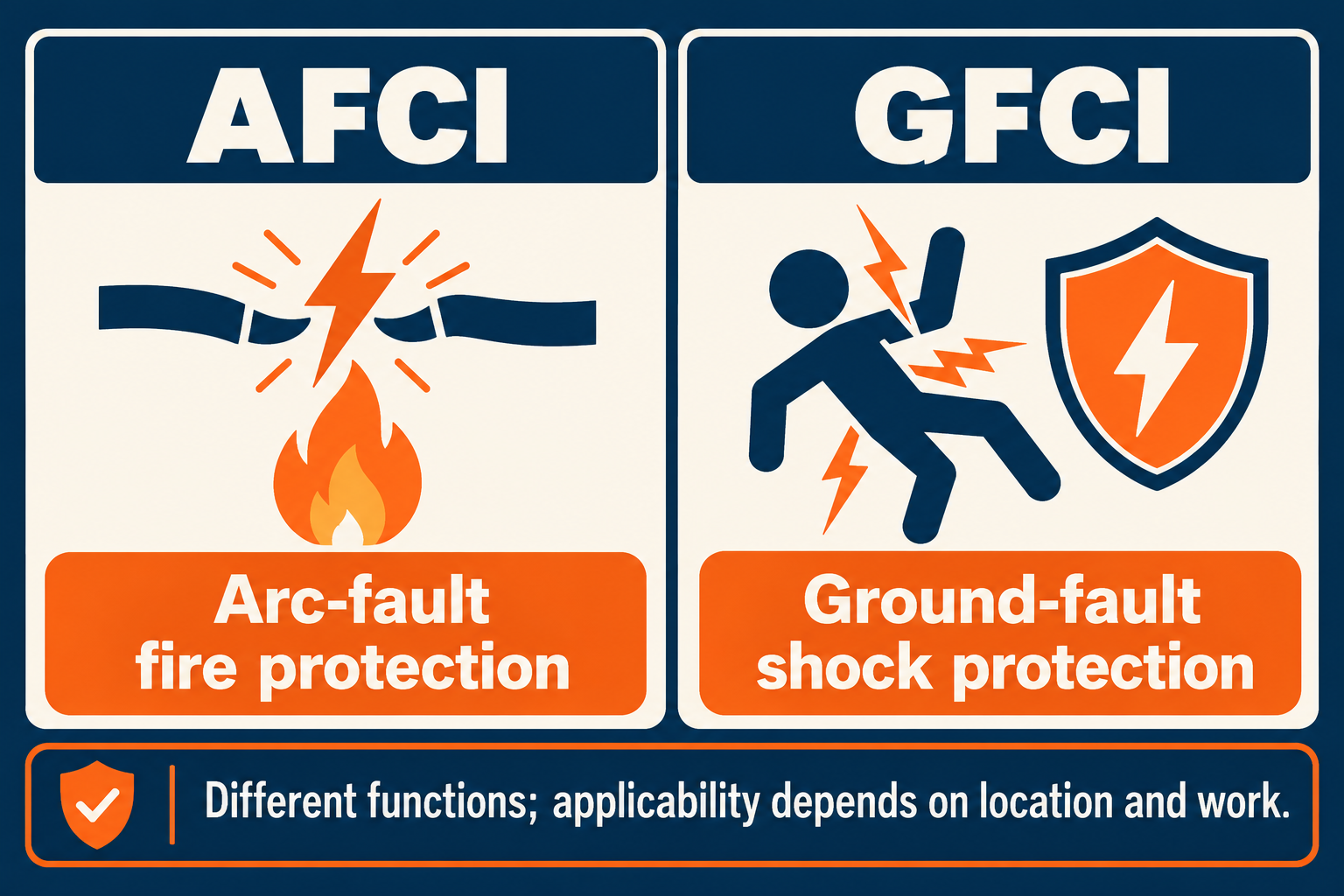
An AFCI, or arc-fault circuit-interrupter, is intended to reduce fire risk from unsafe arcing and sparking. GFCI protection addresses a different, shock-related hazard. AFCI cost depends on whether the job replaces a compatible device, adds protection to one or more circuits, diagnoses an unwanted trip, corrects wiring, or expands into panel work.
A Canadian specialist labor guide reports electrician rates around CAD $80–$150 per hour. That is labor context, not an installed-price range: a service minimum, device, panel compatibility, wiring, and local administration can change the total.
The available evidence does not establish a comparable installed-price range for the U.S. and Canada. Use local quotes for the actual panel and circuits, and keep any diagnostic visit separate from a repair whose cause is not yet known. An hourly rate or breaker price alone cannot estimate a complete job.
What the project may include
- replacing a failed or obsolete AFCI device;
- adding protection during new circuit or renovation work;
- diagnosing a trip before deciding whether the device or circuit needs repair;
- correcting a wiring or shared-neutral issue;
- modifying or replacing a panel if it cannot accept a suitable compatible device.
An AFCI that trips is not proof that the breaker is defective. Removing or bypassing protection can leave a fault or required protection unresolved.
Cost drivers and common scenarios
The exact panel model and listed breaker compatibility are central. The number of circuits, circuit layout, accessible versus concealed wiring, panel space, and whether work coincides with a renovation all affect labor. A single-device visit may be dominated by the service minimum; a multi-circuit job can cost more overall even if the per-device price is lower. If correction requires opening a finished wall or ceiling, access and restoration assumptions can matter as much as the device count.
- Contained replacement: The electrician confirms a compatible device has failed, finds no circuit fault, and the panel is serviceable. The quote should cover the visit, part, labor, and testing.
- Protection during planned work: New wiring or renovation work creates a protection decision. Identify the affected circuits, device type, any inspection, testing, and work that must happen before concealment.
- Unwanted-trip diagnosis: A connected appliance, wiring condition, shared-neutral arrangement, moisture, or device compatibility may be involved. Price troubleshooting separately from a replacement device until the cause is known.
- Panel or wiring escalation: If the panel cannot accept a suitable device or a broader condition is found, ask for that evidence and compare the larger scope separately. Do not treat panel replacement as an automatic AFCI add-on.
Applicability depends on location and work scope
The U.S. uses locally adopted electrical-code editions and amendments. Canadian rules are implemented through provincial or territorial systems and local administration. Requirements can differ for new construction, renovation-triggered work, a failed-device replacement, and unchanged existing wiring. Ontario ESA’s outlet guidance says a licensed contractor should determine where AFCI protection is needed; that is an Ontario example, not a universal retrofit rule.
Ask the electrician and local authority whether the proposed work is required, triggered by the project, accepted as a retrofit, or elective. If an inspector or insurer raised the issue, confirm what documentation that party needs rather than assuming a device label closes the finding.
Make the quote comparable
Request the affected circuit list, reason for the work, exact panel and device models, compatibility basis, diagnosis included, wiring corrections, access assumptions, permit or notification, inspection, testing, labels, and exclusions. Separate the price for device work from troubleshooting or any panel correction, and agree on the threshold for additional work. The finished scope should state what protection boundary was addressed and what remains unresolved.
For a renovation, coordinate any required inspection before concealment. Keep circuit and device details with the home records to support later troubleshooting. A useful budget pays for compatible protection and a properly resolved circuit; device price alone does not establish that the work is complete.