
A sewer repair or connection quote may price the pipe and labor while leaving out fees charged by a municipality or utility. Depending on the work, the project can also require a plumbing or right-of-way permit, drawings, an inspection before the trench is closed, traffic controls, restoration approval, a deposit, or a separate utility connection charge. These amounts belong in the budget, but they are not the same as a private contractor’s installation price.
There is no useful national sewer-fee range. Requirements depend on the address, project type, route, road, connection size, property class, and authority. The homeowner’s task is to identify the applicable charges and process with the authority that will issue the permit or accept the work.
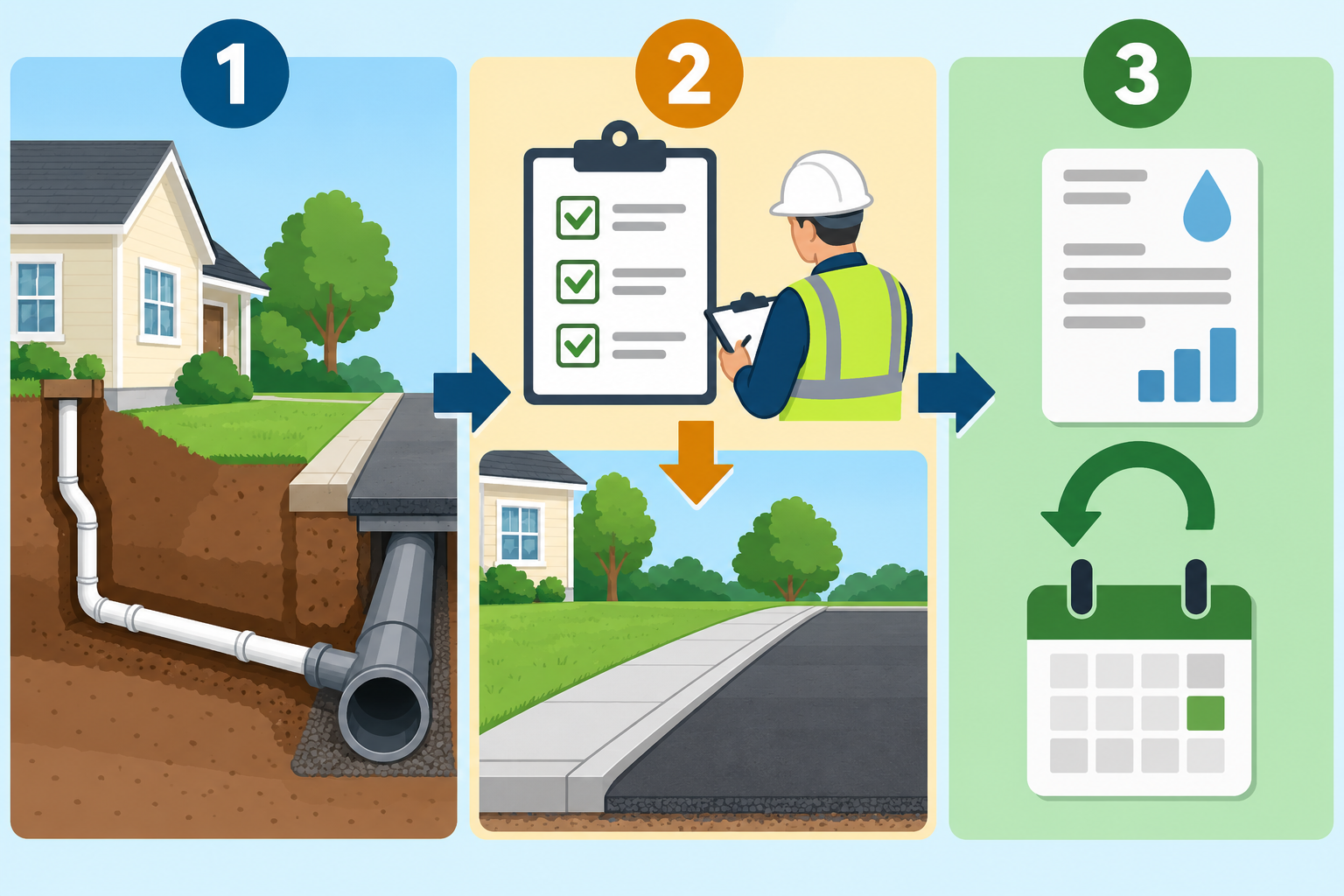
Identify the administrative layers
| Item | What it may cover | Who to ask |
|---|---|---|
| Connection, tap, or capacity charge | Establishing or expanding service, connecting to the main, or system capacity | Sewer utility or municipality |
| Plumbing or sewer permit | Review of private repair, replacement, or new connection | Building or plumbing office |
| Right-of-way or road permit | Work in a street, sidewalk, boulevard, or public easement | Road authority and sewer utility |
| Inspection and acceptance | Required view before covering work, test, final report, or permit sign-off | Authority and contractor |
| Contractor approval | Local registration, license, training, or approved-bid list | Permit office or utility |
| Deposit or bond | Security for restoration, extension, or public-surface work | Authority that holds the funds |
| Ongoing capacity charge | Recurring bill triggered by a connection or added use | Sewer provider or treatment authority |
One project can involve multiple authorities. A municipality may issue a road-opening permit while a utility reviews the connection and a building department handles plumbing inspection. Ask who applies for each approval, who pays the fee, and who schedules the inspection; a contractor’s phrase “permit included” may refer to only one of them.
Separate official charges from contractor work
A fee schedule tells you what an authority charges for its listed service. It does not state the private contractor’s labor, materials, camera, pressure test, equipment, traffic control, or restoration cost unless it explicitly says so. A municipal inspection fee may also cover an administrative review rather than the private inspection the homeowner expects.
For example, Newark’s Water and Sewer Department says its listed prices were current as of June 1, 2026. It lists a $500 sewer application and administration fee and a $750 water and/or sewer inspection fee, and says routine application and inspection fees apply to Water and Sewer Department projects. Those charges are Newark examples; the page also distinguishes new connection charges and additional fees. They are not contractor prices or amounts to add automatically to a private-only repair.
Wesleyville’s 2026 schedule lists $200 for a full sewer-lateral inspection that includes camera work and certification, but $100 for a partial inspection described as certification only. The partial charge does not establish a camera service price. A fee schedule alone also does not tell you which properties or transactions must obtain the inspection. Verify the legal trigger and the deliverable separately.
Check whether the project changes future bills
A new connection can create a recurring obligation even after construction and inspection are complete. King County, Washington, says its capacity charge applies to certain connections, reconnections after five years, additions, or changes of use for properties whose sewage is treated at a County plant. The current property owner pays; the charge is billed for 15 years unless paid off early. For connections in 2026, the County publishes a rate of $77.99 per residential customer equivalent per month, with the assigned customer equivalents varying by home type and size.
This is a local system-capacity charge, separate from a private lateral quote and ordinary monthly sewer service. Ask the utility whether a particular parcel, connection date, treatment plant, and project type qualify; do not assume the same charge applies elsewhere. The municipal connection guide covers the construction scope, while this page separates one-time administration from a continuing system bill.
Handle sale-time requirements as their own process
Some authorities require a report, test, correction, or certificate for a property transfer. Others do not. Confirm the current trigger for the parcel, the record already on file, the exact test and deliverable, and any deadline before paying for a camera visit.
Oro Loma Sanitary District’s program, for example, requires a certificate for covered sales entering escrow on or after August 1, 2026. Its published process includes CCTV and an air or water test with a District representative, and the $450 certificate charge is separate from contractor inspection and repair costs. Berkeley describes a possible six-month transfer extension, but only after City review; one path requires a $4,500 deposit, which may be refunded after certification or forfeited if required work is not completed. That deposit is contingent cash, not an ordinary fee or guaranteed extension.
These examples show why a camera price, certificate charge, and refundable or forfeitable deposit need separate lines. For the complete triggered transaction, extension, correction, and closing decision, see sewer lateral compliance at home sale.
Include permit and close-out work in method quotes
Ask the authority whether inspection must happen before a trench or connection is covered, whether a video or drawing is needed, and what record closes the permit. Portland’s CIPP rule for certain privately maintained pipes in public rights-of-way or easements requires permit review and specified completion documents, including pre- and post-lining video, an as-built drawing, and locate-marker photos. The same rule allows additional excavation or replacement in some failed-acceptance cases. It sets local requirements, not a universal lining specification or price.
A permit can therefore affect sequence and cost even when a contractor says the pipe work is trenchless. Ask who pays for a repeat visit if inspection fails, whether a failed test requires access to be reopened, whether a local fee is refundable, and whether the contractor will deliver the records needed for final acceptance. Keep approval charges distinct from any contractor charge to prepare drawings or attend an inspection.
Check grants and reimbursements before work starts
A program may help with part of a lateral project, but its advertised maximum is neither a project price nor automatic savings. Some programs require an accepted application, specified bids, an approved contractor, or written quote approval before work begins. Others reimburse only after the owner pays an eligible invoice and sends permits, test results, and proof of payment.
Ask the program administrator which parts qualify: inspection, cleaning, spot repair, full replacement, public-side work, connection, restoration, or permit. Confirm whether the money is paid to the owner or contractor, how long processing may take, whether funds are available, and whether a change order needs approval. The repair assistance and financing guide compares those cash-flow and repayment questions. Do not deduct a cap from a quote until the program confirms property eligibility and the exact work.
Build a budget and schedule from current authority answers
Before comparing bids, make a list of the separate construction and administrative items. Ask the utility or city for its current fee schedule and identify the permit type and inspection needed for this exact scope. Save the page or email, access date, address or parcel, and question asked. A published fee may still vary by connection class or project, and a schedule for a sale inspection may not apply to a repair permit.
Use this simple status for each item:
- Confirmed: the authority identified the applicable charge or requirement for this parcel and project;
- Quoted: a contractor or other provider supplied a written price for its work;
- Allowance: a documented estimate remains subject to review or measured conditions;
- Unverified: the responsible authority, fee, or scope is still unknown.
Do not hide an unverified permit or restoration amount inside a single contingency. If the authority cannot price a fee before review, identify when it will be established and whether the project can pause before the charge is incurred.
Questions for the authority and contractor
- Which permit or approval applies to this precise repair, replacement, or new connection?
- Is any portion in a public right-of-way, easement, or utility-maintained area?
- What inspection, test, drawing, video, or certificate is required, and before which construction step?
- Is the charge for official review, a municipal inspection, contractor testing, or more than one service?
- Are deposits, bonds, restoration charges, or recurring capacity bills triggered?
- Who submits applications, schedules inspections, and pays each authority directly?
- What happens if work fails inspection or the authority changes the accepted scope?
- Does assistance require approval before work, and when would any reimbursement arrive?
- What documents prove acceptance and close the permit?
Ask the contractor to label each fee as included, passed through at cost, separately quoted, an allowance, or excluded. If both bidders say “permit included,” ask them to name the permit and inspection line they priced. If one includes right-of-way restoration and the other does not, revise the bids to the same requirement before comparing totals.
Preserve the approval and payment record
Keep the fee schedule, written authority response, permit application and approval, inspection result, invoice, deposit receipt, restoration sign-off, program acceptance, and final as-built or report. Record which amounts are refundable, when a payment is due, and what event releases a deposit. If a route or method changes, ask whether the original permit and fee still apply before treating the old amount as current.
A useful sewer budget separates private construction, public connection, authority administration, inspection and close-out, restoration, and any recurring charge. It also states who confirmed each requirement and when. Local verification makes the budget more dependable than a national average that mixes unrelated fees and services.