
A sewage ejector system lifts wastewater from fixtures that cannot drain to the sewer by gravity. The cost is not just the pump: a new installation may require a basin, discharge piping, venting, electrical work, alarms, access, permits, and finished-space restoration. Replacing an accessible failed pump is a different project from creating a new basement bathroom system.
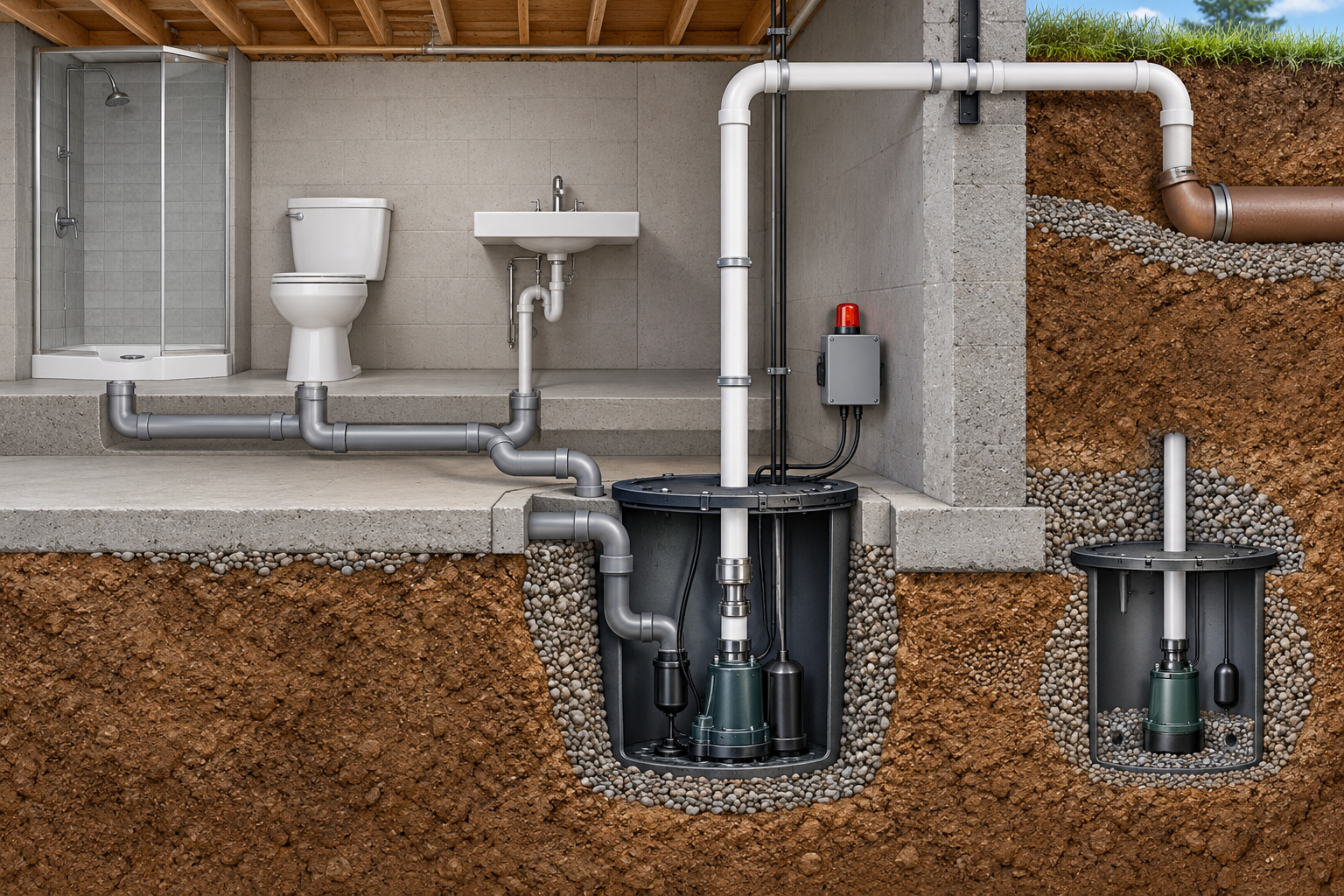
Installation versus replacement
Replacement may reuse a suitable basin, discharge route, venting, controls, and electrical supply. The main uncertainties are access, pump compatibility, condition of the basin and check components, and whether the failure damaged surrounding finishes.
New installation adds excavation or slab access, fixture drainage, basin placement, venting, discharge connection, electrical coordination, alarm or backup arrangements, and finish work. A basement bathroom plan may include unrelated fixtures or remodeling; keep those costs separate unless they are required for the ejector system.
There is no dependable national ejector-specific price range for this scope. Treat any consumer-market number as a local, scope-qualified observation and request a complete quote rather than relying on an equipment price.
Main project layers
| Layer | Questions that affect cost |
|---|---|
| Basin and pump | New or existing, capacity, access, replacement compatibility |
| Gravity collection | Which fixtures drain to the basin and what pipe work is needed? |
| Discharge | Route, connection, valves, and protection from reverse flow |
| Venting | Existing compatible vent or new configuration? |
| Electrical | Dedicated supply, controls, alarm, and property-specific requirements |
| Access | Exposed utility room versus slab, wall, cabinet, or finish opening |
| Administration | Permit, inspection, plumbing, electrical, and local code review |
The exact configuration is safety- and code-sensitive. This guide does not provide installation instructions.
Scenario bands
Like-for-like accessible replacement: The basin and connected systems are serviceable, access is straightforward, and the replacement is compatible. Labor, pump, testing, and any alarm or control work form the core scope.
Failed pump with damaged access or finishes: Water or sewage may have affected surrounding materials. The pump repair and contamination or finish restoration are separate budgets.
New basement bathroom: Basin excavation, fixture rough-in, venting, electrical, discharge, permits, and finish coordination make this a multi-trade project. A pump quote alone is not a bathroom budget.
Power or equipment failure risk: A backup pump, alarm, or power arrangement may reduce some failure exposure but adds cost and maintenance. Ask what happens during a power outage and what the system does not protect against.
Ejector versus sump pump
A sewage ejector handles wastewater from plumbing fixtures and is different from a sump pump that handles groundwater or foundation drainage. Toronto’s basement-flooding guidance discusses pumping equipment as property-specific protection; the Canadian private-side drainage guidance also distinguishes sanitary building sewers from foundation drainage and sump systems. Do not use a sump-pump quote or maintenance assumption as an ejector budget.
Maintenance and failure economics
An ejector system adds equipment that must remain accessible and operable. Ask the installer what inspection, alarm testing, cleaning, and replacement planning applies, and whether a service visit includes the basin, pump, controls, and discharge components. There is no universal replacement interval supported here; condition, use, and manufacturer requirements matter.
If a pump fails repeatedly, investigate the system configuration rather than replacing the same component without explanation. Possible contributors may include power, controls, discharge, basin, or upstream fixture issues, but a cost article cannot diagnose one property.
Quote questions
- Is this a new system, a pump-only replacement, or a larger basin and piping project?
- Which fixtures are included and where does discharge connect?
- Are basin, venting, electrical, alarm, controls, permits, and inspection included?
- What access and finish restoration is included?
- Which components are retained and in what condition?
- What backup or alarm options are available and what maintenance do they require?
- Is sewage cleanup or remodeling outside the plumbing scope?
- What evidence confirms the repaired system operates correctly?
The useful comparison is between complete, compatible system scopes. A low pump-only price may be appropriate for a straightforward replacement, but it cannot be compared with a quote that creates an entire below-grade drainage system.
Compare a replacement quote with a new-system quote
For a replacement, ask the contractor to test or document the retained basin, discharge, vent, electrical supply, controls, and alarm. If one of those components is unsuitable, the project is no longer pump-only. A unit price for a basin, valve, wiring, or access restoration is more useful than an undefined contingency.
For a new system, request a drawing or clear scope showing which fixtures drain by gravity to the basin, which pipe carries pumped discharge, where venting connects, and how service access is maintained. The purpose is not to design the system from a cost article; it is to make sure the price includes the components needed for a compatible, inspectable installation.
Ownership horizon matters. A cheaper pump with difficult access, no practical alarm, or unclear maintenance may create higher future service exposure. A more complete installation may cost more now while reducing the risk of a failed component being discovered only after finishes or sewage have been affected. Compare purchase price, access, maintenance, backup arrangements, and replacement responsibility together.
Compare quotes on the system boundary
For two replacement proposals, list the retained components and the items being replaced. Confirm whether both include basin access, electrical reconnection, discharge components, testing, alarm, permits, and cleanup of the work area. A pump alone can be an appropriate price for a straightforward compatible replacement, but it does not compare with a proposal that corrects a failed basin or adds equipment. Ask for a unit price or approval trigger if an exposed component is worse than expected.
For a new system, identify which fixtures are in the scope and what work is required to connect each one. A general basement bathroom renovation can add a toilet, sink, shower, flooring, walls, and finish upgrades beyond the ejector system. Keep those costs separate while confirming that the plumbing quote includes the collection piping and necessary system components. A contractor should explain which requirements are local code or permit matters rather than leaving the owner to assume that the pump package is complete.
Plan for continuity and service
Because the system depends on powered equipment, ask how the household will know that it is not operating and what instructions apply during an alarm or outage. A backup pump, alarm, or power arrangement changes the budget and creates its own inspection needs. Do not assume these options prevent all backup or replace a valve, lateral correction, or sump system.
Keep the access hatch or service area clear and retain the model, installation record, maintenance guidance, and final discharge description. Ask whether future service requires a special contractor and whether routine visits include the basin and controls. These ownership costs are part of choosing an installation layout: a slightly more accessible system may be easier to inspect and maintain than one hidden beneath permanent finishes.
Separate a pump failure from a system change
A replacement estimate should say which existing equipment can be reused and how that conclusion was reached. Ask about the pump, basin, discharge pipe, check components, vent, electrical supply, controls, alarm, and service access. A pump-only price is comparable with another pump-only price only if both assume the retained system is suitable and include the same testing and reconnection. If one estimate replaces the basin or electrical equipment, compare that broader scope separately rather than dismissing it as a higher pump price.
A new installation has additional design and access questions. The quote should identify which fixtures drain by gravity to the basin, the route of pumped discharge, where venting and electrical connections tie in, the finished elevation, and how the basin can be serviced later. Cutting a slab, installing fixtures, and restoring a bathroom may involve separate plumbing, electrical, structural, and finish trades. Request a drawing or clear written description and confirm local permit and inspection requirements before construction.
Compare project cases without using an equipment-only number
An exposed utility-room replacement may be a focused service if the basin and connected components are sound. A failed system beneath a finished floor can add access and contamination restoration. A new basement bathroom adds excavation, collection piping, venting, discharge, electrical, alarm, permits, and finish work. A proposal for a backup pump or alternate power adds another system with its own maintenance and failure modes. These cases should not be compared using a pump’s purchase price.
Ask bidders to state the operating test they will perform and what record you receive: model information, discharge path, alarm test, check-component condition, and any retained equipment. The quote should say whether the work restores the original arrangement or changes the system. If a system repeatedly fails, determine whether a replacement component addresses the cause before buying another like-for-like pump.
Include future service access and outage planning
An ejector system depends on powered equipment and adds components that may need service. Ask what the manufacturer requires for inspection and maintenance, what signs prompt a service call, and how the owner can reach the basin without dismantling finished work. There is no universal replacement interval supported here; usage, product requirements, condition, and configuration matter.
Discuss what happens if power is lost, the alarm activates, or the pump cannot discharge. A backup device or power arrangement may reduce some exposure but adds purchase and maintenance cost; it does not make the system failure-proof. Keep that decision separate from a sewage-backup valve or sump system, since each responds to a different water pathway. A complete budget includes the installed system, restoration, service access, and a realistic maintenance plan.