
When bids exceed the design budget, the next step is not automatically to blame the designer or choose the lowest bidder. First reconcile scope, assumptions, allowances, exclusions, market conditions, and the budget basis. Then decide whether to reduce scope, change materials or systems, phase the work, obtain more bids, or redesign.
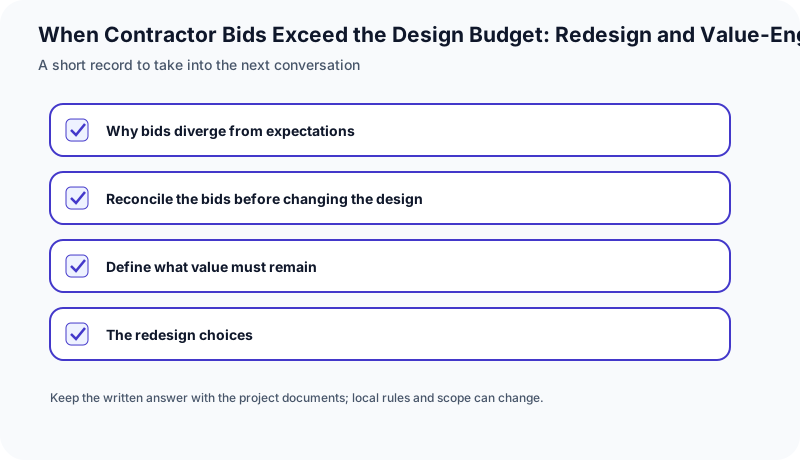
Why bids diverge from expectations
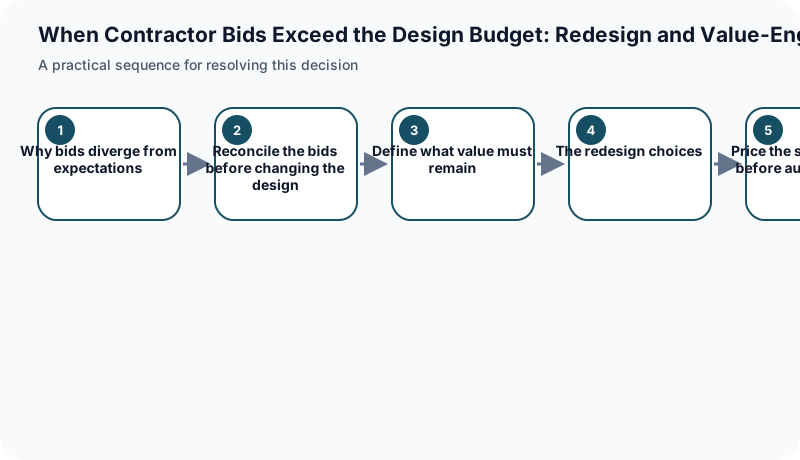
An early estimate may have used incomplete drawings, optimistic allowances, or a different construction scope. The market may have changed. Contractors may have priced risk, access, logistics, schedule, or missing details differently. Bids may also reveal that the owner’s budget and desired program were never aligned.
Compare each bid against the same drawing issue and list inclusions, exclusions, alternates, allowances, taxes, permits, temporary work, and schedule assumptions. A high bid may contain scope that the low bid omitted.
Reconcile the bids before changing the design
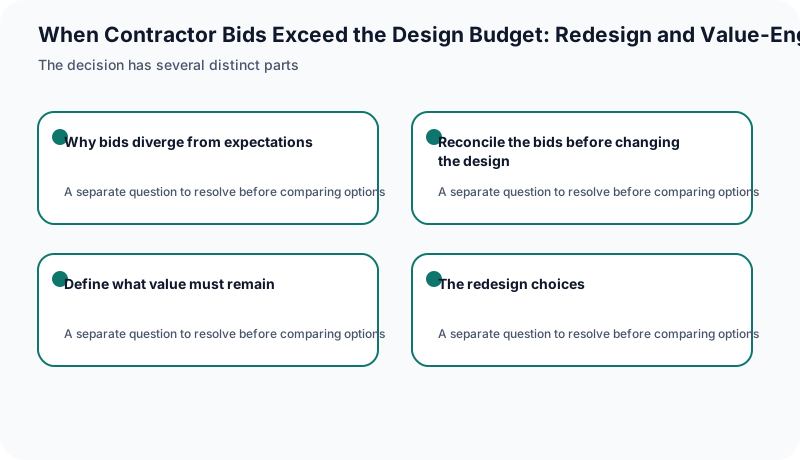
Create a bid tab that compares each contractor against the same drawing issue and scope. Check work included, allowances, exclusions, taxes, permit handling, schedule, site access, temporary work, and assumptions about existing conditions. Ask each contractor to clarify unusually low or high lines before deciding that the design itself is unaffordable.
If bids are incomplete or based on different assumptions, a second round of pricing may be more useful than immediate redesign. Ask the architect or estimator which missing information would materially improve the bids and whether issuing an addendum can resolve it. A complete comparison helps prevent removing a needed design feature to offset scope that was never priced.
Define what value must remain
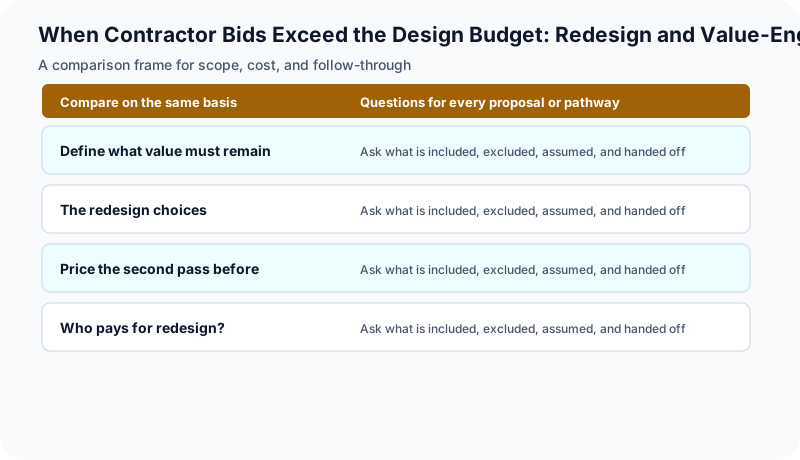
Before redesign, the owner should identify the project’s core outcome, acceptable tradeoffs, and hard constraints. A lower-cost option may preserve the number of rooms but reduce finish level, change the building footprint, phase site work, or defer a discretionary feature. Ask the designer to show what each option saves, what it changes, and what risks it introduces.
Value engineering is most useful when the team tests the function and lifecycle impact of a design choice. A lower initial material price may increase maintenance, energy use, replacement frequency, or risk. A smaller project may reduce quantities but still require the same survey, professional design, permit review, mobilization, or utility work. Ask for the total project effect rather than only a material substitution price.
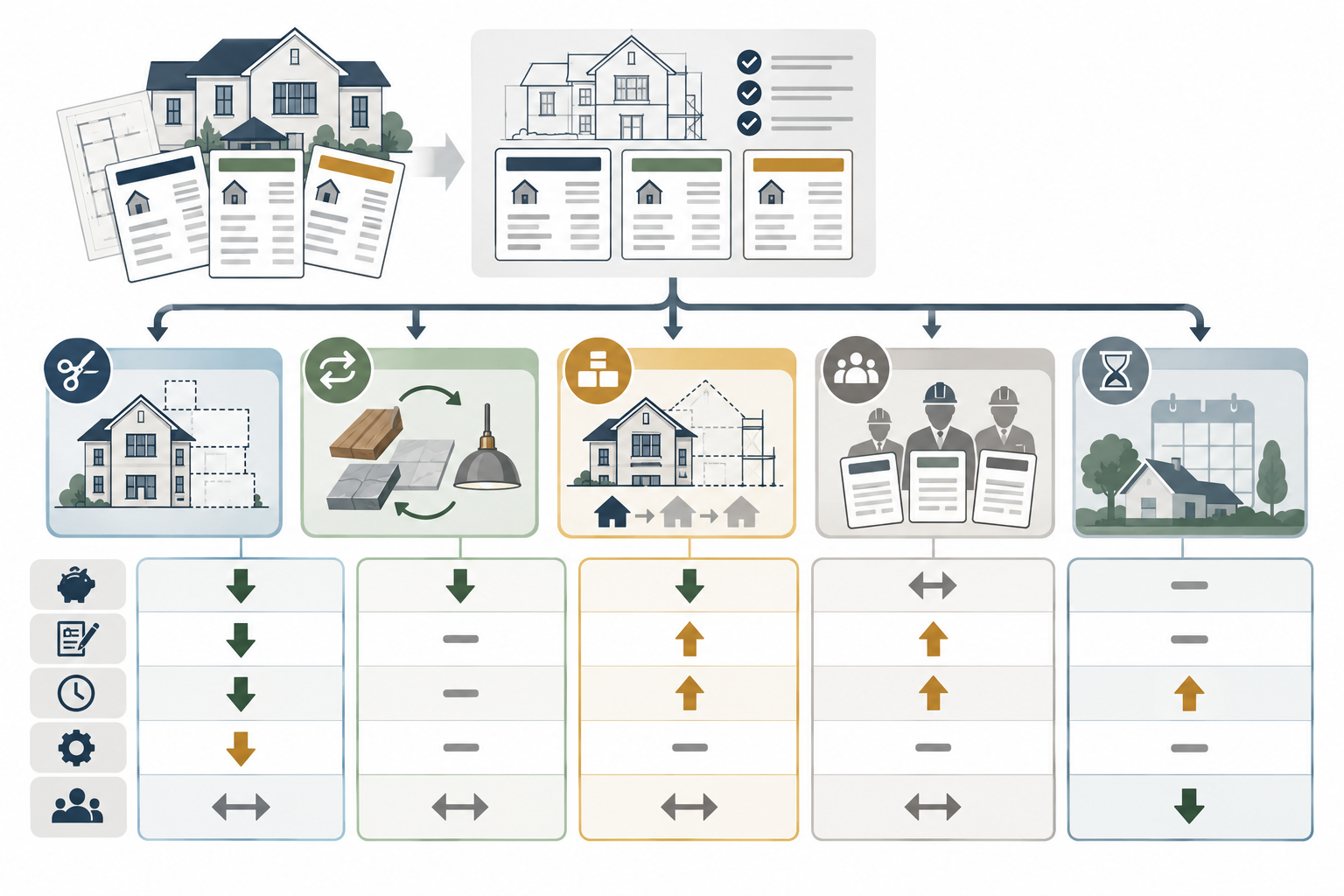
The redesign choices
- Scope reduction: Remove rooms, finishes, site work, or phases while preserving the core objective.
- Substitution: Change materials, equipment, assemblies, or details after checking performance, maintenance, warranty, and approval effects.
- Phasing: Build a defined first phase and defer work that can remain safely and economically separate.
- Value engineering: Study how design choices, quantities, details, and construction methods affect value and cost; it is not simply “buy cheaper materials.”
- Rebid: Request new prices after the scope is clarified or market timing changes.
- Pause: Stop before signing or revising the permit when the remaining uncertainty is too large.
Each option has professional time. A change can require new drawings, structural calculations, MEP or energy coordination, permit revisions, and contractor repricing.
Price the second pass before authorizing it
Request a written redesign scope that states the target budget, design elements to protect, options to compare, number of meetings, revised sheets, consultants, and contractor or estimator involvement. Ask whether the existing permit package remains suitable and whether the authority must review the new design. Professional fees should be approved before work starts so a “quick revision” does not become an open-ended additional service.
Ask the contractor to separate the cost of estimating the revised scope from the cost of building it. If the contractor is retained under a preconstruction agreement, review how paid estimating hours are credited or billed if construction proceeds. If you solicit new bids, keep the schedule and bid validity assumptions consistent.
Who pays for redesign?
The answer depends on the owner-professional agreement and why the change is needed. AIA guidance describes phases, compensation, and additional services as matters that should be defined in the agreement. Do not assume the architect owes unlimited redesign because a bid is high, and do not assume every redesign is an owner change. Review the contract, the design assumptions, and the actual bid evidence.
Protect the original project objective
Write down the outcome the owner will not give up and the items that can change. That may be the number of rooms, accessibility, usable area, rental unit, structural performance, or schedule. The architect can then propose options that target cost without cutting the function the project is meant to provide.
Ask for an option table with revised scope, professional fee, likely authority implications, construction savings basis, and unresolved assumptions. A smaller plan may change engineering, permit fees, utility requirements, and contractor mobilization. If the savings are only a guess, label the estimate preliminary and ask what document or trade input would improve it.
Avoid false savings from shifting costs
A substitution can lower the purchase price but require more maintenance, another detail, or a different approval. Phasing can reduce immediate cash but add later mobilization and price exposure. Removing a feature can save construction cost while leaving design fees already incurred. Compare the full effect across design, authority, contractor, and operating costs before deciding.
Decide whether to redesign, rebid, or pause
Redesign is sensible when there is a clear change that can reduce cost while preserving the project’s essential outcome. Rebid when contractor scope or market assumptions differ enough that the current prices are not comparable. Pause when a major site, approval, or funding question could make any design option premature. Ask the architect or estimator which choice would produce useful new information before paying for another design round.
Set a target savings and a threshold for proceeding. If the revised option does not reach the target, will the owner reduce scope again, phase work, or stop? This prevents a series of small changes that consume professional fees without bringing the total within budget.
Keep permit and infrastructure costs visible
If redesign changes the number of units, area, use, or utility demand, ask whether the authority fee or a separate growth charge changes. The building-permit fee, development charge, utility connection, and physical work are distinct. Ask for written updated calculations before treating a redesign as a savings.
If the project has an issued permit, ask whether the revised drawings need approval before construction. The professional fee for redesign does not include the authority’s review or the contractor’s change order unless the agreement expressly says so.
Document the savings and the tradeoff
For each proposed option, ask the designer or estimator to state the expected savings basis, design fee, construction impact, schedule, approval effect, and any new uncertainty. A range may be more honest than a single promised saving. Compare options on the same contractor scope and drawing issue.
If an option saves money by deferring an item, record when it must be completed later and what additional mobilization or permit work that creates. If it reduces quality or performance, ask the provider to explain the practical effect. Keep the owner’s approval in writing before revising drawings.
Confirm the revised scope with the contractor
After the designer issues revised drawings, ask the contractor to confirm the new scope, exclusions, schedule, and price. A written revision should state whether it replaces the original price or adds to it and how allowances are adjusted. If the project is rebid, provide the same drawing issue and scope to each bidder.
Do not begin construction from a cost-saving sketch that has not been integrated into the approved documents. If a permit revision is required, include review time and fee before setting the new start date.
Keep the revised estimate and old bid together so the owner can see which trade or allowance accounts for the difference.
After selecting an option, update the total budget and confirm that the owner still accepts the project’s remaining risks.
Budget for the second pass
Ask for a written scope containing target savings, drawings or specifications affected, consultant coordination, review rounds, permit implications, and rebid support. Keep separate allowances for professional redesign, authority revisions, contractor estimating, and construction changes. A cheap design change that creates a performance or approval problem is not a saving.
Keep a decision log showing the chosen option, rejected alternatives, target savings, current drawing issue, and cost assumptions. This helps prevent a later contractor from pricing a superseded design or an owner from comparing an old estimate to a revised scope.
If the change affects an issued permit, read permit revision and resubmittal cost. If the original budget was built too early, construction estimating and preconstruction cost explains estimate confidence.
The strongest response is an explicit decision: what outcome must remain, what can change, what new information is needed, and what additional fee protects that decision.
Compare revisions by outcome
Ask the design team to identify the cost and schedule effect of each proposed change, including any consultant redesign, permit revision, long-lead item, and construction work already completed. Changes that appear similar on a plan may affect durability, energy use, maintenance, or future flexibility differently. Keep a written decision log stating the original requirement, the accepted trade-off, the approved fee, and the date the contractor may use the new documents. Do not release a revised set until the owner and contractor understand which version governs. This creates a deliberate value decision rather than a series of small cuts whose combined effect is unclear.