
The cheapest debris service depends on who loads the material, how long debris is generated, where a truck can reach, and who carries the risk of sorting and disposal. Compare the service model rather than only the advertised container or truck price.
Three common service models
| Option | Best fit to investigate | Main trade-off |
|---|---|---|
| Dumpster | Debris is generated over several days and the site has a suitable placement area | You or the crew must load it, and weight, material, rental, and overage rules apply |
| Junk-removal crew | A small or concentrated load needs to be removed by workers | Labor and truck capacity are included, but the service may cost more for a large continuous project |
| Contractor hauling | Removal is integrated with demolition or construction | Coordination is simpler, but hauling, markup, disposal, and responsibility may be less transparent |
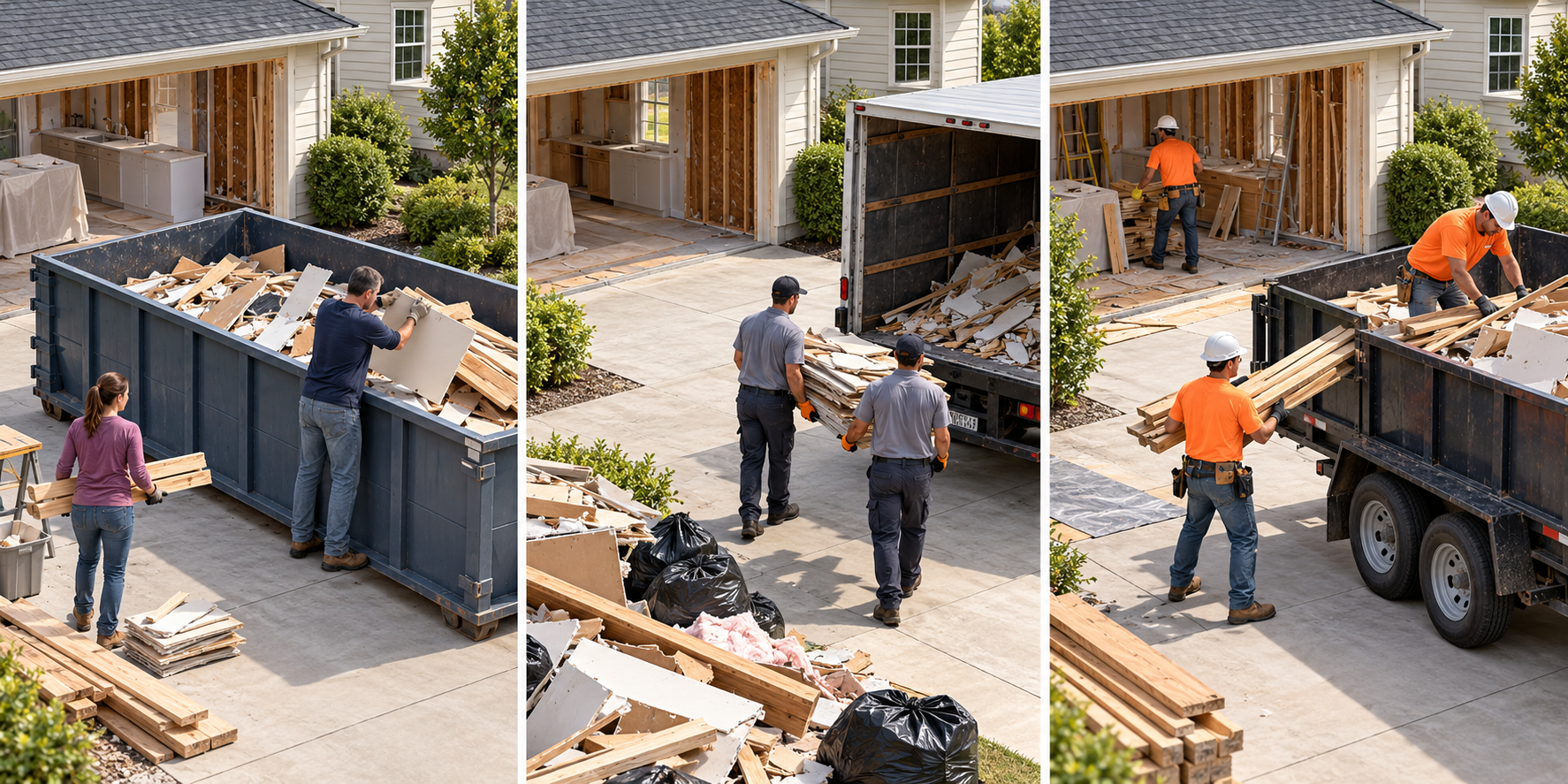
These descriptions are starting points, not universal service definitions. Providers differ in what they lift, sort, sweep, recycle, and accept.
Who does the work?
A dumpster shifts loading labor to the homeowner or construction crew. That can work when material is light, access is short, and the project naturally produces a container-sized load. It is less attractive when debris must travel through a finished home, down stairs, or across a long yard.
Junk removal generally includes a crew to collect and load, but confirm whether workers remove material from inside the home, dismantle items, protect surfaces, and sweep afterward. Contractor hauling may include loading as part of demolition, but it can be embedded in a lump sum. Ask for the hauling and disposal assumptions if you need to compare it with an outside service.
Match the model to project duration
For a one-day cleanout, scheduled crew loading can reduce the need to keep a container on site. For a renovation that generates debris continuously, a dumpster or contractor-managed hauling arrangement may reduce repeated appointments. A hybrid can work: use contractor hauling for heavy or hazardous material, a container for ordinary sorted debris, and a separate service for final contents removal.
Do not combine ordinary construction debris with lead, asbestos, mold-contaminated material, PCBs, or other hazardous waste without confirming the applicable service and disposal requirements. Hazard-specific work belongs with qualified professionals.
Space, access, and material constraints
A dumpster needs a delivery and pickup path. A removal truck needs a place to park and workers need a safe route. Narrow gates, stairs, long carries, soft ground, and occupied rooms can change the labor and protection scope more than the debris volume does.
Material type matters as well. Government of Canada construction, renovation, and demolition reporting distinguishes material streams including concrete, masonry, asphalt, wood, gypsum, metal, plastic, and commingled waste. A provider may price or reject these differently. Heavy material can exhaust a dumpster’s weight allowance, while a mixed load can lose recycling or incur contamination charges.
Compare the total, not the headline price
For each option, write down:
- loading and carrying labor;
- container or truck rental and service time;
- delivery, pickup, and distance charges;
- included weight and overage rules;
- sorting, recycling, and disposal;
- surface protection and cleanup;
- scheduling, swap-outs, and repeat trips;
- contractor coordination and markup;
- responsibility if material is rejected or the site is inaccessible.
The right choice may be the one that reduces disruption or uncertainty, not the one with the lowest advertised starting price.
For container-specific assumptions, read dumpster rental cost for construction. For facility and tipping economics, see construction debris disposal cost.
Small loads may have a municipal route
Some municipalities offer resident collection or self-haul options, but service-area, material, and load limits matter. Gatineau residents with proof of residence may bring up to 12 cubic meters of construction residue to its ecocentres each calendar year; the City’s schedule lists $36.30 per cubic meter above that allowance, with no currency code stated. Ecocentre users sort material before arrival and unload it themselves, and some tenants are classified as small-business users. In Montgomery County, Maryland, residents receiving County trash service may set out two construction-debris cans per week, each under 45 pounds. The County’s guide has a separate no-charge threshold for residential trash that should not be assumed to cover every C&D load. Check current acceptance and compare your own trips, loading time, and vehicle needs with a hired service.
Match the service to the work pattern
A dumpster makes sense when the project generates debris over time and someone onsite can sort and load it. Junk removal can fit a smaller, defined pile when the homeowner wants a crew to load and carry it away. Contractor hauling may be included in a remodeling or demolition bid, which can reduce coordination but make the underlying allowance less visible. These models differ in labor, timing, and who is responsible for a load being ready—not just in the vehicle that takes it away.
For a bathroom renovation, a single container may sit while the trade removes fixtures and finishes over several days. If the work is concentrated into one visit and the debris is already accessible, a removal crew might complete pickup quickly. For a full-house teardown, the demolition contractor may control loading and haul trips as part of the production sequence. These examples are not rules: site access, material restrictions, schedule, and local provider terms decide which arrangement is practical.
Count labor and coordination in the total
The headline quote may leave out time that the homeowner or contractor must supply. A container offer generally does not include the homeowner’s loading labor. A removal-crew quote may include labor but charge according to volume, material, access, or minimum service. Contractor hauling may bundle labor and disposal with demolition, but the estimate can still have an allowance or overage clause. Compare the total effort and risk across the same pile of material.
Consider where the debris is located. Carrying items down stairs, through a finished hallway, around a narrow side yard, or from an upper floor can change how long a crew needs. A container placed close to the work may reduce carrying but could block parking or need local permission. A pickup crew may avoid leaving a container onsite but needs a clear path and a defined pile. If the quote excludes moving furniture, disconnecting fixtures, or separating material, those tasks still need an owner.
A small pile and a long-running project call for different comparisons
For one predictable pile, compare the full-service pickup total, minimum charge, included volume or weight, extra-item rules, and the amount of preparation the homeowner must do. The container option should include delivery, pickup, included rental days, weight, and overage. If you can load it yourself and the pile is not time-sensitive, the container may be convenient; if carrying labor is the difficult part, labor-inclusive service may be worth the added charge.
For a long remodel, compare the expected number of hauls and the duration of service. A series of removal visits can become expensive; leaving a container onsite can incur rental extensions or interfere with access. Contractor hauling may align better with trade phases, but ask if each trip is included or billed separately. The project schedule and cleanup obligation should be clear enough to prevent a service from arriving before waste is ready or after it has blocked the site.
Material and destination rules still apply
Each service model has limits on what it accepts. Heavy concrete, soil, appliances, liquids, treated wood, and suspected hazardous materials may need separate handling or may be excluded. A labor-inclusive pickup does not make a restricted material acceptable. Ask the provider to identify accepted streams and how a rejected item or mixed load changes the price.
If a contractor claims that recycling or salvage lowers the total, ask which material is separated, where it goes, and how any credit is calculated. A potential recycling benefit may be offset by sorting labor, additional handling, or a second destination. Facility charges can also depend on weight and contamination. Keep removal labor, transport, container rental, and disposal as separate comparison points even when the bid combines them.
Decide who owns each risk
Write down who supplies labor, chooses the pickup time, controls placement, loads material, pays the facility charge, and handles rejected or overweight loads. The lowest advertised starting price may not account for the homeowner’s labor, a longer rental, difficult access, or an additional trip. A more expensive service may be better value if it includes those tasks and leaves a defined area ready for the next trade.
If the general contractor includes hauling, compare the described endpoint with any separate dumpster or cleaner you plan to hire. Otherwise, the same debris-removal service may appear twice—or neither scope may cover final removal. Ask whether receipts or weight tickets are available when disposal is passed through. Keep post-construction cleaning separate from bulk hauling; post-construction cleaning cost covers the handover boundary, and dumpster rental covers container terms.
Before booking either service, make sure the expected pile is ready on the service date. A pickup crew may charge for additional volume or items outside the description; a container may incur rental time while trades continue to add debris. Share photographs and material types with the provider, then record the accepted quantity, included labor, and pickup or rental conditions in writing. This gives the homeowner a fair basis for comparing labor-inclusive service with self-loading.
A hybrid can work if the responsibilities do not overlap
Some projects use a container for ongoing trade debris and a separate pickup for a specific bulky item or final pile. That can solve different needs, but it may also duplicate labor or disposal if both services include the same material. Mark what each service will remove, where it will be placed, and who requests the pickup. Confirm whether the contractor’s hauling allowance already covers any load. A hybrid arrangement is easiest to evaluate when each line has a defined material group and end condition; otherwise, compare one complete service model against another before booking multiple providers.