
Residential scaffolding is usually a combination of equipment, transport, assembly, dismantling, duration, and site-specific protection. A rental-only number can be much lower than a professionally installed and maintained system, so compare the service scope before comparing prices.
What drives the quote
| Driver | Why it changes the cost |
|---|---|
| Height and length | More levels, bays, ties, access points, and components may be required |
| Configuration | A simple straight façade differs from a roofline, corner, stair tower, or irregular elevation |
| Duration | Longer rental, idle time, weather delays, and extensions increase exposure |
| Delivery and setup | Transport, unloading, assembly, dismantling, and return may be separate |
| Base and ground | Stable support, slopes, soil, paving, and protection can require additional planning |
| Protection | Guardrails, screening, netting, canopies, pedestrian protection, or weather measures may be included or optional |
| Site constraints | Property lines, sidewalks, neighbors, overhead wires, and narrow access affect layout |
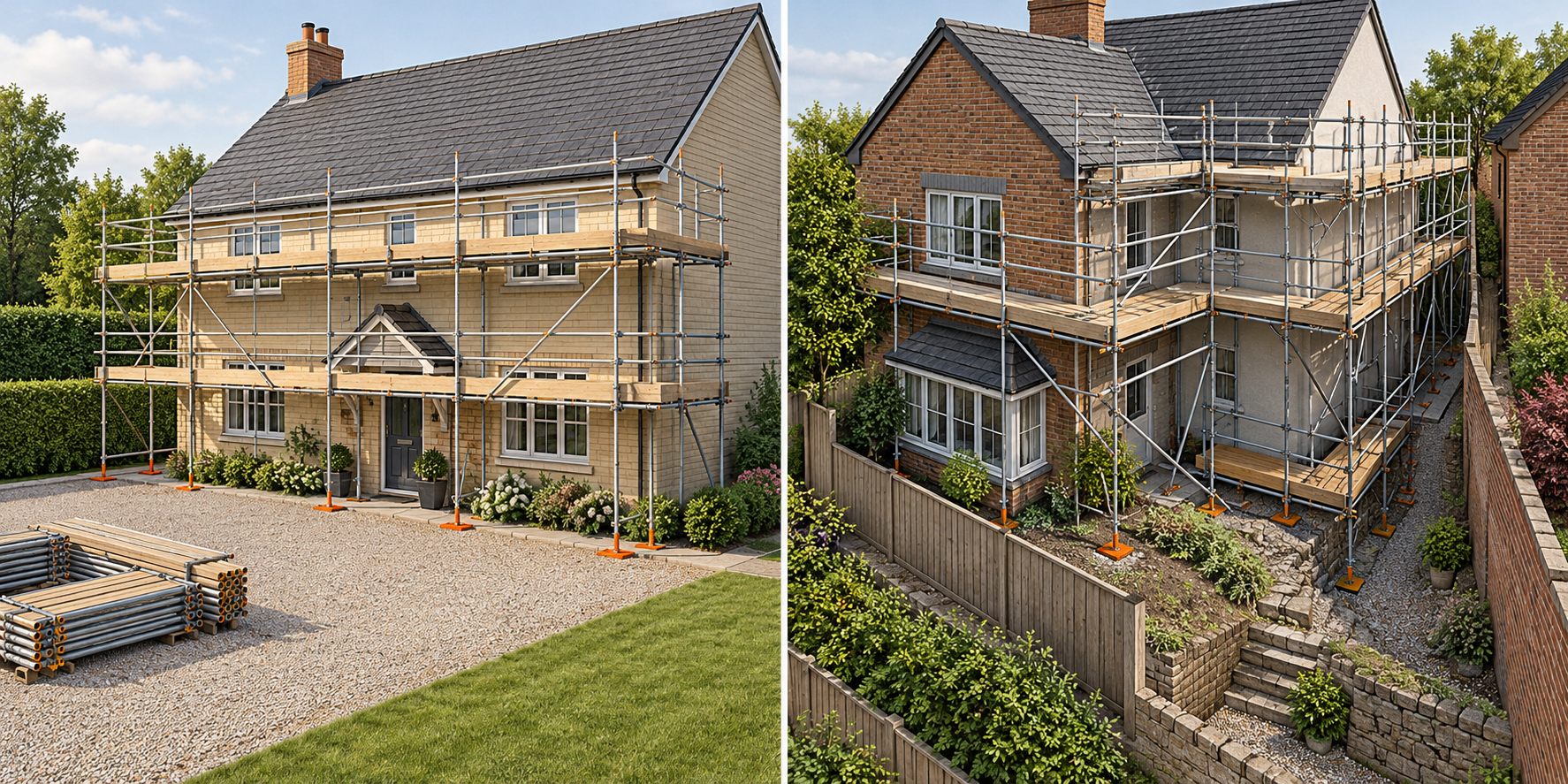
There is no universal residential scaffolding rate. Some quotes combine rental and installation; some are priced by area, level, duration, or project lump sum. Ask for the assumed footprint, working height, rental period, setup, inspection, modifications, and removal.
Rental versus installed service
The owner or contractor may rent components while a specialist handles design, setup, and dismantling. A contractor may also own a system and price it as part of the work. The economic comparison is therefore not “rental versus rental”; it is the complete access service required for the job.
Confirm who is responsible for checking the system after relocation or a weather event, maintaining access, replacing damaged components, and extending the rental if the project slips. A cheap initial quote can become expensive if teardown and remobilization are not included.
Ground, layout, and falling-object protection
CCOHS recommends evaluating ground conditions, overhead wires, obstructions, elevation changes, tie-in points, component condition, stable bases, load, access, and manufacturer or engineer instructions. OSHA describes protections such as guardrails, falling-object controls, and trained workers in its construction-safety material. These are professional worksite boundaries, not instructions for a homeowner to erect, alter, or operate scaffolding.
Do not use makeshift bases, mixed incompatible components, ladders on platforms, or incomplete decks. If a provider proposes a setup that does not clearly address the façade, ground, access, and protection conditions, resolve that before signing.
When a lift may fit better
A mobile elevating platform may reduce setup time for a short task or allow work around an obstacle. Scaffolding may make more sense for longer work along a façade, repeated access to the same elevation, material staging, or a location where a lift cannot reach safely. The correct choice depends on geometry, ground, duration, loading, and qualified operation—not just daily rental price.
Questions to ask
- Is this quote for equipment only or delivered, installed, inspected, maintained, and removed?
- What height, length, access points, and loading assumptions are included?
- How are ground preparation, ties, stairs, guardrails, screening, and pedestrian protection handled?
- What happens if the project is delayed or weather prevents use?
- Who pays for relocation, damage, extension, or a second mobilization?
- Are sidewalk, street, neighbor, engineering, or local approval requirements separate?
- What access, protection, and temporary logistics work is included, and what permanent repair or enclosure work remains outside this quote?
For a mobile alternative, read boom lift and scissor lift rental cost. For shared site constraints, see difficult site access.
The useful comparison is installed access over the work period
Scaffold proposals may price equipment, delivery, erection, adjustment, rental duration, dismantling, and pickup as one service or as separate lines. An equipment-only offer can look lower but still leave the homeowner or contractor to arrange qualified installation, inspection, protection, and removal. A turnkey installed proposal may carry a higher headline price while making responsibility clearer. Ask who is providing the complete system and who is responsible for changes as the work advances.
Duration matters because setup and dismantling occur around a fixed work period, while rental or service charges can continue between crew visits. Ask how long the quoted period is, when the rental clock begins, whether weekends count, and what triggers an extension or return trip. If siding, painting, roofing, and window work happen in sequence, determine whether one scaffold arrangement can serve all trades or must be altered. A schedule change can affect rental time even when no additional scaffold is installed.
Compare access with the actual work sequence
Scaffolding provides a stationary work platform and can make repeated work along an elevation more practical. A lift may fit a shorter or more mobile task if the machine can reach and the work surface supports it. The comparison changes when the site has soft ground, landscaping, a narrow approach, overhead obstructions, public-side access, or a need to keep a route open. A lift may need repeated repositioning; scaffold may need more initial setup and can occupy the area longer.
Ask the contractor to explain which locations, heights, and work phases the proposed access arrangement covers. It is not enough to know the building height: the structure, ground, obstructions, equipment route, and task locations all influence the solution. Where a contractor is comparing scaffold and lift proposals, ask for the complete project cost including delivery, operator or installation services, protection, standby time, and teardown. The lowest daily rental is not the same as the least expensive completed access plan.
A simple and a constrained elevation
A straightforward elevation with room to deliver materials, level ground, and one continuous trade sequence may support a simple installed arrangement. A complex elevation with uneven or soft ground, several corners, roof transitions, a narrow side yard, delicate landscaping, and multiple trades may need more planning, extra components, alterations, or protective measures. If the contractor needs access to only one short-duration location, a mobile alternative may reduce how long equipment remains onsite—but only if it reaches safely and is suitable for the task.
These examples help identify which proposal is plausible; they do not tell the homeowner which scaffold system to install. A qualified provider should determine design and safe use. Do not alter, climb, load, or move scaffold equipment based on a cost comparison. Ask who may make adjustments and how work stops if site conditions differ from the plan.
Shared space can add a separate logistics scope
Scaffold may affect neighbors, a driveway, a shared path, street frontage, or a pedestrian route. Protection and public-way permissions are distinct from the scaffold rental itself. Depending on the project, the quote may need to address delivery timing, barriers, route maintenance, relocation, and removal. Local approvals are project- and jurisdiction-specific; an estimate should identify them as included, excluded, or owner-arranged rather than assume they are covered by equipment rental.
If the work is beside occupied rooms, ask whether scaffold installation or work above it affects temporary protection, dust containment, or weather protection. If material is stored on the platform, have the qualified contractor define permitted use and responsibility. These adjacent costs can be material even where the scaffold provider’s equipment fee is stable.
Make proposals comparable
Ask each bidder to state the elevation and work area, service type, delivery and pickup, installation and dismantling, work period, alterations, inspections or provider checks, access protection, standby or extension charges, and exclusions. Confirm whether damage to lawns or paving, public-side obligations, weather delay, and a second setup are in the price. If the contractor expects to reuse scaffold for later phases, identify the period and responsibility for maintaining it between visits.
Compare that scope with a lift alternative and the cost of repeated mobilizations. Include the work the equipment enables in the same schedule so a longer rental is not blamed on access equipment when the actual delay comes from trade sequencing. For shared access factors, see difficult site access; for mobile equipment costs, compare aerial lift rental.
If the quote depends on keeping a shared route open, have the contractor identify how delivery, installation, and dismantling fit around that requirement. Include any agreed alternative route or limited work window in the schedule and ask who coordinates it with affected occupants or neighbors.
Before setup, confirm which contractor controls the access area and when other trades may use or alter it. If the work sequence changes, request a revised duration and responsibility before the scaffold remains in place longer than expected. The proposal should identify how the site is returned to its prior condition after removal, including any agreed cleanup or repair around the installation area.
Confirm who controls the setup during pauses
A project may pause while weather changes, materials arrive, or another trade completes a prerequisite. Ask who is responsible for the scaffold during that interval, who may inspect or alter it, and whether the rental or service price continues. The homeowner should not move or modify the equipment. A qualified provider should establish how the equipment is managed, and the contractor should explain whether a pause changes access, duration, or removal timing. This responsibility is particularly important when residents or neighbors use the same area and helps distinguish rental time from the labor needed for a later alteration or return visit.