
Fence material affects privacy, appearance, maintenance, repairability, wind exposure, gate hardware, slope handling, and future replacement—not only the first quote. Grades and product systems vary within every broad category.
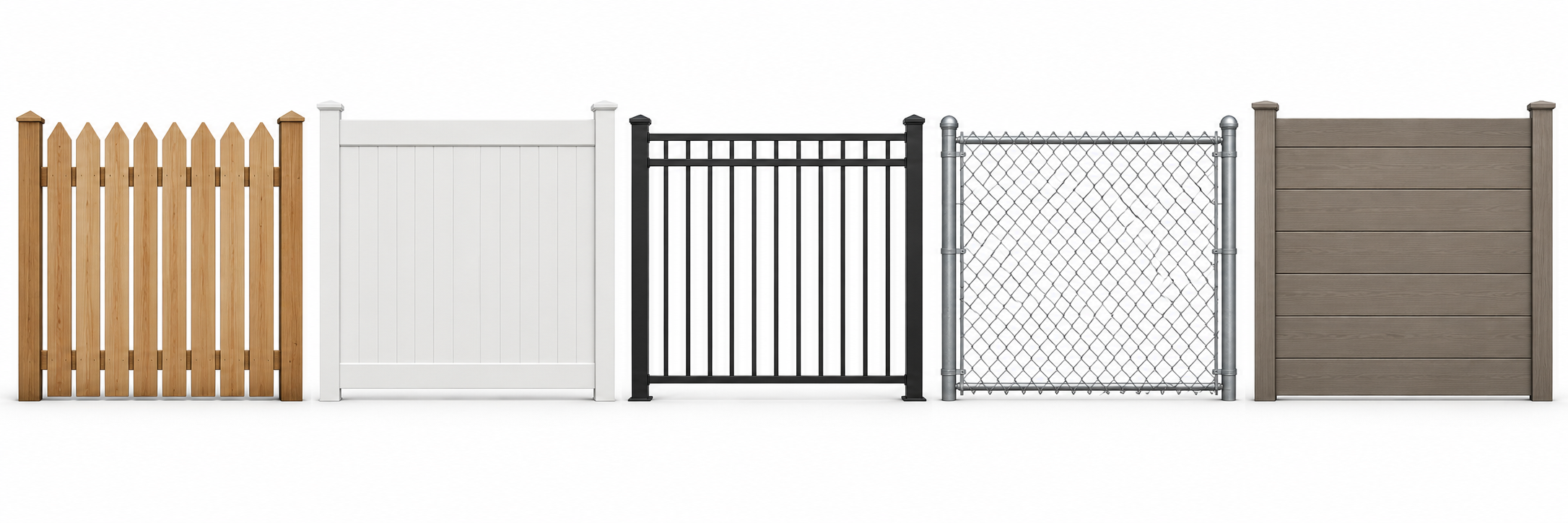
A practical comparison
| System | Often suits | Questions to price |
|---|---|---|
| Wood | Flexible layouts and privacy | finish, rot exposure, post condition, future board matching |
| Vinyl | Low routine finishing and consistent appearance | product grade, expansion, impact repair, slope and gate hardware |
| Aluminum | Open views and corrosion-resistant product options | coating, wind exposure, post spacing, infill and gate system |
| Chain-link | Boundary, pet, or security enclosure with visibility | height, coating, privacy slats, terminals, gates and terrain |
| Composite | A finished privacy or appearance system | product support, fasteners, repair parts, heat and availability |
This is a decision framework, not a universal lifespan or cheapest-to-most-expensive ranking. Angi’s broad U.S. range shows how material, height, length, gates, leveling, and removal affect installed price. Canadian market pricing needs local evidence.
Maintenance and repair
Wood finishes protect appearance and help manage weathering, but USDA guidance says performance varies with wood, product, climate, exposure, and surface condition. Vinyl, aluminum, chain-link, and composite still need cleaning, inspection, hardware maintenance, and occasional part replacement.
Ask whether individual panels, pickets, posts, rails, and gates can be replaced. A fence that is inexpensive to install may be difficult to match after a storm or product discontinuation.
Tradeoffs within each material family
Wood offers flexible layouts and can be repaired one board at a time when matching material is available. Species, treatment, finish, exposure, and contact with soil affect ownership; no one coating interval applies everywhere. Vinyl can provide a consistent opaque panel and reduced routine painting, but impact damage and discontinued profiles may make a local repair visible or difficult. Ask what the exact product’s expansion and installation instructions require.
Aluminum often supports an open view and has product-specific finishes and infill systems. It may not deliver the privacy of a solid panel and can be sensitive to the chosen coating, fasteners, and coastal exposure. Chain-link can suit a visible boundary or pet enclosure and can accept privacy inserts, but those additions change airflow, appearance, and maintenance. Composite may offer finished privacy infill, but product support, heat, profiles, fasteners, and replacement stock vary.
These are broad decision descriptions, not product guarantees. Compare current specifications for the named system and ask how a gate, corner, slope, or damaged section is repaired. Material grade and hardware can matter as much as category.
Compare ownership by the goal of the fence
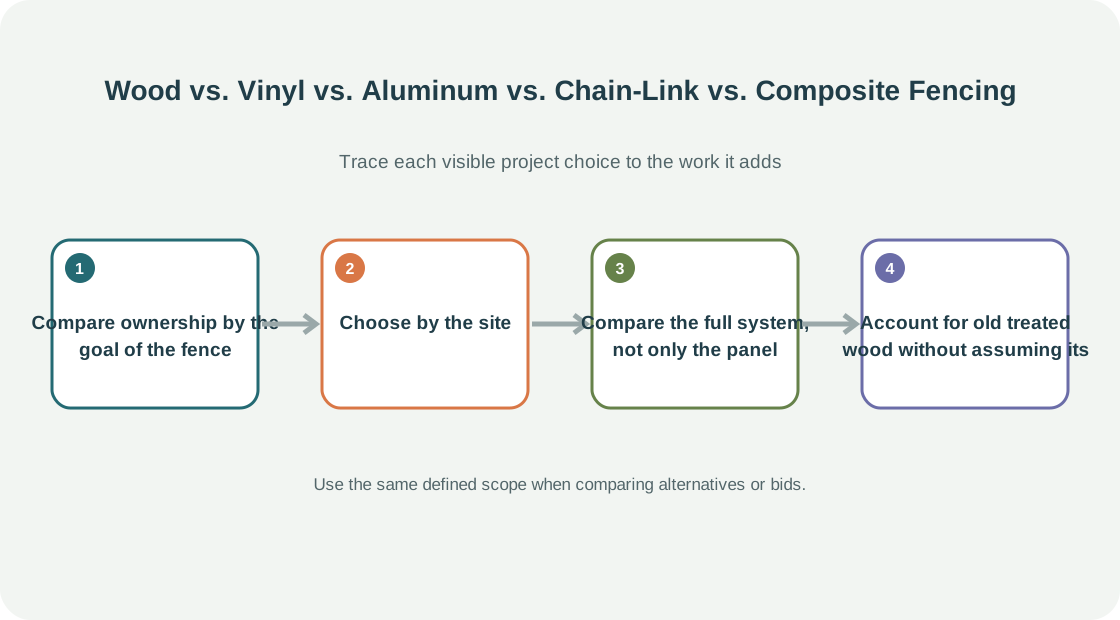
For privacy, compare visual coverage, height, gates, and approval limits. For pets, compare gaps, gate latches, and the way the fence meets uneven grade. For a boundary, compare visibility, line confirmation, and how it follows a slope. For a wind-exposed yard, get product and design guidance for the actual layout instead of assuming one material is universally stronger.
Calculate the first project scope with the same length, height, gates, removal, terrain, and access for each material. Then list cleaning, finishing, repair part availability, and likely owner effort. A “lifetime” marketing claim does not answer these questions or establish the service life of an installation.
Choose by the site
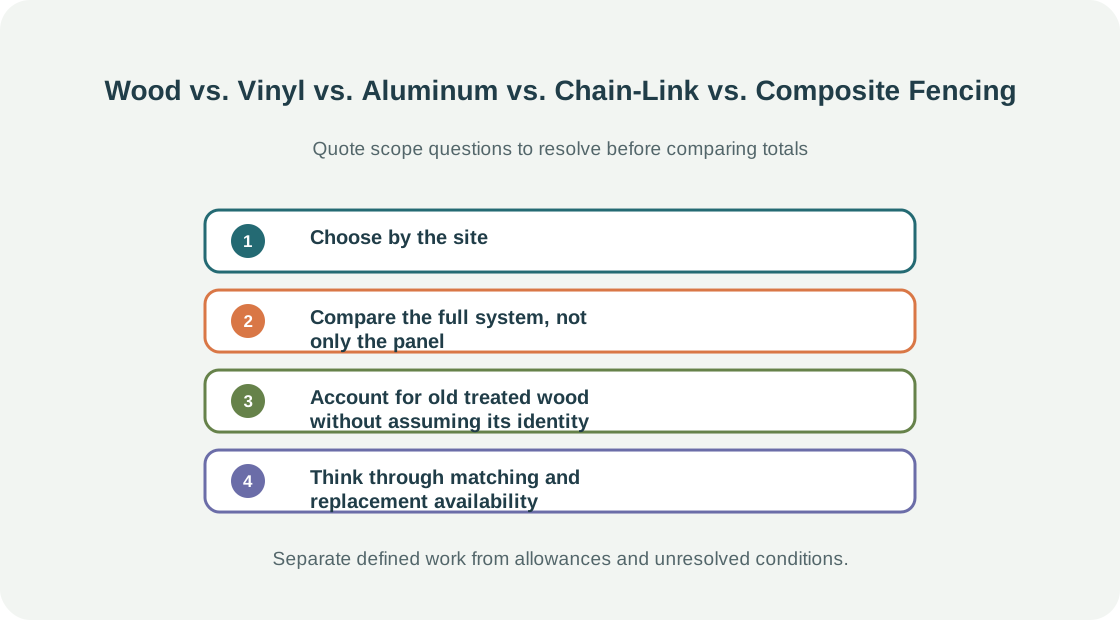
Slope, rock, roots, wind, salt, moisture, privacy goals, pets, pool boundaries, and gate weight can matter more than material preference. Pool barriers and automated gates are separate safety-sensitive decisions with local requirements.
Compare the full system, not only the panel
A material comparison should include posts, rails, gates, fasteners, finish, and replacement parts. A wood fence with a gate and frequent corners is not the same scope as a straight run of chain-link. A vinyl or composite system may use coordinated profiles that affect how it follows a slope and how a damaged section can be replaced. Aluminum and chain-link can preserve views but may not meet the privacy goal without added screening. Ask bidders to show gate and corner details, not only a repeated panel price.
Maintenance also has different forms. Wood may need attention to coating and moisture exposure; metal systems may require inspection of coatings, connections, and corrosion-prone locations; manufactured panels may need cleaning and replacement-part support. “Low maintenance” does not mean no inspection, no repair, or no eventual replacement cost. Ask what the owner’s actual tasks are and what damage a product warranty excludes.
Account for old treated wood without assuming its identity
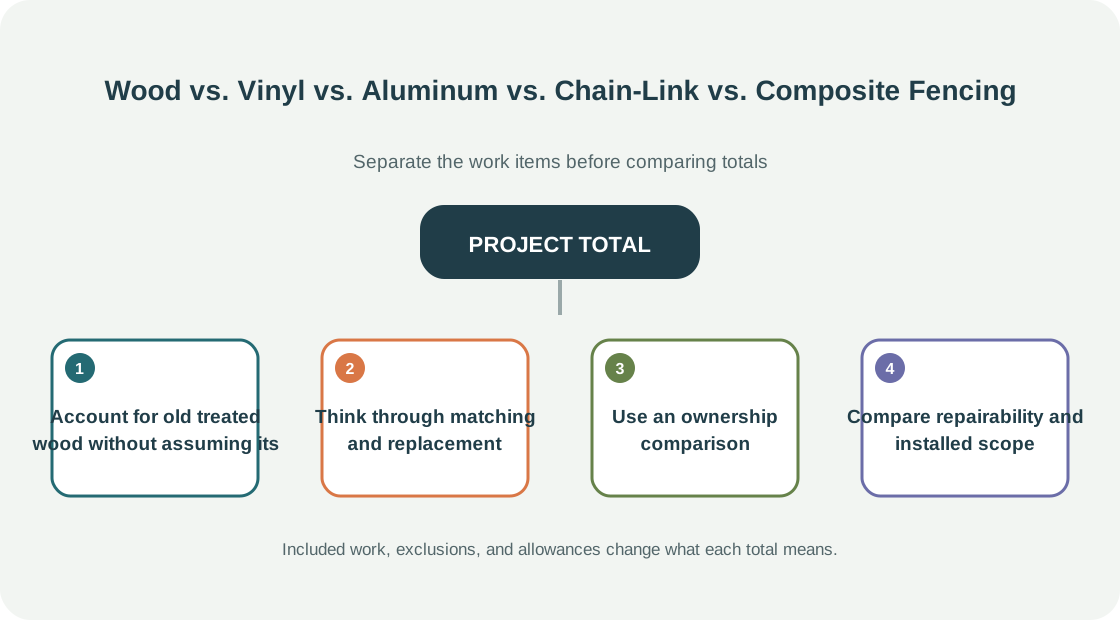
An existing wood fence may contain older treated lumber, but visual inspection and age cannot identify a particular board with certainty. Health Canada says Canadian residential fences built before 2004 are likely to contain CCA-treated wood and recommends minimizing exposure to damaged or deteriorating pieces. U.S. EPA guidance says most homeowner-use CCA production stopped at the end of 2003, does not require blanket removal of existing structures, and advises against burning treated wood at home or using it as mulch. Each source applies within its own jurisdiction and points to local disposal requirements.
If repair or replacement will disturb old boards or posts, include handling, dust, removal, and disposal in the quote. This is not a reason to select one new fence material or automatically remove an intact older fence. It is a practical part of the project scope to verify locally.
Think through matching and replacement availability
Fences age section by section. A storm may damage one panel, a gate may need a new latch, or an owner may later extend the run. Ask whether the exact profile, color, picket, rail, or post is available and whether a repair would require replacing adjacent components. Product availability can change; keep the product name and finish information with home records.
For wood, future matching can depend on species, size, treatment, and finish. For manufactured systems, replacement parts may depend on a particular profile or series. Ask the installer about local stocking and whether a visually similar replacement is compatible. A warranty does not ensure that an identical part will be available at a future date.
Use an ownership comparison
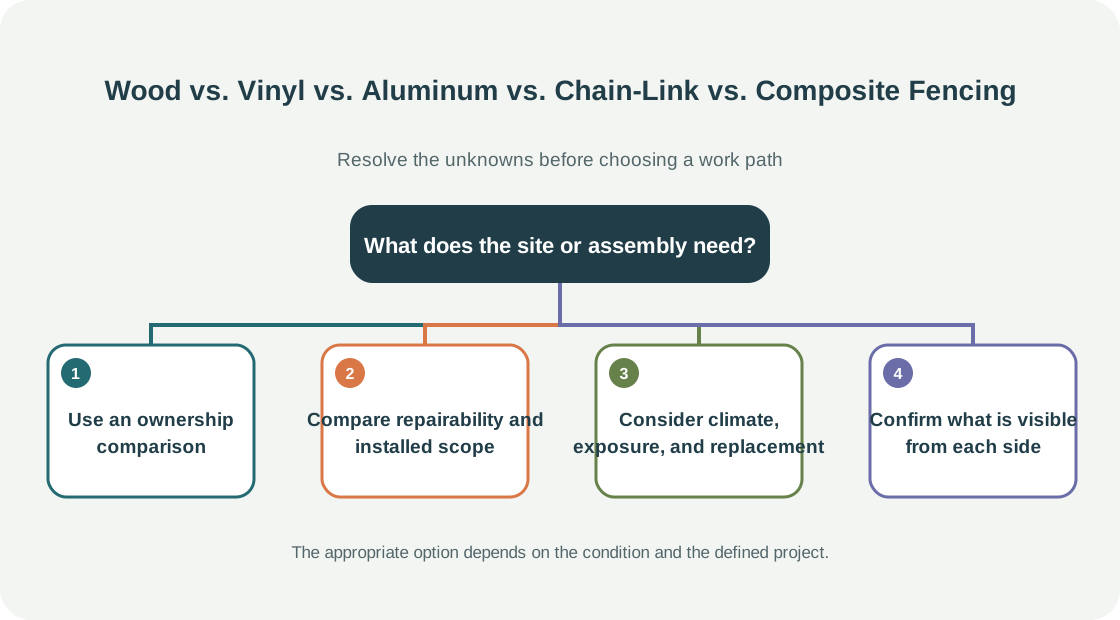
For each material, record the installed quote, cleaning or finish tasks you are willing to perform, whether damaged parts can be matched, and the likely cost of access for repairs. Include the fence’s purpose: privacy, boundary definition, pets, visibility, or a gate route. A more expensive product may better fit a high-privacy goal, while an open system may suit a boundary where visibility matters. There is no universal ranking that converts these different functions into one cheapest material.
Ask each bidder to price the same length, height, gate count, removal, terrain, finish, and restoration. Then compare available product documentation and local approval assumptions. Material choice is useful only after the quotes share a common project boundary.
Compare repairability and installed scope
A material comparison should include posts, rails, infill, gates, hardware, finish, and installation rather than treating the visible panel as the whole fence. Ask whether each estimate includes demolition, disposal, corners, transitions, and a gate of the same width and function. A design that needs more posts or a different foundation can change installation cost even if the panel material appears less expensive.
Think about future repair before choosing. Can a single picket, panel, rail, or gate component be replaced? Are colors and profiles likely to be available locally? How are scratches or damaged finishes repaired? Wood, vinyl, aluminum, chain-link, and composite each have different repair methods and visual aging. The exact product and supplier matter more than a broad material label, so record the manufacturer, profile, color, and hardware in the quote.
If privacy, pet containment, or visibility is the main purpose, compare how each design performs for that purpose at the actual grade and line. A material category alone does not establish wind performance, security, or suitability for a pool barrier. Keep specialized safety and legal requirements separate from a general cost comparison and confirm the applicable details locally.
Consider climate, exposure, and replacement parts
Sun, moisture, salt, freeze-thaw, wind, and nearby vegetation can affect the appearance and maintenance of fence materials. Ask suppliers what care the exact product calls for in the local climate and which parts can be replaced individually. Do not rely on broad claims such as “maintenance-free”; hardware, posts, finishes, and gates still need inspection and sometimes service.
Compare the finished look on both sides of the fence if appearance matters to neighbors or shared areas. Check whether panel orientation, rail placement, or an alternating layout changes material quantity and labor. If the fence must match an existing section, bring a sample or photograph and ask how the transition will be handled. An exact match may not be possible as materials weather or product lines change.
Confirm what is visible from each side
Material and panel orientation can change which side shows rails, posts, fasteners, or the finished face. Ask the contractor to document the orientation and whether both sides receive the same finish. This can affect neighbor expectations, shared-property agreements, and the perceived value of a fence. Resolve it before ordering.