
“Gate” can mean a light pedestrian opening, a wide double driveway gate, or a pool barrier. Price depends on width, weight, posts, hinges, latch, surface, access, alignment, and whether automation or a safety function is involved.
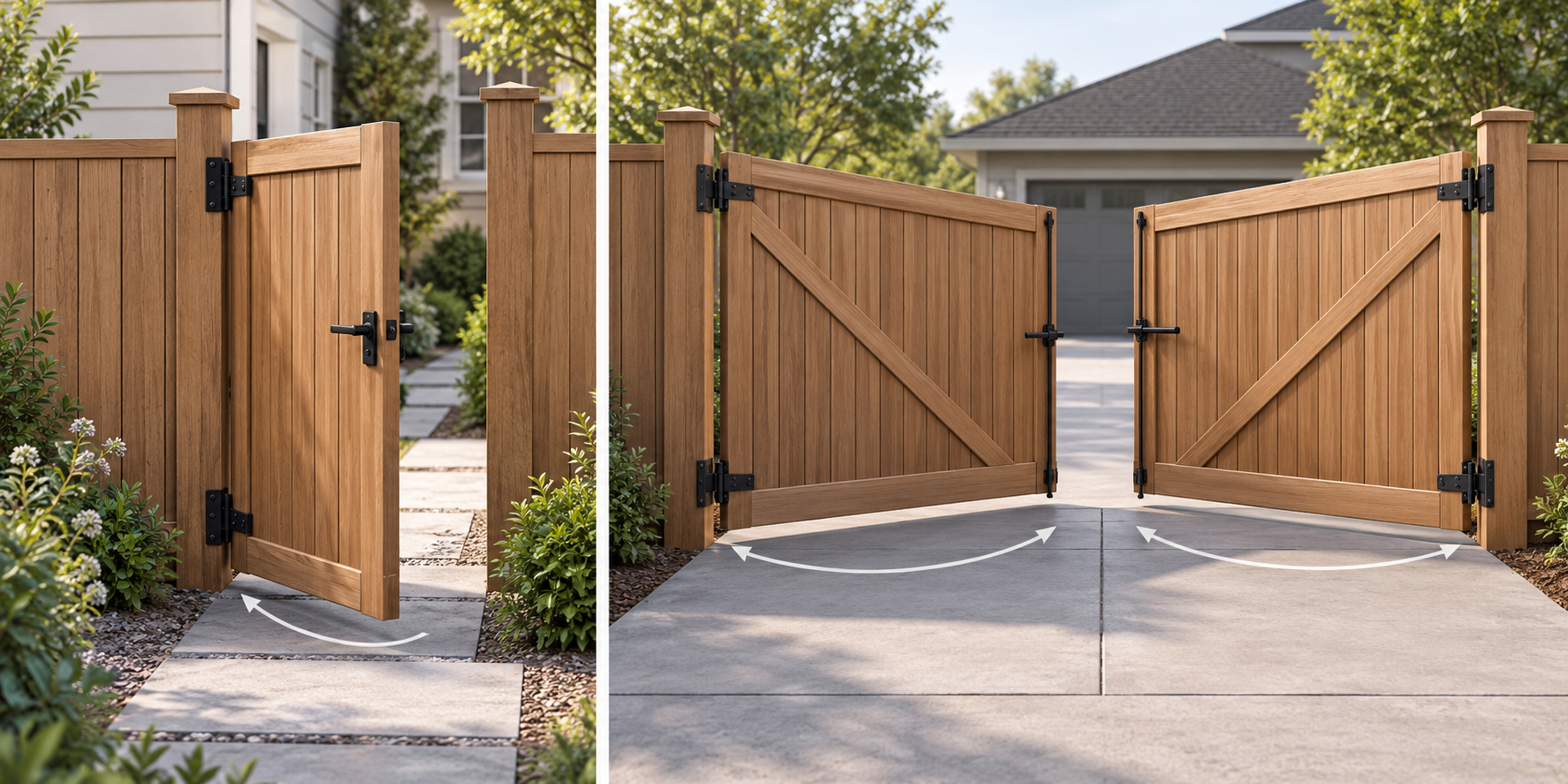
Ordinary manual-gate scope
Ask for the gate leaf or leaves, posts and footings, hinges, latch, stops, hardware, panels, removal, disposal, finish, and adjustment. A sagging gate may need hinge or post work rather than a replacement leaf. A heavy driveway gate may require different support and access from a pedestrian gate.
Angi’s broad U.S. fence range identifies gate count and site conditions as cost drivers, but it does not create a universal gate price. Canadian pricing should be locally evidenced.
Pool-gate boundary
When the dominant purpose is restricting access to a pool, the gate becomes part of a safety-barrier decision. CPSC guidance discusses barriers, self-closing and self-latching gates, openings, and supervision, while stating that its guidance is not mandatory and local rules control. Toronto’s process shows that a local pool-fence application can involve a zoning certificate before a permit. Neither source establishes requirements for every jurisdiction.
Compare a repair with a new gate
A gate that sags or does not latch may need hinge adjustment, a repaired latch, post correction, or a replacement leaf. The visible panel is not always the source of the problem. Ask whether the gate is out of alignment because of hinge wear, a leaning post, ground movement, swelling or damage to the leaf, or a changed grade. A contractor should describe the observed condition and the part the quote addresses.
A replacement may involve more than ordering a gate of the same width. Posts, hinges, latch position, swing clearance, stops, privacy infill, and the connection to adjacent fence panels need to suit the new leaf. If the gate becomes heavier or wider, check whether existing posts and footing assumptions remain appropriate. The cost comparison should include adjustment, removal, disposal, and finish matching, not only the gate product.
Driveway and pedestrian openings are different projects
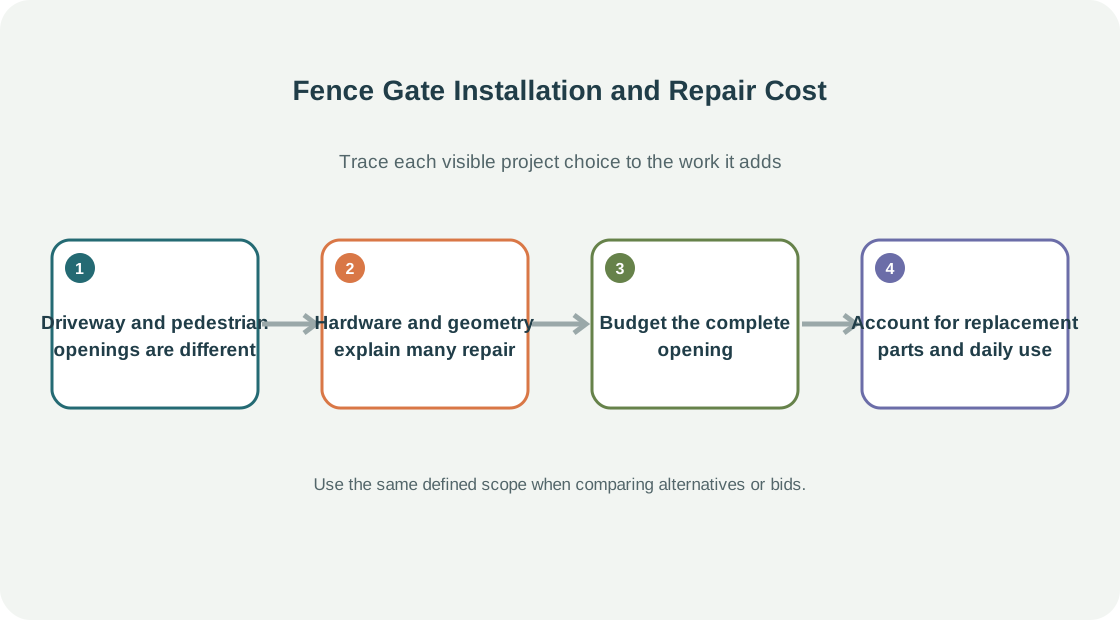
A pedestrian gate is generally a smaller opening with lighter hardware. A driveway gate may be wider, heavier, double-leaf, or exposed to different ground and vehicle-clearance conditions. The estimate should name the clear opening, leaf count, gate material, direction of travel, latch or lock, post arrangement, and approach surface. If vehicles need to cross a slope or drainage channel, make those conditions visible in the site description.
For a manual gate, test the intended opening path and nearby obstructions. For a gate in a shared line, confirm who owns the posts and fence and who is responsible for maintenance before selecting a design. A quote does not establish a property line or resolve neighbor permission.
Hardware and geometry explain many repair differences
Gate width, material, hinge spacing, latch type, drop rod, stop, and post alignment affect both installation and repair. Ask whether the problem is a leaf that has warped, hardware that has worn, or a support that has moved. If the gate is heavier than the original, new hinges and stronger posts may be part of the work. A contractor should state what evidence supports reusing the existing supports.
A driveway gate may need a wide clear opening while still avoiding a slope, wall, parked vehicle, or road edge. The quote should indicate swing direction or the intended slide path and any ground preparation. A double gate has two leaves and a meeting point, adding alignment and hardware questions. These configurations should not share a generic “gate replacement” estimate without dimensions.
Budget the complete opening
Ask whether the estimate includes gate leaves, posts and footings, hinges, latch, stops, connecting fence panels, removal, disposal, finish, and adjustment. If a gate is being moved, include the old opening closure and any new posts or fence sections. If the project changes the boundary or access route, resolve property and approval questions before fabrication.
Account for replacement parts and daily use
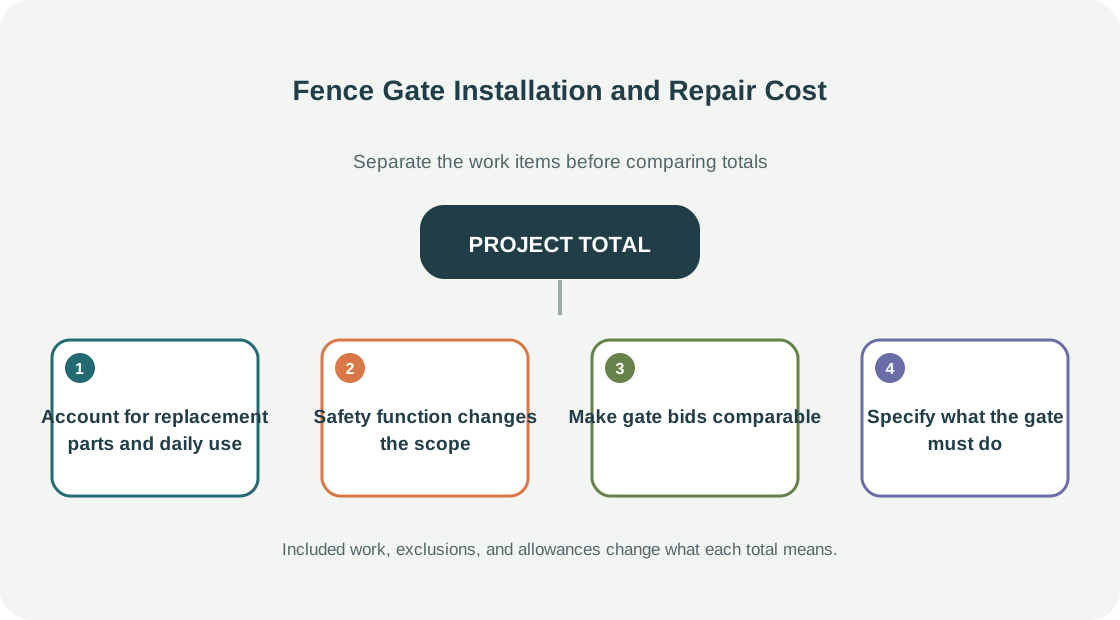
Think about how often the gate is used, who needs to open it, whether a vehicle must pass, and whether the latch is reachable from the intended side. These use details can guide the hardware and swing direction. If accessibility is a concern, include that goal in the design and verify applicable requirements with a qualified professional or authority.
Ask about replacement hinges, latches, stops, and gate panels. Some ornamental or proprietary systems may be harder to match later. Confirm finish, corrosion protection, lubrication or adjustment guidance, and warranty terms for the exact product. Routine maintenance needs vary; avoid a universal service interval.
Safety function changes the scope
If the gate is part of a pool barrier, child-safety enclosure, or other access-control boundary, treat that function as a separate compliance decision. CPSC pool-barrier guidance and Toronto’s permit page provide U.S. and local examples, but requirements vary by location and may change. Ask the responsible authority what applies to the property and purpose. Do not assume that a standard garden latch, a self-closing product label, or a similar neighboring gate meets the applicable requirement.
Automation also changes the system. A powered gate needs an operator, controls, electrical scope, and applicable protective devices; see the automated driveway gate cost guide. Keep that work separate when comparing manual-gate bids so that power, safety, and access-control features are not hidden in the physical gate price.
Make gate bids comparable
Send bidders the same opening width and height, gate style, desired material, post locations, terrain, access, existing-fence condition, and repair history. Ask for separate amounts for leaf or leaves, posts and footings, hinges, latch, removal, finish, adjustment, and restoration. State whether a lock, keypad, automation, or pool-barrier function is included or excluded.
Ask which observation would trigger a post or footing change and how the contractor will price it. If the gate is currently binding, request a diagnosis before choosing a replacement model. The broad U.S. fence market ranges identify gates as a cost driver but do not give a universal gate price; local scope is the useful budget basis.
Specify what the gate must do
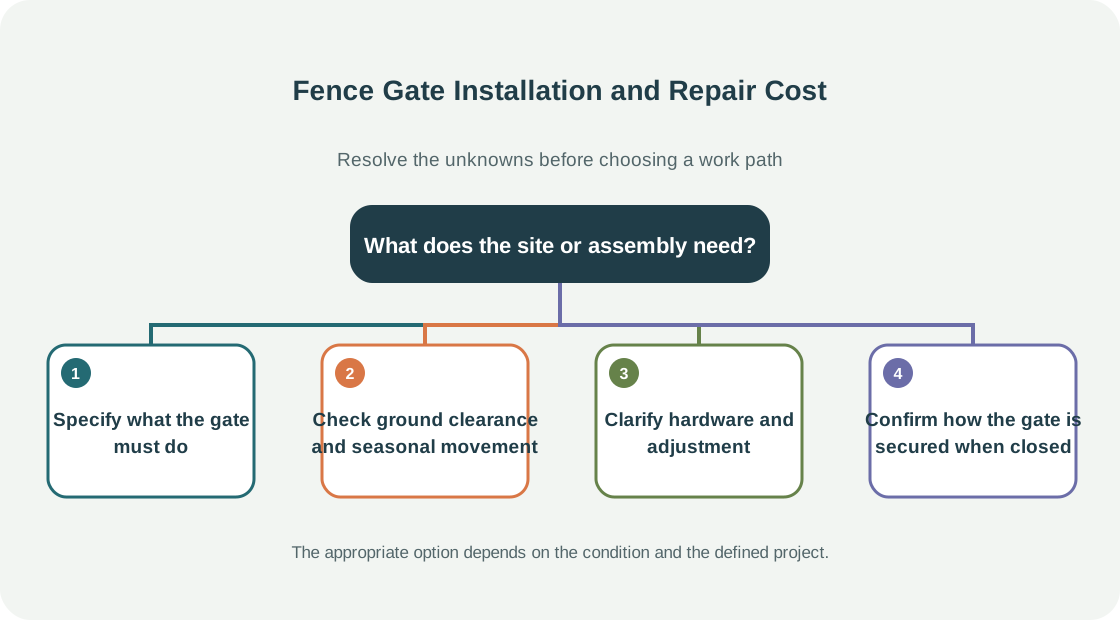
A pedestrian gate, wide equipment opening, and driveway gate differ in span, hardware, support, and expected use. State the clear opening, swing or slide direction, frequency of use, latch location, and whether the gate must accommodate a particular vehicle or path. Check that the proposed swing will not conflict with a slope, sidewalk, parking space, or neighboring property. These layout details often matter more than the gate panel style.
Ask whether the quote includes hinge and latch posts, reinforcement, hardware, stops, alignment, and adjustment after settling. A gate can sag if its support or span is unsuitable even when the panel itself is well made. If a fence section is being modified, price the tie-in and any adjacent post replacement separately. Confirm which components are included in a warranty and what maintenance the hardware needs.
An automated gate is a separate system with operator and safety requirements. Do not treat a manual gate price as a proxy for motorization or use general online instructions to choose safety devices. For powered access, request a qualified system-specific design and local code verification, including how the gate behaves during power loss and how hazards are managed.
Check ground clearance and seasonal movement
The gate’s lower edge and swing path need to work with the actual surface. A rising driveway, uneven paving, snow accumulation, or seasonal ground movement can affect clearance and operation. Ask the installer to show the gate’s travel path and the planned clearances at both ends. If a new driveway or path is planned, coordinate elevations before the gate is fabricated.
For paired gates, identify how the meeting point is latched and what keeps each leaf aligned. For a single wide gate, ask how the hinges and support are matched to its dimensions and use. These details affect reliable operation and repair needs. Obtain product and hardware information so future adjustments can be matched to the installed system.
Clarify hardware and adjustment responsibilities
A gate may need adjustment after installation as hinges settle or the surrounding fence moves. Ask what initial adjustment is included, how the latch is aligned, and whether the provider offers a follow-up visit. Get the hinge, latch, stop, and lock specifications on the quote so replacement parts can be identified later. If the gate is on a shared or regulated boundary, verify the applicable permissions and barrier requirements before choosing hardware.
Confirm how the gate is secured when closed
Ask whether the gate needs a center stop, cane bolt, lock, or other hardware and whether those items are included. The choice can depend on width, wind exposure, surface slope, and how the opening is used. Confirm that latches are reachable and compatible with the intended users. If the gate is part of a pool barrier or another controlled-access system, verify the applicable requirements with the local authority and a qualified provider before ordering.