
After a storm, tree impact, collision, flood, or visible movement, the first cost question is usually not the repair itself. It is the scope: what moved, what is concealed, what remains supported, and whether the damage affects a deck, porch, roof, fence, or adjacent house.
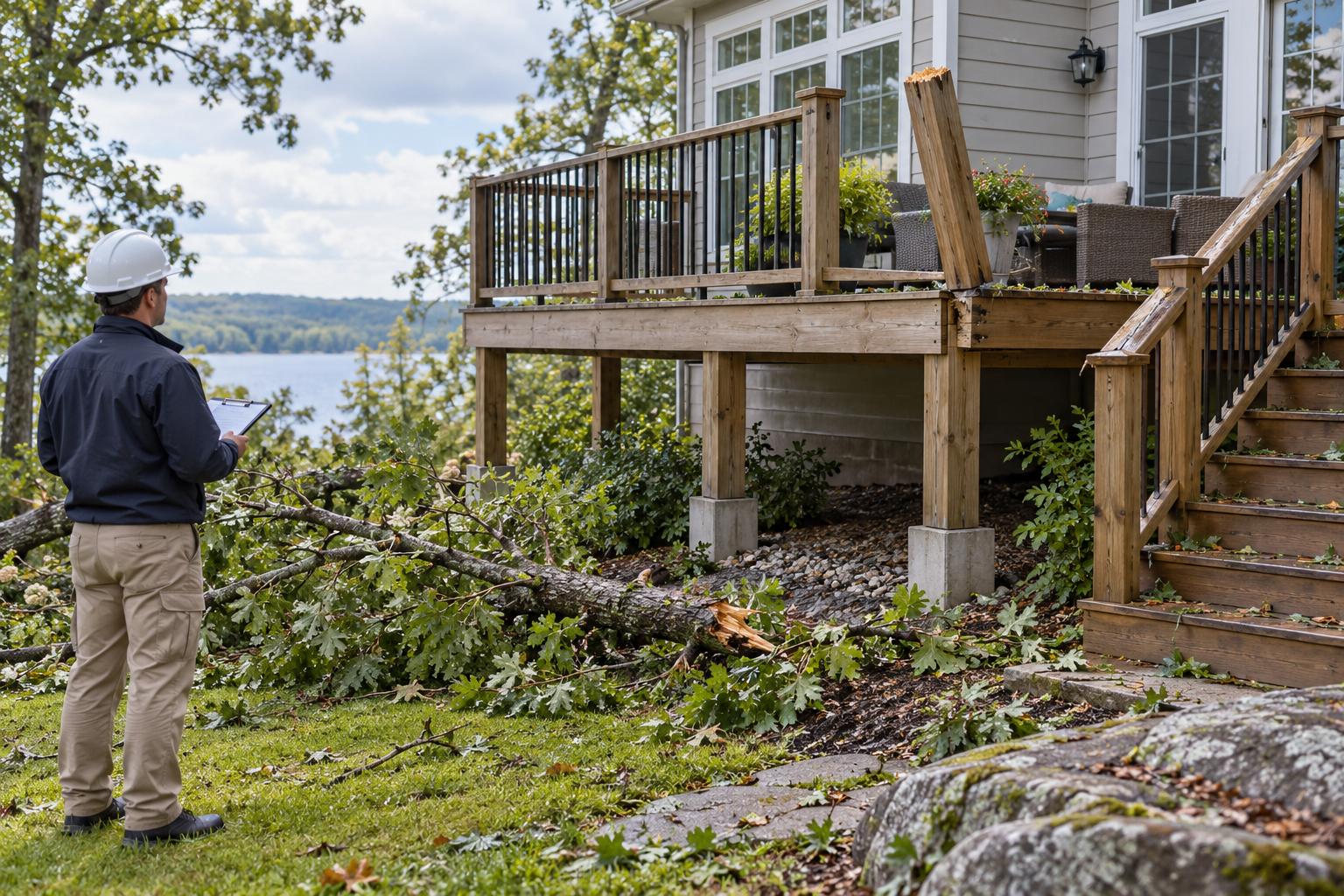
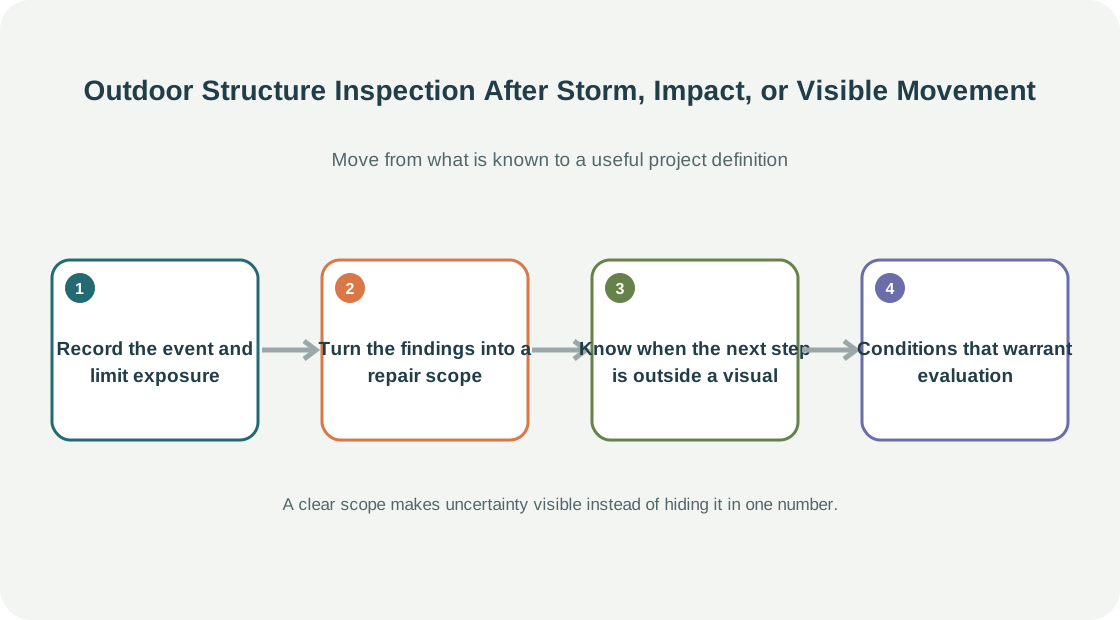
Conditions that warrant evaluation
Keep people away from structures with leaning posts, displaced connections, damaged stairs or guards, significant movement, impact damage, broken roof members, or suspected support or foundation failure. A photograph or one visible symptom cannot establish the full condition.
What a professional may examine
NADRA’s guide supports a system-level look at the ledger or house connection, framing, posts and footings, fasteners, decking, stairs, guards, movement, decay, and drainage clues. A contractor inspection may define repair scope; a structural engineer may be needed for load capacity, unusual movement, major damage, temporary support, or design decisions.
The AWC guide helps explain component relationships in its stated U.S. wood-deck context, but it does not certify a damaged structure or provide a universal post-event repair method.
If the walking surface is a continuous membrane or protects finished space below, ask whether the evaluation covers the membrane, drains, edges, penetrations, substrate, and wall connection—not only the visible walking surface or framing. BC Housing guidance distinguishes open decks from membrane-covered balconies and roof decks because they manage water through different assemblies. A general deck checklist does not establish membrane condition; ask whether a building-envelope specialist or selective opening is needed.
Decide who should evaluate the structure
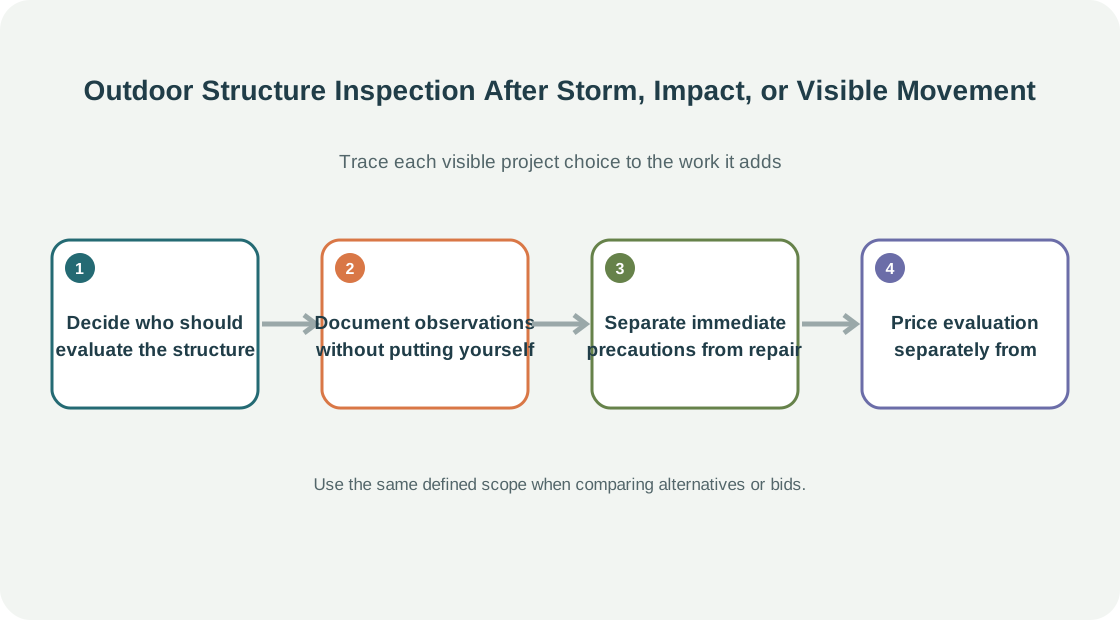
A contractor can inspect visible conditions and prepare an estimate within that scope. A structural engineer may be appropriate when the structure moved, a support or connection is damaged, the proposed repair changes the load path, or temporary support and capacity are questions. A restoration contractor may coordinate cleanup and documentation after a covered event, but that does not replace technical evaluation where structure is involved.
Ask each provider what they will examine, what access is included, whether the report is written, and what conclusions they are qualified to make. The AWC deck guide explains component relationships within its stated U.S. context; NADRA’s checklist helps organize an inspection. Neither is a post-event clearance certificate or a site-specific repair design. Local qualifications and rules vary.
Document observations without putting yourself at risk
From a safe location, record the event date, weather or impact information you know, visible damage, displaced parts, and areas that cannot be accessed. Photograph the structure from multiple angles only if it can be done without entering an unsafe area. Keep people away from a leaning or moving structure and do not move members, remove connections, climb onto damaged stairs, or attempt temporary support.
Damage may extend beyond the visible finish. A shifted post can affect attached beams or guards; water may reach a connection or wall behind an intact-looking surface. Ask the professional to identify observed damage, inaccessible areas, recommended follow-up, and limits of the assessment. Do not treat a photo review as proof that hidden supports are sound.
Separate immediate precautions from repair design
If a structure appears unstable, keep people away and contact a qualified professional. A homeowner should not attempt to prop, jack, straighten, or reconnect a damaged deck or porch based on a generic guide. Weather may continue to affect an exposed structure, so ask the professional whether temporary protection or restricted access is needed and who is responsible for that work.
After the site is safe to approach, share event details and previous repair history with the evaluator. The evaluation should identify which members or connections are affected, what remains hidden, and whether the damage extends to the house, roof, stairs, guard, or foundation. Ask whether the written report distinguishes current observations from assumptions and recommended next steps.
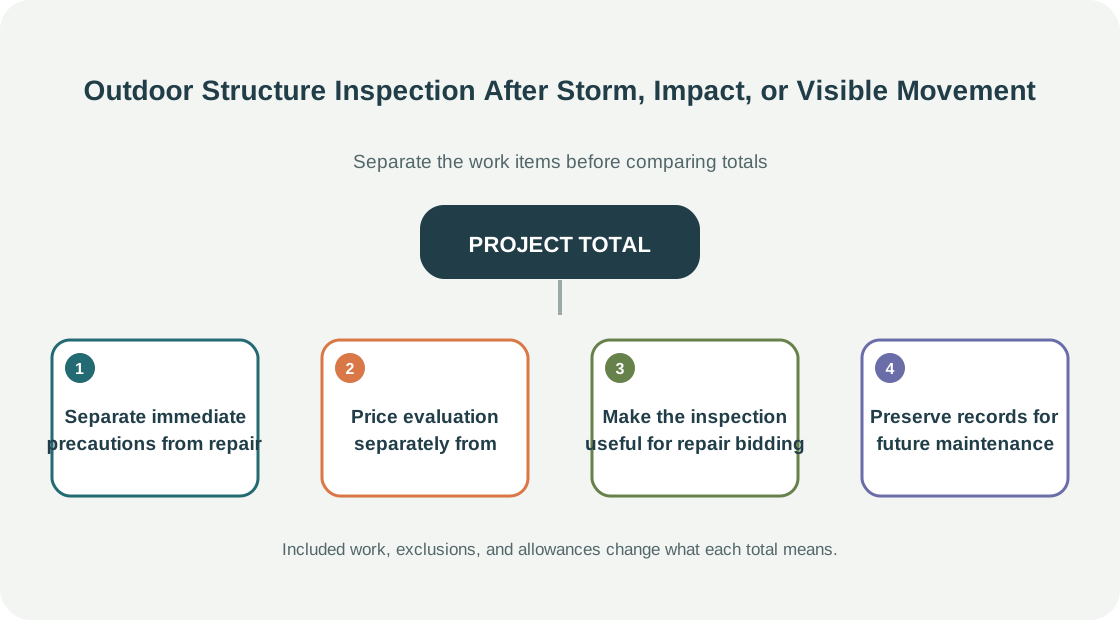
Price evaluation separately from construction
The inspection fee, engineering opinion, stabilization work, repair, disposal, and finish restoration can be separate services. Ask whether an initial visit produces a written scope or only a quote for the contractor’s work. If the structure needs engineering, confirm who prepares drawings or specifications and whether more than one contractor can bid from them.
When comparing repair bids, use the same affected area and material, demolition, disposal, access, temporary work, and restoration assumptions. Ask how concealed damage changes the price and require approval before extra work. If the damage affects multiple outdoor structures or the house, a coordinated restoration scope may be more suitable than separate small estimates.
Make the inspection useful for repair bidding
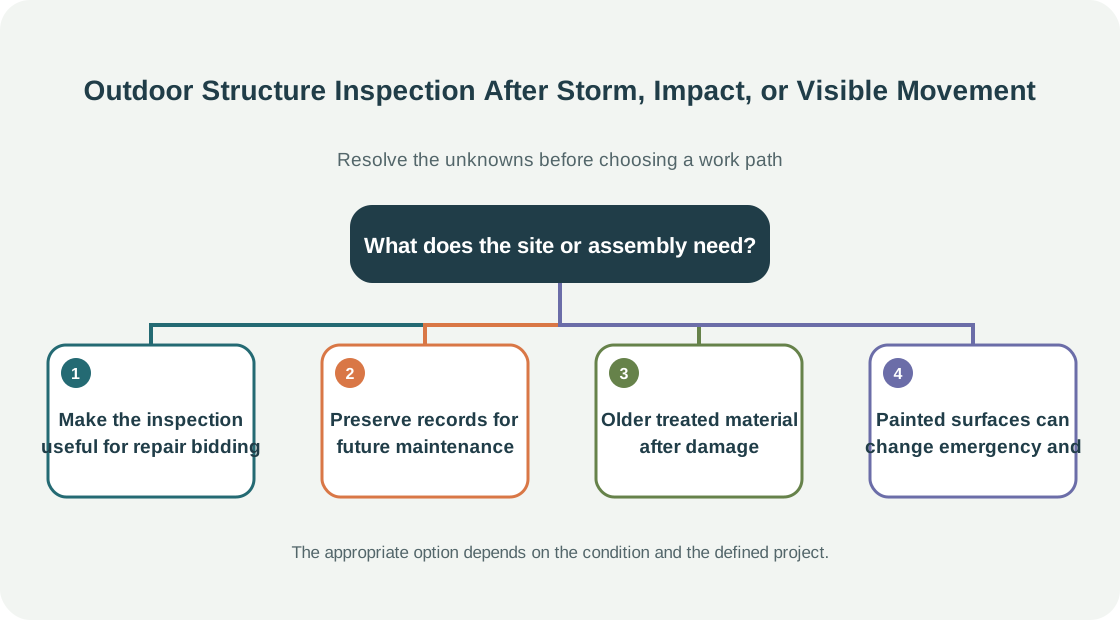
After evaluation, ask for a scope that identifies the affected components, what can remain, and which uncertainties require opening the structure. If contractors will bid from the report, share the same version and ask each to price the same tasks. Keep optional upgrades separate from restoring the damaged structure so the owner can see the cost of the event-related work.
For work that may change drainage, stairs, guards, or a house connection, ask who verifies local permits and design requirements. If the structure’s intended use changes during repair, request a separate evaluation for that new use rather than folding it into a storm estimate.
Preserve records for future maintenance
Keep the inspection report, photographs, repair scope, product documents, invoices, and approval records together. This creates a record of what was observed and changed without treating the repair as a guarantee that every concealed condition is resolved. Follow the professional’s stated inspection or maintenance recommendations and arrange follow-up if movement or water intrusion returns.
Older treated material after damage
If a damaged older deck or fence may contain treated wood, include handling and disposal in the repair discussion. Health Canada says Canadian residential decks, fences, and play structures built before 2004 are likely to contain CCA-treated wood, while age and appearance do not confirm a specific member. U.S. EPA guidance separately advises minimizing dust when handling CCA-treated wood, avoiding home burning or reuse as mulch, and following local disposal requirements; it does not require blanket removal of existing structures.
This is a material-handling consideration, not a diagnosis that a structure contains CCA or a reason by itself to remove it. Ask the contractor how damaged pieces will be handled and which local disposal instructions apply.
Painted surfaces can change emergency and repair scope
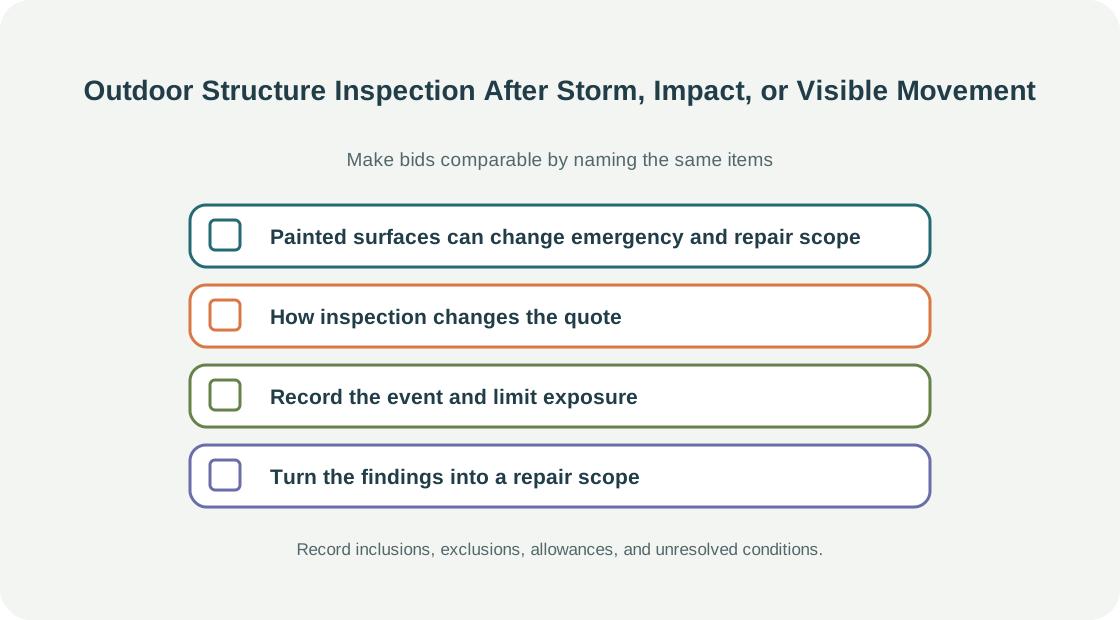
If storm damage exposes painted material in an older U.S. home, identify what surfaces a contractor plans to disturb before cutting, sanding, or demolition. EPA’s lead Renovation, Repair and Painting rules may apply to work in pre-1978 housing; the emergency provision is limited to work needed to address an immediate hazard or threat of significant damage, and it does not remove every cleaning or recordkeeping duty. Later restoration work may need to follow the ordinary requirements. This does not establish that a particular surface contains lead. Ask the contractor to confirm current federal, state, and local requirements before the work begins; other countries have separate rules.
How inspection changes the quote
Findings may separate emergency stabilization, demolition, disposal, structural repair, finish restoration, engineering, permits, and insurance-related documentation. Do not merge a broad restoration claim with a normal repair estimate; when the dominant work is post-loss recovery, the restoration scope becomes the main decision.
Document the event, inaccessible areas, visible conditions, and professional recommendations. Avoid DIY shoring, bypasses, or structural prescriptions without appropriate expertise.
For a U.S. flood event, keep physical repair, floodplain approval, and insurance coverage as separate determinations. FEMA’s June 2025 NFIP claims guidance distinguishes exterior decks or patios from qualifying porch additions, but the actual policy, building configuration, and claim facts govern. The guide cannot tell you whether an individual loss is covered. Ask the insurer about the policy and the local floodplain administrator about current repair or replacement requirements before treating expected insurance proceeds as part of the project budget. This NFIP context does not apply to Canadian policies or other insurance products.
Record the event and limit exposure
After impact, unusual movement, or a storm, note when the change occurred, what was observed, and which parts of the deck, porch, railing, stairs, or cover appear affected. Photographs from a safe distance can preserve context for an inspector or insurer. Do not climb onto, load, or attempt to straighten a visibly unstable structure to obtain a closer view. Keep people away from the affected area while arranging appropriate assessment.
An inspection and a repair bid serve different purposes. An inspector may document observed damage and recommend further evaluation; a contractor’s estimate prices a defined repair; an engineer or other qualified professional may be needed for structural questions. Ask for the scope and deliverable before scheduling. If the event may be insured, check the insurer’s documentation requirements without delaying urgent safety measures.
Share information about recent weather, falling branches, vehicle contact, prior repairs, and changes in doors or attached finishes. The evaluator should note what was accessible and which concealed areas could not be examined. A visual review cannot guarantee that there is no hidden damage. If the structure is safe to approach only from a particular location, communicate that constraint in advance. The resulting report should separate observations, suspected causes, and recommended next steps so later repair bids address the same issue.
Turn the findings into a repair scope
After an inspection, group the reported conditions by urgency and component rather than requesting one undifferentiated “repair” price. Ask which observations call for immediate restricted access, which need a qualified structural assessment, and which are maintenance or finish items. The inspector or professional should support those distinctions; a homeowner should not infer that a defect is harmless because it appears small.
When requesting bids, share the same report, photographs, and affected-area description with each contractor. Ask the bidder to identify which findings are included, which are excluded, and whether any recommendation depends on opening concealed areas. If one proposal includes an engineered repair detail and another assumes a field repair, the totals do not describe equivalent work. Keep design fees, permits, temporary support, demolition, disposal, repair, and finish restoration visible.
If an insurer, municipality, or property manager needs documentation, ask what format and credentials are required before commissioning additional work. Retain the inspection report, dated photographs, estimates, approvals, and repair records together. The documentation helps explain what was observed and addressed, but it is not a certification that unrelated or inaccessible parts of the structure are defect-free. Arrange a follow-up inspection where the professional or authority requires one.
Know when the next step is outside a visual inspection
A visual inspection may identify movement or visible damage but may not answer whether a beam, footing, attachment, or concealed connector can safely carry its intended load. Ask the evaluator to state when a specialist, testing, selective opening, or engineered analysis is needed. A written boundary on the report is useful: it says what the visit could assess and what remains unknown.
Do not treat a repair estimate as a substitute for that evaluation if there is active movement, separation, or uncertainty about temporary support. The contractor may be qualified for a specific repair, but the owner should understand who is responsible for determining the repair design and any required approval. Keep the inspection and construction decision as separate documented steps when the condition warrants it.