
Repair can mean replacing a slat, post, roof panel, fastener, screen, or finish. It can also mean correcting settlement, corrosion, storm movement, or a failed connection. The structure’s intended use and the availability of matching parts determine whether repair remains sensible.
Separate the failure types
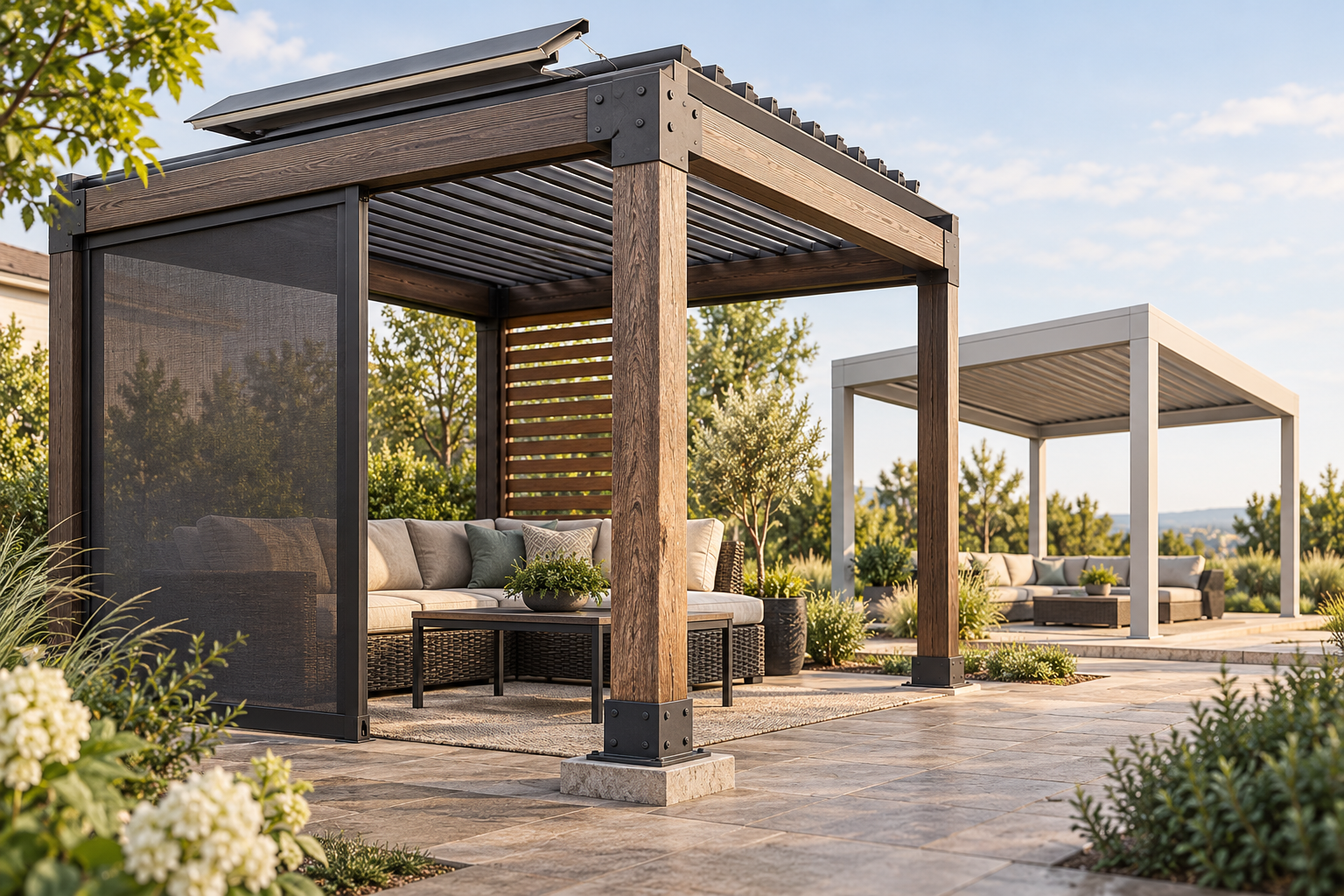
Ask whether the problem is cosmetic, surface weathering, a replaceable part, a post or connection, a roof or drainage issue, or movement at the base. Inspect adjacent members before replacing the visible piece. Storm or impact damage should not be declared safe from photographs alone.
Proprietary systems
Motorized louvers, aluminum frames, retractable covers, screens, and specialized hardware may require manufacturer parts and qualified service. A replacement part can be expensive or unavailable even when most of the structure looks good. Confirm model, warranty, maintenance, and support before choosing a repair.
USDA guidance explains why exterior wood finish performance varies with wood, product, exposure, and surface condition. It does not establish a universal maintenance interval. Current market sources provide installation signals but not a dependable national repair price or Canadian range.
Start with the failure and the remaining structure
A damaged slat or screen panel can be a discrete repair. A leaning post, loose base, moving roof, corroded connection, or storm impact may involve the support system and adjacent components. Ask the contractor to distinguish appearance damage from movement, decay, or an attachment problem. A photograph can help locate the issue but cannot establish that a roofed structure remains safe.
The base and the parts above it should be considered together. Settlement, water pooling, movement, or a damaged anchor can affect alignment and door or louver operation. If the structure is attached to a house or deck, check the supporting connection as part of the evaluation. Do not treat a new finish as a repair to a weakened post or frame.
Proprietary components change the economics
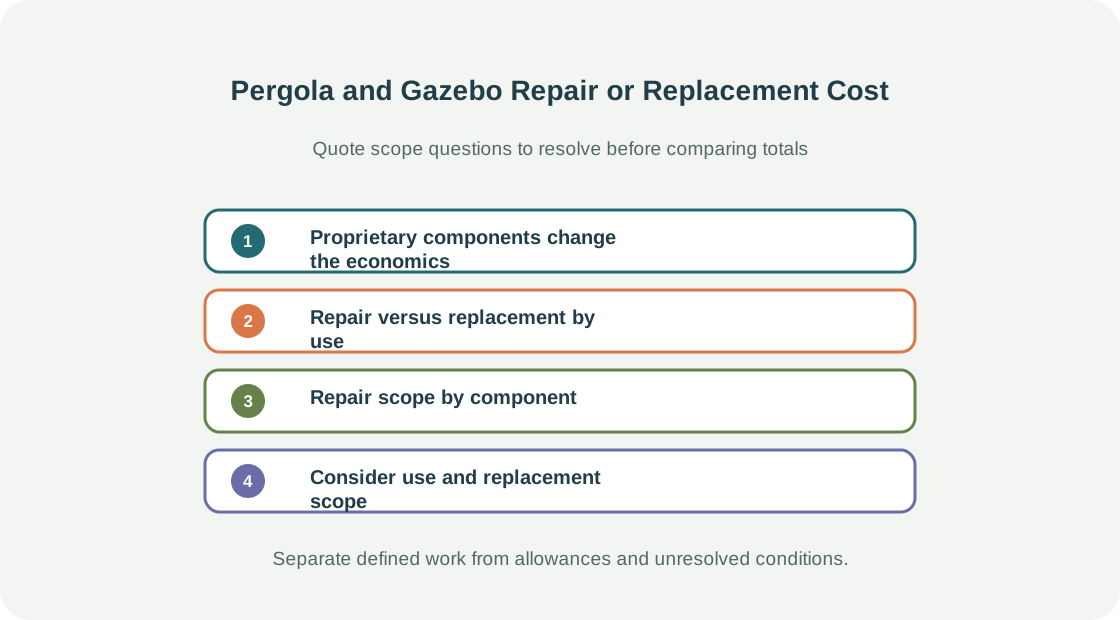
Motorized louvers, retractable shades, screen systems, aluminum frames, and specialized roof panels may rely on manufacturer-specific parts. Before approving a repair, identify the exact make and model if possible, contact the manufacturer or service provider about compatible parts, and confirm whether the warranty remains active. A seemingly small damaged component may be difficult to source; a larger repair may be practical if common members remain available.
Ask whether the repair includes removal, adjustment, replacement parts, electrical or control work, finish, and testing. If an exact part is obsolete, compare a compatible replacement component with replacing the whole system. Do not substitute parts or modify a motorized mechanism based on a generic online listing.
Repair versus replacement by use
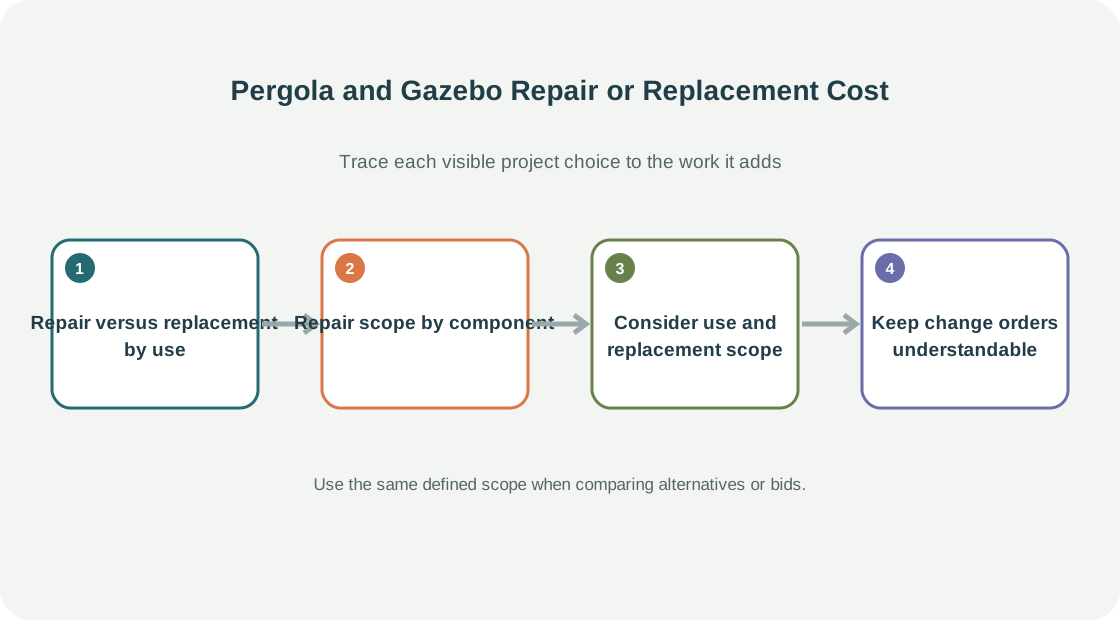
Repair is more plausible when damage is localized, supports and connections are sound, compatible parts are available, and the structure still meets the homeowner’s needs. Replacement deserves comparison when the base or roof is failing, corrosion or decay is widespread, parts are unavailable, or a different footprint and weather performance are wanted.
For a repair option, list the parts that remain and uncertainty around them. For replacement, define the same footprint, material, roof or louver behavior, screens, electrical features, base, access, and finish. Include removal and disposal in both estimates. If the homeowner wants improved weather protection, make that performance change explicit; a like-for-like replacement is a different decision.
Repair scope by component
For wood structures, ask whether the proposed work is finish renewal, replacement of an isolated slat, post or beam work, or repair of a base or connection. A new coating can improve appearance but does not correct decay or movement. For metal structures, identify coating damage, corrosion, fasteners, and product-specific connectors. For roofed structures, include water management and the condition of adjacent roof elements.
If screens, louvers, or retractable parts are involved, ask the contractor to confirm the exact model and compatible replacement part. Ask whether the repair includes adjustment, controls, electrical work, testing, and disposal. If parts are obsolete, compare a supported replacement system with repair of the remaining frame.
Consider use and replacement scope
If the structure still meets the homeowner’s needs and only one component failed, repair may preserve value. If its size, location, weather protection, or maintenance burden no longer fits, replacement can be an opportunity to choose a different system. Be explicit about those benefits; otherwise, compare a repair with a like-for-like replacement.
Ask whether removal of the old structure, disposal, foundation repair, new access, and landscape restoration are included in replacement. If the new structure uses different posts or a roof, verify the base and drainage rather than reusing an old footprint by default.
Keep change orders understandable
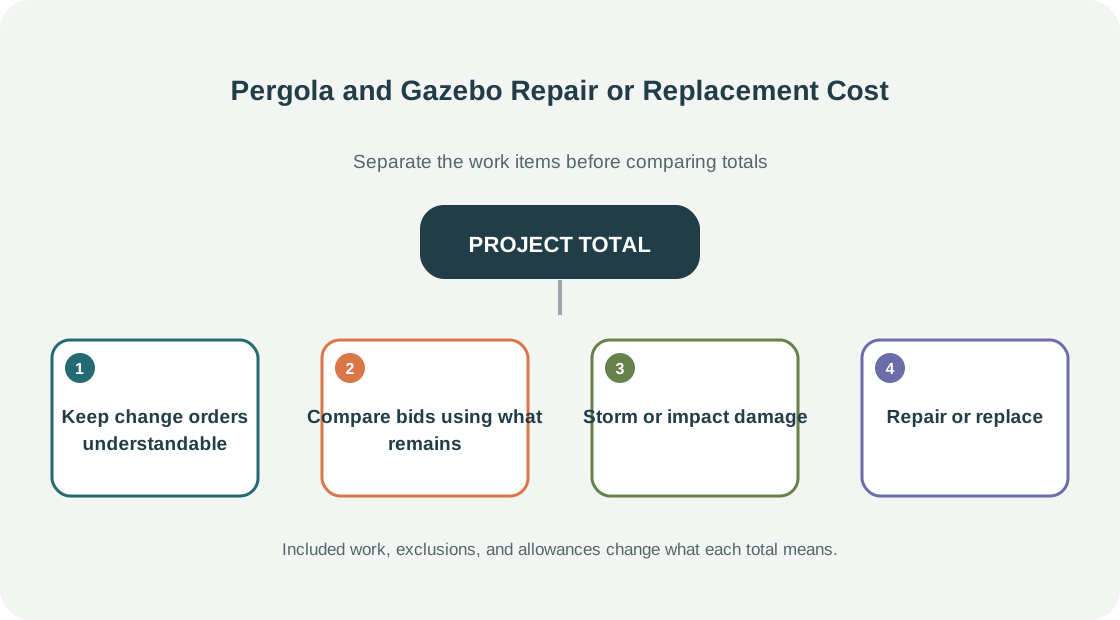
When hidden damage is possible, ask for a written base scope and a clear owner-approval process. If the contractor finds a damaged connection or unavailable part, request documentation and a separate price before proceeding. This allows you to compare repair, replacement part, and full-system replacement without committing to an open-ended project.
Compare bids using what remains
List the component being repaired and all parts that will remain. Ask what condition supports retaining them and which areas were not inspected. For replacement, define the same footprint, foundation, roof or top behavior, screens, access, electrical features, and finish. A larger proposal may replace more than needed; a smaller proposal may omit the condition causing the failure. Request a written diagnosis and separate line items.
If storm or impact damage is involved, obtain qualified evaluation for a leaning or moving structure before approving finish work. Document visible conditions from a safe location. Keep insurance, ownership, and coverage questions separate from the contractor’s physical repair estimate.
Storm or impact damage
If a pergola or gazebo has moved after a storm or impact, keep clear of leaning members or a roof that appears unstable and obtain qualified evaluation before repair. Document visible damage from a safe location. Do not use a contractor’s simple patch quote as confirmation that hidden supports are unaffected. Insurance or property-responsibility decisions are separate from the physical repair scope.
Repair or replace
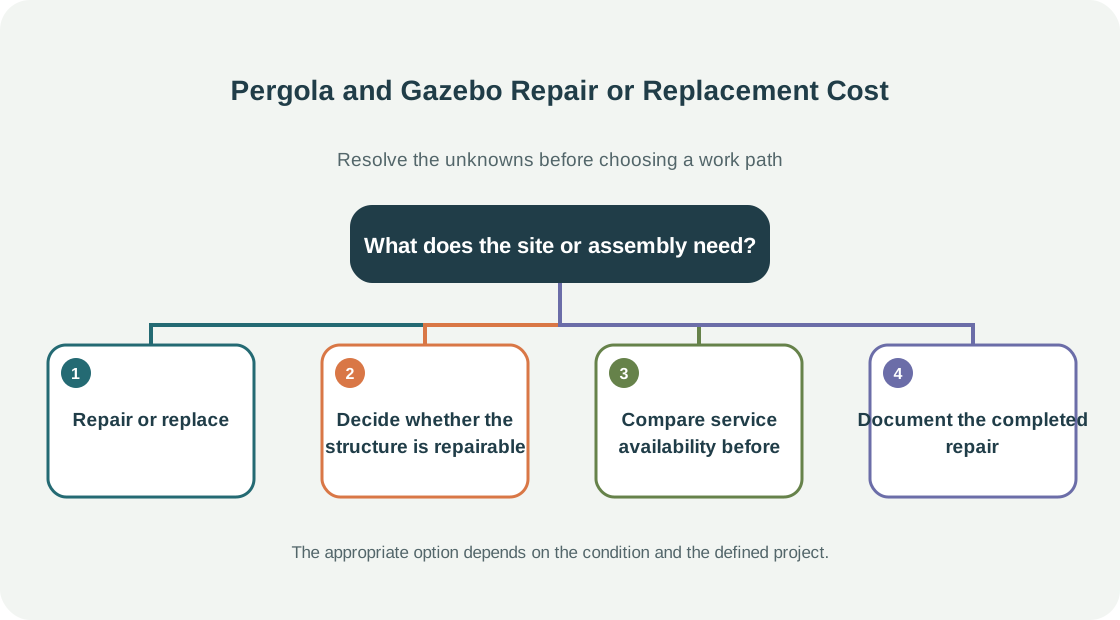
Repair favors localized damage, sound bases and connections, available parts, and a structure that still meets the homeowner’s use. Replacement deserves comparison when deterioration is widespread, the roof or base is failing, parts are obsolete, or a new layout or weather performance is wanted.
Obtain qualified evaluation for a leaning, moving, or load-bearing structure before authorizing work.
Decide whether the structure is repairable
A damaged roof panel, loose connection, leaning post, and deteriorated base are not interchangeable repair tasks. Ask the provider to identify the affected components and determine whether the frame is square and adequately supported before replacing a visible part. A new cover cannot correct movement at a footing, and cosmetic paint cannot establish that a damaged connection is sound. If the structure moved in a storm or is unstable, keep people clear until it has been evaluated.
For manufactured products, identify the model and age if known. Check whether matching panels, fasteners, brackets, and finish are still available and whether substitutions are accepted by the manufacturer. A repair estimate should say what components are original, what will be replaced, and whether modification affects warranty coverage. For wood, describe the location and extent of deterioration; for metal, ask about corrosion and coating condition. Avoid assuming that damage is limited to the surface that looks affected.
Compare repair and replacement as different outcomes. Include removal, disposal, foundation work, delivery, assembly, anchoring, finish, and restoration for a replacement. For repair, include access, temporary support if needed, and any inspection of adjacent components. If the structure is attached to a house or deck, ask whether that connection and supporting structure are part of the scope or need a separate assessment.
Compare service availability before repairing
For a branded kit or motorized feature, ask whether the supplier or manufacturer still supports the model and can provide matching parts. An improvised substitute can change fit, appearance, or warranty coverage. Get the part number and installation scope in writing, and verify whether labor is covered separately from the replacement component. If a model is discontinued, compare the cost of adapting it with the cost and disruption of replacement.
For a custom wood structure, ask which members can be repaired individually and how new material will be finished to blend with weathered components. A proposal should describe any temporary support, access, and disposal needed to remove damaged sections. If the cause is recurring water exposure, movement, or a damaged base, include that correction in the repair decision rather than replacing the same surface part repeatedly.
Document the completed repair
Ask the contractor to list replaced parts, products used, and any areas left unchanged. Keep photographs of the repaired connection and the product information with the structure’s records. This can help identify compatible parts if another repair is needed and shows what was inspected during this visit.
Set realistic appearance expectations
A repaired area may remain visible because old material has weathered or a finish has faded. Ask whether the proposed work restores function only or includes refinishing nearby components for a more even appearance. If color matching is important, request a sample or test area and understand that outdoor exposure will continue to change the finish.