
Re-screening is a maintenance or enclosure-repair project for an existing structure. It is different from building a new screened porch, replacing the frame, or converting the space into a three-season room.
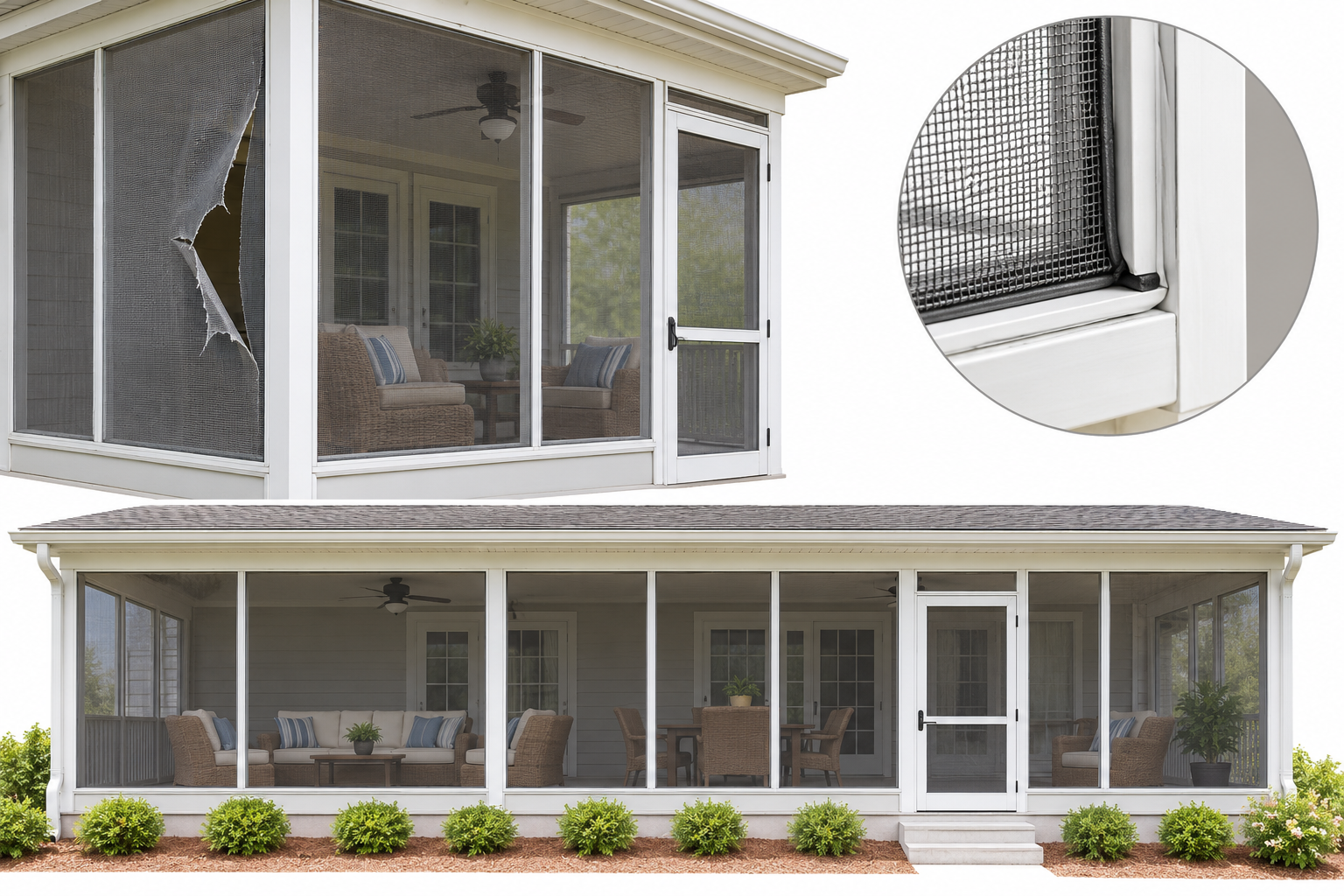
Spot repair or full re-screening
Spot repair may replace one panel, spline, door screen, or damaged section. Full re-screening may include removing old mesh, inspecting and repairing the frame, installing new mesh and spline, replacing doors, working at height, and restoring trim. Pet-resistant, solar, aluminum, or specialty mesh changes material and labor.
Check the frame first
Ask whether posts, rails, roof, floor, columns, flashing, drainage, and attachment points were inspected. A screen can be replaced even when the structure is not ready for more enclosure or continued use. Frame movement, rot, or storm damage needs a different evaluation.
Angi’s 2026 summary distinguishes existing-porch screening from new screened-porch construction and reports the former around USD 2,000–4,000 in its source-specific signal. That is U.S. market context, not a universal or Canadian price.
Scope and mesh options
Spot repair can be sensible when a panel, spline, or door screen is damaged while the frame remains straight and secure. Full re-screening may involve removing mesh across many openings, inspecting channel and framing, replacing spline, adjusting doors, and refinishing trim. Ask whether labor is priced per panel, per opening, or as a project and whether the quote includes both sides of the porch where access differs.
Material options include standard mesh and specialty products for pets, visibility, solar shade, or insect control. These options affect material price, sight lines, airflow, cleaning, and replacement. Ask for the manufacturer’s description of the named mesh rather than treating “solar” or “pet resistant” as a universal performance level. A retractable motorized screen is a different system with housings, tracks, motors, controls, mounting, and possibly electrical work.
Inspect the frame before ordering mesh
The mesh is attached to a frame that can be loose, corroded, bent, or damaged by moisture. Ask whether the contractor will inspect the screen channels, posts, rails, door frame, roof, floor, columns, and attachment points before measuring custom material. If the structure moves or the opening is out of square, new mesh may not stay secure or operate as expected.
Height and access affect labor. A tall porch, difficult exterior side, landscape obstruction, or limited setup area may require additional equipment or careful protection. Ask how the crew reaches each panel, what is removed to access it, and whether cleanup and disposal of old mesh are included.
Keep price estimates in scope
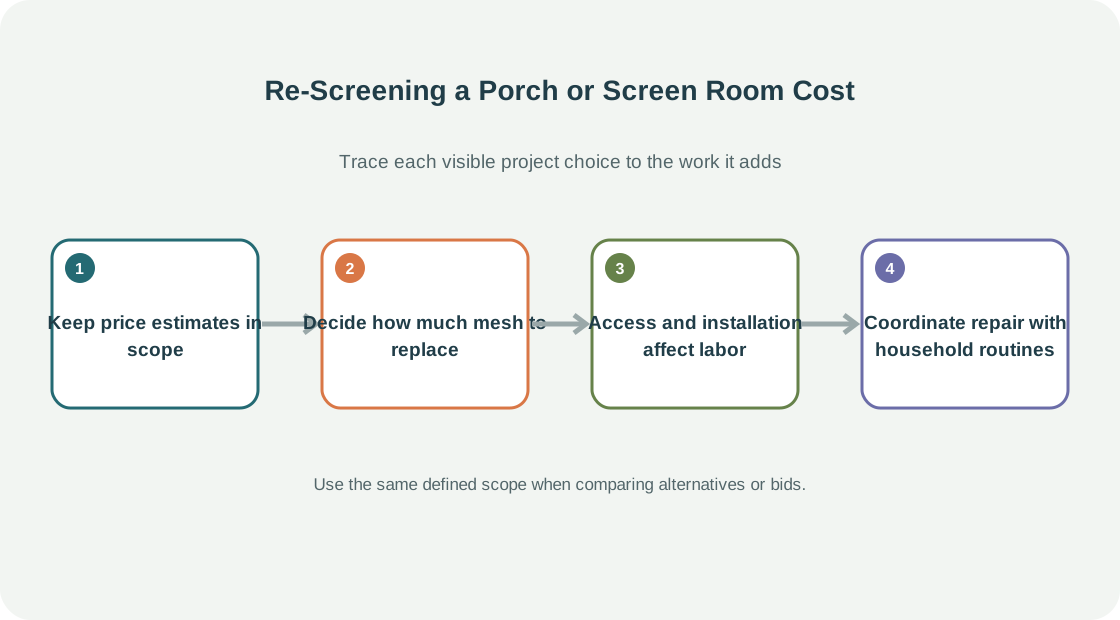
Angi’s 2026 signal distinguishes screening an existing porch at roughly USD 2,000–$4,000 from new screened-porch construction, but its existing-screen figure is a broad source-specific estimate, not a price for every spot repair or full re-screen. The porch’s size, material, access, door work, frame condition, and mesh type determine the local scope. Canadian work needs local quotes rather than currency conversion.
Do not compare that retrofit estimate with new construction or a motorized system. If posts, roof, floor, or columns need repair, ask for those items separately. A screen contractor’s estimate may not include structural evaluation or porch repair.
Decide how much mesh to replace
One torn panel may be a practical spot repair when adjacent mesh is in good condition and the frame remains square. If many panels are brittle, loose, or mismatched, full re-screening can provide a more consistent appearance and avoid repeated service calls. Ask the provider to show which panels were inspected and whether door screens, spline, and frame repairs are included.
Specialty materials should be selected by the need they serve. Pet-resistant mesh, solar screen, aluminum insect screen, or a tighter weave can change visibility, airflow, appearance, and fit. Product percentages and terms may measure different things, so compare manufacturer specifications for the exact named products rather than treating them as one ranking. Check replacement availability and cleaning directions.
Access and installation affect labor
Tall openings, screened ceilings, narrow exterior access, or landscaping can require more setup. A contractor may need access from both sides of a panel or may need to remove trim to reach the screen channel. Ask whether setup, removal of old mesh, disposal, door adjustment, and finish restoration are included. If the screen room is on an upper level, clarify how workers will access it and protect adjacent surfaces.
If the screen frame is damaged or the porch moves, obtain a separate evaluation before ordering custom mesh. New mesh will not correct an out-of-square opening, loose post, leaking roof, or unstable rail.
Coordinate repair with household routines
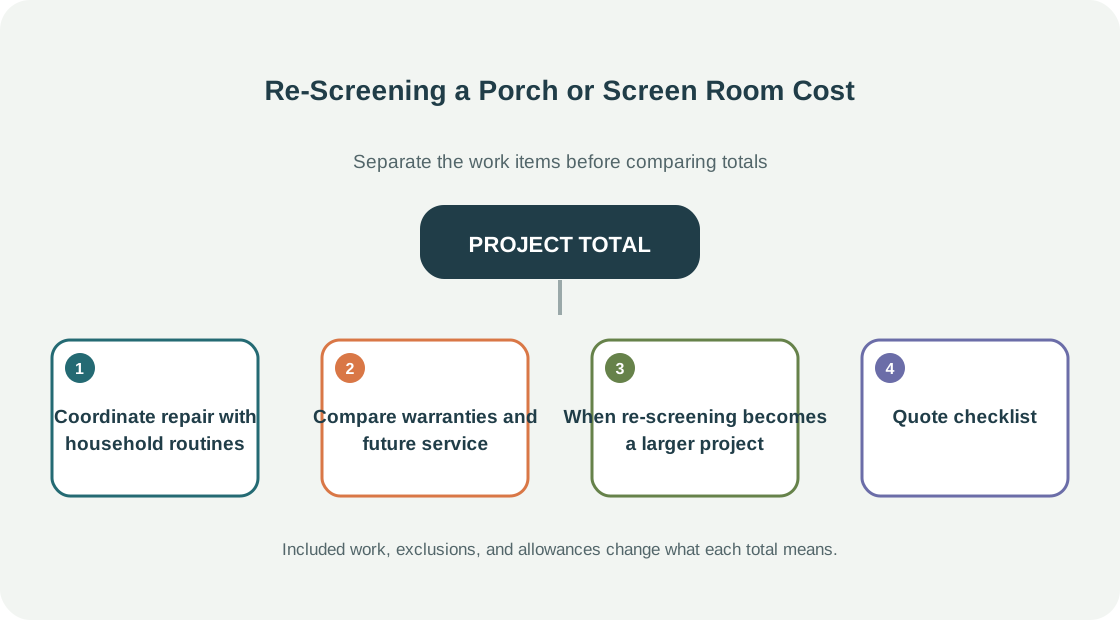
Ask how many openings will be unavailable at once and whether a door remains usable during the work. If the porch is a primary access route, plan an alternate entrance. Clear furniture and stored items before the crew arrives, and confirm who moves large pieces or protects them from dust and debris.
If pets or young children use the porch, ask how the work area will be secured and whether the new mesh is intended to address a specific use. Specialty mesh does not replace a gate or other safety measure. State the owner’s goal and review the product’s exact limits.
Compare warranties and future service
Ask what the product warranty covers, how installation affects it, and whether future repairs are available through the installer. A manufacturer may warranty mesh but not labor, frame condition, or a pet’s damage. Keep product names and screen dimensions for later replacement.
When re-screening becomes a larger project
If a frame is deteriorated or the homeowner wants windows, weather protection, insulation, heating, or major structural modifications, the project crosses into enclosure or addition work. See the screened-porch and enclosure guides. If the porch is serviceable and the need is damaged mesh, identify each opening and compare spot repair with full re-screening using the same mesh and door assumptions.
Quote checklist
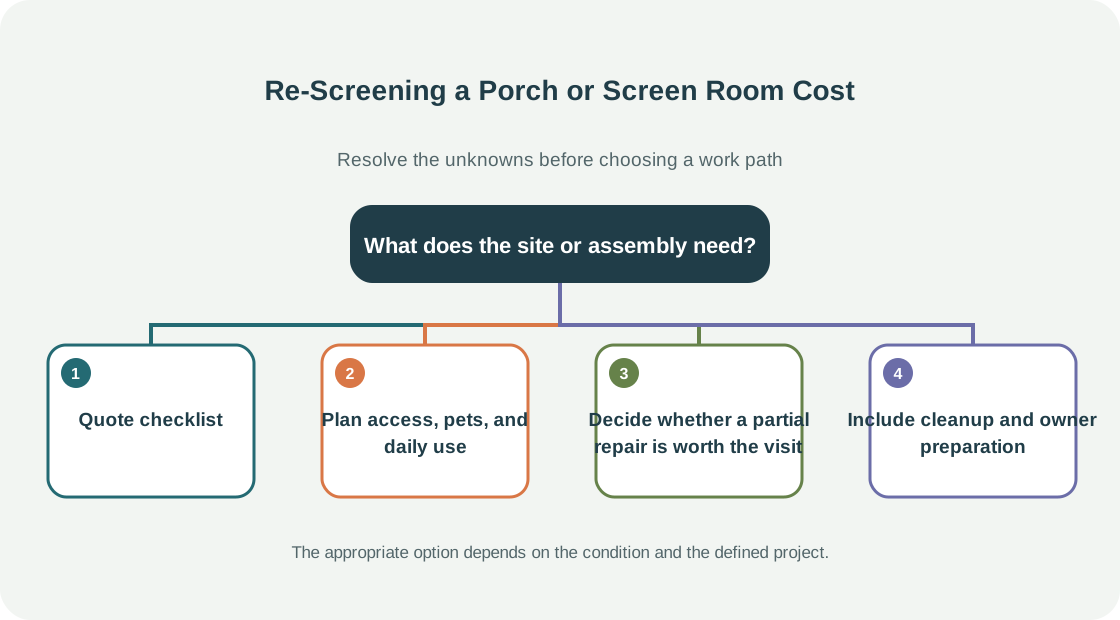
Identify mesh, frame and spline repairs, doors, access, trim, removal, disposal, finish, and warranty. Retractable systems may require manufacturer-specific service. If insulation, windows, heating, or major structural changes are added, the project moves beyond re-screening.
Plan access, pets, and daily use
The right mesh and door arrangement depend on how the porch is used. Consider pets, children, insect pressure, visibility, airflow, and whether furniture must pass through a wide opening. Ask the contractor to identify the product by manufacturer or specification and explain its tradeoffs. A more durable mesh may be heavier or less transparent, while a solar-control product may change light and airflow. Confirm that door hardware and frame details suit the selected screen.
Inspect the screen channels and surrounding frame before ordering custom mesh. If a porch is out of square or has loose rails, the screen may not fit or remain taut. Ask whether the quote includes new spline, channel repair, door adjustment, trim, and removal of old mesh. Height, exterior access, landscaping, and furniture can affect labor and protection needs. State who moves furniture and whether cleanup is included.
For partial repairs, compare how the new panel will look beside weathered existing mesh and whether the remaining screens are likely to need work soon. For full re-screening, ask whether all openings, doors, and transoms are counted and whether the work is completed in one visit. Clarify warranty coverage, seasonal maintenance, and who can service the system if a panel loosens later.
Decide whether a partial repair is worth the visit
If several panels are loose, brittle, or torn, ask the contractor to compare repair of only the damaged openings with re-screening all exposed panels. Labor to mobilize and set up may be similar for a small and medium repair, while full re-screening gives a more consistent appearance. The right choice depends on the mesh condition, expected use, and whether the frame is ready for new material. Ask for both scopes if the difference is material.
Check what is included in the site visit and measurement. A custom mesh order may require a deposit and lead time, and the installer may need to return after fabrication. Confirm the schedule, cancellation terms, and whether temporary closure is available if the porch must remain protected. If a door must stay usable, discuss sequencing before all screens are removed.
Include cleanup and owner preparation
Ask whether old spline, mesh, staples, and packaging are removed and who disposes of them. Confirm whether furniture, plants, and curtains must be moved before the crew arrives and whether the contractor will protect the floor. A clear preparation list avoids a delayed visit or an unexpected cleanup charge.
If the porch is used by pets, plan how they will be kept away from open frames while work is underway. Confirm when doors and panels can be used again after installation. These practical details are small compared with the material choice but affect how smoothly a full re-screening proceeds.
Compare the finished result with the agreement
At handover, walk the porch and check each opening, door, spline, and latch against the written scope. Note any panel that is loose, wrinkled, damaged, or difficult to operate and ask how it will be corrected. Retain the mesh product information and warranty so replacement or service can be matched later.