
Flood resilience is a portfolio of choices, not one product. The right budget depends on whether water comes from a sewer, surface runoff, groundwater, a river, coastal surge, or several sources; how deep and fast it is; how long it remains; and whether the building can be altered safely. A backwater valve and a raised furnace may reduce specific losses, but neither makes a basement or house floodproof.
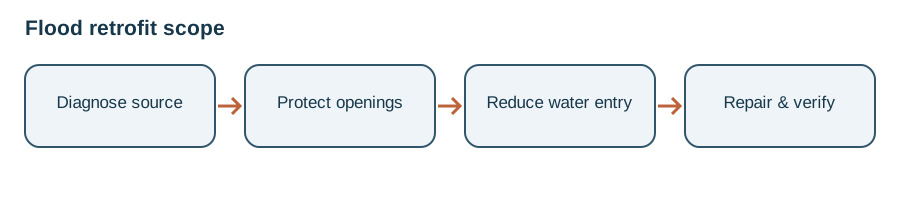
Begin with the flood pathway
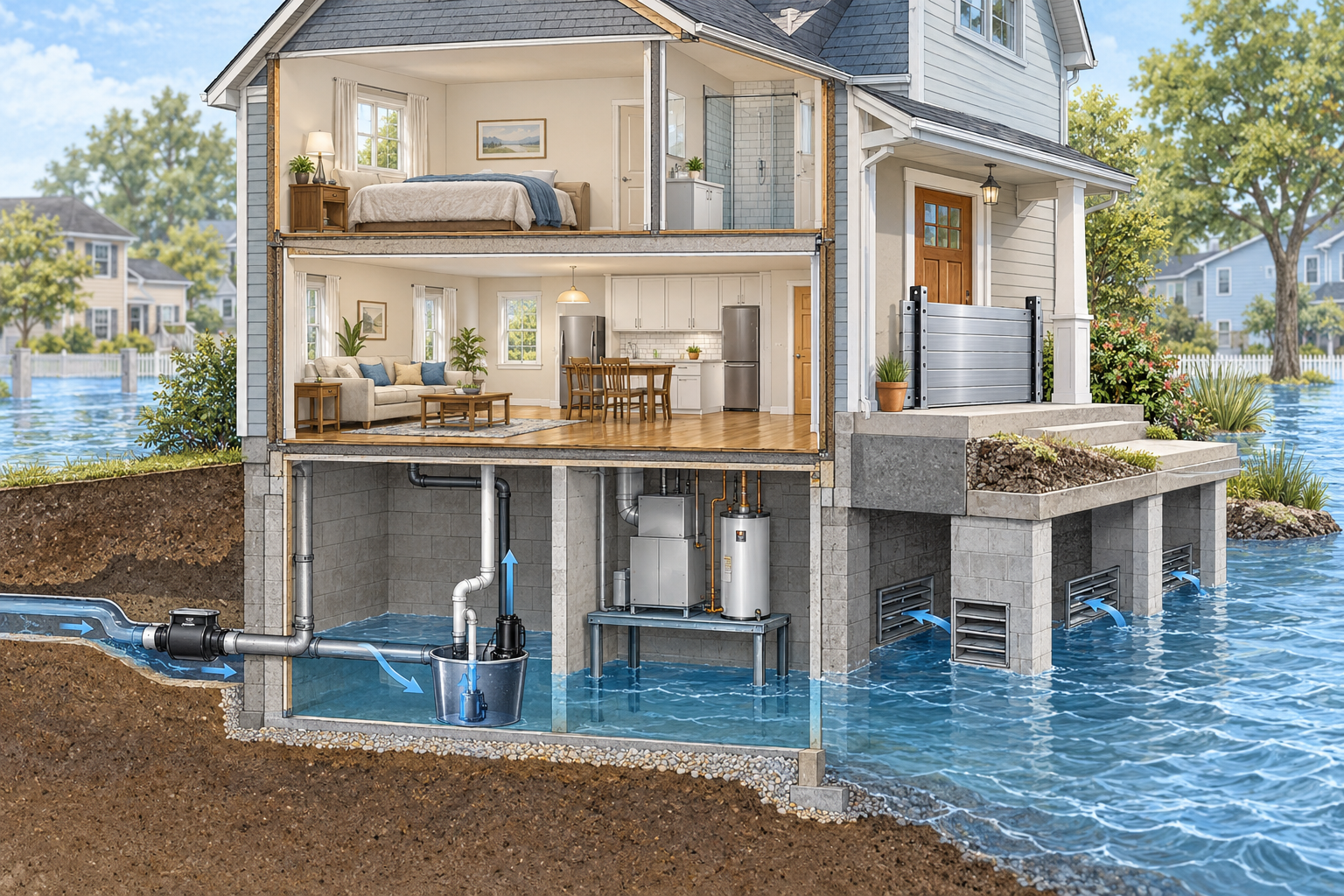
Ask where water enters and what the water can damage. Sewer-backup work may involve a backwater valve, alarms, a sump system, or a combination. Surface water may require grading, downspout, drainage, or site work that belongs with the ordinary site category. A high-water event may require utility protection, flood openings, barriers, wet floodproofing, dry floodproofing, elevation, relocation, or a decision not to invest in a vulnerable structure.
Depth, velocity, duration, waves, debris, foundation type, and building materials change both suitability and price. A measure designed for shallow nuisance water should not be presented as protection against moving floodwater. Local floodplain, permit, substantial-improvement, electrical, fuel, and insurance rules also vary. U.S. federal guidance cannot be treated as a Canadian code, and a rule from one U.S. community may not apply to another.
A practical cost hierarchy
Use these tiers to organize quotes, not as a universal price list:
- Reliability and warning: maintenance, water alarms, automatic shutoff where appropriate, and better access to existing drains or pumps are usually the smallest work packages.
- Sewer and sump protection: a backwater valve, redundant sump arrangement, or discharge improvement can require plumbing, electrical, concrete, and restoration work. See the dedicated guides for their different failure modes.
- Equipment and opening protection: moving or elevating utilities, protecting a door or garage opening, and adding engineered flood openings can become multi-trade projects.
- Floodproofing or structural work: wet or dry floodproofing, major enclosure changes, and house elevation require design, permits, and often significant disruption. These are not ordinary maintenance projects.
The total budget can rise because the visible measure is only one part of the work. Slab cutting, finish removal, utility disconnection, temporary occupancy, access, structural investigation, engineering, surveying, inspections, and post-work testing may matter more than the valve, panel, vent, or pump itself.
Phase the work without hiding residual risk
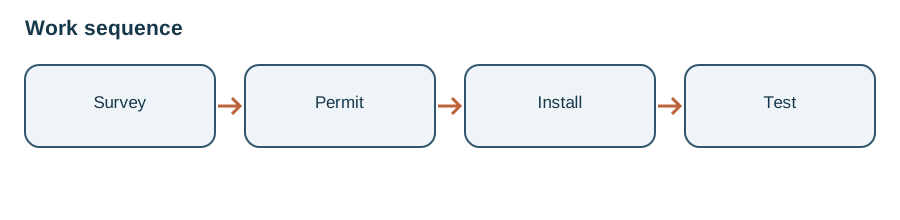
An effective plan states what each phase protects and what it does not. For example, a homeowner might first address known sewer backup, then improve sump reliability, then protect equipment and openings, and finally commission an engineered study of elevation or floodproofing. That sequence can be sensible when it matches the hazard. It is not a substitute for evaluating whether the first phases are overwhelmed by the expected event.
Maintenance is part of the cost. Canadian flood guidance describes recurring checks for backwater valves, sump pumps, alarms, grading, downspouts, catch basins, foundation conditions, and drainage. A device that is inaccessible, untested, blocked, or impossible to operate during an event is not the same as a functioning resilience measure.
When larger work deserves comparison
Compare elevation, relocation, reconstruction, or a different property decision when flooding is deep, repeated, fast, coastal, or structurally consequential. Dry floodproofing is not appropriate for every building, and wet floodproofing does not mean a finished living space can be left exposed without consequences. Flood vents equalize pressure in suitable floodable enclosures; they do not stop water.
Get a property-specific professional opinion before selecting structural elevation, floodproofing, coastal foundation work, or utility relocation. Confirm current local requirements, the expected flood characteristics, and the effect on access, egress, insurance, and future maintenance.
U.S. and Canadian budgeting
U.S. projects may involve floodplain and program rules that do not carry across the border. Canadian projects likewise depend on provincial, municipal, conservation, utility, and insurance contexts. Use local bids in the currency and market where the home is located. Do not treat a grant, rebate, or possible insurance treatment as guaranteed savings; program status and eligibility change.
The most useful flood-retrofit quote identifies the water source, design assumptions, protected components, excluded work, required professional services, maintenance, and remaining risk. Without that scope, two prices may describe completely different levels of protection.
Separate the quote into decisions
Ask the contractor to show which line items address sewer backup, surface water, groundwater, flood depth, equipment damage, occupant safety, and finish loss. A sump pump may handle inflow into a pit but not water through a wall. A backwater valve may reduce a sanitary-sewer pathway but not a rising river. A raised furnace may preserve heat after a shallow event but leave the building and electrical service exposed. This separation makes it easier to compare a modest first phase with a larger mitigation project.
Include the work that is easy to omit: investigation, design, survey, permits, inspection, utility shutdown, temporary housing, demolition, storage, cleaning, drying, reconstruction, and future maintenance. If a quote says “floodproof basement” or “protect utilities” without naming the water assumption and the protected area, ask for a more precise scope. A low price may represent only a product or a partial enclosure.
When not to make the cheapest phase the first phase
If the hazard is fast-moving water, deep flooding, coastal surge, wave action, or repeated structural damage, a low-cost measure may offer little protection relative to its price. If the issue is an intermittent sewer backup or a power-dependent sump, a targeted reliability project may be proportionate. If the property cannot meet the proposed floodproofing assumptions, the right next step may be elevation, relocation, reconstruction, or a professional feasibility study.
Ask for a residual-risk statement after each phase. It should say what remains possible, which maintenance is required, and what event would exceed the design basis. That statement helps the homeowner avoid treating a collection of small devices as a complete flood solution.
Estimate the disruption as well as the construction
Flood work can interrupt plumbing, power, heat, access, storage, or finished living space. A slab-cut valve installation may need dust control and floor replacement. Utility elevation may require a temporary loss of heat or hot water. A structural project may require temporary housing, protection from weather, and a longer inspection sequence. Ask every bidder to show these effects in the schedule and price.
Include post-event costs in the comparison. A project that reduces a sewer backup but still leaves finished contents vulnerable may not have the same value as one that changes the use of a floodable enclosure. A barrier may require people and warning time. A sump system may need battery replacement and testing. The lowest initial price is not necessarily the lowest ownership cost.
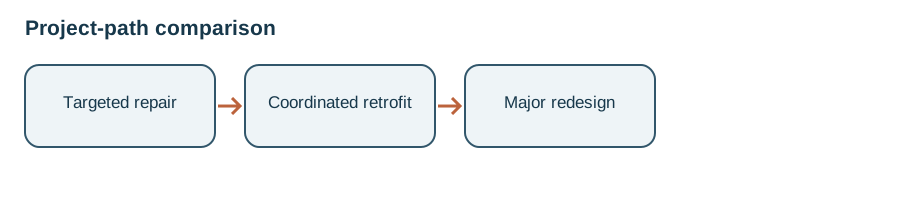
Compare realistic project paths
The right comparison depends on the failure already observed and the one the homeowner is trying to prevent. A home with a history of sewer backup may need a plumber to establish which fixtures and branches connect below the likely surcharge point before a backwater-valve quote can be compared. A home with groundwater seepage may need its drainage and sump arrangement assessed first; adding a second pump does not correct a discharge line that returns water toward the foundation. A lot exposed to river flooding may need a broader structural and floodplain review before a door panel or basement finish is treated as the main budget decision.
Ask each provider to price a defined stage and state what later work it assumes. One proposal might cover a valve and floor restoration, while another includes investigation, a pump, electrical backup, and grading. Those are different projects even if both are titled “basement flood protection.” Request an optional price for the next sensible phase where uncertainty remains, but do not treat every possible phase as mandatory.
Before approving work, write down the household’s priority: prevent a repeat sewer event, keep essential equipment operating, reduce damage in a defined room, or change the building’s exposure. Then compare the initial project, recurring maintenance, disruption, and residual risk against that priority. A narrow project can be worthwhile when it addresses the observed pathway; it is poor value when it is presented as a complete solution to hazards it does not address.
A quote checklist
Before accepting a proposal, confirm the water source, assumed depth and duration, protected areas, excluded pathways, design or engineering responsibility, permit and inspection treatment, temporary access, restoration, maintenance, and residual risk. Ask what evidence supports any statement about insurance, grants, floodplain eligibility, or code. Keep a separate contingency for hidden damage and site conditions.
For each phase, record what result would cause the household to stop, continue, or change direction. If a targeted project addresses the only repeated pathway, a broader package may not be needed now. If the assessment shows that the building or access fails under the assumed event, pricing more small devices may simply postpone the structural or property decision. That decision point helps keep the budget tied to findings rather than to a preset list of products.