
A backup sump system reduces dependence on one pump or one electrical feed. It does not guarantee a dry basement. The right choice depends on inflow, head height, discharge capacity, pit condition, outage length, water service, battery storage, freezing risk, and whether the primary system is failing mechanically rather than electrically.
The main approaches
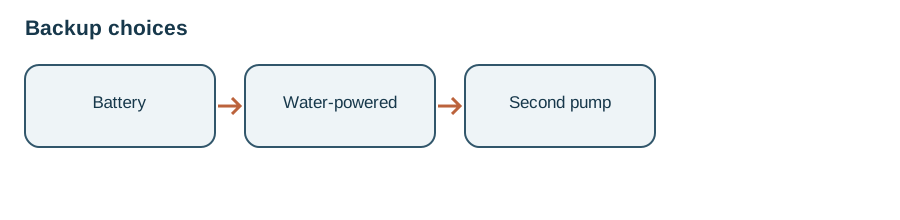
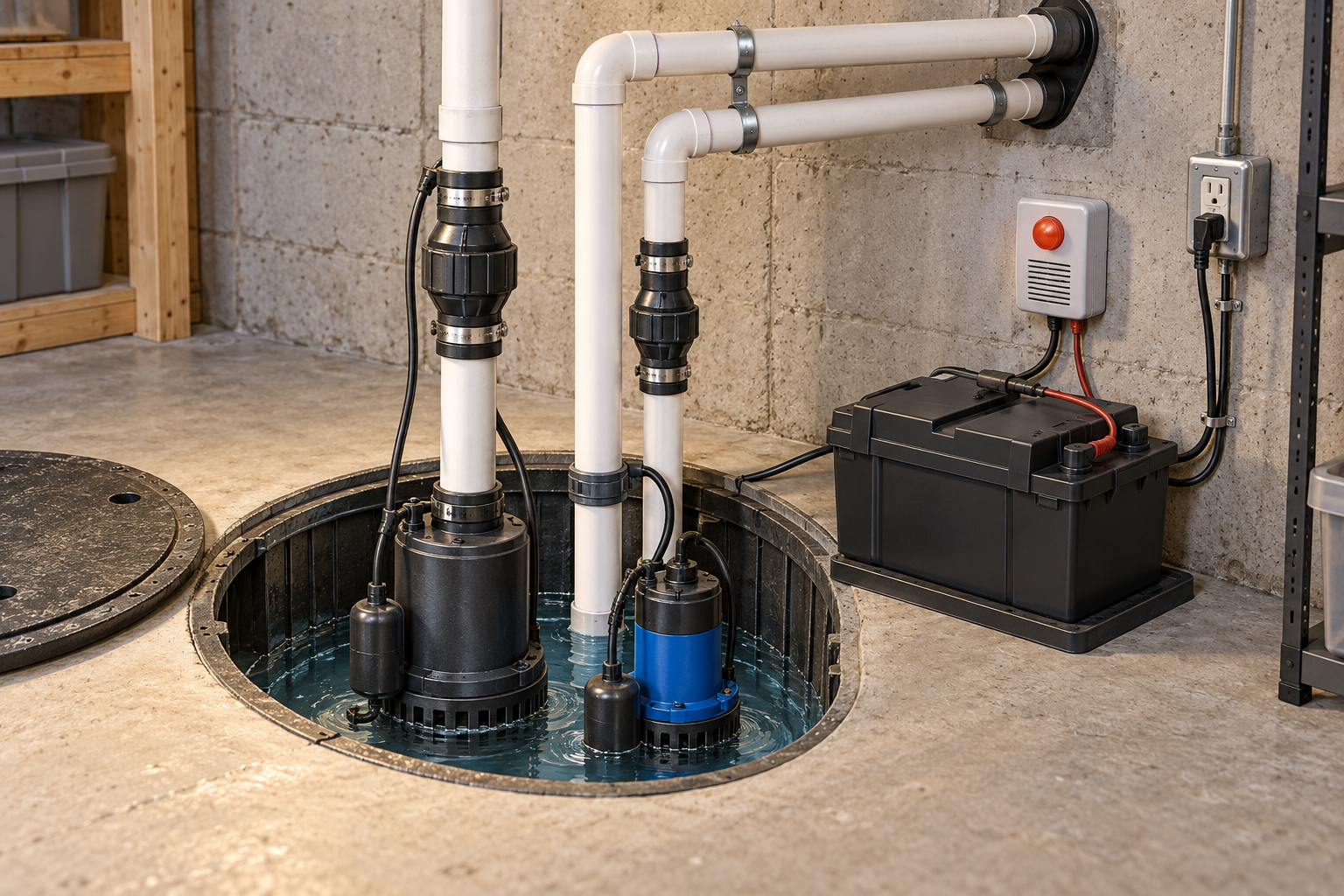
- Battery-backed pump: A separate pump and control system can operate when normal power fails. The practical limit is runtime, which changes with inflow, lift, pump duty, battery capacity, age, temperature, and discharge conditions. There is no generic number of hours that applies to every home.
- Water-powered backup: In some homes, municipal water pressure can drive a backup pump. Feasibility depends on local water service, pressure, plumbing, backflow and discharge rules, operating cost, and whether the home could lose water service during the same event.
- Second electric pump: A second pump provides capacity and redundancy, but it still needs reliable power unless connected to an appropriate backup source. The pit, check valves, discharge, alarm, and float arrangement must be evaluated as a system.
- Monitoring and alarm: A high-water alarm, remote notification, or shutoff can shorten the time between failure and response. Monitoring is useful only when somebody can act on it.
Cost planning
The installed budget usually includes more than the backup unit. A simple battery system in an accessible pit may be a smaller project. A second pump, new discharge, electrical circuit, alarm, water-powered connection, or pit modification can raise the cost into the low thousands. Finished-basement access, concrete or wall work, exterior discharge, difficult head height, and a generator or battery system can add substantially more.
Price the pump, controller, battery or water connection, check valves, discharge piping, electrical work, alarm, testing, and restoration separately. Include future battery replacement and periodic testing in the ownership budget. A low initial price may not be the best value if replacement batteries are hard to source or the system cannot be inspected.
What a quote should answer
Ask the installer to measure or explain the required flow and head, the existing pump’s performance, expected inflow, discharge route, check-valve arrangement, power source, alarm behavior, and access for service. Confirm whether a second pump can share the existing discharge without reducing reliability. Ask how freezing, debris, blocked outlets, or a stuck float are handled.
Do not publish or rely on a generic runtime promise. Manufacturer runtime and capacity claims depend on a particular pump, battery, head, and test condition. Use the exact product documentation for a proposed system and have the installer confirm compatibility.
Coordinate with the larger flood plan
The Government of Canada treats sump reliability, testing, alarms, and backup as part of flood readiness. That does not make a backup pump a substitute for foundation drainage, grading, sewer-backup protection, or a flood assessment. If water is entering through walls or rising faster than the pump can remove it, more pump capacity may not solve the cause.
An outage-resilience plan may connect the sump to a generator, battery, or other non-portable source, but the power equipment belongs to the home power-system decision. Electrical transfer, outdoor equipment, fuel, and interconnection work require current code and manufacturer review. Keep the sump project focused on the protected load and its drainage behavior.
U.S. and Canadian differences
Product availability, water-powered feasibility, electrical requirements, discharge rules, and labor costs vary by market. Use a local quote in local currency. Confirm whether local authorities or insurers require a particular arrangement, but do not assume one municipality’s rule applies to every home.
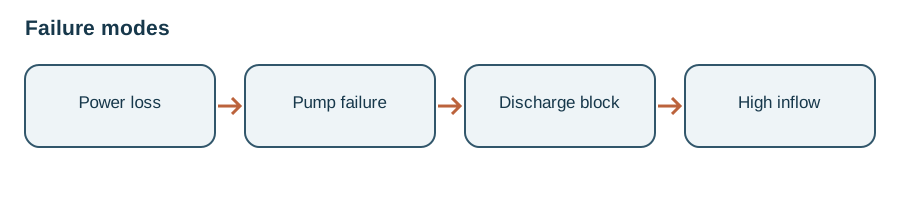
The best backup-sump decision makes the failure mode explicit: power loss, primary-pump failure, inflow overload, blocked discharge, or remote unattended operation. Then budget for the protection that actually addresses that failure.
Test the system under realistic conditions
Ask the installer to explain how the float, check valves, discharge, alarm, and backup source interact. A backup pump that starts in a dry pit has not demonstrated that it can handle the actual head or inflow. A battery that runs a small test may not last through a long outage. A water-powered unit may be unavailable when municipal pressure is low or the property loses water service.
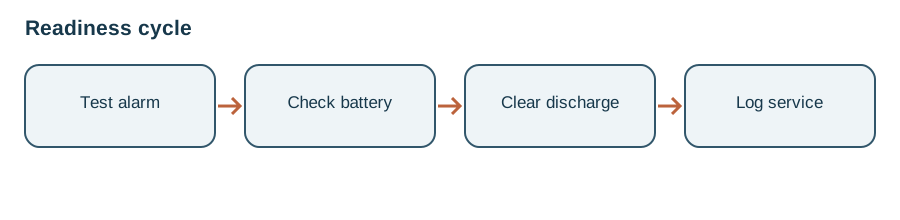
Include a written testing schedule. It may involve exercising the pump, checking the alarm, inspecting the discharge for blockage or freezing, cleaning the pit, checking battery condition, and confirming that the household receives a notification. The exact schedule should follow the product and local professional advice. Store replacement batteries and parts where they will remain usable, and make sure somebody can respond to a remote alert.
Decide whether redundancy is enough
If the primary pump is undersized, its discharge is poor, or the pit receives water faster than either pump can remove it, adding a backup may not solve the risk. A foundation or drainage assessment may be needed. If the main failure is repeated power loss, a critical-load plan or permitted backup source may be more effective than a larger battery alone. If the risk is sewer backup, use the backwater-valve decision as well.
The quote should state the design assumptions and the failure it addresses. That prevents a resilience package from becoming a collection of devices whose combined performance has never been considered.
Compare battery capacity with the event
An outage lasting an hour, a day, and several days creates different requirements. Inflow may rise during the same storm that interrupts power. A battery system sized for a brief failure may not cover a long outage, while a very large battery may cost more than a permitted generator or a different drainage strategy. Ask the designer to show the assumed duty cycle, head, inflow, battery age, recharge method, and expected warning or response time.
Water-powered backup also has limits. It depends on a suitable municipal water supply and pressure, uses water while operating, and may not be appropriate where service is unreliable or local rules restrict the connection. A second electric pump still needs an electrical plan. These alternatives should be compared by failure mode rather than by marketing category.
Make maintenance visible
Record the pump model, battery type, check-valve arrangement, discharge route, alarm, and test date. Inspect after heavy storms and before the season when groundwater is highest. Replace batteries and worn parts according to the product and professional advice. Include a plan for what happens if the household is away, the discharge freezes, or an alarm cannot be heard.
Before selecting an option, consider who will notice and respond to a failure. An occupied home may rely on an audible alarm and someone nearby; a seasonal or rental property may need remote alerts and an identified service contact. The alert has little value if the network, power, or response route is unavailable during the same event. Include these operating assumptions when comparing system prices, especially if the pump protects a finished space or essential equipment.
Match the backup to the failure the household expects
Start with the primary system’s failure history. If the pump itself has failed, a second pump or serviceable replacement may be more relevant than a larger battery. If utility outages are the recurring problem, compare the backup load and duration with the household’s permitted power options. If the pit fills faster than the primary pump can clear it, an additional unit may help only if the pit, intake, and discharge can handle the combined flow. If water bypasses the pit, a pump backup does not address the entry point.
For a home that is occupied during storms, a local audible alarm may be useful. A seasonal or vacant property may need remote notification and a named person who can respond. A notification system has little value if nobody receives it, the internet or cellular path fails, or the person cannot reach the home safely. Include the communication service, alarm power, and response plan in the budget rather than treating the alert device as automatic protection.
Compare the options on the same operating assumptions. Ask each bidder to state the expected inflow, lift, discharge route, power source, battery condition, water-service assumptions, and test method. Then compare purchase and installation, likely replacement parts, periodic testing, and the consequences of a long event. Do not select a larger unit merely because its maximum rating is higher; the installation and operating conditions determine whether that capacity is available at the home.
Turn the outage scenario into a comparable specification
Ask the installer to state which pump and alarm the backup is intended to support, how the backup activates, and what conditions can prevent it from discharging. Compare the expected duty against the household’s plausible outage and inflow scenarios rather than relying on a battery label or a headline runtime. Actual run time depends on pump demand, battery condition, cycling, and the installation; have the installer explain the assumptions and what will signal that capacity is being depleted.
For a water-powered backup, verify that the property has a suitable water supply and that local rules permit the arrangement. For a second electric pump, ask whether its power source and discharge route remain independent when the primary system fails. These are design questions for the qualified installer, not universal performance guarantees.
Make the handover part of the quote: alarm checks, safe test procedure, battery replacement responsibility, discharge inspection, and instructions for responding to a failure. A system that is not tested or whose alarm is missed may provide little practical resilience. Include service access and a record of the installed components in the ownership comparison.