
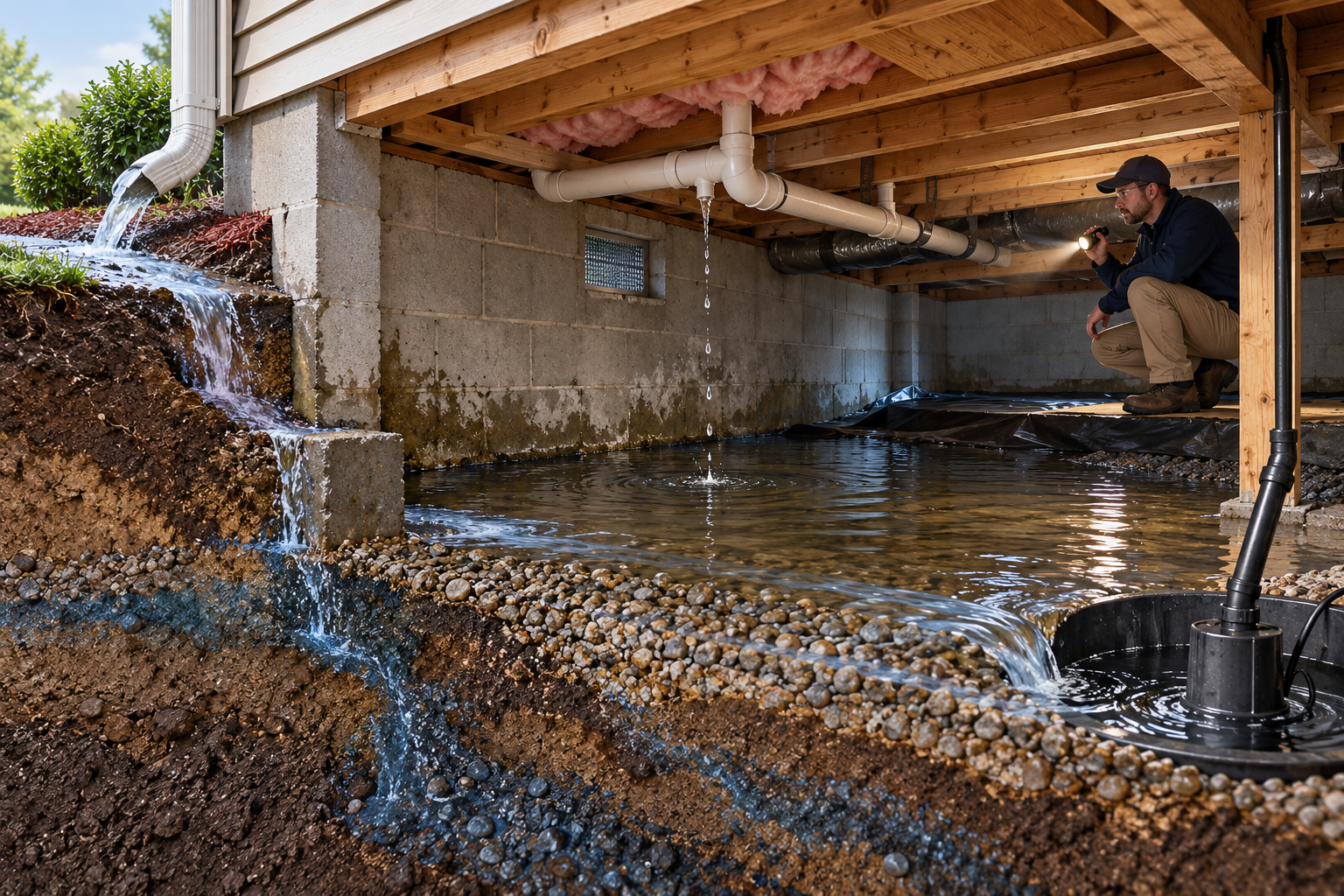
Standing water in a crawl space is a symptom to investigate before pricing a liner, encapsulation, or dehumidifier. Possible causes include surface runoff, groundwater, foundation entry, plumbing, a failed drain, or a sump and discharge problem.
Make the space safe first
Do not enter standing water around energized equipment, sewage, chemicals, unstable soil, or damaged structure. Use qualified help for electrical decisions, contaminated water, pumping, and structural concerns. Extraction, drying, and disposal may need to precede ordinary moisture work.
Identify the water path
Record where water is deepest, how long it remains, whether it follows rain or snowmelt, and whether it has odor or visible contamination. Note downspouts, grade, window wells, foundation walls, plumbing, sump operation, and discharge. This history helps a professional investigate the source; it is not a diagnosis that can be made safely from a general article.
A dehumidifier controls air moisture, not pooled water. A liner can conceal an active leak, and a sump cannot correct water that never reaches its collection point. Correct bulk water before enclosure or insulation; NRCan advises correcting leaks before insulating a crawl space.
Compare correction paths by failure mode
- Site water: grading, roof drainage, downspouts, window wells, or exterior drains when runoff is the leading source.
- Foundation or groundwater: collection, footing-level drainage, a sump and discharge, membrane, or targeted wall work when below-grade entry is supported.
- Plumbing: isolate and repair the fixture, supply, drain, or waste source.
- Pumping: inspect the basin, pump, float, check valve, power, alarm, backup, and discharge.
- Damage and air moisture: remove or dry affected materials, then assess humidity and enclosure needs.
Ask which part of the path each proposal fixes and what remains outside scope. A grading correction cannot repair a foundation drain; a sump cannot correct a blocked outlet; humidity equipment cannot remove standing water.
Separate emergency response from permanent repair
Price immediate safety, stopping an active plumbing source, pumping or extraction, drying, contents protection, and disposal separately from lasting correction such as grading, drainage, sump work, discharge, foundation repair, or later enclosure. A response invoice is not a complete repair budget.
No dependable universal standing-water repair price is established. Specialist packages may combine drainage, encapsulation, grading, pumps, and restoration. Request the measured area, access preparation, excavation or trench length, basin and pump, discharge, power, drying, restoration, disposal, testing, maintenance, and exclusions.
Make competing estimates describe the same work
Compare proposals using the affected area, access, water depth or event history, and the mechanism each contractor is addressing. Ask whether the total includes emergency pumping, temporary power or protection, extraction and drying, disposal, drainage trench or pipe, a sump and discharge, grading, foundation treatment, damaged-material replacement, and restoration. Mark exclusions beside the item they affect rather than relying on a general line saying additional work may be required.
A drainage quote should name the collection route and destination. A sump quote should identify pit, pump, controls, power, alarm, discharge, test, and backup assumptions. An exterior correction should show excavation limits, access, utilities, backfill, and landscape restoration. An enclosure quote should state that standing water has been addressed and identify any remaining humidity or material-drying work. These are different budgets even when each is described as crawl-space repair.
Collect observations without creating a new hazard
When the area is safe and accessible, photographs from the entrance, a marked water-depth reference, the date, recent weather, and pump or alarm behavior can help compare later inspections. Do not cross water to reach a sump or unplug equipment to test it. If sewage, fuel, chemicals, unstable soil, damaged wiring, or structural movement is suspected, leave the space to qualified responders and keep those costs separate from routine drainage work.
If the water returns only under a certain event, agree on a safe observation plan with the professional. It may be enough to document the outside rainfall, the visible entry point from a safe location, and whether the pump operated. A test should have a stated purpose and stopping condition; it is not proof that the space can withstand every storm.
Keep emergency and permanent decisions distinct
An urgent response may need to begin before the source is known. Pumping, electrical isolation, drying, and protection of belongings can limit damage, but they do not establish the permanent correction. After the immediate hazard passes, ask for a separate diagnosis and repair proposal. This avoids paying for temporary extraction as if it were the completed water-management system, and avoids delaying necessary safety work while bids are compared.
Make the permanent estimate trace the water
Ask the contractor to identify the entry or collection point, the route through the space, and the final destination. For drainage, request measured length, material assumptions, cleanouts, basin connection, and testing. For a sump, list basin, pump, float, check valve, power, alarm, backup, and discharge. For exterior work, list excavation depth and access, utilities, soil handling, backfill, and surface restoration. For damage work, list extraction, drying, material removal, disposal, and who documents completion.
If one proposal combines several trades, request subtotals for source correction, collection and discharge, restoration, and later enclosure. This makes it possible to compare a narrower correction with a full package without implying that every component is needed at every home.
Plan for findings that change the scope
Excavation or selective opening can reveal a broken pipe, utility conflict, wet insulation, damaged framing, or a different water path. Agree on who can authorize extra work, what evidence is required, how unit prices are applied, and whether the area will be protected while a decision is pending. A written change process is particularly useful when emergency response must begin before all conditions are visible.
Budget for drying and material condition separately
Removing visible water does not dry insulation, wood, stored items, or concealed materials automatically. Ask whether extraction, dehumidification, air movement, disposal, and damaged-material replacement are included, and who documents moisture conditions. If the water may be contaminated, the response and disposal plan should be set by qualified professionals.
A drainage system can be functioning while the space still needs drying or restoration. Conversely, new insulation or a liner can conceal a source if those steps happen before water correction. Keep emergency cleanup, permanent water control, and later enclosure on separate lines so the homeowner can see which stage remains incomplete.
Ask how a recurrence changes the decision
A return of water at the same place may indicate a failed correction or a condition outside the original scope. Water elsewhere may point to another pathway. The handoff should identify the limits of the test, the weather or inflow conditions observed, any inaccessible area, and who should be called if the symptom returns. This record makes a follow-up inspection more focused than simply repeating the original proposal.
Set a readiness condition and handoff
Before closing the space, document the source assessment, correction, collection route, pump and discharge test, affected materials, and remaining limitations. If a liner, dehumidifier, or insulation follows, show how it interfaces with the correction and how service points remain accessible. Wet insulation, wood deterioration, pests, mold-like growth, radon, plumbing, or structural concerns need their own qualified review.
If the source is seasonal or concealed, agree with the professional on a safe observation or wet-event test. Record the date, weather, photographs, water depth, and pump activity without entering an unsafe space. State what observation moves the work to the next stage and who will record that decision.