Crawl Space Moisture Inspection Cost
A damp crawl space may need drainage, a ground vapor barrier, encapsulation, dehumidification, plumbing repair, pest work, mold assessment, or structural evaluation. A moisture inspection is valuable when it identifies the mechanism and boundaries before a contractor prices a bundled enclosure.
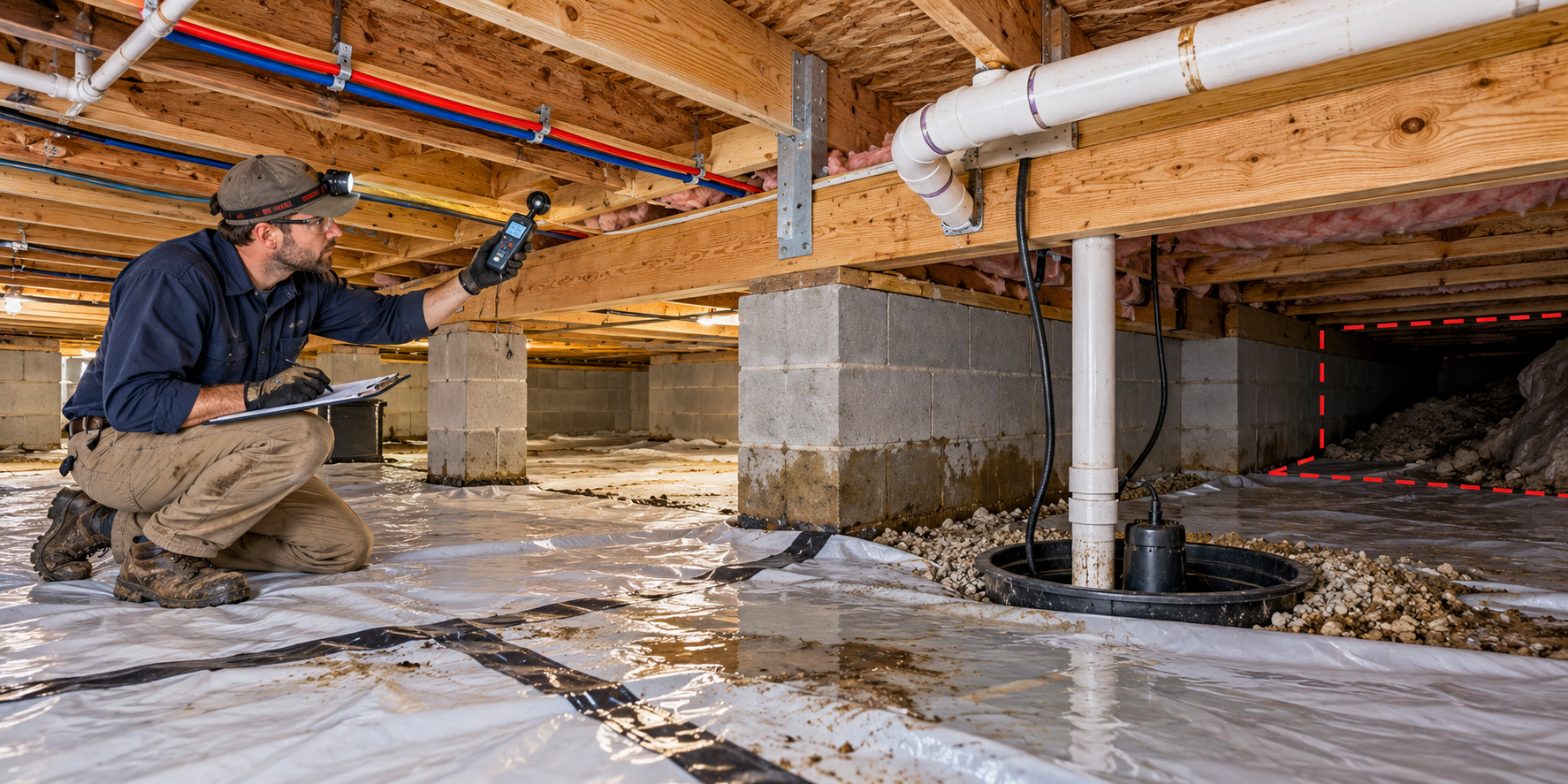
What the inspection should cover
Where safely accessible, ask the evaluator to document:
- standing water, wet soil, groundwater paths, and exterior drainage clues;
- ground cover, seams, walls, piers, penetrations, and vents;
- humidity, condensation, and temperature conditions;
- sump, discharge, plumbing, and duct or HVAC observations;
- visible wood deterioration, pests, mold-like growth, or structural distress;
- access height, obstructions, and areas that could not be inspected.
DOE explains that soil can introduce liquid water or vapor, with vapor condensing on framing. That distinction changes the project: a barrier may manage ground vapor, while standing water needs a source and collection strategy.
What it may cost
No reliable comparable U.S. or Canadian inspection-fee dataset was established. A free encapsulation estimate is not necessarily an independent diagnostic service. Ask whether the provider charges for time, measurements, photographs, a written report, or referrals, and whether the fee is credited toward later work.
Keep the boundaries clear
An inspector can identify signs that warrant a structural, pest, mold, plumbing, or enclosure specialist without diagnosing those disciplines remotely. A useful recommendation should list observations, likely pathways, unknowns, proposed scope, and exclusions. It should not sell encapsulation as the answer to every crawl-space symptom.
Diagnostic scope and cost logic
An inspection may be a paid independent assessment, a building-science consultation, a pest or structural review, or a contractor’s sales estimate. Those services can overlap in vocabulary while producing different deliverables. Ask whether the provider will enter the full space, what areas are inaccessible, whether measurements or photographs are included, and whether the report distinguishes observations from recommendations.
The fee should support a decision. A useful report can identify whether the immediate concern is standing water, groundwater, soil vapor, condensation, a failed barrier, a sump, plumbing, or another condition. It can also say when the evidence is insufficient. A free estimate can still be useful for a defined project, but it may be shaped around the provider’s encapsulation system rather than a comparison of alternatives.
What changes the next budget
- Water: drainage, sump, discharge, site correction, foundation work, or restoration may be needed before enclosure.
- Ground vapor: a continuous ground cover and appropriate wall or pier detailing may be relevant, but the barrier does not remove standing water.
- Humidity and condensation: dehumidification, ventilation, air sealing, or a changed enclosure strategy may be evaluated.
- Consequential conditions: wet insulation, wood deterioration, pests, mold-like growth, radon, plumbing, or structural concerns need their own qualified scope.
- Access: low height, obstructions, stored material, ducts, and unsafe conditions can limit both diagnosis and repair.
DOE says soil can introduce liquid water or vapor and that vapor can condense on framing. NRCan advises correcting leaks before crawl-space insulation. These sources support a mechanism-first assessment, not a universal encapsulation prescription.
What to request in writing
Ask for the areas inspected, conditions on the day, water history considered, measurements, photographs, inaccessible zones, likely pathways, unresolved questions, recommended sequence, and excluded specialist work. If a quote follows, ask which observations justify drainage, a liner, a dehumidifier, or a structural or environmental referral.
An inspection is worthwhile when it prevents a bundled project from hiding the distinction between source correction and symptom control. The right output is not certainty where the space was inaccessible; it is a clearer next decision and an honest statement of what still needs to be verified.
Match the inspection to the decision
A first visit may only need to determine whether water is entering, whether soil vapor is contributing, and whether the space is safe to enter. A pre-insulation inspection may need to assess leaks, wet insulation, wood condition, drainage, and service access. A quote review may need to compare a barrier, encapsulation, drainage, sump, dehumidifier, or exterior correction. The scope and fee should follow the decision rather than the name “crawl-space inspection.”
Ask whether the inspection includes the entire space or only accessible areas. Low clearance, debris, ducts, wiring, pests, stored material, standing water, and unstable soil can limit observation. A report should identify those limits. An inaccessible area is an uncertainty to manage, not evidence that it is dry or safe.
What makes a report useful
Look for a plan or room-by-room description, photographs, moisture or humidity observations, water history, likely pathways, and a distinction between liquid water, vapor, condensation, and damage. If an enclosure or drainage system is recommended, ask what observation supports each component and what remains unresolved. If insulation is involved, ask what must happen to leaks and wet materials before the retrofit.
The DOE guidance identifies soil as a possible source of liquid water or vapor and describes the importance of ground-cover continuity in crawl spaces. NRCan advises correcting leaks before crawl-space insulation. Those points support asking for a mechanism-first report; they do not select a universal assembly for the property.
Budget after the visit
Organize the next quote into diagnosis, source correction, drainage or sump, ground and wall enclosure, dehumidification, damage removal, insulation, and maintenance. A low inspection fee is not useful if the report only recommends a package. A higher fee may be justified when it clarifies whether the package is needed or identifies a different source.
Before signing repair work, ask for the condition that will be handed off after inspection, the test that will follow, and the areas still inaccessible. Preserve the report and photographs for later comparison. The inspection earns its place in the budget when it prevents moisture symptoms from being priced as a single product.
How to use competing reports
Give each professional the same water history and ask for observations before recommendations. Compare the accessible area, measurements, photographs, likely mechanisms, limitations, and next diagnostic step. If one report proposes a liner and another proposes drainage, the useful question is which water path each report found and what evidence would resolve the disagreement.
Keep the inspection fee separate from the repair total. A report that recommends a package should still explain the role of each component and what is not included. A lower-cost visit may be enough for a localized issue; a more detailed inspection may be worthwhile before enclosing a low-clearance space or installing insulation that would hide the condition.
Decide what level of certainty is worth buying
Pay for the observation that can change the repair decision. A moisture map may be enough to separate one wet area from a broad pattern. A camera, test opening, or drainage assessment may be worthwhile before excavation. A specialist referral may be required for structural, environmental, radon, plumbing, or restoration questions. The report should say what each step can establish and what it cannot.
When the inspection is complete, classify the next action as monitor, correct a local source, install or repair a system, or refer the condition. Attach the next quote to that classification. This keeps inspection cost, repair cost, and renovation cost separate and prevents an inaccessible area from being treated as a confirmed diagnosis.
Give the inspector the event history, prior quotes, photographs, and the decision you need to make, but ask the report to distinguish supplied information from independent observation. Request a clear list of accessible and inaccessible areas, conditions requiring urgent action, suspected mechanisms, and the next step that would reduce uncertainty.
The inspection should leave the homeowner able to ask better quote questions. It should not be used as a substitute for structural, environmental, plumbing, electrical, or restoration assessments when those are indicated. Its value is a more defensible sequence and a clearer boundary around the next purchase.
Keep the report with later quotes and record which recommendations were accepted, staged, or declined. If conditions change, the original limitations help determine whether a new visit is needed. A durable inspection record is part of the project budget, not paperwork after the decision.
That record is especially useful before a liner, insulation, or wall finish conceals the inspected areas. It preserves the difference between an observed dry condition and an area that was never accessible.