
A crawl-space sump system can require more than the same pump installed in an open basement. Low clearance, difficult material handling, a new pit, drainage connections, service access, discharge, and electrical work can all increase labor and coordination.
U.S. crawl-space signal
Angi’s 2026 U.S. specialist observations place crawl-space or exterior sump installations around $1,500–$4,000. The figure is a market signal, not a universal quote or design. It may bundle pit excavation, pump, drainage, access, electrical, or discharge work.
Components to price
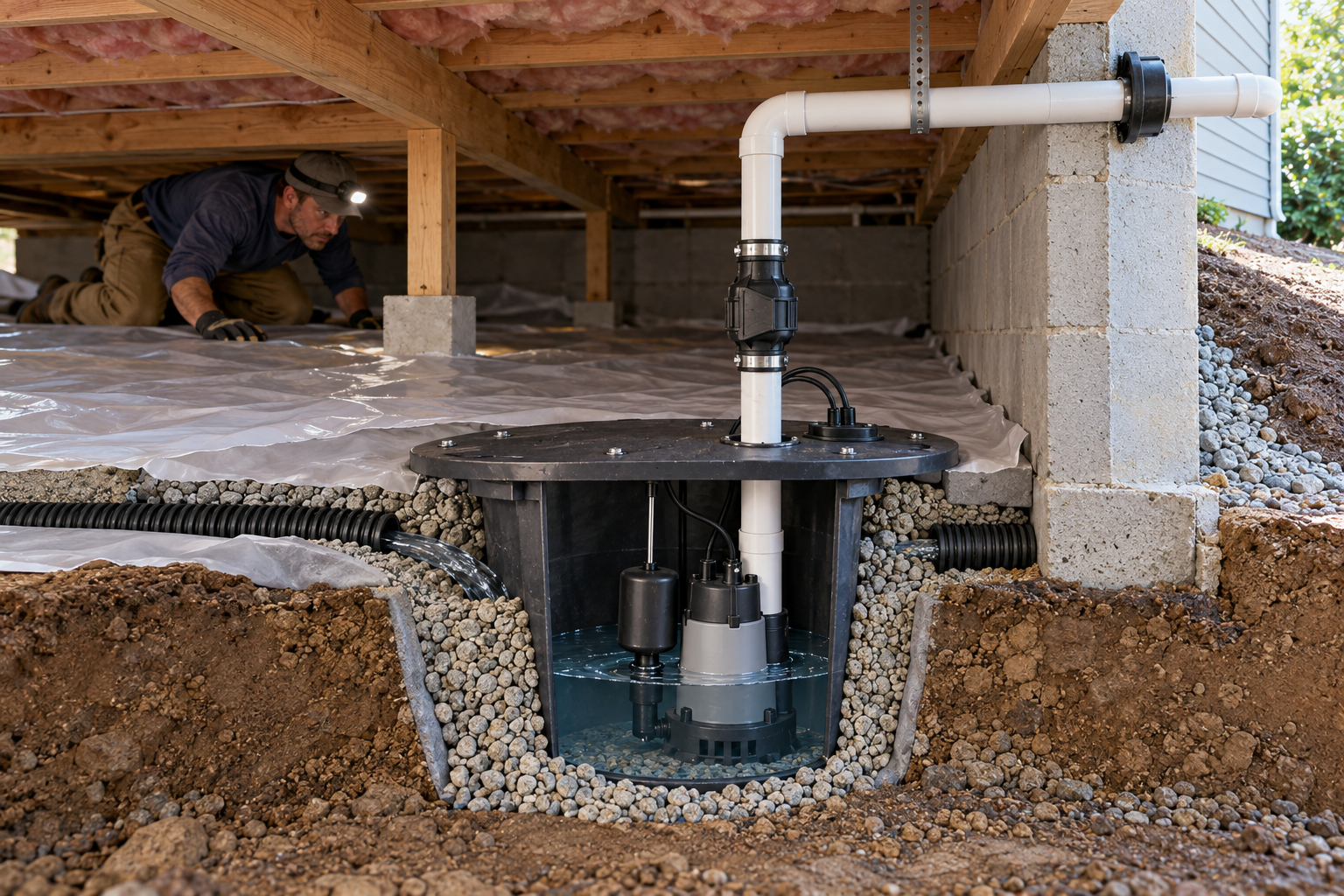
Ask for the pit and lid, collection connection, pump and control, check valve, discharge route, power, alarm, backup, concrete or soil work, and maintenance access. The Government of Canada describes the operating relationship among weeping tiles, the pit, float, pump, check valve, and discharge; local plumbing and electrical requirements remain controlling.
The pump should be selected from inflow and total head, not a generic horsepower rule. A sealed or supported cover, ventilation, and access details depend on the assembly and authority requirements.
Encapsulation coordination
Do not bury the pump, float, discharge, or alarm behind an enclosure without a service plan. If standing water is present, the sump may be one part of a drainage correction, not evidence that the crawl space is ready for encapsulation. A battery backup or alternate power protects against different failure modes and should be priced separately.
Define the collection system first
A crawl-space sump pump is useful only when water can reach the pit and the discharge can move it away from the building. Ask whether the pit receives a perimeter drain, a local low point, a footing-level collection route, or water from another system. If the source is outside the collection area, a pump may operate normally while the crawl space remains wet.
The installation can include access preparation, excavation, basin, lid, collection connections, pump, float or control, check valve, discharge, power, alarm, backup, concrete or soil restoration, and future service. A quote should identify which of these are new, which are reused, and which are excluded. The Government of Canada describes the relationship among weeping tiles, a pit, float, pump, check valve, and discharge; local requirements control the actual installation.
Low clearance changes the scope
Record the access route, height, soil, debris, posts, footings, utilities, insulation, pests, and standing water. Material handling and safe work can cost more than the pump itself. Ask whether the contractor includes debris removal, contaminated-water precautions, opening or enlarging access, and restoration after the pit is installed.
If the pit is placed beneath an enclosure, keep the lid, float, alarm, pump, check valve, and discharge reachable. Do not cover equipment before testing and photographing it. A basin that is technically installed but difficult to service can create a larger future cost.
Power, discharge, and backup
Ask how the pump is powered, what happens during an outage, whether the alarm is audible or monitored, and where the discharge terminates. A battery backup, alternate power, or secondary pump addresses different failure modes. A backup that shares a blocked or frozen discharge is not independent protection. Price battery replacement, generator service, alarm testing, and electricity separately from the initial installation.
The pump should be matched to inflow and total head rather than selected by a generic horsepower rule. Ask how the installer will test flow, float operation, check-valve behavior, and discharge. Confirm local electrical, plumbing, permit, and inspection requirements with the responsible professionals.
Compare four common scopes
- New pit and pump: access, excavation, basin, lid, discharge, power, and restoration.
- Pit plus crawl drainage: trenching, collection pipe or channel, stone or filter detail, connections, pump, and testing.
- Pump and discharge resilience: alarm, backup, alternate power, or a protected outlet for a known failure mode.
- Water-management correction: exterior drainage, foundation repair, grading, or plumbing work because the sump is not the primary source correction.
Ask what observation justifies the selected scope. No universal Canadian crawl-space installation price was established; local measured quantities are more useful than a converted market headline. The right budget describes the water path, operating condition, service plan, and limits.
Confirm source and inflow assumptions, pit location, discharge destination, electrical work, permits, access, backup, testing, and exclusions for site drainage, plumbing, mold, pests, or structural work. No reliable comparable Canadian crawl-space installation range was established.
Make the handoff measurable
Request a diagram or photographs showing how water reaches the pit, where the pump discharges, and how the lid, float, alarm, check valve, and backup remain accessible. Ask for the test result under safe conditions and record which existing components were reused. If the crawl space will later be enclosed, document the equipment before the liner or insulation conceals the route.
The installation should leave the homeowner knowing what to inspect, how often to test it, and what a power loss or blocked discharge looks like. A pump is one response to a collection problem; it is not proof that the source has been corrected. Compare the installation with the property’s inflow and failure modes, not simply with a generic pump size or market headline.
Ask how the installation interacts with posts, footings, ducts, wiring, plumbing, insulation, and the access door. Ask whether the basin lid is supported and serviceable and whether the pump can be removed without dismantling the enclosure. If a battery or alternate power is included, record its test and replacement assumptions separately.
The crawl-space pump should be evaluated as part of a water-management chain. If the water source is exterior grading, a foundation wall, plumbing, or an inadequate collection route, the installation may need to be staged with that correction. A clear quote identifies the pump’s job and prevents a new piece of equipment from being treated as a complete moisture repair.
Photograph the pit location, collection connections, float, pump, check valve, discharge, power, alarm, and backup. Record the test result and identify which components were reused. Ask where a technician will work and whether the lid can be removed without disturbing the liner, insulation, or finished access panel.
The proposal should state what happens if the pit receives more water than expected, if the discharge freezes, or if power fails. Those conditions may require a larger collection system, an alternate route, a backup, or a different source correction. They should not be hidden in a generic pump warranty.
The useful installation budget is therefore the price of a known collection and discharge path, plus the access and maintenance needed to keep it working. The equipment model is only one part of that decision.
Ask how the pump fits the crawl space
The pit location should be connected to the expected water path, not selected only because it is the lowest visible point. Ask whether water will arrive from a perimeter drain, a local trench, a footing-level route, or a broad low area. If water is arriving through a foundation wall or from site grading, the pump may be only one part of the correction.
Low clearance and difficult access can affect every line item. Ask how materials enter, how soil and debris leave, how workers remain safe, and whether an opening must be enlarged. Ask whether standing water or contaminated material changes the scope. These conditions may cost more than the basin and pump.
Separate normal operation from resilience
A primary pump, battery backup, alternate power, high-water alarm, and secondary pump address different risks. Ask which failure mode each item covers and what happens when the discharge is frozen or blocked. If both pumps share a route, test the route under the expected condition. If the backup uses a battery, price replacement and testing.
Keep the pump, float, lid, alarm, check valve, power, and discharge accessible after a ground liner or insulation is installed. Record the model, installation date, test, and maintenance instructions. A serviceable installation lowers future diagnostic cost and makes it easier to distinguish pump failure from a source or discharge problem.
A complete crawl-space quote
Request measured access and excavation, basin, lid, collection connection, pump, controls, check valve, discharge, electrical work, alarm, backup, restoration, permits, test, warranty, and exclusions. No universal Canadian installation range was established. The local quote should explain what water is controlled, what remains outside the scope, and what the homeowner will maintain.
At handoff, keep the pit and discharge location documented even if the crawl space is later enclosed. The installation is complete only when the equipment can be tested, serviced, and connected to a known water path.