
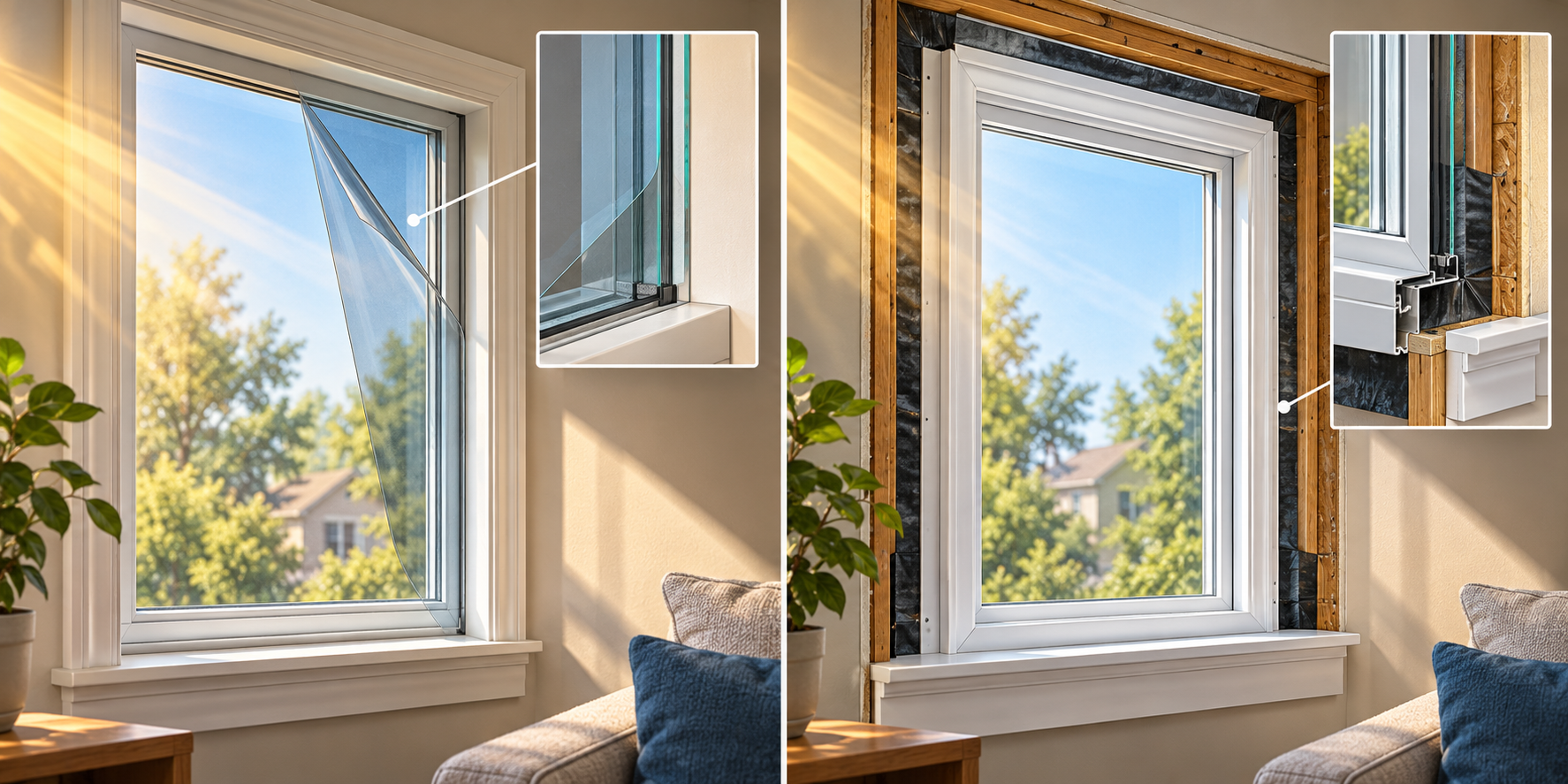
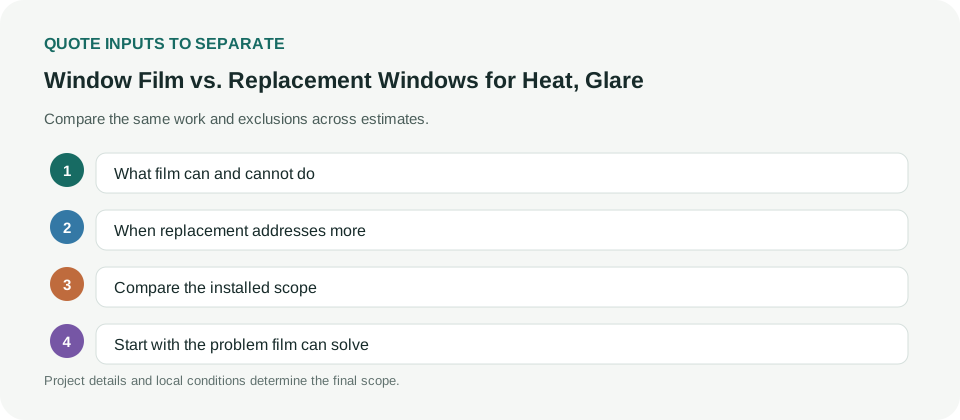
Window film and replacement windows are different interventions. Film may change solar heat, glare, visible light, or ultraviolet exposure while retaining the existing frame. Replacement changes the complete opening product and may address operation, leakage, glass failure, frame condition, or configuration. Choose by the problem, not by the promise of a lower product price.
What film can and cannot do
Film is a surface-applied attachment. Its effect depends on the film, existing glazing, pane count, coatings, orientation, shading, and installation. DOE research models films separately from storm-window panels and reports results under stated assumptions; it does not establish a guaranteed household saving.
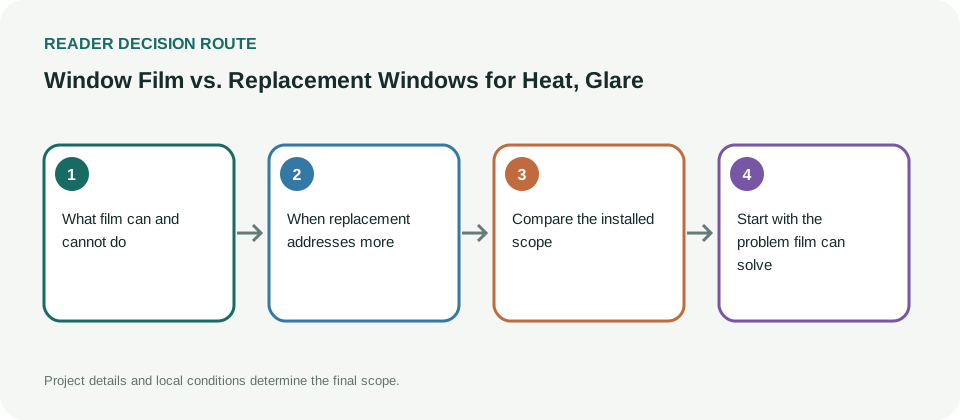
Film does not repair a rotten frame, failed insulated-glass seal, broken operator, leaking flashing, or a window that cannot meet an egress or impact requirement. It also may not be compatible with every glass construction. Ask the film installer and window manufacturer about thermal stress, edge conditions, warranty, cleaning, removal, and appearance before application.
When replacement addresses more
Replacement may be the better scope when the unit is distorted, repeatedly failing, fogged between panes, leaking at the opening, difficult to operate, or due for a different size or performance package. It brings product, removal, installation, air sealing, flashing, trim, finish, disposal, and concealed-condition costs.
If the existing frame is sound and the goal is mainly solar control or glare, film or an exterior shading approach may be a narrower option. If the goal is comfort from drafts or cold glass, diagnose sash and perimeter leakage first; a film with the wrong solar behavior may not solve that complaint.
Compare the installed scope
| Question | Film | Replacement window |
|---|---|---|
| Main scope | Product application and preparation | Complete product and opening project |
| Existing frame | Usually retained | Insert may retain it; full-frame may expose more of it |
| Failure repair | Does not repair window or wall defects | Can address some unit and frame defects, but not every wall problem |
| Compatibility | Existing glazing and film specification are critical | New product and installation details are critical |
| Disturbance | Often lower, but access and removal still matter | Usually broader demolition, finish, and disposal scope |
Use separate U.S. and Canadian market information where available. Do not convert a film or window price across currencies or treat one product’s claim as universal.
Start with the problem film can solve
Window film is usually considered for solar heat, glare, visible light, ultraviolet exposure, or privacy. It does not repair a cracked pane, failed IGU seal, rotten frame, distorted sash, missing flashing, or a window that will not lock. Replacement is a broader intervention that can change the frame, glass, operation, air seal, and installation perimeter.
Write down the room, orientation, time of day, symptom, existing glass, shade, and desired result. A south- or west-facing opening with strong solar exposure may present a different film decision from a cold, drafty, or water-damaged opening. If the primary problem is heat entering through many parts of the enclosure, exterior shading or broader envelope work may deserve comparison.
Film choices and compatibility
Films vary in solar-control, visible-light, reflective, low-emissivity, security, decorative, and privacy objectives. Interior and exterior products see different exposure and maintenance conditions. Compatibility can depend on pane count, coatings, glass type, seal condition, edge details, orientation, and the product manufacturer’s instructions.
Do not assume that a film marketed for one window is safe or warranted on every insulated-glass unit. Ask for written compatibility and warranty information for the actual glass and frame. A film can change solar absorption and temperature within the glass assembly; product-specific technical guidance matters where thermal stress or seal risk is a concern.
Compare the complete costs
A film project may include preparation, measurement, custom cutting, installation, access, removal of existing film, edge finishing, and future replacement. Replacement-window cost may include the unit, removal, disposal, flashing, air sealing, trim, cladding, interior finish, access, and concealed damage. Compare both options using the same number of openings and the same finish assumptions.
| Goal | Film may fit when | Replacement may fit when |
|---|---|---|
| Glare or solar heat | Existing window is sound and glass remains serviceable | Frame, seal, operation, or performance also needs work |
| UV or fading concern | A compatible product meets the desired optical result | The complete window needs a different glass package |
| Draft or leakage | Only after the actual problem is shown to be glazing-related | Sash, perimeter, frame, or wall leakage is confirmed |
| Failed glass or fogging | Film does not address the failure | IGU, sash, or full unit must be replaced |
The table is a scope comparison, not a promise that film will produce a specific energy saving.
Performance and energy limits
DOE research distinguishes surface-applied films from storm panels and other attachments and reports modeled performance under stated assumptions. The results support considering film as one alternative, but do not guarantee a particular household bill reduction. Product metrics such as U-factor, SHGC, visible transmittance, air leakage, and condensation resistance answer different questions.
Film may reduce solar gain or glare while changing the room’s daylight and appearance. A replacement window may improve multiple properties but carry much more disturbance and cost. If energy is the primary objective, compare baseline conditions, orientation, shading, product data, installation, climate, and energy prices. If comfort or glare is the main objective, evaluate that outcome directly rather than forcing it into a payback calculation.
Ask how the film changes the whole window
The same film can behave differently on different glass constructions. Before purchase, identify whether the existing unit is single- or double-pane, whether it has a low-emissivity coating, its orientation, and any existing cracks or edge damage. Ask the film supplier to confirm compatibility for that exact glazing and to explain the risk of thermal stress or seal effects if the product is unsuitable. A generic claim that a film “fits windows” is not enough for a coated or specialty unit.
The estimate should state whether the film is interior or exterior, the product name, visible-light and solar-control characteristics, warranty, surface preparation, edge and muntin details, and whether old film can be removed later. A price per square foot may omit measurement, access, furniture protection, cleanup, and difficult shapes. Custom glazing or high windows can make installation labor a larger share than the material.
Compare the film with a replacement proposal only after naming the job each one must do. Film can alter solar gain, glare, or privacy, but it does not repair a leaking frame, failed hardware, or a deteriorated insulated-glass seal. Replacement can address a broader assembly but also involves product, removal, flashing, finish, disposal, and possibly a changed opening. A shade or exterior screen may be a better alternative for some solar-control goals, depending on appearance and weather exposure.
Ask each provider what outcome they are promising and what is outside the scope. If the reason for replacement is energy savings, obtain the assumed baseline and method rather than compare a film quote with a promised utility reduction. If the reason is a visible defect or water problem, price the repair of that defect separately. The least expensive treatment is useful only if it solves the condition the homeowner is paying to correct.
If film is selected, ask whether the product can be removed without damaging the glass coating or seals and what that later removal costs. If replacement is selected, ask whether the existing trim and cladding can be retained and how the new frame interfaces with them. These future-work details can matter when the homeowner expects to remodel the façade or replace adjacent windows later.
For a façade with matching windows, ask whether one film-treated pane will look different from untreated glass at night or under direct sun. Appearance should be part of the choice, not an afterthought once the film is installed.
For a large film project, ask whether the installer will test one representative pane first and how the result will be assessed. A trial can reveal appearance or adhesion issues, but it does not establish compatibility for every glass type in the home.
When replacement is the wrong comparison
Do not use film to conceal an active leak, failing frame, or broken seal. Do not replace a sound window solely because a film installer has not considered exterior shading, curtains, overhangs, or a secondary panel. Likewise, do not select film merely because its product price is lower if it cannot deliver the desired light or heat outcome.
U.S. and Canadian pricing and product requirements should remain separate. Older openings may also contain lead paint, asbestos-suspect caulk, or other materials if trim or glass is disturbed. Confirm qualified assessment and current local requirements before renovation.
The best proposal identifies the existing glass, exact film or replacement product, compatibility, expected optical and thermal result, installation boundary, warranty, removal option, and what the scope cannot correct. Choose the intervention that matches the problem rather than the one with the simplest headline price.
Ask for the exact film and glass compatibility, expected optical change, warranty, preparation, removal option, and labor. For replacement, ask for complete-product metrics, frame method, flashing, finish, disposal, and concealed-work assumptions. A lower initial price is useful only if the intervention solves the stated heat, glare, UV, comfort, or condition problem.