
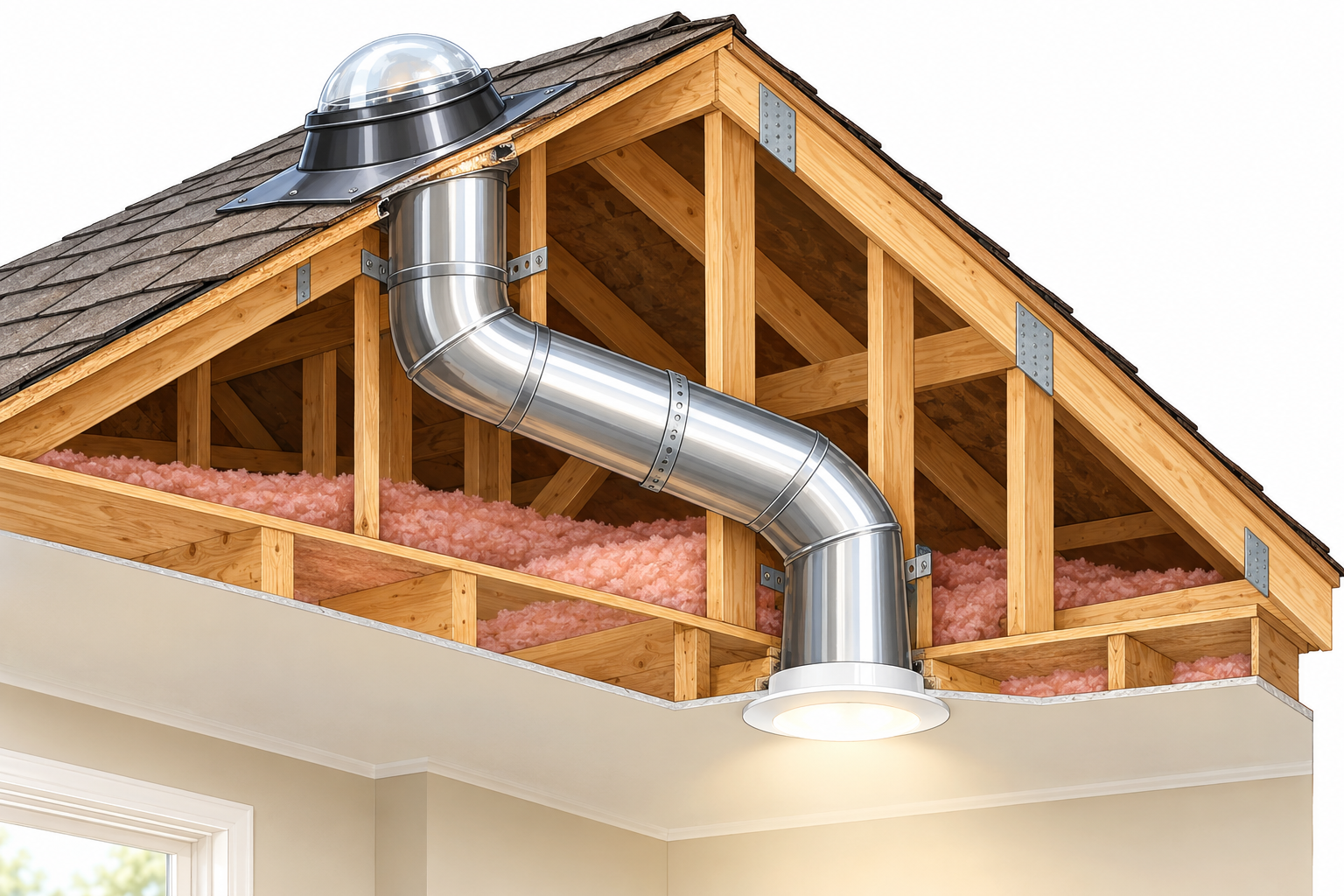
A tubular skylight, also called a tubular daylighting device, brings daylight through a roof dome, reflective tube, and ceiling diffuser. It has a smaller and differently shaped roof opening from a conventional skylight, but the installed project still depends on roof access, flashing, tube routing, attic obstacles, and interior finish.
Define the device
“Sun Tunnel” may be a brand or product term, while tubular daylighting device is the generic description. Ask for the manufacturer, dome and flashing detail, tube diameter and length, rigid or flexible sections, bends, diffuser, light kit or controls, roof compatibility, and warranty. Do not assume two products using the same name have identical performance or installation requirements.
What changes the installation cost
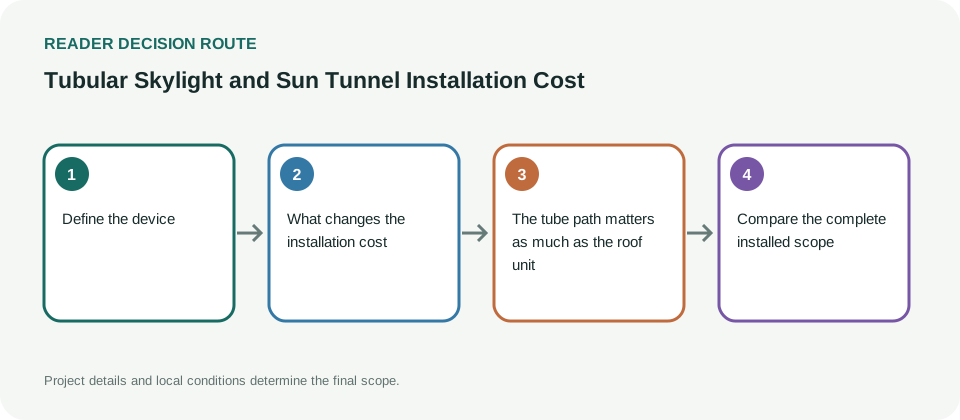
- roof type, pitch, covering, access, and weather protection;
- location and number of bends in the tube;
- attic framing, insulation, ductwork, wiring, and other obstacles;
- roof dome, flashing, underlayment, and roof-cover matching;
- ceiling opening, diffuser, trim, drywall, paint, and air sealing;
- delivery, removal, disposal, and optional light or ventilation accessories.
The shorter and straighter the path, the simpler the project may be, but the actual product instructions and roof assembly control the details. A tubular device is not automatically leak-proof because its opening is smaller.
The tube path matters as much as the roof unit
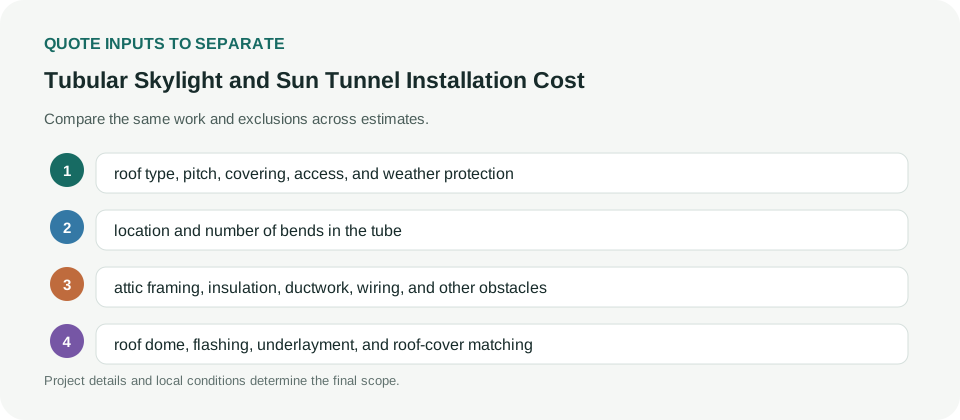
A tubular daylighting device sends light through a roof dome and reflective tube to a ceiling diffuser. The roof opening is usually different from a conventional skylight, but the interior route can make the project easy or difficult. Ask where the dome and diffuser will sit, how long the tube will be, how many bends it needs, and whether the route crosses framing, wiring, plumbing, ductwork, or storage platforms.
A short, straight run in an accessible attic is a different installation from a longer path that bends around trusses or mechanical equipment. More bends and a longer route can change light delivery and may require a different product or layout. Have the installer show the proposed path and product instructions before cutting. Do not assume a larger dome will compensate for a poorly routed tube or that a product with the same generic name has the same performance.
Compare the complete installed scope
A quote should identify the dome, flashing, roof-covering interface, underlayment, tube diameter and length, rigid or flexible sections, elbows, diffuser, trim, and any light kit or controls. Ask whether the price includes cutting and framing the roof/ceiling openings, moving attic insulation, air sealing, drywall repair, paint, delivery, access, weather protection, and disposal. The contractor should state what is excluded if hidden framing or roof damage is found.
A tubular skylight can be less involved than a large conventional unit when it uses a shorter route and does not need a deep shaft, but that is not a universal price rule. The active evidence includes no representative current U.S. or Canadian installed-price range for tubular systems. HomeGuide’s conventional skylight-installation estimate is not a substitute for a tubular-device price; it does not identify the same product, route, or installation scope. Ask local installers to quote the exact device and path rather than borrowing a conventional-skylight figure.
Decide whether daylight is the only goal
A tube can be useful in a hallway, closet, or interior room where daylight matters but a view or ventilation does not. A conventional fixed skylight may suit a room where direct view is important, while a vented unit adds an operating function and hardware. Compare where the light will land, how it changes over the day, and whether a diffuser can meet the room’s purpose before comparing product prices.
Ask for the manufacturer’s product name and whether “Sun Tunnel” is a brand-specific term or a generic description. Confirm roof type and pitch compatibility, flashing method, tube insulation where relevant, and any warranty conditions. Do not assume the smaller opening makes a device leak-proof: roof integration still matters. If the existing roof is near replacement, ask whether coordinating the flashing and roof work changes the total, and have the scope show which contractor owns each interface.
The project may need a qualified professional if the proposed location affects structural members or concealed services. Keep those checks separate from the daylight product price. A complete estimate should leave a weather-tight roof and a finished ceiling, with the diffuser in the intended location and no unpriced attic or interior work left behind.
Check light output and placement before choosing the size
A tubular device is designed primarily to bring daylight to a diffuser; it does not provide the direct view or ventilation of a conventional skylight. Ask the supplier for the product’s light-output information and the assumptions behind it, including tube length, number of bends, roof orientation, and diffuser. A claim based on a short straight tube may not describe a route that crosses a crowded attic.
Placement can change both the perceived result and the construction scope. A diffuser near a hallway intersection may distribute light differently from one centered over a work surface. The installer should check ceiling framing and attic obstructions before recommending a location. If the tube must detour around ductwork or wiring, compare that revised path with moving the opening or choosing another daylighting method.
The homeowner should distinguish daylight availability from guaranteed room brightness. Sky conditions, season, orientation, and interior surface colors affect the result. Ask whether an optional light kit is included and how it operates after dark. If the project is meant to replace a regularly used electric light, ask for a realistic expectation rather than a general energy-saving promise.
Compare the product-only amount with the finished room
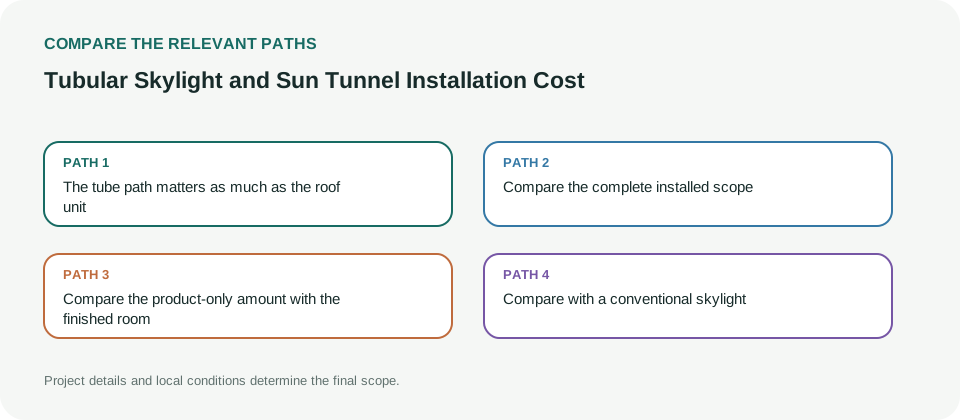
If a retailer provides a kit price, ask whether it includes all roof flashing, tube sections, elbows, diffuser, extension pieces, and ceiling trim needed for the actual route. A nominal “standard kit” may not cover a deep attic or unusual roof material. Product-only and installed figures should remain separate until the contractor confirms the material list.
Ask the installer to identify the roof and ceiling openings, tube joints, insulation treatment, and final seal checks. If the tube passes through a cold attic, ask what the product instructions say about condensation management and whether the installation includes insulation around the tube. The answer should refer to the selected model and climate rather than a generic claim that reflective tubing needs no maintenance.
For a simple route, a homeowner may compare one device with a conventional skylight using the desired light, view, opening size, and finish. For a complex attic, price the actual route before choosing. There is no reliable North American installed range for this product class in the available evidence, so the useful budget is a local quote with the path and finish specified.
If the attic is used for storage, ask how the tube will affect access and whether storage items could press on or block the reflective surface. The installation should preserve the intended tube path.
Confirm the installer’s responsibilities
Ask the installer to identify which work is included at the roof and ceiling and who will correct a leak or finish defect afterward. The manufacturer’s product warranty may cover the device while the roofer’s workmanship warranty covers the flashing; keep both in writing. Ask what maintenance is required for the dome, tube, and diffuser and whether the homeowner can safely reach each part.
If the quote includes several devices, request one row per location with tube length, bends, attic obstacles, roof surface, and diffuser. A shared visit may reduce setup, but each route can differ. Comparing the exact path is more useful than a single per-device average.
If the room’s light goal is a work surface or reading area, ask the installer where the diffuser will sit relative to the task. A device centered in a hallway may not deliver the same useful light to a desk. Confirm location and finish before the roof opening is cut.
Keep the installer’s route drawing with the warranty and model paperwork so later work in the attic does not block the tube or damage its joints.
Ask whether the diffuser can be cleaned and whether the dome can be reached for inspection after installation. A product that is difficult to service may require roof access later, so include that practical ownership cost when comparing locations.
If the roof has a long-term warranty, ask the roofer whether the new penetration needs a particular flashing detail or installation partner. Record the approved product and method before cutting. This protects the homeowner from a disagreement between the daylighting installer and the roofing contractor later.
Compare with a conventional skylight
| Question | Tubular device | Conventional skylight |
|---|---|---|
| Main result | Daylight through a diffuser; limited direct view | Daylight and potentially view or ventilation |
| Interior scope | Tube and ceiling diffuser | Often a larger shaft or light well with deeper finish work |
| Roof interaction | Smaller dome and flashing system, product-specific | Unit, roof opening, flashing, and roof-covering system |
| Design limits | Tube route and bends affect placement and light | Shaft depth, orientation, and roof location affect the result |
There is no reliable universal installed price in the available evidence. Ask for a complete base scope and a separate allowance for attic obstacles or finish repair. A tubular device may be a useful alternative when a conventional skylight’s view, shaft, or roof opening is not needed, but it is not a substitute for every daylighting objective.