
Permanently removing a skylight is a roof and interior-finish project. The work may include removing the unit and flashing, closing or reframing the roof opening, repairing the roof deck and underlayment, matching the roof covering, restoring insulation and air control, and patching the ceiling or shaft. A small unit can create a disproportionately large finish problem.
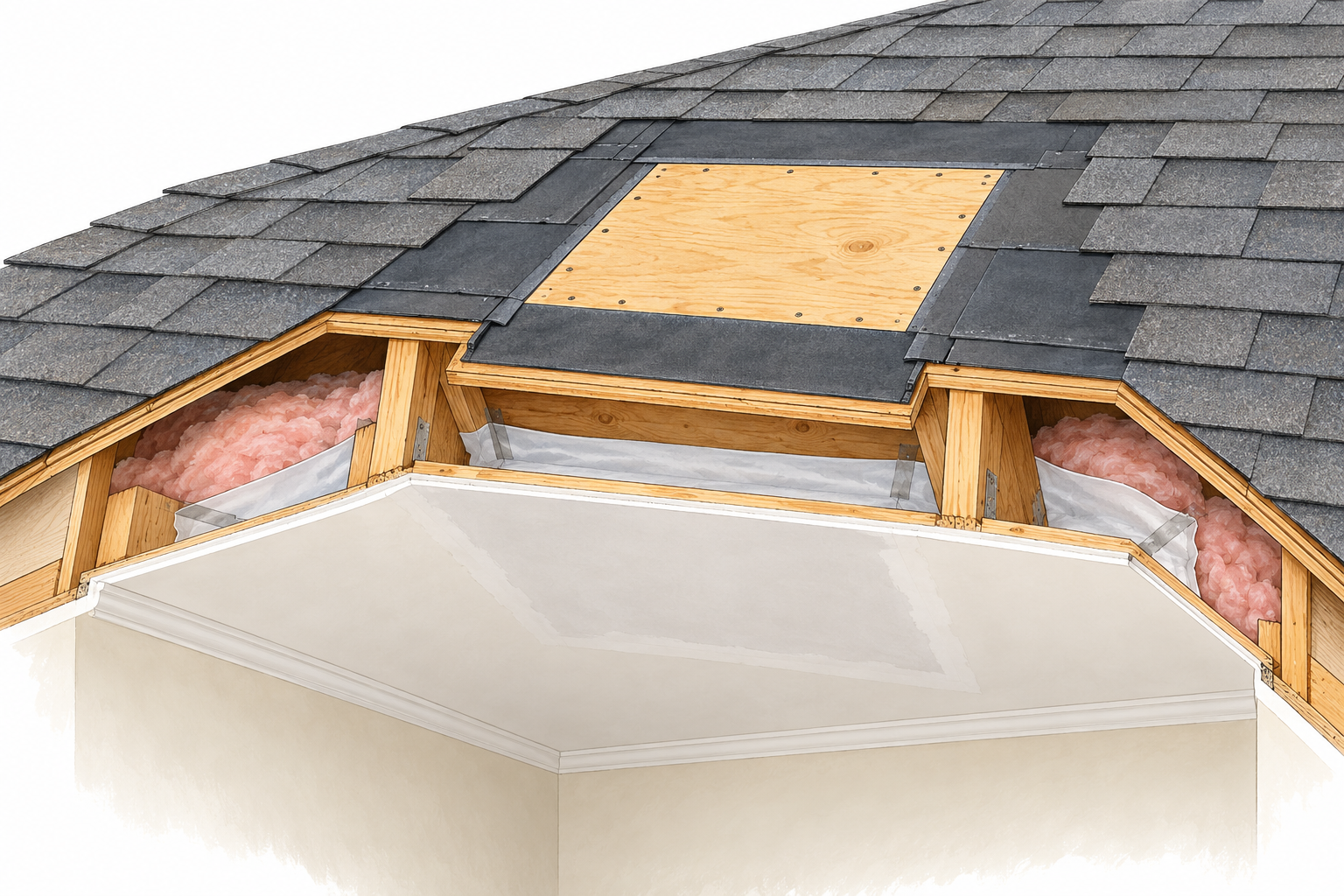
What the roof scope includes
The contractor should identify whether the skylight is curb- or deck-mounted, how the roof opening is framed, the roof covering and underlayment, the flashing, the interior shaft, and any visible water or rot. Closing the opening needs a durable roof-deck and water-management repair integrated with the surrounding roof. VELUX installation guidance is useful for understanding why product and flashing details matter, but it is specific to VELUX products and does not dictate every removal method.
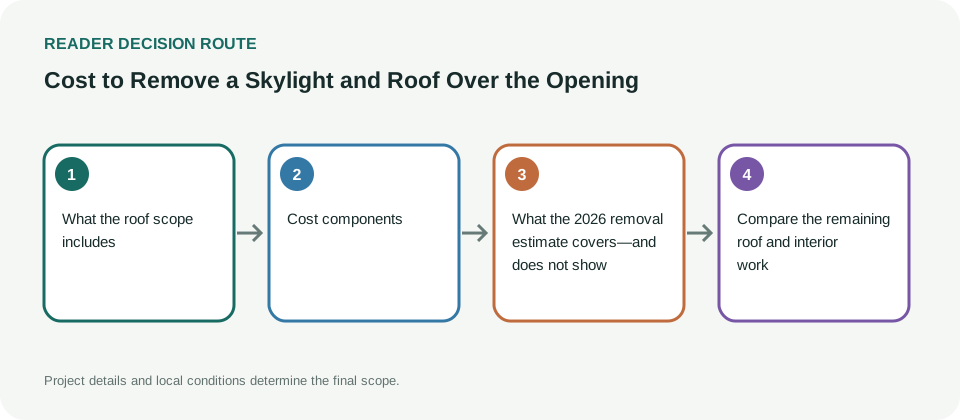
Cost components
- roof access, protection, weather, removal, and disposal;
- unit, curb, flashing, underlayment, roof deck, and framing removal or repair;
- insulation, vapor or air-control continuity, and interior shaft closure;
- matching shingles, tiles, membrane, metal, or other roof covering;
- ceiling framing, drywall, texture, trim, paint, and flooring protection;
- diagnosis or repair of concealed water damage;
- permits, engineering, or other professional scope where applicable.
Matching older roof materials may be difficult. If a roof is already being replaced, coordinating the closure can affect access and material matching, but the interior finish and roof-deck scope still need to be priced.
What the 2026 removal estimate covers—and does not show
HomeGuide’s February 2026 page lists $125–$250 to remove a skylight and $350–$1,000 to remove it and roof over the opening, with roof type affecting the latter estimate. These are source-reported figures, not a local bid. The page does not give a per-row sample size, identify the currency with an ISO code, or establish that interior shaft work is included. Do not treat the lower “remove” amount as the cost to leave the roof and ceiling fully restored.
The roof-over scope may need removal of the unit and flashing, reframing or closing the hole, roof deck and underlayment repair, and a compatible roof covering. The interior shaft may require insulation and air-control work, ceiling framing, drywall, trim, texture, and paint. If roof and ceiling contractors are separate, the estimate should identify where one trade’s scope ends and the next begins.
Compare the remaining roof and interior work
A simple closure may be possible when the opening is accessible, framing is sound, and a matching roof covering is readily available. A more complex project can require structural review, replacement of damaged deck or rafters, difficult tile or metal matching, insulation correction, or substantial ceiling restoration. A small skylight can therefore produce a project larger than the unit’s apparent size. These are work-scope distinctions; local material and labor prices determine the actual amount.
If the roof is already scheduled for replacement, ask for a coordinated price to close the opening during that work. The roofer may already have access and matching materials, but the estimate still needs to show unit removal, structural closure, underlayment, flashing or roof integration, and interior finish. Confirm whether the skylight contractor or roofer will be responsible for water-tightness and warranty after the work.
Decide whether removal is better than repair or replacement
Removal may suit an obsolete unit that repeatedly leaks or a room where daylight is no longer useful. Repair can be narrower if the source is a bounded gasket or flashing detail and the unit remains serviceable. Replacement preserves daylight or ventilation but adds the cost of a new compatible unit and flashing. Compare the total roof work, interior disturbance, desired function, and risk of recurring maintenance.
Before approving closure, ask how the contractor will maintain insulation and air-control continuity and restore the ceiling. If the skylight is vented or powered, include safe disconnection and any electrical work. If water damage or possible hazardous materials are present, ask how they will be assessed and included. The written estimate should list roof access, protection, removal, deck/framing, roof covering, insulation, ceiling finish, disposal, permits or design if applicable, and a concealed-condition approval point.
The HomeGuide range is not a substitute for a project-specific proposal, and it does not establish the cost of every element above. It is useful as a prompt to ask whether the estimate is only for removal or for a complete roof closure. The homeowner should approve the latter scope only when both the exterior roof and interior room will be restored.
Plan for material matching and weather exposure
Roof materials age and fade, and an older product may no longer be available. Ask the roofer to inspect the surrounding roof before promising a close match. The quote should state whether the repair will use stored material, a current equivalent, or a larger replacement area so the closure blends acceptably. If matching is uncertain, price a defined alternative rather than leave the homeowner with an open-ended “as needed” line.
The opening should remain protected from rain between removal and completion of the deck and underlayment work. Ask what temporary cover is included and who is responsible if weather interrupts the job. The roof contractor and interior finish contractor should coordinate before the ceiling shaft is closed so insulation, air control, and any required inspection are addressed.
If the skylight is being removed because of a leak, first distinguish the unit from the roof and wall conditions. Closing the opening can eliminate the skylight interface but will not repair water entering elsewhere on the roof. Ask what evidence supports removal as the correction and whether adjacent roof or framing damage will be addressed. That avoids paying to close a hole while leaving the original leak path active.
Price the closure from the roof inward
Ask the roofer to describe the roof layers in order: existing covering, underlayment, deck, and framing. The estimate should show whether the skylight curb or deck-mounted frame is removed, whether framing is retained or changed, and how new sheathing connects to the old roof deck. It should also identify the underlayment lap and roof-covering transition. These details help distinguish a surface patch from a durable closure.
For the interior, ask whether the shaft is removed completely or closed at the ceiling plane, and whether the ceiling cavity needs new framing. The proposal should state what insulation is installed, how air leakage is controlled, and which vapor-control details are appropriate for the assembly. These decisions depend on the home and climate; a generic insulation value or vapor retarder instruction should not be inferred from a roof-over price example.
If the original skylight leaked, ask whether framing or insulation will be inspected for damage before closure. If moisture remains, sealing the ceiling may hide a problem. If the opening is simply unwanted and dry, the project can be narrower. The contractor should distinguish those conditions and price any required repair separately.
Coordinate permits and completion records
Ask whether the closure requires local review based on the roof or framing work and who confirms that requirement. If engineering or inspection is needed, include its fee, schedule, and documentation in the estimate. The project should leave a record of the repaired roof assembly and any changed framing, especially if the home will be sold or reroofed later.
The roofer should state which party warrants the closure and what is excluded, such as interior paint or unrelated roof work. If a separate contractor restores the ceiling, coordinate a handoff after the roof is weather-tight and any concealed inspection is complete. This avoids closing the room before the roof work has been verified.
If roof covering is brittle or near replacement, ask for an alternate that closes the opening during the reroof. Compare material matching, mobilization, and interior finish timing rather than assuming simultaneous work is automatically less expensive.
Ask whether the quote includes removal of the interior shaft or only closes the ceiling at its bottom. These are different scopes; retaining a boxed shaft may leave a visible projection or cavity that the homeowner does not want.
If the skylight is no longer desired because the room overheats, compare removal with shading or replacement alternatives before closing the opening. Removal ends daylight and possibly ventilation; it should address a deliberate homeowner goal, not just a leak diagnosis.
Compare removal with repair or replacement
Removal may be sensible when the unit is obsolete, repeatedly leaks, no longer suits the room, or the homeowner values a simpler roof. Repair can be narrower when the unit and flashing are sound and the source is bounded. Replacement may be preferable when daylight or ventilation is still desired and a compatible product can be installed correctly. Compare the remaining service horizon, roof work, interior disruption, and recurring leak risk.
Ask for the closure detail, roof-covering match, insulation and air-control plan, interior restoration, access, disposal, warranty, and concealed-condition allowance. The completed job should leave both roof and ceiling weather-resistant and finished; “remove skylight” is not the full scope.