
Solar maintenance is usually a mix of monitoring, inspection, troubleshooting, and occasional component repair rather than one universal annual service. A production drop can come from shade, soiling, communication failure, inverter trouble, damaged wiring, roof or weather damage, or a problem that requires a specialist visit. The cost depends on diagnosis, access, warranty, and whether the system is safely generating.
Separate routine service from repair
Routine service may include reviewing production and alerts, visual inspection, checking accessible equipment, cleaning when justified by local conditions, and confirming that monitoring reports the system correctly. It should not promise a fixed production gain or imply that every array needs the same cleaning schedule. Weather, tilt, vegetation, dust, snow, and site conditions matter.
Repair begins when a fault needs diagnosis or replacement. The quote should identify the symptom, tests performed, failed component if known, labor, access, replacement equipment, monitoring, commissioning, and disposal. A “service call” that ends with a recommendation for a second mobilization is different from a completed repair.
Common cost branches
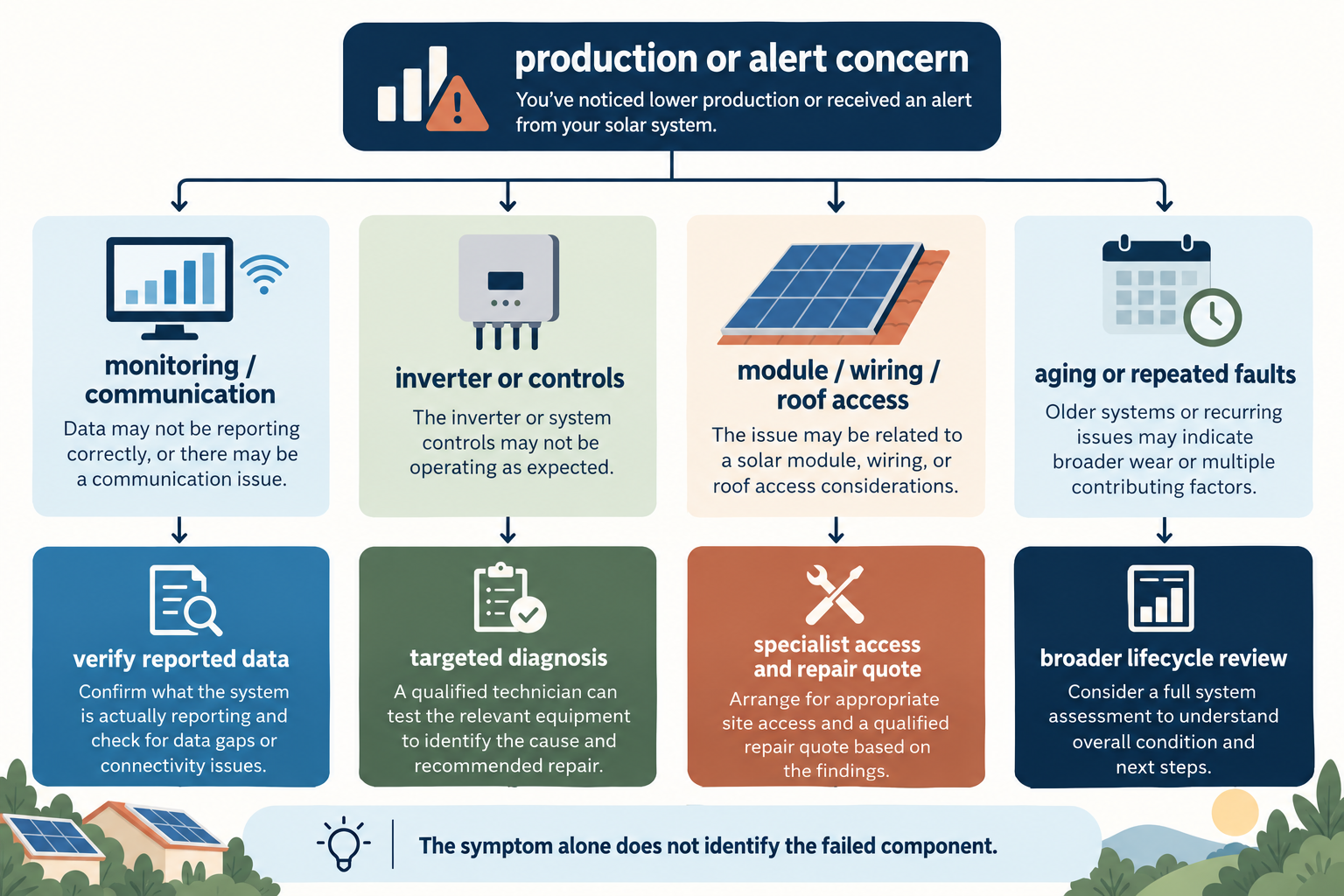
Monitoring or communication fault: The array may be operating while the portal or gateway is not reporting. Confirm actual production before replacing hardware.
Inverter or control fault: A central inverter, microinverter, optimizer, shutdown device, or gateway may need diagnosis and replacement. Compatibility and warranty labor can dominate.
Module, wiring, or roof-access problem: Diagnosis may require roof access, specialized equipment, or coordination with a roofer. Damage from weather or animals can expand the scope.
Underperforming system: Compare the production model, shading changes, equipment age, and utility data before assuming a panel failure. Sometimes repair is less useful than a system lifecycle assessment.
What moves the price
Access is a major driver. A safe, serviceable wall-mounted inverter differs economically from a failed roof-level device on a steep or fragile roof. System documentation matters too. Missing layout records or unknown equipment can turn a simple visit into diagnosis and compatibility work.
Warranty coverage, installer availability, shipping, discontinued models, and local labor affect the total. Ask whether a warranty replacement includes labor, access, monitoring restoration, and recommissioning. A repair may also require utility notification or an inspection depending on the work and jurisdiction.
Three scenarios
Small service problem: The system is physically intact and the issue is a monitoring setting, accessible connection, or clear fault. A focused diagnostic visit may resolve it.
Component repair: A failed inverter or control component requires a replacement, testing, and system records. The part may be covered while labor is not.
Aging-system review: Repeated faults, low production, obsolete equipment, or a near-term reroof make piecemeal repairs less attractive. Compare repair, expansion, and replacement over the ownership horizon.
The available evidence does not support one current universal maintenance or repair price. Use local quotes and ask what is included. Maintenance is worthwhile when it identifies a meaningful issue or preserves reliable operation; it is poor value when sold as a generic service with no system-specific outcome.
Read a service invoice
The invoice should distinguish observation from diagnosis and diagnosis from repair. Record production data reviewed, alarms, tests, accessible equipment inspected, parts changed, unresolved conditions, and the next decision. “No fault found” is useful only if the provider says what was checked and what remains possible.
Cleaning deserves the same discipline. Soiling, snow, vegetation, or bird activity may justify a focused service in one location and not another. Ask what condition was observed, what access and cleaning method is proposed, and what result is expected. Do not pay for a guaranteed percentage increase without a measured baseline and a credible mechanism.
When a small repair is not enough
Escalate to a lifecycle review when faults recur, the inverter or monitoring platform is obsolete, the roof is nearing replacement, production is persistently below an explained baseline, or the household wants storage. Compare the cost of another visit with a planned system repair or redesign. Repeated low-cost calls can be more expensive than one well-scoped diagnosis.
Track performance before paying for a remedy
Save utility bills, monitoring data, weather or shade changes, and service reports. Compare the current pattern with the system’s own production baseline rather than with a neighbor’s array. This helps separate a communication problem from a generation problem and gives a repair contractor something better than a vague “it is producing less” symptom.
Preventive work versus replacement reserve
Preventive inspection can identify deteriorating equipment, roof access problems, or monitoring gaps before an outage. It cannot guarantee output or eliminate component replacement. Put a reserve for inverter, microinverter, roof coordination, and access alongside the service price. If repeated repairs approach the cost of a supported redesign, compare the two scopes before authorizing another isolated visit.
What a useful maintenance quote says
It names the equipment inspected, access method, tests, cleaning basis, parts, warranty treatment, production baseline, unresolved conditions, and reporting. It also states what is excluded, such as roof repair, electrical service work, or animal damage. A quote with this structure gives the homeowner a result to evaluate rather than a generic promise of “optimization.”
Separate cleaning from diagnosis
Cleaning may be reasonable when soiling is visible and the equipment or roof surface can be accessed safely, but it does not explain every production loss. Shade changes, inverter faults, monitoring failures, wiring issues, module-level problems, utility interruptions, and roof or animal damage need different investigations. Ask what test will distinguish those causes and what result will be delivered if no fault is found.
A maintenance visit can be a good investment when it establishes a baseline before a warranty claim, confirms a suspected fault, or prevents a small issue from becoming a long outage. It is weaker value when the contractor cannot identify the equipment inspected or promises an output increase without a production model. Price the diagnostic branch separately from optional cleaning or optimization work.
Decide when diagnosis has paid for itself
Use the value of the information to decide how far to investigate. If the system is young, productive, and showing one clear warning, a focused visit may be enough. If faults recur, records are missing, the roof is nearing work, or several components are obsolete, a broader lifecycle review may avoid repeated callouts. Include lost generation, access, monitoring, warranty, and the chance that the recommended repair does not resolve the original symptom.
The useful deliverable is not simply a cleaner array. It is a documented condition, measured or explained performance baseline, identified next action, and clear boundary around work that belongs to roofing or electrical specialists.
Use records to avoid repeating the same visit
Keep the equipment list, array layout, production baseline, monitoring alerts, photographs, service tests, warranty correspondence, and unresolved conditions with the property. When a later contractor can see what was already tested, the homeowner is less likely to pay for a duplicate diagnostic visit or approve a part without evidence that it is the cause. Good records also support a roof project, inverter replacement, expansion, or resale.
The maintenance decision should therefore include the information gained, not only the labor performed. A visit that rules out several causes and produces a clear next step can be worthwhile even when no repair is made. A visit that repeats a checklist without addressing the system’s symptom may be poor value regardless of how low its advertised price is.