
A portable generator backup system can cost less than permanent standby generation, but the household connection still needs a safe, approved design. The project may include the generator, outdoor storage or handling, inlet, manual transfer equipment, selected-circuit panel, electrician labor, permits or notifications, and testing. Extension-cord use and improvised backfeeding are different arrangements and must not be presented as household wiring solutions.
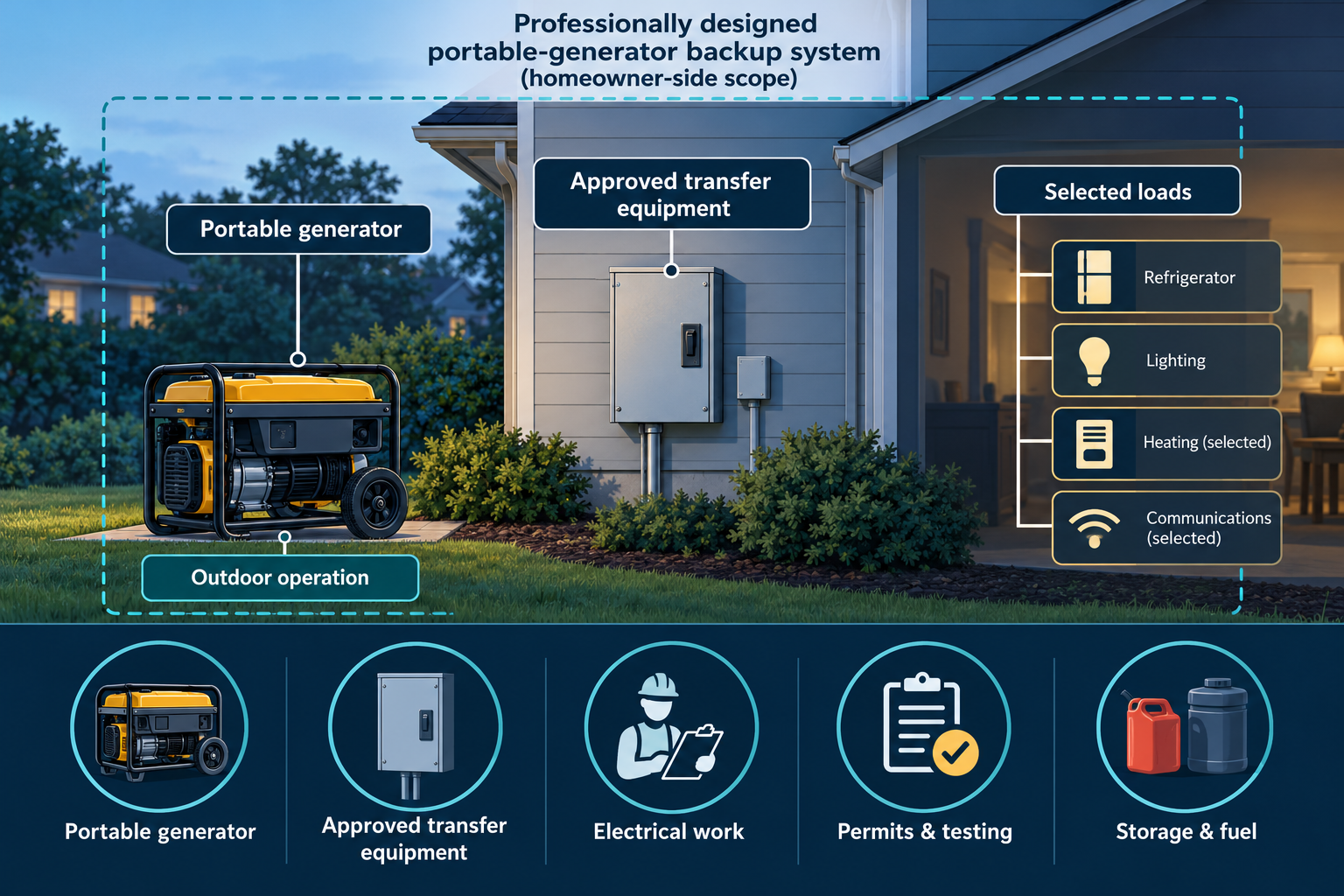
Define the connection
The transfer equipment must prevent the generator from energizing utility lines through the home. Exact equipment, grounding, bonding, inlet, cord, and panel requirements depend on the generator, service, jurisdiction, and design. CPSC guidance makes carbon-monoxide exposure a central safety concern; generator operation must remain outdoors in a location and arrangement approved for the property and equipment.
This article does not provide connection instructions. Have a qualified electrician design and install the household-side equipment, and confirm what local authority or utility notification is required.
Cost components
The generator is only the first line. Add the inlet and cable arrangement, transfer switch or panel, circuit relocation, wiring distance, labeling, labor, permit or inspection, and commissioning. Selected circuits may include refrigeration, lighting, communications, sump or well equipment, and controls. Large electric loads can exceed portable-generator output and may need to remain disconnected.
Fuel storage, transport, weather, and outage duration affect ownership cost. A portable unit may require manual setup and refueling; include the value of that labor and the risk that fuel is unavailable during a prolonged event.
Three scenarios
Selected circuits with a straightforward panel: The generator and transfer equipment serve a small defined load list. The installation is relatively predictable if the panel and service are compatible.
Multiple circuits or motor loads: Well or sump pumps add starting-current questions. The design needs actual equipment data and may require load management or a larger generator.
Complex service or jurisdiction: Panel constraints, grounding questions, difficult wiring, or local approval changes the project. A “generator-ready” label is not evidence that the existing wiring is suitable.
Compare with standby generation
Portable systems may lower initial equipment and permanent fuel-infrastructure cost but usually require manual deployment, storage, refueling, and a narrower load scope. A standby system costs more to install but can automate transfer and exercise, subject to its own maintenance and fuel requirements. Compare total ownership and outage response, not only purchase price.
There is no dependable universal current installed range, and electrical rules differ by jurisdiction. Get a written local scope that names the transfer method, circuits, safety responsibilities, approvals, and exclusions. Never trade away safe isolation for a lower quote.
Manual operation is part of the cost
The homeowner may need to store the generator, move it outdoors, connect the approved equipment, start it, manage loads, refuel, and shut it down. Those tasks are not a substitute for a safe household-side installation. Include storage space, weather, fuel availability, physical access, and the likelihood that nobody is home when the outage begins.
Compare connection designs
Ask the electrician to identify the inlet, transfer equipment, selected circuits, labeling, inspection, and test procedure. Some systems use a transfer switch; others use a dedicated backup panel or another approved architecture. The right design depends on the service and generator. Do not compare a professionally connected selected-circuit system with an extension-cord-only arrangement as if they deliver the same service.
Know when portable stops being economical
If the household needs automatic operation, broad simultaneous loads, frequent long outages, or fuel integration, compare the portable system with standby generation and battery storage. A lower equipment price may be offset by manual labor, narrower coverage, refueling, storage, and repeated setup.
Select loads before selecting the generator
List refrigeration, communications, lighting, pumps, heating controls, and other priorities. Record motor-starting requirements and decide which loads cannot run together. A portable unit that is adequate for lights may not start a pump or support a heating system. The source and transfer design must be based on actual equipment information.
Ask about closeout
Require labels, a circuit schedule, transfer behavior, inspection status, and a test record. Confirm where the generator is stored, how it is moved and connected under the approved design, and who maintains the inlet and transfer equipment. This makes manual operation an understood ownership task rather than an unpriced assumption.
A portable system has a logistics budget
Include a dry storage location, movement to the outdoor operating position, approved connection, fuel handling, weather exposure, manual startup, load management, and shutdown. A household member may need to perform those tasks during bad weather or when nobody is home. A low hardware price does not provide automatic outage coverage.
Verify the boundaries of the load list
Keep priority loads separate from deferrable loads and identify motor starts. A refrigerator, lights, communications, and a pump may not be able to start together on a small unit. Ask how the homeowner knows when capacity is exceeded and whether the transfer arrangement provides the intended isolation. Do not assume a portable generator can support a whole service because it has a high peak label.
When to choose another system
Compare standby generation when automatic operation or frequent long outages matter. Compare battery storage when quiet short-duration service or solar integration matters. Compare a smaller critical-load design when the home’s actual priority list is narrow. Each alternative should be priced with approved transfer, commissioning, and maintenance—not with an improvised connection.
Separate source output from household connection
The generator’s advertised output does not describe the usable service at the household panel. The connection, transfer device, inlet, circuit scope, starting demand, and any load-management behavior determine what the home can actually receive. Ask for those limits in the same document as the generator model.
Some vehicles provide a bounded alternative through a manufacturer-specific outlet and compatible transfer system. That is distinct from a bidirectional vehicle-to-home installation; see vehicle-to-home backup cost and verify the exact vehicle, equipment, utility approval, and installation path.
Include storage and replacement
Portable ownership requires a dry, accessible storage location and a plan for fuel that remains usable. Parts, battery, handles, maintenance, and eventual replacement are not normally included in an electrical installation quote. Add them when comparing portable backup with a permanently installed generator or battery.
Make manual operation part of the design
The homeowner may need to store the generator, move it outside, connect it to the inlet or approved transfer equipment, start it, monitor fuel, manage loads, and disconnect it after the event. Those actions must be compatible with the occupants, weather, access, and outage timing. A portable system may be economical when outages are infrequent and the homeowner can operate it safely; it may be poor value when the home is vacant, the equipment is difficult to move, or automatic continuity is important.
The quote should identify the generator output, connection point, transfer or isolation method, supported circuits, starting-load limits, storage arrangement, fuel assumptions, and commissioning or homeowner training. It should not imply that a portable generator can be operated indoors, in an attached garage, or through an improvised backfeed. Safety and lawful isolation are part of the system’s cost boundary.
Know when the portable path has ended
Compare portable ownership with standby generation or battery storage when the load list grows, outage duration increases, manual operation becomes unrealistic, fuel storage is difficult, or repeated setup creates a meaningful burden. Include replacement, maintenance, storage, fuel, weather exposure, and the cost of an electrician visit if the connection needs changing. The best choice is the least expensive complete service for the actual outage objective—not the least expensive source sitting in a store.