
Condo insurance is layered. The association’s master policy may insure the building or common property under its terms, while an owner’s policy may cover personal property, liability, improvements, additional living expense, and parts of the unit. The declaration and both policies matter; neither the phrase “master policy” nor “unit policy” answers every claim.
Insurance also does not decide maintenance responsibility. A failed roof, pipe, window, or appliance may be allocated under the governing documents even when a policy denies coverage because the loss is wear, deferred maintenance, or below a deductible.

Start with three documents
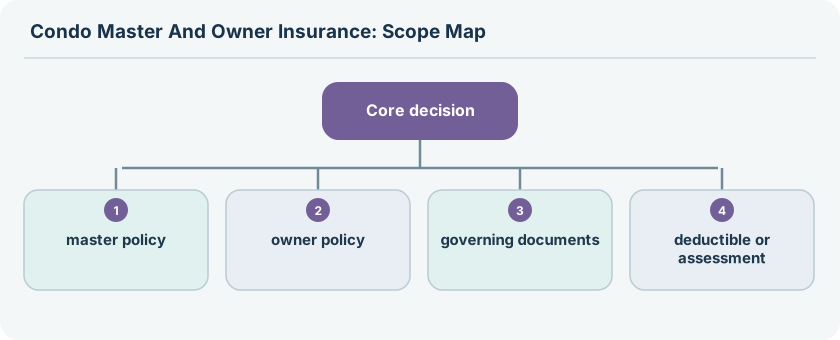
Collect:
- the declaration, bylaws, rules, and maintenance matrix;
- the association’s certificate, policy summary, exclusions, limits, and deductible schedule;
- the owner’s policy, endorsements, limits, exclusions, and loss-assessment coverage.
Ask the manager or broker which policy is primary for the event, but read the actual wording for important decisions. A certificate may summarize coverage without showing exclusions, sublimits, valuation, or claim conditions.
What the master policy may address
Depending on the property and policy, the association may insure common elements and some building components, such as structure, roof, exterior, shared mechanical systems, common plumbing, or common electrical equipment. The policy may define the insured property differently from the declaration’s maintenance categories.
The policy may cover a sudden covered event but exclude deterioration, seepage, corrosion, faulty workmanship, mold, flood, earth movement, or other causes unless endorsed. Coverage can also be limited by valuation, vacancy, security, reporting, and mitigation requirements.
What the owner policy may address
An owner’s policy may address personal belongings, personal liability, additional living expense, certain unit fixtures or improvements, and a share of a covered assessment if the policy includes loss-assessment coverage. It may have special limits for water damage, jewelry, electronics, business property, or temporary housing.
Ask whether the policy covers betterments and improvements made before or after purchase, and whether it treats the unit’s original finish differently from an owner upgrade. Keep renovation invoices, photographs, and approval records so the value and status of improvements can be demonstrated.
Deductibles and assessments
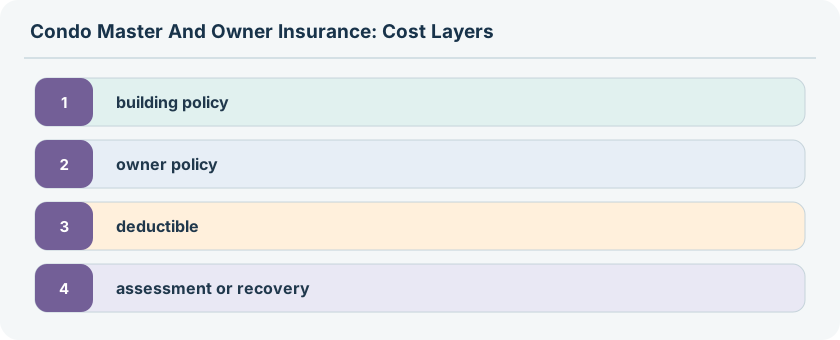
A master-policy deductible may be much larger than an owner’s ordinary deductible. The association may pay it from common funds, recover it under a governing-document chargeback rule, or allocate it through an assessment. The policy may also contain separate deductibles for water, wind, earthquake, flood, or other causes.
For Freddie Mac mortgage applications received on or after July 1, 2026, a condo project’s master-policy per-unit deductible may not exceed $50,000 under that program’s seller/servicer rules. The same bulletin requires the lender to document an HO-6 policy when the master policy leaves any unit-interior or improvement coverage out, or includes a per-unit deductible; the HO-6 limit must be enough to restore the unit to its pre-loss condition or cover the per-unit deductible, whichever is greater. These requirements are program-specific and do not promise that a particular claim or chargeback will be covered. Owners should have a broker compare the actual master policy, declaration, and unit policy.
Loss-assessment coverage on the unit policy is not a guarantee that every association charge will be paid. Check the trigger, covered cause, limit, exclusions, and timing. A charge for ordinary maintenance or an uninsured capital project may not qualify.
Claim sequence after an event
After a leak, fire, storm, or other event:
- make the area safe and limit further damage when possible;
- notify the manager, association insurer, and owner insurer promptly;
- ask who is assigning the adjuster and restoration contractor;
- photograph the source, affected components, and contents;
- preserve damaged items and invoices where safe;
- obtain written instructions before discarding or rebuilding;
- keep a log of access, temporary housing, and communications.
The first emergency contractor may be chosen to stabilize the property, not to decide final responsibility. Ask for the emergency scope separately from permanent repair and interior restoration.
Common coverage misunderstandings
The master policy does not necessarily cover a unit’s paint, flooring, cabinets, contents, or owner-installed finish. An owner’s policy does not necessarily cover a common roof or shared riser. A policy exclusion does not prove that an owner caused the loss, and a covered payment does not prove that the association owned the failed component.
Coverage can also differ between a condominium, co-op, strata, and HOA planned development. A townhouse owner should confirm whether the association insures the structure and which interior items the owner must insure.
Questions for the broker and manager
- What property does each policy define as insured?
- Which cause of loss is alleged, and is it covered?
- Which deductible and sublimit apply?
- Who reports the claim and controls the adjuster?
- Are improvements, contents, and additional living expense covered?
- Is loss-assessment coverage available and what are its conditions?
- How are emergency mitigation and permanent restoration separated?
- Can a deductible or uninsured amount be charged to one unit?
- What records and deadlines apply?
- How will disputed responsibility be documented?
Use insurance to fund a covered loss, not as a shortcut for deciding ownership. The most reliable claim file links the physical cause, the governing-document allocation, the policy language, the deductible, and the repair scope.
Reconcile the policy with the documents
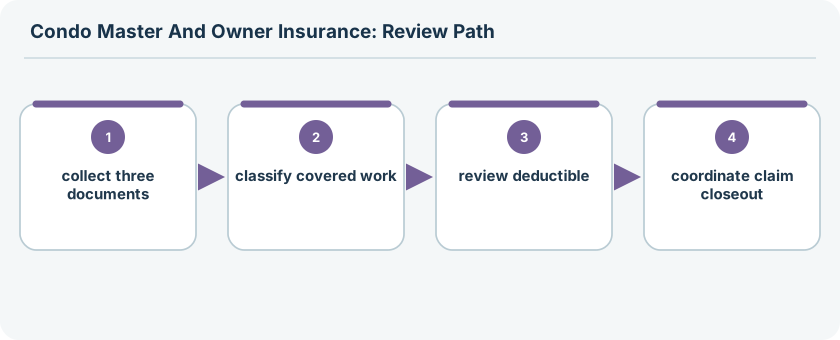
The declaration may use terms such as unit, common element, standard unit, betterment, or owner improvement. The policy may use different terms such as building property, fixtures, improvements, or covered cause. Make a note of both definitions. A disagreement can arise when the declaration assigns maintenance to an owner but the master policy insures the component, or when the policy excludes a condition the documents still assign to the association.
Ask the broker to explain limits, valuation, coinsurance or replacement requirements, sublimits, water or sewer endorsements, flood or earthquake coverage, equipment breakdown, ordinance or law coverage, and claims-made or occurrence features where relevant. Ask the manager how the association meets its insurance obligation and communicates changes to owners.
Purchase and annual review
A buyer should obtain the current master-policy summary, deductible schedule, claims history or open-claim information available, declaration insurance provisions, and the unit-policy requirements. Confirm whether the building is a condominium, co-op, strata, or HOA planned development and whether townhouse structures are insured by the association.
An owner should review coverage after a renovation, a major assessment, a change in use, or an increase in the master deductible. Photograph valuable improvements and keep receipts. Check that the unit policy has enough personal-property, liability, additional-living-expense, and loss-assessment coverage for the actual exposure.
Recovery and closeout
After a claim, ask for a written scope, coverage position, deductible allocation, and restoration standard. Track payments from each insurer and identify any uncovered betterment or excluded cause. At closeout, retain adjuster correspondence, invoices, photographs, drying records, permits, warranties, and the final release or acceptance documents.
Insurance works best as one part of the repair file. Link the physical cause, the document responsibility, the policy response, the deductible, the restoration scope, and the records needed to prove what happened.
What to verify at renewal
Master-policy renewals can change deductibles, exclusions, limits, carrier requirements, and the association’s budget. Ask the manager for the new summary and compare it with the prior year. Check whether the building has new water, roof, flood, earthquake, equipment-breakdown, or ordinance-and-law exposures.
Owners should adjust unit coverage when the master deductible rises, improvements change, contents increase, or a loss-assessment obligation becomes more likely. Ask the broker for a written explanation of what the unit policy does and does not cover. Avoid assuming that an association’s insurance certificate satisfies the owner-policy requirements.
For a claim, keep the physical diagnosis, declaration section, policy language, deductible, coverage position, restoration scope, and final invoice together. That combined file helps resolve subrogation, chargeback, and coverage questions without treating insurance as a substitute for document analysis.
A practical coverage file
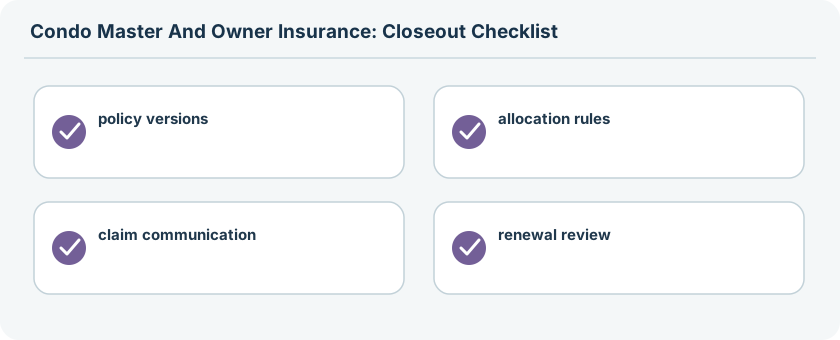
Keep the declaration excerpt, master-policy summary, owner-policy declarations, endorsements, deductible schedule, claim number, adjuster correspondence, photographs, invoices, and final coverage decision together. Review the file after renewal or a renovation. Coverage should be checked against the actual building and unit, not a generic condo policy label.
Example: a kitchen water loss
A dishwasher hose may damage cabinets, flooring, drywall, a neighboring unit, and common structure. The master policy, unit policy, declaration, and cause investigation may address different lines. Do not infer from the damaged room which policy pays or whether the owner was negligent.
Report promptly, photograph the source and contents, separate mitigation from rebuilding, and request the coverage and deductible positions in writing. At closeout, record original finishes, owner improvements, excluded betterments, restoration, and any loss-assessment question.
Ask both insurers how subrogation, a deductible recovery, and an owner-specific charge may affect the claim. Keep the association’s repair allocation separate from the owner policy’s coverage decision. A policy file is strongest when it records what was insured, what was excluded, and what was restored.
At renewal, compare the master deductible with the unit policy’s loss-assessment limit. Ask the broker to review any gap created by a new assessment, renovation, or change in building use.
A practical annual check compares the master policy’s property definition and deductible with the declaration’s unit boundary and the owner policy’s improvements and loss-assessment coverage. After a claim, preserve the cause report, coverage position, allocation, restoration, and deductible payment. This avoids treating an insurance summary as the full repair rule.
Review the file after each renewal and material renovation; policy limits and deductibles can change even when the building component does not.
Keep the renewal summary with the declaration and unit policy so changes in limits, exclusions, and deductibles can be reviewed together.