
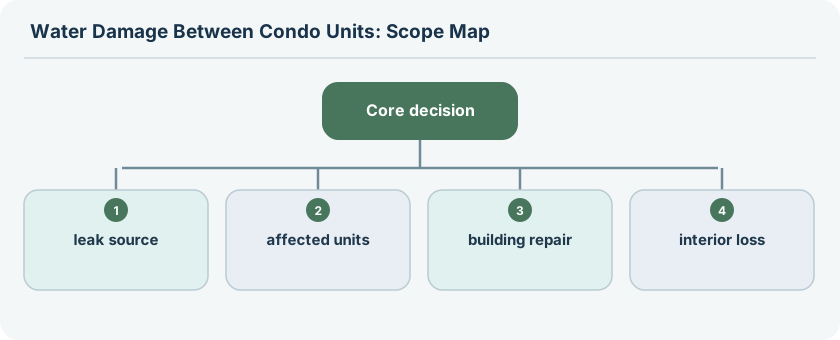
Water damage between condo units creates several questions at once: where did the water start, which component failed, who had a duty to maintain it, which policy responds, who controls mitigation, and how are finishes and deductibles allocated? The unit where the stain appears is not necessarily the source or the responsible party.
Treat the event as a documented investigation, not an immediate conclusion about fault. Ontario guidance is useful for showing why repair-after-damage, standard-unit, common-element, and insurance questions interact; Florida law provides a different jurisdiction-specific example. Neither establishes a universal North American outcome.
Stabilize and notify
If safe, stop the source or shut off the appropriate valve. Keep people away from electrical hazards and contaminated water. Notify the manager, association, affected neighbors, association insurer, and your own insurer promptly. Use an appropriate mitigation contractor and keep every invoice.
Take photographs and video before demolition where safe. Record the time discovered, rooms affected, visible source, moisture findings, access, communications, and steps taken to prevent more damage. Emergency drying should not wait for a final decision about who ultimately pays, but temporary mitigation should be recorded separately from permanent restoration.
Trace the source and component
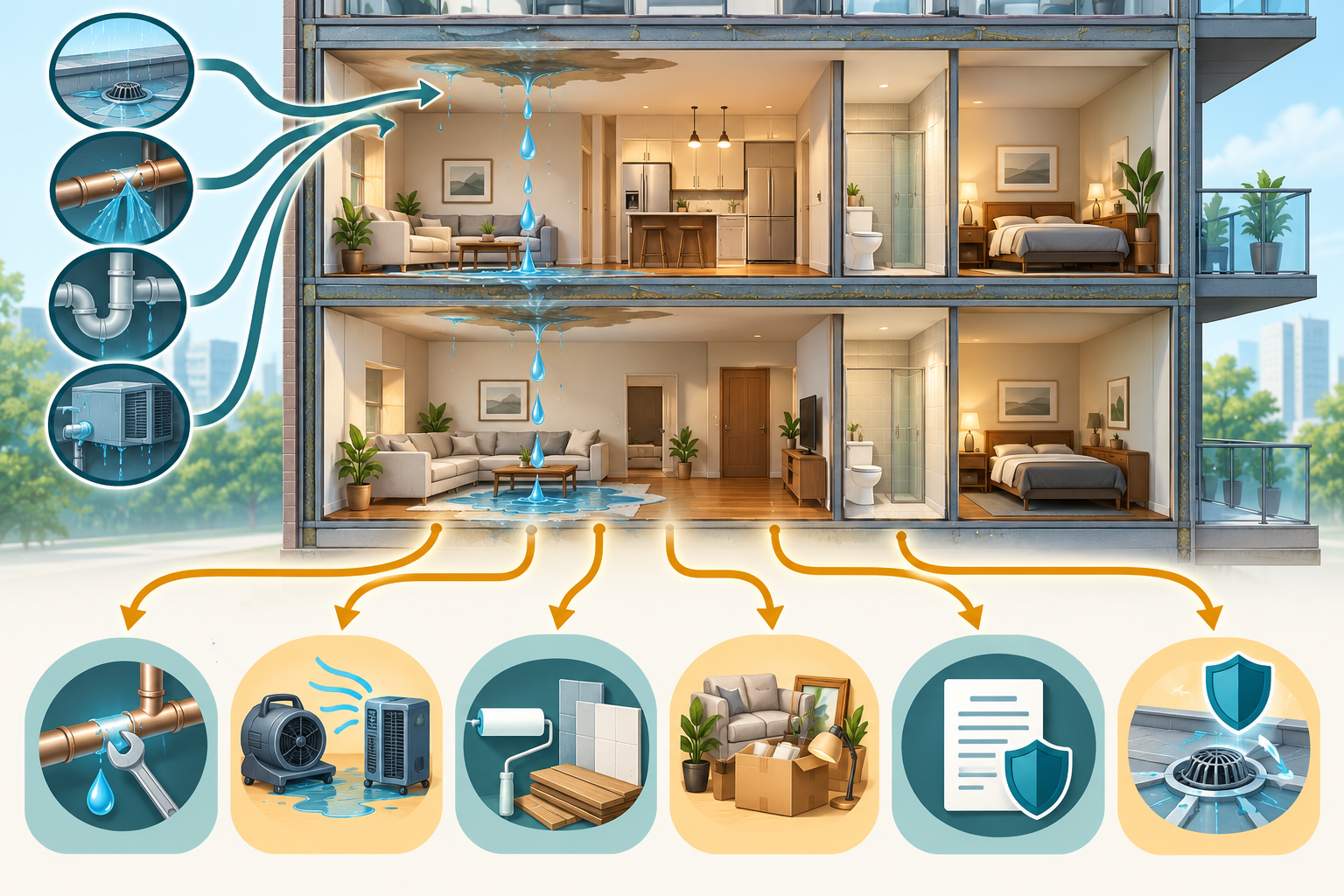
A leak can come from a supply line, drain, riser, roof, window, balcony, HVAC condensate line, appliance, fixture, toilet, renovation, or unit above. Ask a qualified plumber, building-envelope specialist, or other appropriate professional to identify the source and failed component.
A pipe in a unit wall may be common. An appliance hose may be unit-controlled. A roof or balcony membrane may be association-controlled while interior finishes are treated separately. The physical location of the stain is only one fact. The diagnosis should state what was inspected, what was ruled out, and what remains uncertain.
Read the allocation rules
Review the declaration, bylaws, maintenance matrix, damage-restoration provisions, alteration records, negligence or chargeback rules, and insurance clauses. Identify:
- who maintains the failed component;
- who has authority to open or repair common property;
- who pays emergency mitigation;
- how common and unit finishes are defined;
- how an owner-caused loss or delay is handled;
- how deductibles and uninsured amounts are allocated;
- what notice and cooperation are required.
Do not assume that the person above pays because water traveled downward, or that the association pays because a common wall was wet. The cause and governing rule must connect. Responsibility for the source, resulting damage, and insurance deductible can be different.
Build a loss-cost map
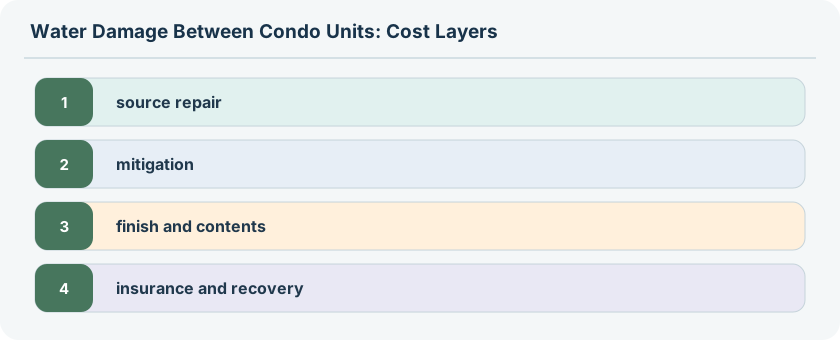
Separate the incident into scopes before comparing invoices or discussing a charge:
| Scope | Question to answer |
|---|---|
| Source repair | What failed, and who may authorize the repair? |
| Mitigation | Who arranged drying, demolition, protection, or temporary access? |
| Common or standard-unit restoration | Which building or standard finishes are included? |
| Improvements and contents | Which upgrades, cabinets, flooring, and belongings are outside that scope? |
| Temporary accommodation | Who evaluates displacement or additional living expense? |
| Deductible or assessment | What policy, bylaw, resolution, or rule supports the amount? |
| Prevention | What correction reduces the chance of recurrence, and who maintains it? |
The party responsible for the source may not be responsible for every consequence. Insurance may cover some lines and exclude others. A contractor’s invoice does not by itself establish an allocation, and an adjuster’s position does not replace the governing documents. Obtain the written basis for any chargeback or assessment and keep disputed amounts separate from facts that are already established.
The map also helps explain why two apparently similar losses can have different total costs. A unit-controlled appliance connection may require prompt drying and finish replacement in the unit below. A failed shared riser may add access through several units, shutdowns, and common-system work. A recurring balcony, roof, or envelope leak may require investigation outside the wet room before any finish is rebuilt. These are cost and scope scenarios, not conclusions about who pays; the component, documents, insurance, and cause still have to be connected.
When more than one unit is affected, ask the manager or association to identify one coordinated project contact and a separate scope for each unit. That reduces duplicated inspections and makes it easier to compare mitigation, standard finishes, owner upgrades, contents, temporary accommodation, and deductibles. It also gives each insurer a clearer record without assuming that one policy will handle the whole event.
Renovations and owner improvements
Prior alterations can affect the investigation. A relocated fixture, added washing machine, changed shower, unapproved pipe, floor replacement, or owner-installed finish may have approval and maintenance conditions. Preserve plans, permits, approvals, invoices, and photographs.
An owner improvement may be excluded from association restoration or may require the owner to pay an incremental upgrade. A contractor should document concealed conditions before rebuilding so later questions do not depend on memory. If a common system must be opened through a unit, agree in writing on access, protection, standard finishes, upgrades, and restoration.
Handling disagreement and insurance
If the source is disputed, request the plumber’s or engineer’s written findings, moisture map, photographs, testing method, and explanation of alternatives considered. Ask the manager to identify which work is proceeding under emergency authority and which allocation is still open. Keep communications factual and avoid admitting responsibility before the evidence is complete.
If a chargeback or assessment is issued, check the authority, facts, amount, calculation, payment date, and dispute process. Notify your insurer even if the amount appears likely to fall below the policy deductible; the insurer may still need notice. Ask each insurer which property, cause, deductible, improvement, and loss-assessment issue it is evaluating. Coverage decisions remain policy- and jurisdiction-specific.
Prevention, buyers, and closeout
Before rebuilding, confirm that the area is dry and that any required mold, electrical, structural, or fire-safety inspection is complete. Ask for photographs of concealed plumbing, flashing, waterproofing, or fire stopping. A surface patch is not a full closeout if the source remains.
Record the prevention measure and future maintenance: a replaced valve, repaired membrane, corrected condensate route, updated appliance connection, access panel, or inspection interval. For a buyer, recurring leaks, open claims, repairs between units, assessments, and restoration records can reveal future exposure. A recent repair is meaningful when the file identifies source, scope, test, funding, and prevention—not merely a fresh coat of paint.
If the source cannot be confirmed, the responsible next step may be further testing rather than a larger repair. Keep emergency work moving when safety or additional damage requires it, but label the permanent scope and payment decision as open until the evidence is sufficient. If the same loss recurs, compare the new source report with the prior file instead of treating each repair as an isolated finish problem. A repeated symptom can change the economic decision from patching to investigating the shared system, even though it still does not establish a payer without the governing documents.
Water-loss checklist
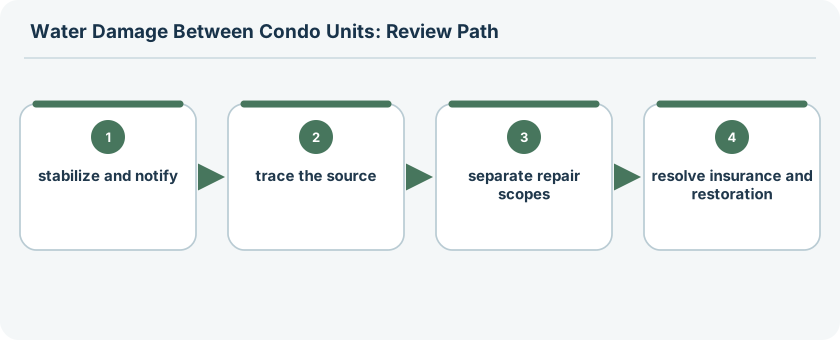
- Make the area safe and limit damage.
- Notify all relevant parties promptly.
- Photograph and record the source and affected areas.
- Obtain a qualified diagnosis.
- Identify the failed component and governing rule.
- Separate source repair, mitigation, restoration, contents, and deductibles.
- Preserve insurance and chargeback communications.
- Record approvals, change orders, and concealed conditions.
- Verify drying, repair, testing, prevention, and allocation at closeout.
Keep one loss file containing the incident timeline, source diagnosis, moisture map, mitigation invoices, photographs before closure, insurance positions, allocation decision, restoration scope, warranties, and prevention plan. A future owner or insurer should be able to see where the water began, what component failed, which policy responded, who paid each scope, and what was done to prevent recurrence.
Example: water from a unit above
Water appearing in a ceiling below may come from a fixture, appliance, branch, riser, balcony, roof, or shared wall. Notify the manager and both insurers, document the source and affected finishes, and separate emergency drying from permanent repair. A chargeback requires a documented cause and governing authority.
If the cause remains uncertain, record what was ruled out, what work is proceeding under emergency authority, and who will investigate next. The final file should connect the source report, affected-unit scopes, moisture and drying records, policy positions, allocation, restoration acceptance, prevention measure, and any follow-up inspection. This lets later owners distinguish a resolved loss from a recurring defect without turning an unresolved question into a definitive charge.