
Electrical responsibility depends on the part of the system and the ownership documents. A breaker panel inside a unit may be unit-maintained, but the feeder serving that panel can be common. A power outage may originate in a unit circuit, a shared riser, a meter room, a transformer, or the utility connection.
Electrical work also has a safety boundary: only qualified professionals should diagnose or modify energized equipment. Responsibility should be investigated without asking an owner to open panels or perform unsafe tests.
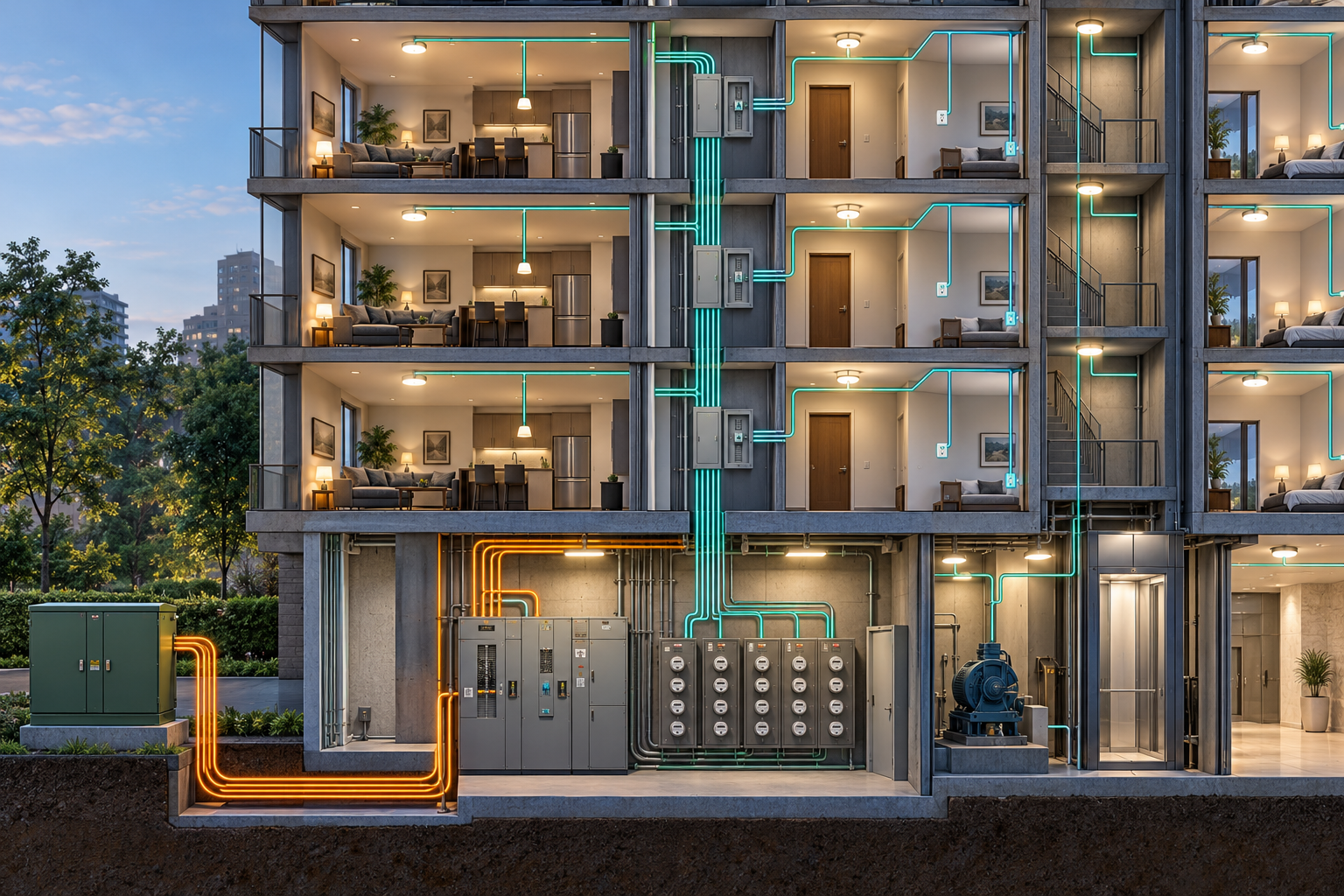
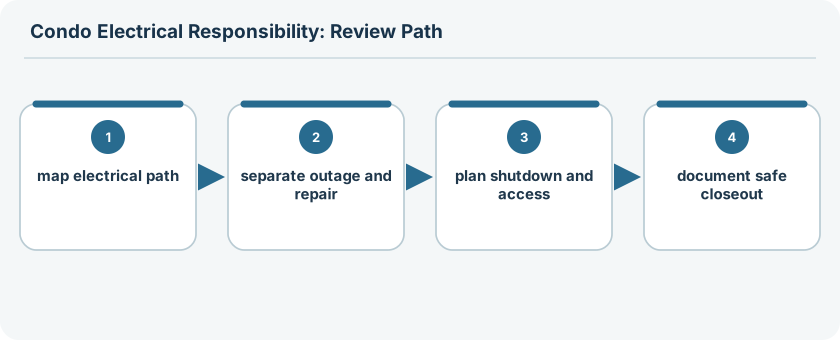
Map the electrical path
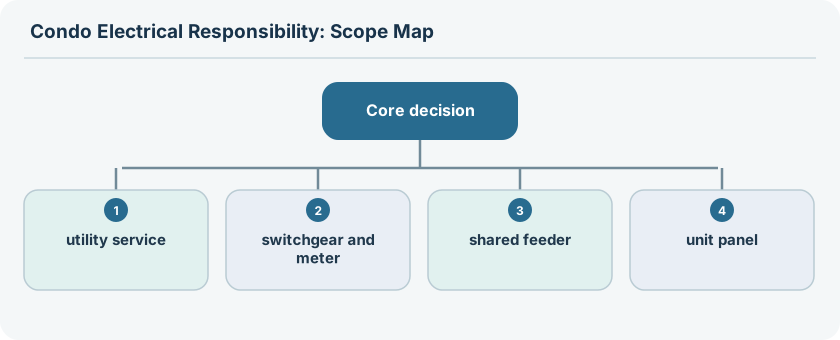
Request a written description of the path from the utility or site service to the affected load:
- utility connection, transformer, or main service;
- building switchgear, meter bank, and common distribution;
- riser, feeder, and unit disconnect;
- unit panel, breakers, branch circuits, and receptacles;
- common-area lighting, pumps, elevators, gates, and fire systems;
- owner-installed chargers, generators, solar equipment, or battery systems.
The declaration, plan, bylaws, electrical rules, maintenance matrix, and utility arrangements may establish different boundaries. Physical location is evidence to investigate, not a universal allocation rule.
Separate an outage from a repair
Ask whether the issue is a utility interruption, a tripped breaker, a failed receptacle, an overloaded circuit, a shared feeder failure, water intrusion, a damaged device, or a code or capacity concern. Note which units and common areas are affected and whether the problem repeats when a particular load operates.
The manager should coordinate building systems and common access. An owner should not repeatedly reset a breaker that trips, bypass a protective device, or make an improvised connection. Preserve electrician reports, photographs, fault codes, and invoices.
Unit circuits and common feeders
A branch circuit serving only one unit may be assigned to that unit, while a feeder, riser, meter bank, or common protective device may be association-controlled. A panel can contain both unit and common equipment, especially where meters or disconnects are grouped. Ask the electrician to identify the failed component and the point of connection.
Common-area systems create a separate category. Lighting, fire alarm, smoke control, pumps, elevators, access control, and emergency power may be maintained through the association even when a local device is in or near a unit. Safety and inspection obligations may limit the owner’s ability to change equipment.
Owner alterations and capacity upgrades
A renovation, EV charger, hot tub, heat pump, induction range, generator, solar array, battery, or additional circuit can affect common capacity and approvals. Review the electrical design, load calculation, permits, utility requirements, insurance implications, and maintenance allocation. Approval should identify equipment ownership, access, removal, future replacement, and damage responsibility.
The owner may pay the incremental installation cost without becoming responsible for the upstream feeder or service. Conversely, an alteration that overloads or damages common equipment may trigger a different allocation under the documents or an approved agreement.
Water, fire, and consequential damage
Electrical failure may follow a roof leak, pipe break, flood, fire, or appliance failure. Keep people away from wet electrical equipment and wait for qualified instructions before restoring power. Notify the association and insurer. The party responsible for the source may not be the party responsible for the panel, wiring, drywall, contents, temporary accommodation, or deductible.
If equipment must be removed, photograph labels and connections where safe and preserve the electrician’s findings. Do not treat a tripped breaker as proof of negligence or owner responsibility.
Funding and documentation
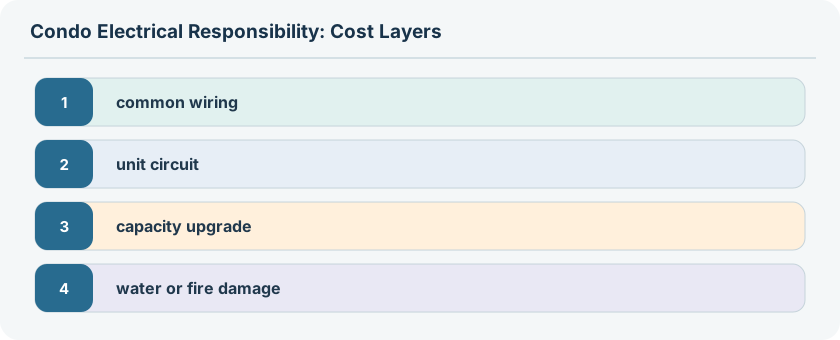
Building-wide electrical work may be funded through ordinary fees, reserves, an assessment, a loan, insurance, or a warranty. Review the scope, testing, permits, code compliance, shutdown plan, access, contingency, and commissioning. Ask whether the project corrects a current failure or expands capacity for future equipment.
For an owner, keep permits, approval letters, inspection sign-offs, invoices, and warranties. For a buyer, read minutes and capital plans for recurring outages, service upgrades, charger programs, and pending assessments.
Electrical responsibility checklist
- Identify the affected load and all affected areas.
- Obtain a qualified diagnosis and written service map.
- Locate the governing-document boundary.
- Separate unit, common, utility, and owner-installed equipment.
- Check permits, approvals, capacity, and alteration conditions.
- Notify the association and insurer after damage.
- Separate equipment repair from restoration and deductible rules.
- Confirm the funding source, allocation, and access plan.
- Preserve reports, permits, test results, and warranty records.
Electrical responsibility is safest when the failed component is named precisely. A unit panel, shared feeder, common switchgear, utility service, and owner alteration can each have a different answer.
Inspection, shutdown, and access planning
Electrical repairs may require a planned shutdown affecting multiple units, elevators, access systems, pumps, fire equipment, or emergency lighting. Ask the manager for the shutdown window, affected services, backup arrangements, and restoration test. Owners should follow the building’s instructions and avoid using generators or extension cords in ways that create additional hazards.
A qualified electrician should identify energized equipment, lockout or safety controls, the failed point, and the work boundary. If a unit must be entered to reach a feeder or panel, document notice, protection, security, and the restoration of finishes.
Code and capacity work
A replacement that restores existing service is different from an upgrade that adds capacity. An electrical project may include load calculations, new switchgear, meter changes, grounding or bonding, fire stopping, utility coordination, permits, and inspection. Ask which items are necessary for repair and which are an owner-requested improvement.
A building-wide charger, heat-pump, solar, or generator program may be more efficient than separate unit installations, but it creates decisions about capital funding, metering, access, future replacement, and use. Record those decisions in a written agreement rather than relying on a contractor quote.
Damage and closeout
If a panel or wiring is wet, burned, or damaged, keep clear and wait for qualified direction. Photograph labels where safe and preserve the electrician’s findings. Insurance, source repair, equipment replacement, drywall restoration, contents, and temporary accommodation may have different allocations.
At closeout, obtain permits, inspection sign-offs, test results, one-line or updated panel schedules, warranties, and photographs of concealed work. Confirm that labels, covers, fire stopping, and common-area protection are complete. A breaker that no longer trips is not, by itself, proof that the underlying cause was corrected.
Owner and buyer review
Owners should keep renovation approvals and electrical records with the unit. Buyers should ask about recurring outages, service upgrades, generator or charger programs, assessments, and capacity restrictions. The useful risk question is whether the building understands its electrical infrastructure and has a funded plan for known work.
A precise electrical allocation names the load, failed component, service boundary, qualified diagnosis, approval authority, funding source, and restoration scope.
A safe closeout file
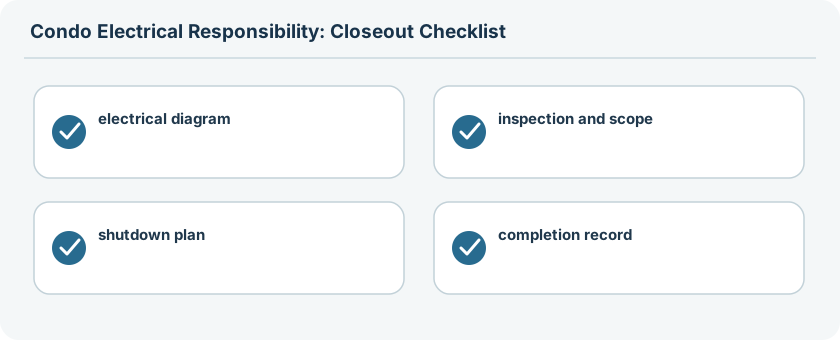
Keep the electrician’s diagnosis, service map, photographs, permits, inspection results, test readings, panel schedule, warranty, and allocation decision. If the work involved a shared feeder or a capacity upgrade, add the shutdown notice and confirmation that common services were tested. This record distinguishes a unit repair from a building electrical project and helps a future owner avoid unsafe assumptions.
For a shutdown, record the affected units and common systems, notice time, emergency provisions, and restoration test. For capacity work, record the load calculation and approval. These details show whether the project restored service or created new shared infrastructure.
Example: repeated trips in several units
If breakers trip in several units or common areas, the issue may involve a shared feeder, service equipment, moisture, overload, or utility supply rather than one receptacle. Owners should report the pattern and avoid resetting a breaker repeatedly. The manager should coordinate a qualified electrician and any required shutdown.
The electrician’s report should name the failed component, affected loads, safety controls, repairs, permits, and tests. If the work adds capacity for chargers or heat pumps, separate that upgrade from restoring existing service and identify the funding and maintenance agreement. Photograph panels and labels only when safe and directed.
At closeout, preserve the service map, inspection sign-off, test results, shutdown notice, and warranty. This record helps future owners and the association distinguish a unit circuit from common electrical infrastructure.
If the issue follows water or fire, preserve the electrician’s cause report and the insurer’s instructions before re-energizing or discarding equipment. If an owner installation is involved, attach the approval and load calculation. A final allocation should not rely on the fact that a panel is inside a unit.
At closeout, the manager should retain updated panel schedules, labels, permits, and test results. Owners should keep alteration approvals and never assume that the nearest panel defines the repair boundary.
A building electrical file should distinguish service restoration from an upgrade. Include the affected loads, service boundary, shutdown, permit, inspection, load calculation, test results, and future maintenance. An owner alteration file should add the approval, equipment, circuit, access, transfer, and removal terms. These records keep a capacity project from being mistaken for a unit repair.
The closeout should also identify whether service capacity changed and who must approve future loads. Preserve that decision with the updated panel or service documentation.