
Windows and exterior doors sit at the boundary between a private unit and the building envelope. That boundary is why a broken pane, failed seal, rotten frame, leaking sill, or full-building replacement can involve different parties and different funding rules.
The first question is not “Who can I call?” It is “Which part of the assembly is assigned to the unit, common elements, or an exclusive-use area?”
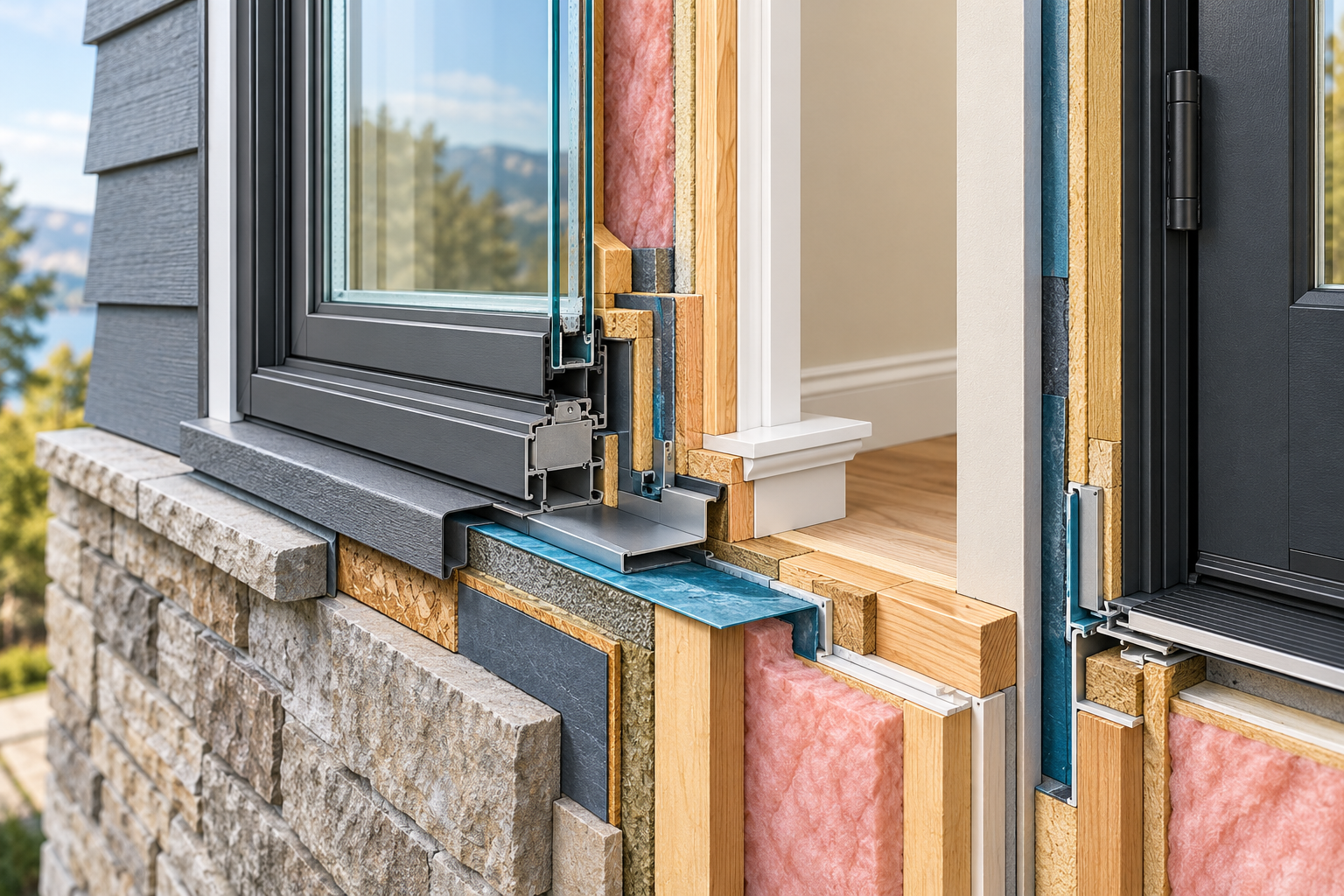
Map the assembly
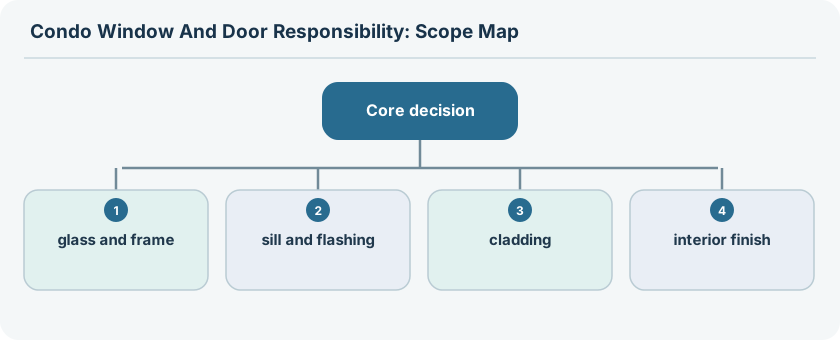
A window opening may include glass, sash, frame, hardware, exterior flashing, sill pan, surrounding cladding, insulation, and interior trim. An exterior door may include the slab, frame, threshold, weatherstripping, lock, closer, surrounding wall, and balcony or corridor interface.
The governing documents may treat the opening or exterior appearance as common property while assigning glass, locks, screens, or interior finishes to the unit. A replacement window selected by an owner may also become an improvement with a special approval and maintenance rule.
Request the declaration, plan, bylaws, architectural standards, maintenance schedule, and any window or door replacement policy. Look for rules about uniform appearance, contractor access, approved products, and who owns a replacement installed by the association or by an owner.
Classify the problem
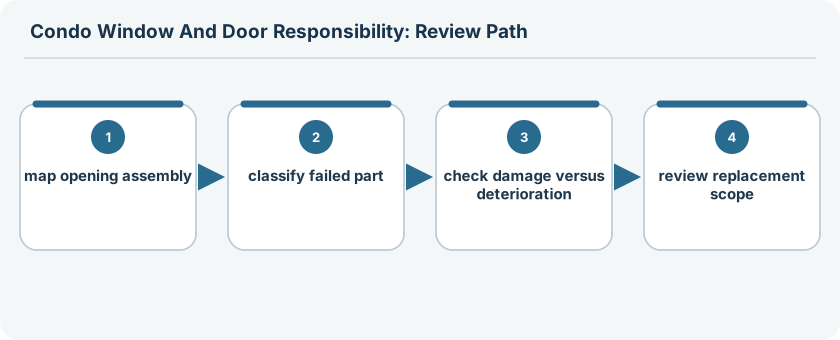
Use the symptom to guide the investigation, not to decide responsibility:
- broken glass may be a unit or insurance matter;
- failed seals may affect the insulated glass unit or the whole window;
- a leaking sill may involve flashing or the wall assembly;
- rot or movement may indicate an envelope or structural issue;
- a draft may result from weatherstripping, installation, or building movement;
- a door closer or lock may be a unit fixture, life-safety device, or common corridor hardware.
Have the manager or qualified contractor inspect before ordering a component. A replacement pane will not solve water entry caused by flashing or cladding. An owner should avoid drilling, changing exterior color, or replacing a uniform assembly without the required approval.
Damage versus deterioration
Insurance may respond to a covered sudden event, while age, failed seals, corrosion, and ordinary deterioration are often handled through maintenance or capital planning. The policy and governing documents control. If water has entered, report it promptly, protect the opening from further damage, photograph the condition, and preserve removed parts if an insurer or expert may need them.
A common-element window replacement does not necessarily make the association responsible for every interior finish or custom treatment. Curtains, blinds, flooring, drywall, trim, and owner upgrades may be evaluated separately. Conversely, an association-caused failure may lead to a different interior restoration analysis than a unit-controlled failure.
Building-wide replacement
When windows or doors are part of the envelope, the project may need an engineer, a reserve or depreciation plan, coordinated access, approved specifications, testing, permits, and phased work. Review whether the project includes only the common exterior assembly or also owner-requested upgrades.
Ask how the association will handle owners who want different glass, colors, hardware, screens, security features, or door styles. The owner may pay the incremental upgrade cost and assume future maintenance, but only if the documents and approval resolution say so.
Cost and allocation questions
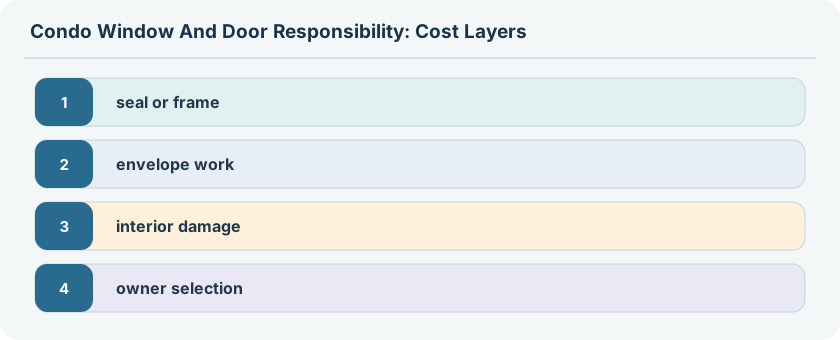
Before accepting a bill, obtain:
- the document section assigning the component;
- the inspection or report identifying the failed layer;
- the scope, bid, contingency, and project schedule;
- the approval or emergency authority for the work;
- the insurance, warranty, and deductible position;
- the allocation formula for common work;
- the treatment of interior finishes and owner improvements;
- the payment, access, and warranty requirements.
A building-wide project may be paid from reserves, an assessment, a loan, or a blend. A single damaged pane may follow a unit maintenance rule or an insurance claim. Do not use the cost of one replacement as evidence of the community-wide allocation.
When buying or selling
Buyers should read minutes, reports, assessments, and the latest capital plan for recurring leaks, envelope testing, or planned window work. Sellers should disclose notices and payment obligations as required by the transaction documents and local rules. A pending replacement can affect timing, financing review, and negotiation even when the unit looks finished.
The safest conclusion is specific: identify the layer, identify the controlling document, identify who has authority, and document whether the cost is routine, damage-related, common capital work, or an owner upgrade.
Test the envelope before replacing a part
A failed seal, draft, condensation, or stain can come from the glass, frame, flashing, cladding, interior humidity, or a larger envelope defect. Ask the manager or qualified contractor to identify the failure layer and to inspect adjacent openings when a recurring pattern exists. Record photographs, moisture findings, and any testing.
For a building-wide replacement, confirm the specification, sample, performance requirements, access sequence, temporary weather protection, interior protection, permits, and testing. The association should explain how owners will be notified and what happens if an opening reveals concealed rot or structural damage.
Owner selections and special costs
An owner may want upgraded glass, a different door, security hardware, screens, tint, blinds, or a modified finish. Request written approval and an incremental-cost calculation. Confirm whether the owner maintains, insures, removes, and replaces the upgrade. Do not allow an individual selection to compromise uniform appearance, fire safety, egress, or warranty conditions.
If a prior owner replaced an opening, keep the approval and invoices. Future repair responsibility can turn on whether the replacement was standard, permitted, and incorporated into the building assembly.
Closeout and purchase review
At completion, retain testing, photos before closing, permits, warranties, and final scope. Buyers should review recurring leak reports, envelope studies, minutes, assessments, and the association’s maintenance plan. A precise conclusion says which layer failed, who controlled the work, how the cost was funded, and what future maintenance remains.
Evidence for a window or door decision
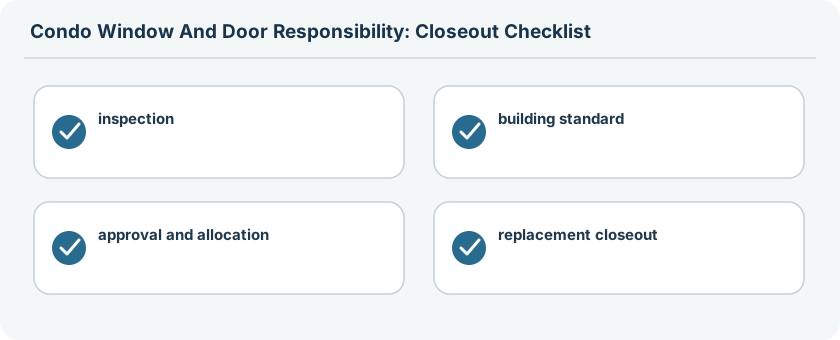
Ask the contractor to identify whether the problem is glass, frame, seal, flashing, cladding, wall, hardware, or an interior finish. If the issue repeats across elevations or units, request an envelope review instead of treating each opening as an isolated replacement.
For a building-wide program, retain the approved product, sample, access schedule, testing method, permit, warranty, and photographs before closure. Record owner upgrades separately and state who maintains or removes them. A closeout file should explain the layer repaired, the standard restored, the funding source, and the next inspection or maintenance date.
A final payment and closeout record
Keep the report identifying the failed layer, approved product, access and protection plan, permits, testing, photographs before closure, warranty, and owner-upgrade agreement. Record the next inspection and who maintains hardware, glass, frame, flashing, and interior finish. That detail prevents a future pane replacement from reopening a building-envelope dispute.
Example: a failed window seal
A failed insulated-glass seal may be a unit-level repair in one plan and part of a common window assembly in another. A leaking frame or sill may indicate an exterior-envelope issue rather than a glass replacement. Ask for a diagnosis and the governing-document section before accepting a bill.
For a building-wide program, distinguish the standard replacement from owner-selected glass, hardware, screens, or interior finishes. Keep approvals, product data, access records, testing, and warranties. The final file should state which layer was replaced and who maintains it.
When a replacement affects a fire-rated door, corridor, balcony, or building envelope, check permits and common access before ordering. A standard product may be required for safety or warranty. Record any owner-paid difference and future maintenance duty in the approval.
At closeout, record the approved product and the maintenance boundary for glass, frame, hardware, flashing, and interior finish. This prevents later repairs from being ordered on an incomplete assumption.
A replacement file should state whether the failed layer was glass, frame, flashing, cladding, hardware, or adjacent wall. It should include the approved product, access, weather protection, testing, finish, warranty, and any owner upgrade. For a recurring pattern, add the building-envelope investigation and planned capital response.
Example: an exterior door replacement
An exterior door can affect security, fire separation, weather resistance, corridor appearance, and the building envelope. Before replacement, identify the approved product and who controls the frame, threshold, closer, lock, and surrounding wall. At closeout, test operation and weather sealing, retain the permit or inspection record, and record the future maintenance duty for each layer.
If the opening is part of a common envelope, the association should keep the product and testing records. If hardware or an interior finish is owner-maintained, the approval should say so explicitly.
Record the next maintenance or envelope inspection date so a replacement is not treated as permanent without a future review.
If hidden rot or wall damage is found, pause and document the change order before closing the opening. Record the added scope, payer, testing, and warranty with the original window or door decision.
The record should identify the repaired assembly, approved product, test, warranty, maintenance duty, and any owner-paid upgrade or future access condition.