
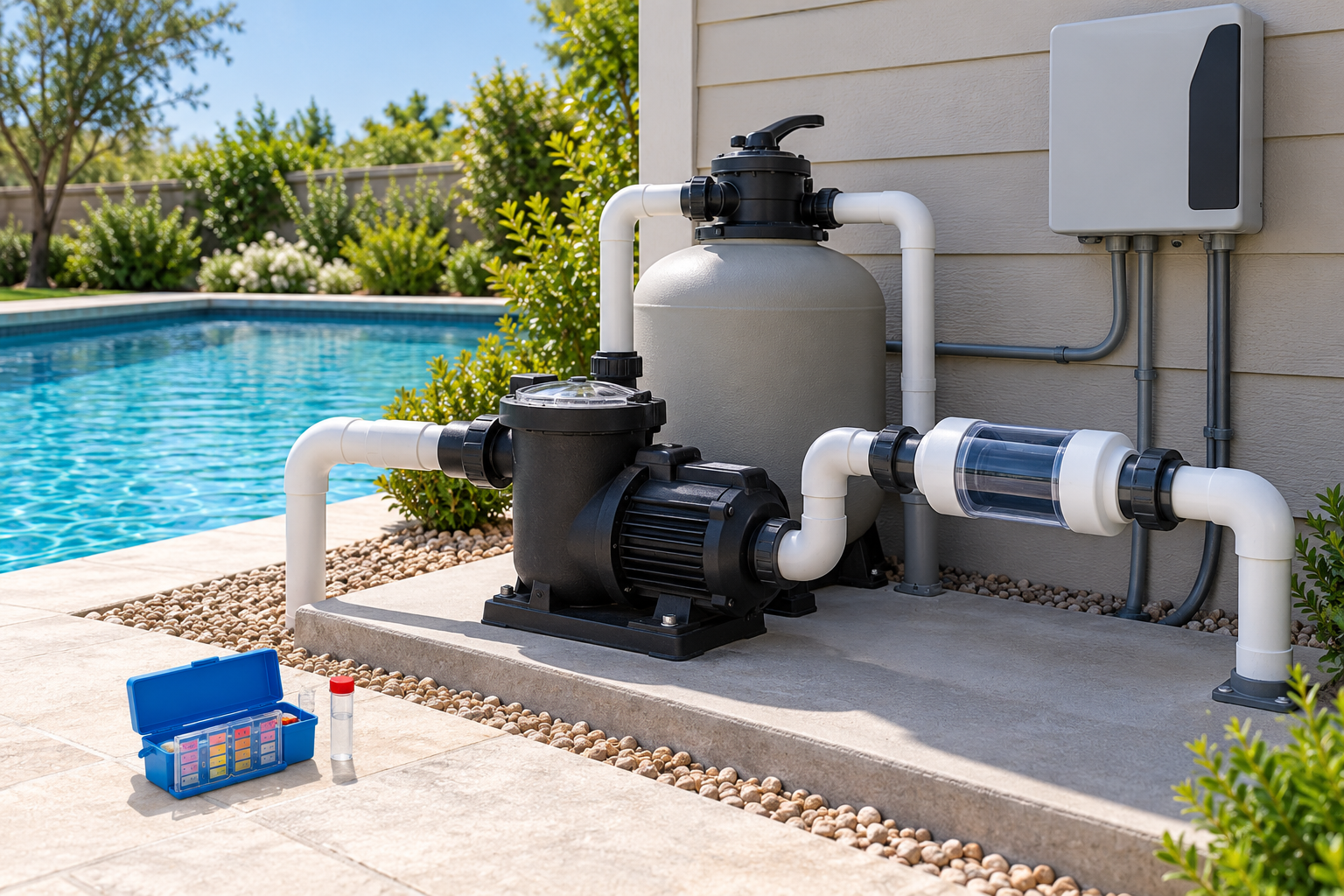
A saltwater pool is still a chlorine-sanitized pool. A salt-chlorine generator uses a cell to produce chlorine from dissolved salt; it does not eliminate chlorine, water testing, or routine maintenance. The choice is between different equipment and operating patterns.
Compare the full system
| Cost or task | Direct chlorine dosing | Salt-chlorine generation |
|---|---|---|
| Initial scope | Dosing equipment and startup supplies | Generator, cell, controls, installation, electrical or plumbing tie-ins, and startup salt |
| Routine work | Testing, sanitizer purchase, storage, dosing and service | Testing, salt and water checks, cell and controller monitoring, and service |
| Future equipment | Dosing equipment and related parts | Cell, controller, compatible pump and plumbing interfaces |
| Quote question | What products, tests, visits, and supplies are included? | What exact generator and cell, warranty, compatibility work, and replacement scope are included? |
Direct dosing may involve less integrated equipment, but the owner or service provider still needs a reliable testing and sanitizer routine. A generator automates chlorine production only within its intended product settings and operating conditions. It does not remove the need to test water or correct conditions.
Price ownership, not a slogan
There is no universal lower-cost system. Pool size and use, climate, electricity, water chemistry, generator model, output, service frequency, cell replacement, and the owner’s time all affect the result. A conversion quote should separate generator, cell, controller, installation, electrical or plumbing changes, initial salt, startup, compatibility checks, recurring supplies, service, electricity, and future replacement.
For a new installation, compare equipment and warranty with the same pool and service assumptions. For a conversion, have the installer inspect the pump, filter, heater, controls, metals, surfaces, plumbing, available electrical supply, and equipment-pad access. Compatibility and warranty are specific to the model and materials; broad claims that all salt systems damage or protect a material are not a substitute for product documentation.
A hands-on owner may value automated chlorine production while still budgeting for testing, routine water care, cell checks, and eventual replacement. A full-service owner should compare exactly what is tested and maintained under both arrangements. If the conversion coincides with a pump or automation project, price the generator as a separate scope so the owner can see which work is essential and which is optional.
Availability matters after startup too. Ask for the replacement-cell price and lead time, and confirm which sanitizer products the provider will continue to supply. Add shipping or an extra service visit if a needed part or product may be unavailable during the season.
To compare two real proposals, use the same pool size, planned swimming season, service arrangement, and utility rate. Add equipment and installation, testing, supplies, electricity, service, and cell or controller replacement for an agreed ownership period. If a supplier cannot provide part availability, expected maintenance, or a warranty term for the selected model, mark those costs as unresolved rather than assuming they are zero.
A system that appears cheaper on sanitizer purchases may still require additional equipment, service, or owner time. Conversely, automation may be valuable to an owner even if it does not lower total cost. State whether the decision is primarily about budget, routine, service availability, or compatibility.
Canadian product status needs exact verification
Health Canada’s August 2026 proposed special-review decision concerns certain registered halohydantoin sanitizer products and formulations. Among other proposals, it proposes cancelling specified uses in combination with electrolysis, ozonation, or ultraviolet devices. It is a proposal for consultation, not a final decision, and does not mean that every salt system or chlorine product is affected. Canadian owners should verify the sanitizer’s active ingredient, registration, formulation, approved label, intended use and treatment-device combination, and the current final decision before changing products. Health Canada proposal
Make the comparison fit the owner’s priorities
The first season after a conversion or a new installation is a useful measurement period. Keep the pool’s opening and closing dates, sanitizer and salt purchases, service visits, electricity, cell settings, water tests, and the owner’s routine. Compare those records with the assumptions used in the original estimate. If the pool’s use, weather, or service arrangement changed, label the change rather than attributing every difference to the generator.
An owner deciding between direct dosing and generation should state which burden matters most: supply handling, testing and records, service dependence, equipment cost, or the ability to change treatment products. These priorities can reasonably differ by household. The evidence supports a system and workload comparison, not a claim that one method is universally cheaper or safer. Canadian owners should separately verify the actual sanitizer label and current status where Health Canada’s proposal may be relevant.
Key points
- Saltwater means chlorine generated from salt, not a chlorine-free pool.
- Compare equipment, testing, service, electricity, and cell replacement together.
- Verify actual product compatibility and Canadian sanitizer status by product and label.
- There is no universal operating-cost winner or guaranteed payback.