
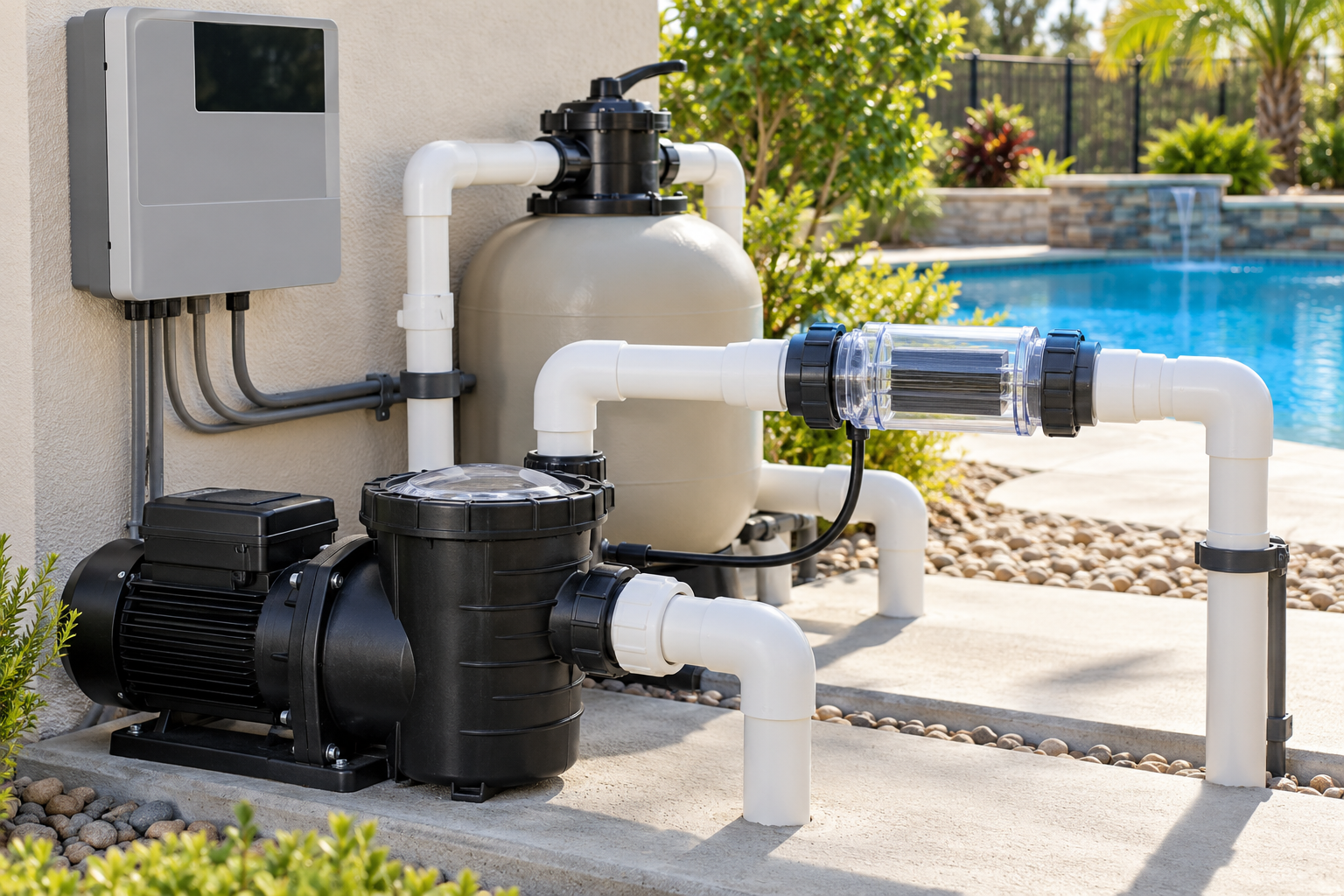
A low-output or warning indication does not prove that the salt cell has failed. Water conditions, settings, flow, wiring, controller, and the cell itself can produce similar symptoms. The right comparison begins with a system diagnosis and the exact equipment model.
Separate cell diagnosis from controller diagnosis
A warning or low-output report should be tied to evidence before a part is priced. Record the generator and cell model, exact display message, operating conditions, water-test information, flow condition, and tests used to distinguish the cell from the controller, sensor, wiring, or another cause. A low sanitizer reading and an alert can occur together without proving which component failed.
The quote should name the confirmed part, compatible replacement, labor, service or cleaning, startup test, warranty, and what happens if the original symptom remains. If the diagnostic visit did not establish a cell failure, price that visit separately from a replacement. The available package does not establish a universal cell-life guarantee or repair price; keep the recommendation tied to the exact system.
Keep sanitizer-product questions separate
In Canada, Health Canada’s August 2026 proposed review addresses certain halohydantoin sanitizer products, including proposals concerning some uses with electrolysis. That does not mean every salt generator, cell, or sanitizer is affected. If the pool uses a sanitizer product that may fall within the review, verify its active ingredient, product registration, approved label, intended use, and current final decision with the official notice or regulator. This question is separate from diagnosing a salt cell and does not establish a cell replacement requirement. Health Canada proposal
Compare repair, cell, and full-system paths
For a confirmed cell failure, compare an approved cell and installation with a separate controller or complete-generator option only if parts support or other findings justify it. Do not compare a retail cell price with a complete installed system. Include shipping, diagnostic labor, installation, startup, compatibility confirmation, and warranty in the total being compared.
The owner should approve a second diagnostic or additional part before the provider proceeds if the first replacement does not resolve the symptom. If a controller is obsolete or multiple components are failing, request that broader scope in writing. The comparison should show which equipment remains in service and what test will confirm return to normal operation.
Keep service history tied to the exact equipment
Record the cell and controller models, installation dates, settings, alerts, water tests, service, cleaning allowed by the manufacturer, prior repairs, and warranty. Give the next technician that record so a recommendation can be compared with the previous finding. Keep any sanitizer registration question separate from equipment condition; Health Canada’s proposal applies to specified products and uses, not to every salt cell.
Compatibility is more than matching a cell name
Before ordering, verify the part number, controller generation, approved output, connections, communication requirements, and warranty with the equipment manufacturer or qualified provider. A similar name or physical fit is not proof of compatibility. If the system has been altered or labels are unclear, identify the installed controller before buying.
Cleaning should follow the exact product instructions. Ask whether cleaning is appropriate, what method is authorized, and whether output will be tested afterward. Do not scrape, soak, or apply a chemical based on generic advice; aggressive cleaning can create a safety or equipment problem and may not correct reduced output caused elsewhere.
Distinguish a weak cell from an operating or water-care issue
The same cell can report different output under different schedules and system conditions. A service report should state what the generator was asked to do, the output setting, whether flow and controls were operating as intended, the relevant water-test results, and how the technician determined that the cell itself failed. If the pool’s use, season, or output setting changed, compare that context with the earlier service history before treating the new reading as a repeat cell failure.
A controller or sensor may show an alert even when the cell is not the only cause. The owner should not use a cost article to increase output, bypass an interlock, or clean the cell using an improvised method. Request the exact manufacturer process from the qualified provider and have the provider record whether cleaning, testing, or replacement was performed. The cost of an unsuccessful part change should be visible in the authorization terms.
When selecting between replacement cell and complete generator, compare warranty duration and exclusions, support for the current controller generation, diagnostic and labor charges, shipping, and the expense of another visit. A part-only web listing is not equivalent to a confirmed installed repair. The best quote explains which failure was confirmed and what test will show that the system is operating again.
Separate a serviceable cell from an unsupported system
A cell can be a replaceable component while its controller or generator remains serviceable. Before buying, have the provider verify the approved part number, controller generation, connection, output rating, and warranty with product documentation. If the controller is obsolete or several components are unsupported, a cell-only purchase may postpone rather than resolve the ownership issue. Request a separate whole-system option so the scopes can be compared.
The quote should state whether the service provider has the part in stock, whether it is new or refurbished, what shipping or travel adds, how long the pool may be without normal sanitation output, and what testing is performed after replacement. These details can matter more than a part-only list price. Do not keep using a product outside its instructions while waiting for a replacement; get qualified product-specific advice.
The service history should include previous alerts, water test conditions, cleaning allowed by the manufacturer, and output settings. If the new cell is installed, compare the post-installation test with the pre-service condition under comparable operation. If the symptom remains, return to diagnosis rather than immediately authorizing another unverified component.
Key points
- Confirm the failed component before replacing a cell.
- Compare the exact cell with controller or full-system alternatives.
- Keep model, settings, water tests, and service records for future diagnosis.
- A sanitizer product review is not a blanket rule for salt-chlorine generators.