
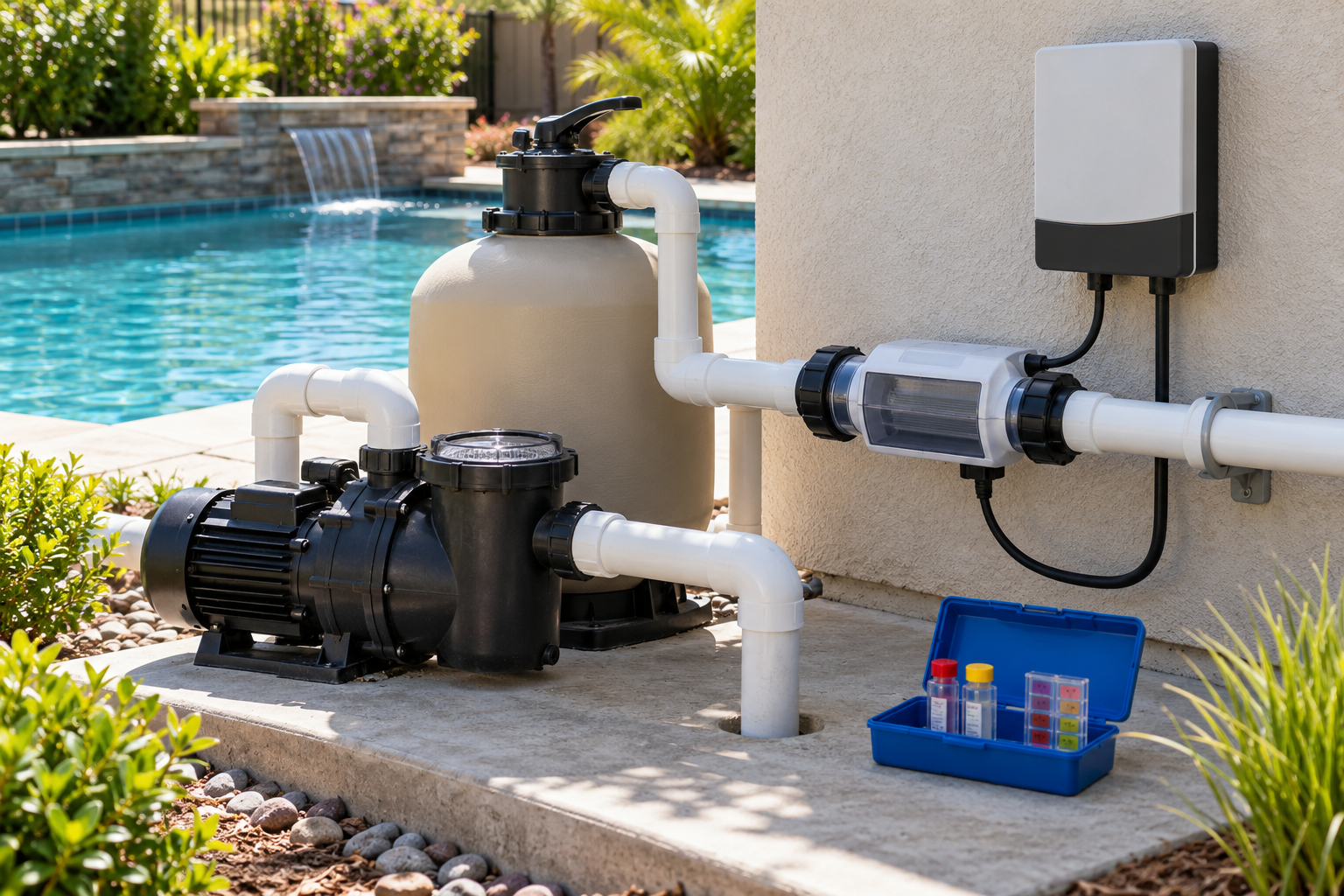
Converting a pool to salt-chlorine generation is an equipment and compatibility project. A salt system produces chlorine from dissolved salt; it does not create a chlorine-free pool or remove the need for water testing and maintenance. The budget depends on the selected generator and cell, installation, existing equipment, and the owner’s routine.
Inspect the existing system first
Before selecting equipment, document the pump, filter, heater, automation, plumbing, electrical supply, finish or liner, metal components, and available equipment-pad space. Ask the manufacturer or qualified installer to confirm compatibility for the exact models and materials. The estimate should identify the generator, cell, controller, connections, initial salt, startup, testing, warranty, and any work required to integrate it.
Mark each current component as retained, adapted, replaced, or not assessed. That makes required conversion work distinct from optional upgrades and leaves unresolved compatibility visible. If the pad is crowded or the pump, heater, or controller is already due for replacement, price those items separately and state the reason they are part of the project.
Compare ownership after the conversion
A generator changes how chlorine is produced; it does not remove routine tests, sanitation, water-balance work, service, or future component replacement. Include electricity, testing and supplies, cell and controller checks, service visits, compatible replacement parts, warranty, and owner time. A hands-on owner and a full-service owner may value the same equipment differently.
For a simple installation, compare a compatible generator and cell with the existing controls and plumbing. For an equipment-pad or automation project, include the additional electrical, plumbing, access, and commissioning work. For an older pool with unresolved material or warranty questions, defer the conversion until the exact products are checked. A conversion is not automatically economical just because it can be added to another project.
Current consumer-market observations are not enough to set a local conversion price. Use an itemized quote and keep U.S. and Canadian prices separate. Do not infer a payback period without local costs for electricity, sanitizer, maintenance, service, and cell replacement.
Use the owner’s actual choice of service arrangement. A self-managed pool may require more owner time for tests, records, water care, and service calls even if chlorine generation is automated. A contractor-managed pool may include testing and equipment observation but still bill cell cleaning, controller work, chemicals, filter service, and repair separately. Ask the provider to show the service tasks under both the current system and proposed generator.
If the owner plans to sell, remodel, or change the pool within a few seasons, compare the time horizon and equipment warranty with that plan. Do not assume a salt generator increases resale value or lowers total ownership expense; the evidence does not establish either result for an individual home.
Canadian sanitizer status is product-specific
Health Canada’s August 2026 proposed special-review decision concerns certain registered halohydantoin products and formulations. It proposes cancelling specified product uses in pools, spas, and hot tubs with electrolysis, ozonation, or ultraviolet treatment. The proposal is not a final decision and does not apply to every salt generator or every sanitizer. Verify the actual sanitizer’s active ingredient, registration, formulation, approved label, intended use, treatment-device combination, and current final decision before making a change. This regulatory context does not by itself establish that a salt generator needs replacement or that a conversion is prohibited. Health Canada proposal
Do not ask the generator supplier to answer a pesticide-registration question from a broad brand name alone. Record the sanitizer’s active ingredient, formulation, registration number, and approved label, then verify the current status with the official Canadian source. The proposal’s effect on an exact product can depend on how it is used with the treatment equipment; it does not replace the need for a separate compatibility and cost estimate.
Approve a defined commissioning handoff
At handoff, retain the generator, cell, controller, pump, heater, and automation models; the installation date; initial settings and test results; water-care instructions; warranty; and next service date. Name the person responsible for unresolved compatibility or startup items.
After a representative season, compare actual testing, service, sanitizer and salt use, electricity, cell condition, and owner workload with the original assumptions. A measured result helps decide whether the new routine suits this pool, but it does not establish a universal savings or payback claim.
Conditions that can make conversion a poor fit
Conversion may be unattractive when required equipment is near replacement, the manufacturer does not confirm compatibility, electrical or plumbing work is extensive, future cell and controller support is uncertain, or the owner’s service arrangement cannot support the additional equipment. It may also be reasonable to wait until a planned pump or automation replacement makes the coordination more practical. The decision should compare the full project with the value the owner places on the changed routine, not assume that the conversion pays for itself.
A pool with unresolved water-balance, corrosion, leak, or circulation problems should have those issues assessed independently. Installing a generator does not cure a water leak, defective heater, poor flow, or underlying maintenance problem. Keep any repair scope separate so the owner knows what the conversion does and does not fix.
Compare the water-care routine before and after installation
A generator changes how chlorine is produced, but the owner still needs a documented routine for testing, water balance, equipment observation, and service. Compare who performs each task under the current system and who will perform it after conversion. Include whether the contractor or owner records readings, checks the cell or controller, buys treatment products, and arranges service if output changes.
The new system should be commissioned against the exact pool and product instructions. Retain initial settings, water-test results, model numbers, installation date, warranty, and the professional’s recommended service contact. If an owner later changes pool use, temperature, or schedule, note that change before comparing output or costs with the first-season baseline.
A conversion is not an answer to an unrelated circulation, leak, corrosion, or water-balance problem. Keep any existing issue in a separate assessment and avoid attributing a future improvement to the generator if other equipment or maintenance also changed. This lets the owner see whether the value was a different routine, a better equipment fit, or another project performed at the same time.
Key points
- Confirm equipment, plumbing, electrical, finish, and warranty compatibility before ordering.
- Budget the generator, installation, startup, testing, cell replacement, and service separately.
- Salt-chlorine generation still requires testing and water care.
- Canadian sanitizer proposals require product and label verification; they are not blanket salt-system rules.