
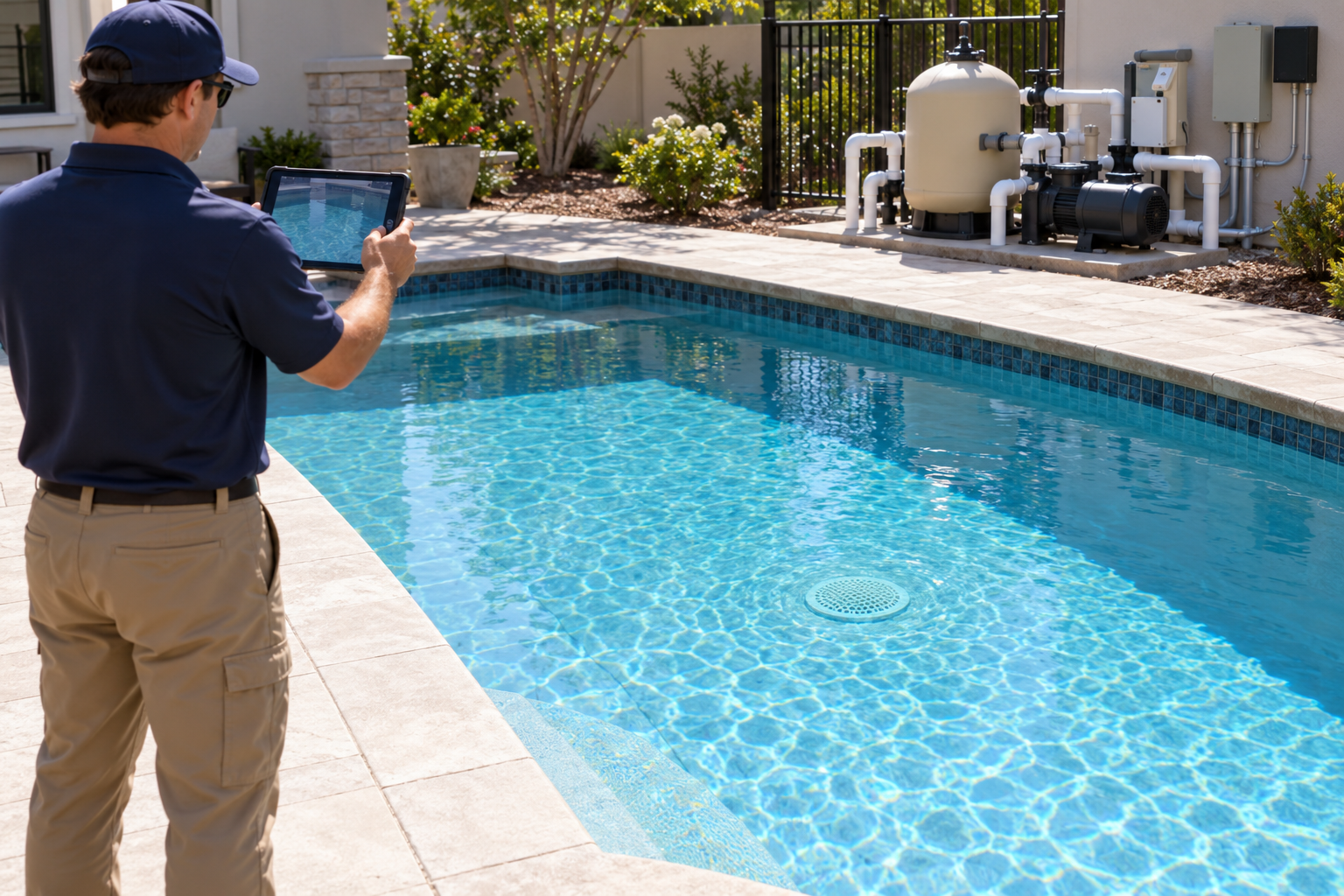
A drain or suction-safety project should begin with an inspection by a qualified pool professional. The correct scope depends on the number and arrangement of suction outlets, pump and plumbing configuration, exact covers and fasteners, equipment, pool use, and applicable requirements. A low-cost cover change cannot be assumed to solve every system condition.
Define the system before pricing work
Ask the professional to identify the outlet and cover models, configuration, dimensions, markings, service life, condition, fasteners, pump and flow arrangement, and any missing records. The quote should separate inspection, compatible cover or assembly, plumbing or structural work, labor, testing, access, permits or approvals, water handling, restoration, and follow-up. Ask which standard, adopted code, or local authority applies to the actual installation and which conditions remain unverified.
CPSC guidance and federal requirements provide important context, but the applicable product and jurisdiction determine the work. Model codes are not automatically local law. The owner should not remove, block, modify, or substitute drain components based on a generic cost guide. Keep the pool out of use and obtain qualified direction if a cover is missing, loose, visibly damaged, or subject to a matching safety notice.
A professional assessment may need to determine how many suction outlets are present, whether they are connected or isolated, which pump operates them, how the visible covers attach, and whether prior repairs or renovations changed the original design. Ask what records, equipment access, model marks, or measurements were used. If an outlet or fastener cannot be identified, the quote should state what additional access or documentation is needed before selecting a replacement.
The owner should compare the assessment itself with the permanent work that follows. A qualified first inspection can prevent buying a cover that looks similar but is not approved for the actual assembly. Ask whether the assessment fee is credited to subsequent work and whether a second professional or authority review is required.
Check exact product notices
Recent CPSC notices cover specific drain-cover products, including Lanyitongke covers, the iGarden Swim Jets P100 combination cover, an Earthtec 7 3/8-inch cover, and Asixxsix covers. The notices have different product descriptions and consumer actions. Match the exact product, model, and current notice, then follow the agency’s instructions and obtain qualified pool-safety review. These notices do not establish that other covers are defective, provide a universal retrofit specification, or give a general upgrade price.
A product name, size, or appearance is not enough to determine whether a notice applies. Compare the installed markings and model information with the official notice and confirm whether the remedy is current. If the owner cannot identify the cover or the record differs from the notice, pause the ordinary budget comparison and ask a qualified pool professional or relevant authority to verify the exact installation.
A drain cover is not the whole suction system
The visible cover is only one component. The suction arrangement may include more than one outlet, a pump, pipework, valves, and a specific cover-and-fastener assembly. The professional needs to understand how those parts function together before saying that a replacement cover is compatible or that an upgrade resolves the risk. A product may have a correct-looking size but still differ in mounting, flow, service life, or installation requirements.
This is why the first cost can be inspection, identification, and documentation rather than a replacement part. If records are missing, the professional may need access to the equipment, pool plans, serial/model marks, or concealed plumbing. Draining, removing tile or coping, replacing pipe, altering equipment, or restoring a surface can make the work more extensive. Ask the contractor to identify which work is confirmed and which depends on inspection.
Understand which requirement applies
CPSC materials and federal product requirements address particular products and contexts. A model code may be adopted, changed, or enforced through local law; private residential and public/commercial requirements may differ. Ask the local building or health authority which rules apply to the pool’s location and use, and ask the contractor to cite the basis for the proposed work. Do not assume that a warning about a named product defines the code for every residential pool.
If a current notice names the installed product, prioritize the agency’s instructions and seek qualified review. The CPSC warnings cited above cover specific products and different actions. A contractor should identify whether the product is an exact match, whether the notice is current, and whether additional system assessment is needed. A quoted replacement part is not proof that the rest of the suction system has been assessed.
Separate immediate safety response from the project budget
When a cover is missing, broken, loose, or associated with a matching stop-use notice, do not treat the issue as an ordinary deferred maintenance item. Keep the pool out of use and follow the current agency or qualified professional’s direction. This article does not tell an owner to cover, plug, block, modify, or improvise a suction outlet. The urgent response and the eventual permanent project can have different costs and timelines.
The final proposal should identify product marks and photographs, system arrangement, exact components, installation method, applicable authority or standard, testing and closeout documentation, and any remaining limitation. Obtain authorization before related plumbing or restoration work expands. This makes competing estimates comparable while keeping the safety decision with the appropriate agency and qualified professional.
Cost drivers the assessment should expose
The price can depend on whether the outlet is readily accessible, whether the exact approved replacement can be identified, whether the mounting surface is sound, and whether the current pump and pipe arrangement can remain. Work may expand if the cover is discontinued, fasteners are missing or damaged, there is evidence of an alteration, the surface needs repair, or several outlets share a system that must be assessed together. The owner should see which of these items the professional actually found and which remain conditional.
If access requires draining, opening a deck, removing tile, or coordinating another trade, the proposal should state why the work is necessary and what restoration it includes. Confirm the method and sequence with the qualified professional; the cost guide does not prescribe draining or system modifications. A replacement quote should name the exact cover or assembly and its intended configuration rather than relying on a generic size description.
A renovation may be the right time to assess an old system, but do not let a general pool remodel silently substitute a product without verification. Ask how the safety scope interacts with the pump, plumbing, finish, and local inspection, and obtain a record of the installed products and closeout. Any unresolved issue should remain visible to the owner and service provider.
Key points
- Identify the complete suction system before comparing a cover or retrofit quote.
- Match product notices to exact products and follow their different actions.
- Do not improvise, block, remove, or substitute drain components.
- Keep requirements tied to the actual jurisdiction and installation.