
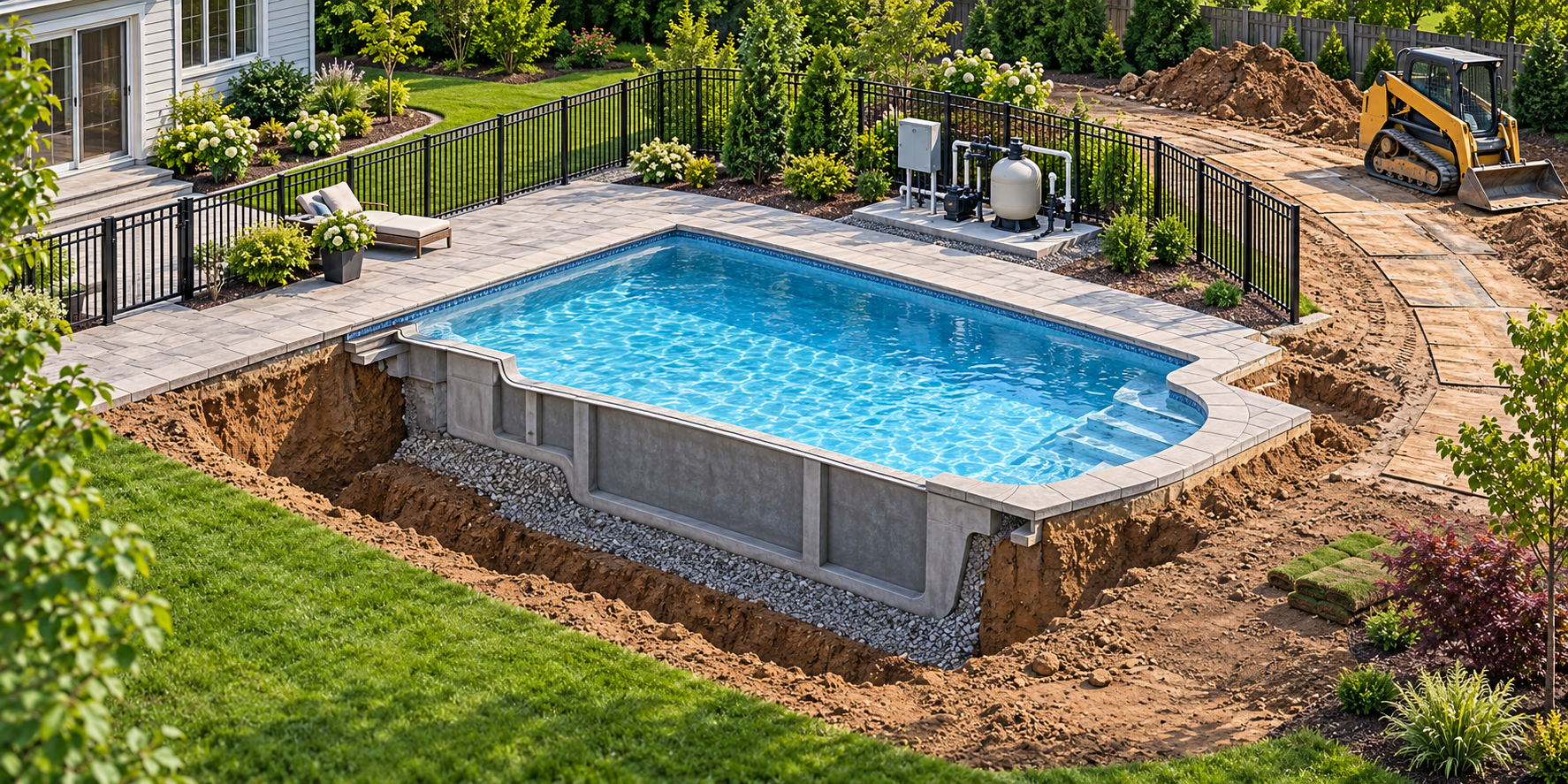
An inground-pool budget is a site project, not a shell price. Excavation, access, structure, utilities, equipment, safety work, decking, restoration, and startup may be contracted separately. Compare estimates only after writing down the work each includes.
Build the installed scope
Ask each contractor to separate the pool structure and interior finish from excavation, soil removal, hauling, groundwater or drainage work, equipment, plumbing, electrical, heater, cover, barrier, coping, deck, water, startup, permits, landscaping, and restoration. Identify allowances and the conditions that can change them. A fixed headline total can hide major differences in pool size, depth, equipment, access, or what is left for another trade.
A useful proposal also shows the site assumptions: measured delivery route, soil and groundwater observations, equipment-pad location, utility tie-ins, drainage plan, barrier and gate scope, and the boundary between pool work and the rest of the yard. If the contractor has not inspected the property, treat access, rock, retaining, disposal, and restoration as unresolved rather than included.
The construction system should be identified, not left as an assumption. A concrete shell, manufactured fiberglass vessel, and vinyl-liner structure have different delivery, construction, and future finish or liner work. Ask whether the quote includes shell or vessel, interior finish, coping, steps, lights, circulation and filtration, heater, sanitation, cover, and equipment pad. If the contractor offers an allowance, ask what size, model, finish level, or quantity it assumes and how a change is authorized.
Some trades may be contracted separately. Identify who coordinates design, excavation, pool installation, electrical or gas work, barrier, landscaping, inspection, and restoration. A project schedule should show which decisions are needed before excavation and which depend on equipment or finish selection. This avoids a low base number that leaves essential work for a later unpriced contract.
Include initial fill timing and the water source in the proposal. During declared conservation stages, a local utility may restrict pool filling or limit when it can happen. Whistler, British Columbia, for example, restricts pool and hot-tub filling from municipal potable drinking water to health and safety needs during Stage 3; verify the current stage, service area, water source, and applicable conditions rather than treating that local example as active everywhere. Whistler’s staged restrictions
Put market observations in context
HomeAdvisor’s U.S. consumer-market guide reports an inground-pool range of about $44,300–$86,500. This is a dated specialist signal, not a local bid or a complete scope definition. It should not be converted to Canadian dollars.
Canadian figures now offer limited local context, but they do not form a national price book. Thursday Pools reports 2026 fiberglass installation averages of CAD $82,500 for small, $103,750 for medium, and $130,000 for large pools. The figures come from a survey of five independent dealers that the page describes as Ontario dealers. The survey method and representativeness are not disclosed. Its standard package is described as including the shell, excavation, basic pump and filtration, plumbing, basic electrical, permits, one light, initial water fill, dirt hauling, about three feet of concrete decking, delivery, and labor; larger decking, fencing, landscaping, and covers are extra. Treat these as attributed fiberglass-only observations, not Canadian averages for other pool types. Thursday Pools’ survey and scope
A Toronto installer separately estimates a standard inground project at CAD $60,000–$130,000, including excavation, equipment, permits, and basic decking, while excluding several finish and site extras. That is one provider’s estimate with its own assumptions, not a comparable version of the five-dealer fiberglass survey. Easy Pools’ Toronto estimate
A local quote can differ from either published example because it includes a different shell, depth, site, equipment package, deck, or permit assumption. Request the same footprint and scope from each provider, and list taxes, contingency, and excluded work outside the base total. When estimates cannot be normalized, preserve the source name and included work beside each amount rather than choosing a single “average” that hides the difference.
Compare ownership as well as construction
The initial contract does not include every future cost. Compare the pool’s intended season and use with likely heating, circulation, sanitation, testing, routine service, opening and closing, cover care, and future finish or equipment work. A material choice changes future decisions, but no one construction type has a guaranteed lifespan or universal maintenance cost. Ask what local providers can service and what warranties exclude.
If a quote offers upgrades, separate necessary work from optional features. Confirm that the proposed equipment, finish, cover, and barrier are compatible with the pool design and local requirements. Local authorities and product instructions govern permits, access, barriers, electrical work, and equipment; general price guidance cannot establish compliance.
Compare timing, payment, and warranty with scope
Construction time affects more than convenience. A project may depend on excavation weather, inspections, delivery, curing or setting, utility connections, water, and trade availability. Ask for the sequence, owner decisions due at each stage, weather assumptions, and any costs that continue if the project is delayed. Check whether the payment schedule is linked to completed work and materials rather than only to calendar dates.
The warranty should identify which party is responsible for the shell or vessel, finish, equipment, installation labor, electrical connection, and site restoration. Ask what documentation is needed if settlement, movement, finish deterioration, or equipment failure appears. Keep product registrations, site drawings, permits, photos before concealment, startup readings, and closeout records together.
A complete comparison therefore has three layers: the defined installed scope, the site conditions that can change it, and the future ownership work the owner accepts. If one proposal does not define one of those layers, request a revision before using its headline price as the low bid.
Key points
- Compare the complete installed scope, not the shell price.
- Site access, soil, utilities, barriers, decking, and restoration can sit outside a base quote.
- Canadian figures here are narrow provider observations with different scopes.
- Keep operating, service, and future renewal costs visible before choosing upgrades.