
A U.S. termite or wood-destroying-insect inspection may be free when it is attached to a treatment proposal, or may be separately priced. Angi’s current general pest-control page displays two inspection estimates: $150–$450 in Cost Insights and $125–$450 in its later Inspection Fees section. It does not reconcile them, so treat both as specialist context rather than one settled U.S. range or a quote for a formal WDI/WDO report. Canadian pricing and report practice should be quoted locally in CAD.
First define the purpose
These are different purchases:
- Routine homeowner inspection: looks for signs that justify treatment, monitoring, or another investigation.
- WDI/WDO inspection: uses a transaction or lender-specific report format where applicable.
- Treatment-linked inspection: supports a provider’s proposal and may be credited if work proceeds.
- Structural or concealed-damage investigation: answers whether framing, flooring, or other building components are compromised.
Do not assume that a free treatment estimate is an independent report, or that a general home inspection satisfies a lender, insurer, buyer, or provincial requirement. Transaction requirements depend on location, contract, lender, loan program, pest geography, and current forms.
What the inspection may cover
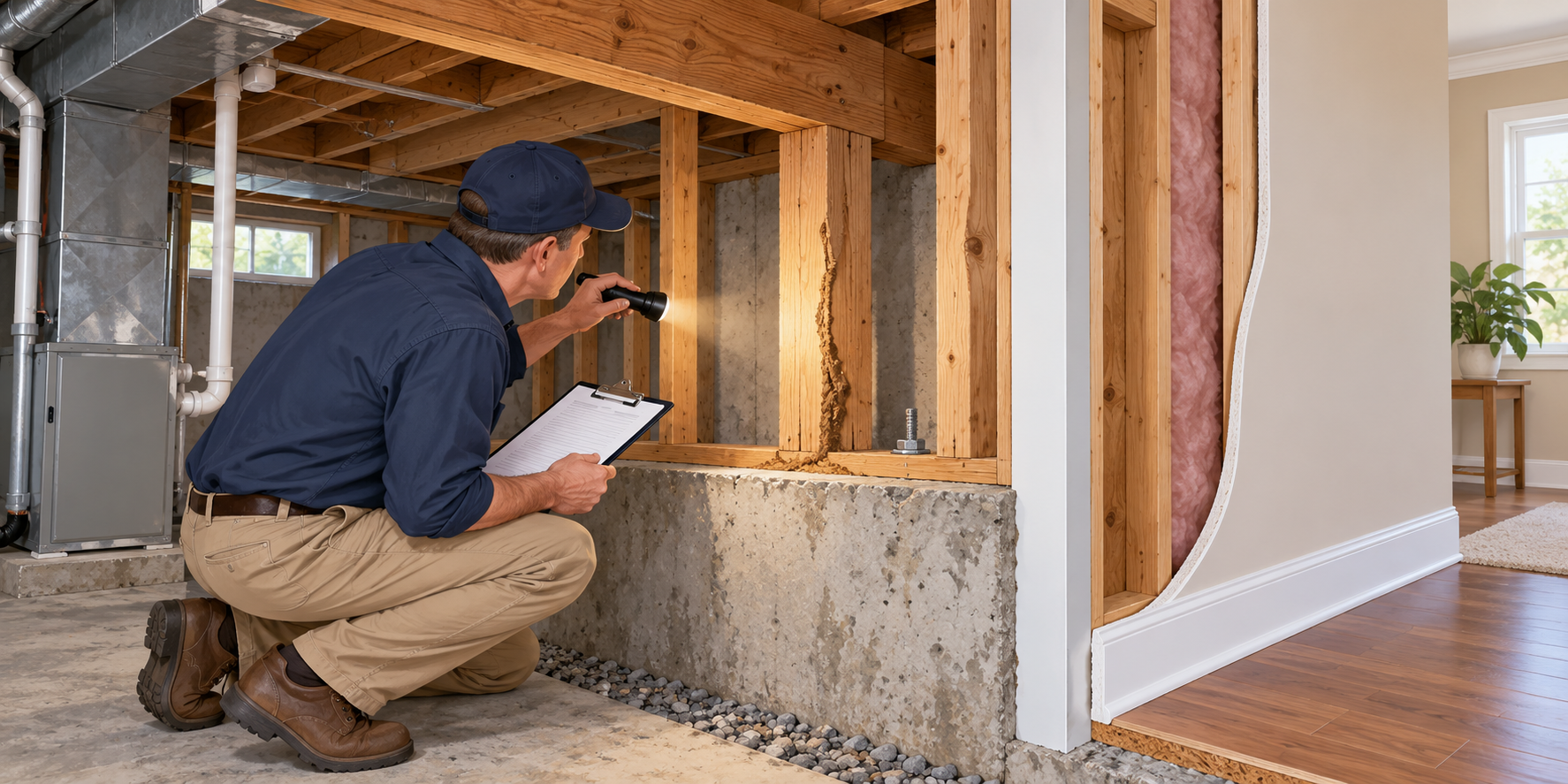
The inspector can look for live termites, swarmers or discarded wings, mud tubes, exit holes, frass, damaged wood, moisture conditions, and evidence of earlier treatment. Accessible basements, crawlspaces, attics, garages, exposed framing, baseboards, and exterior soil-to-wood interfaces may be relevant. A useful report states which areas were inspected and which were inaccessible.
The key distinction is active infestation versus historic evidence. Old damage or an abandoned tube may show that a building has had exposure without proving current activity. Conversely, a clean visible surface does not prove that concealed wood is unaffected. The report should explain the basis for its conclusion and identify remaining uncertainty.
What raises the price
Budget more when the property has a large perimeter, multiple foundations or additions, a tight crawlspace, unfinished attic, stored materials blocking access, detached structures, extensive moisture, or a request for photographs and a detailed written report. Travel and a short transaction deadline can also affect the fee.
The provider may price a follow-up moisture investigation, wood probing, opening of finishes, or a structural evaluation separately. Those services are not automatically required; they become relevant when the visible evidence cannot answer the homeowner’s decision.
Ask about the deliverable
Before hiring, confirm:
- Is the inspection visual, and are accessible attic or crawlspace areas included?
- Does the report identify evidence, suspected activity, damage, and conducive conditions separately?
- Are previous treatments, inaccessible areas, and limitations documented?
- Is the report designed for a particular transaction or only for treatment planning?
- Is the fee credited toward treatment, and does that affect the independence of the recommendation?
- Who evaluates structural damage, moisture, or finish repair if the inspection finds it?
EPA termite guidance treats termite work as a structural-protection concern and distinguishes inspection from professional control. That does not mean every finding needs immediate whole-house treatment. It means the next step should follow the evidence and the property’s risk.
How to use the report
Separate the findings into immediate treatment, monitoring, source correction, building repair, and unresolved investigation. A termite provider can price control, while a structural professional may need to assess a beam, joist, sill, or wall. Moisture correction and finish restoration are separate scopes. Avoid accepting a single allowance that combines treatment and unverified repair.
For a purchase, ask the inspector to explain whether evidence is active, old, or inconclusive and what documentation a lender or insurer actually requires. For an existing home, ask what monitoring interval and follow-up would change the decision. A report is valuable when it makes uncertainty visible rather than using a precise-sounding service life or damage grade unsupported by the inspection.
Transaction examples: VA loans and Florida
A VA-financed purchase is one example of a location- and transaction-specific WDI requirement. The VA’s current local-requirements page lists the states and areas where a report is required; some entries are county-specific. Under that page, an unlisted state does not require the inspection unless the VA appraisal report identifies a specific issue. A 2022 VA circular, which states that it remains valid until rescinded, describes inspection fees where a Notice of Value (NOV) requires the report, says required minimum-property repairs must be completed before guaranty, and encourages buyer–seller negotiation over costs. It does not set a standard fee or make the seller universally responsible. Verify the current VA page, circular status, NOV, and itemized invoice for the property.
Florida provides a different example. For a licensed WDO inspection in a real-estate transaction, Florida Statute §482.226 requires a report on the department’s form when a fee is charged or the customer requests a written report. The report identifies findings and inaccessible areas; it is not a guarantee that organisms or damage are absent unless it states the extent of a guarantee. This is a Florida rule, not a general U.S. or Canadian report standard, and it does not establish an inspection price.
Keep inspection findings separate from repair conclusions
A WDO report can identify evidence and recommend next steps without establishing the full repair quantity or a member’s structural capacity. Ask each treatment bidder to use the same report and identify any assumptions beyond it. If evidence points to weakened framing, concealed moisture, wiring, roofing, or finishes, assign that question to the appropriate qualified trade rather than combining an unverified repair allowance with pest treatment.
Estimate the first step and the possible second step
A screening visit may be enough when visible evidence is limited and access is good. If the next step requires probing, destructive access, or structural assessment, ask what finding triggers it. If one proposal bundles inspection with treatment or repair, confirm what happens if active termites are not found and set a separate approval point before work expands. A defined visual report lets the provider show evidence before additional investigation is quoted.
Price the report, the remedy, and the return visit separately
A WDO finding can lead to another inspection, treatment, repair, or a follow-up report, and those are different purchases. Ask whether the first fee covers only the field visit and form, or also a second look after contents are moved, treatment is completed, or a repair is made. If a transaction party needs a particular form or clearance statement, confirm who can issue it and whether that document has its own fee. The initial inspection does not automatically include the work needed to satisfy a lender, buyer, insurer, or contract.
Separate any pest treatment from repair of damaged wood. A provider may price control from the report while a carpenter or structural professional prices the affected material; a broad repair allowance is difficult to compare until its area and assumptions are stated. If one contractor offers both, ask for the treatment, access, replacement material, finish restoration, and reinspection as distinct lines. This makes a later change in the repair scope visible rather than hiding it inside a single “termite clearance” total.
The timing can also affect the practical cost. On a purchase deadline, ask which steps must happen before the report is accepted, whether repairs require another inspection, and how long the quote or report remains usable. A return visit or revised document may add a fee even when the original inspection price was modest. These are transaction-specific questions; the VA and Florida examples above do not establish one national sequence or fee.
If a seller provides an earlier report, ask whether the new inspector can rely on it, what changed since the inspection, and whether the intended recipient accepts its date and form. A second fee can buy a new scope or current documentation, but the reason should be clear before you pay.
Bottom line
A routine U.S. pest inspection may be free or separately priced. Angi’s $150–$450 and $125–$450 displays are unreconciled general pest-inspection context, not a formal WDO report quote. For a transaction, confirm the exact form and rule with the party requiring it. VA and Florida examples show why the location, financing, report trigger, and written deliverable matter; neither supplies a universal fee or payment rule.