
Professional cockroach control often costs more than a single visit suggests because the work may include inspection, source reduction, targeted treatment, monitoring, follow-up, and coordination with other units. A U.S. specialist market observation places simpler pest service in the low hundreds, commonly around $100–$500, while persistent, severe, or multiunit work can exceed that range. Canadian pricing should come from local providers in CAD.
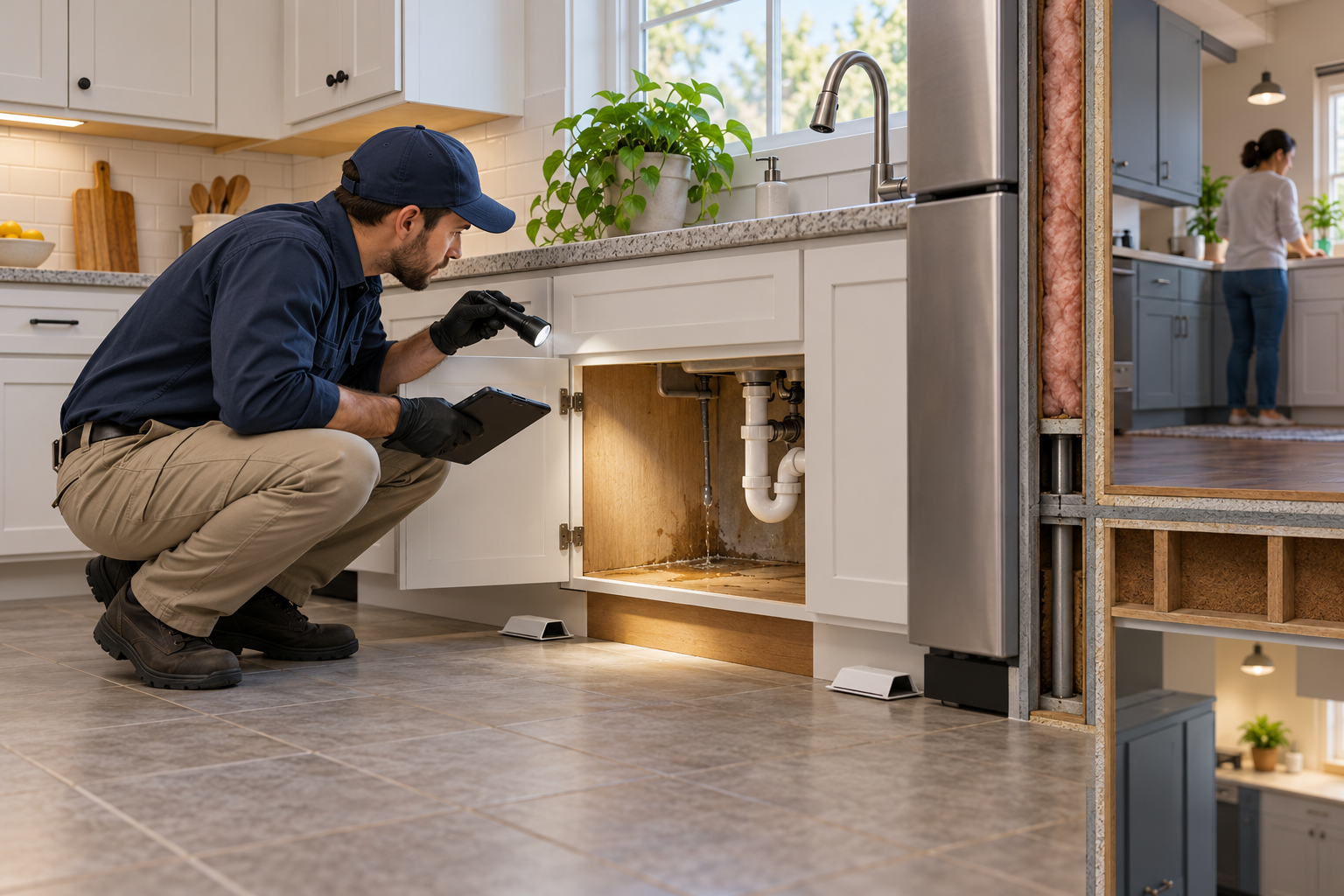
Confirm the problem and its extent
Cockroach control starts with identification and inspection. Different species can use different parts of a building and may require different control decisions. Droppings, shed skins, odor, or a sighting can justify an inspection, but a provider should explain what was found, where activity appears to be concentrated, and whether adjoining rooms or units may be involved.
The price can change when activity is limited to one kitchen, appears in several rooms, follows a plumbing or moisture path, or is present across shared walls. A quote for a single accessible home is not comparable with a coordinated apartment-building response.
What treatment may include
Health Canada describes cockroach control as a combination of environmental changes, cleaning, sealing, monitoring, and appropriate pesticide use rather than a product-only event. The proposal may therefore include:
- inspection and species identification;
- bait or other targeted treatment;
- crack-and-crevice work by a qualified provider;
- monitors or follow-up inspections;
- sanitation and food-storage instructions;
- correction of leaks or moisture conditions;
- sealing or repair of entry paths;
- repeat visits or a defined service period.
The provider should identify which tasks are included and which are homeowner, landlord, association, or other-trade responsibilities.
Why recurring visits may be necessary
Cockroaches can remain in protected locations and may be reintroduced through packages, shared walls, plumbing paths, or building movement. A follow-up visit may be used to check monitors, reassess activity, refresh a treatment, or confirm that source conditions were addressed. Repeat visits are not proof that the initial treatment failed; they may be part of a responsible plan.
Ask whether the quote includes a set number of visits, a time-limited service period, or an open-ended recurring plan. Ask what evidence triggers another visit and whether the guarantee covers only retreatment or also exclusion, sanitation, and repair.
Building conditions affect the total
Leaks, condensation, food residue, accessible garbage, clutter, damaged seals, and openings around utilities can support recurrence. Correcting those conditions can be more economical than repeatedly paying for treatment while leaving the source in place. Some corrections belong to plumbing, building-envelope, finish, or property-management scopes and may not be included in a pest invoice.
Do not seal vents, drains, or other openings without understanding their building function. A pest professional can identify a possible route, but the responsible trade may need to correct it without compromising ventilation, drainage, fire separation, or access.
Single-family versus shared buildings
In a condominium, apartment, townhouse, or other attached property, a cockroach problem may involve neighboring units or common areas. Who must inspect and pay can depend on the lease, governing documents, local law, and the source of the infestation. Category-specific responsibility questions belong with the applicable shared-property or tenancy decision, not with a generic extermination price.
Ask whether the provider’s proposal assumes exclusive access to one unit. If a wider inspection is recommended, request a written explanation of the suspected pathway and the proposed sequence. A unit-only treatment may be inadequate, but a building-wide treatment should also be supported by evidence.
Compare quotes by scope
| Question | Why it matters |
|---|---|
| What species and locations were identified? | Method and recurrence risk depend on the actual problem. |
| How many visits are included? | The first visit may not be the whole program. |
| Are monitors, follow-up, and retreatment included? | A low initial price may omit the verification stage. |
| What preparation is required? | Cleaning, access, food storage, and pets can create household cost. |
| Who corrects leaks, openings, or damaged finishes? | Treatment may not fix the condition that supports recurrence. |
| Does the quote cover one unit or shared areas? | Cockroaches can move beyond the first reported room. |
Pesticide products must be used by qualified providers according to applicable labels and state, provincial, territorial, or municipal requirements. Do not add unapproved products or foggers to a professional program without advice.
Low, typical, and complex service scenarios
A limited, confirmed problem in one accessible kitchen may fit a low-complexity service visit with inspection, targeted treatment, and a defined callback. A typical recurring problem may need monitors, source-condition instructions, a return visit, and coordination between treatment and sealing. A severe or shared-building infestation can require several units, repeated access, property-management coordination, and a longer follow-up period.
Those scenarios should not be collapsed into one “cockroach extermination” price. Ask the provider to state the number of rooms or units, the activity evidence, and the visits included. If a quote uses a monthly number, ask what the initial inspection and first treatment cost separately.
Source correction can be the economic pivot
Health Canada’s guidance treats cleaning, sealing, monitoring, and environmental changes as part of control. In practical budgeting, a leaking pipe, food-storage problem, garbage area, damaged seal, or shared plumbing route may be more important than the material used in one treatment. Correcting the source may involve a plumber, building manager, maintenance contractor, or another trade.
Ask whether the pest company has observed the condition directly or is only listing a generic possibility. Price a confirmed repair separately. Do not let a recurring service contract become a substitute for a known plumbing, moisture, or access correction.
How to judge the follow-up promise
“Guaranteed” can mean a free callback, a limited retreatment, a scheduled inspection, or a promise that depends on sanitation and access. Read the time period, covered species, treated areas, homeowner obligations, and exclusions. Ask how the company records activity and whether the plan changes if a neighboring unit is involved.
For a shared property, keep the treatment scope separate from responsibility for payment. A provider can explain how to control cockroaches without determining what a landlord, condominium association, or unit owner must pay under local documents and law.
A quote should show the service endpoint
Ask when the provider considers the project complete: after a treatment, after a period without signs, after a monitor check, or after source corrections are verified. Ask whether the guarantee restarts after a return visit and whether a new species or neighboring-unit activity changes the contract.
Keep a short record of sightings, rooms, dates, preparation, and repairs. It gives the provider useful information and helps distinguish recurring activity from a new event. Do not use that record to self-diagnose a species or choose a pesticide; use it to make the professional scope more precise.
The cheapest visit may not be the cheapest program
Compare the expected first-year total, source correction, monitoring, and follow-up rather than the first treatment charge. If the provider cannot state the endpoint or callback rule, request a clearer scope before signing a recurring agreement.
Preserve the distinction between treatment and maintenance
A recurring inspection plan may be useful, but it should identify the conditions it monitors and the action taken when activity is found. Routine applications without a defined pest or prevention purpose are not automatically the best use of the budget. Ask what the provider expects the household or building manager to maintain.
Ask what changes the price
Severity, building size, shared walls, food-service conditions, access, preparation, and follow-up can all change the service scope. Ask whether the quote is for one unit, a whole building, or an inspection that may recommend additional work. Confirm what the household or manager must do before and after treatment and how callbacks are handled. If activity returns, the next step may be sanitation, moisture correction, exclusion, monitoring, or a revised diagnosis rather than an automatic repeat application. Put that decision rule in the agreement.
Confirm the program endpoint
Ask whether the provider is selling a single treatment, a callback, monitoring, or a recurring service and what observation ends or renews the work. Confirm preparation, re-entry, occupied-unit, food-service, and shared-wall assumptions before comparing prices. If sanitation, moisture, exclusion, or building management must change, list that work separately. A defined endpoint keeps repeated applications from becoming the default response to a diagnosis that has not been revisited.
Bottom line
Use a broad U.S. planning band of roughly $100–$500 for simpler professional service, with the expectation that repeated, severe, inaccessible, or multiunit work can cost more. The meaningful comparison is inspection, treatment, source correction, monitoring, and follow-up together. In Canada, obtain local CAD pricing and confirm the building and product requirements that apply.