
The pest company’s invoice is only one part of a bed-bug project. The household may also pay in time, laundry, storage, encasements, furniture handling, monitoring, temporary accommodation, pet arrangements, and repair of damaged finishes. These costs vary too much for a universal total, but they can be estimated once the provider gives a clear treatment area and preparation plan.
Preparation is a real project scope
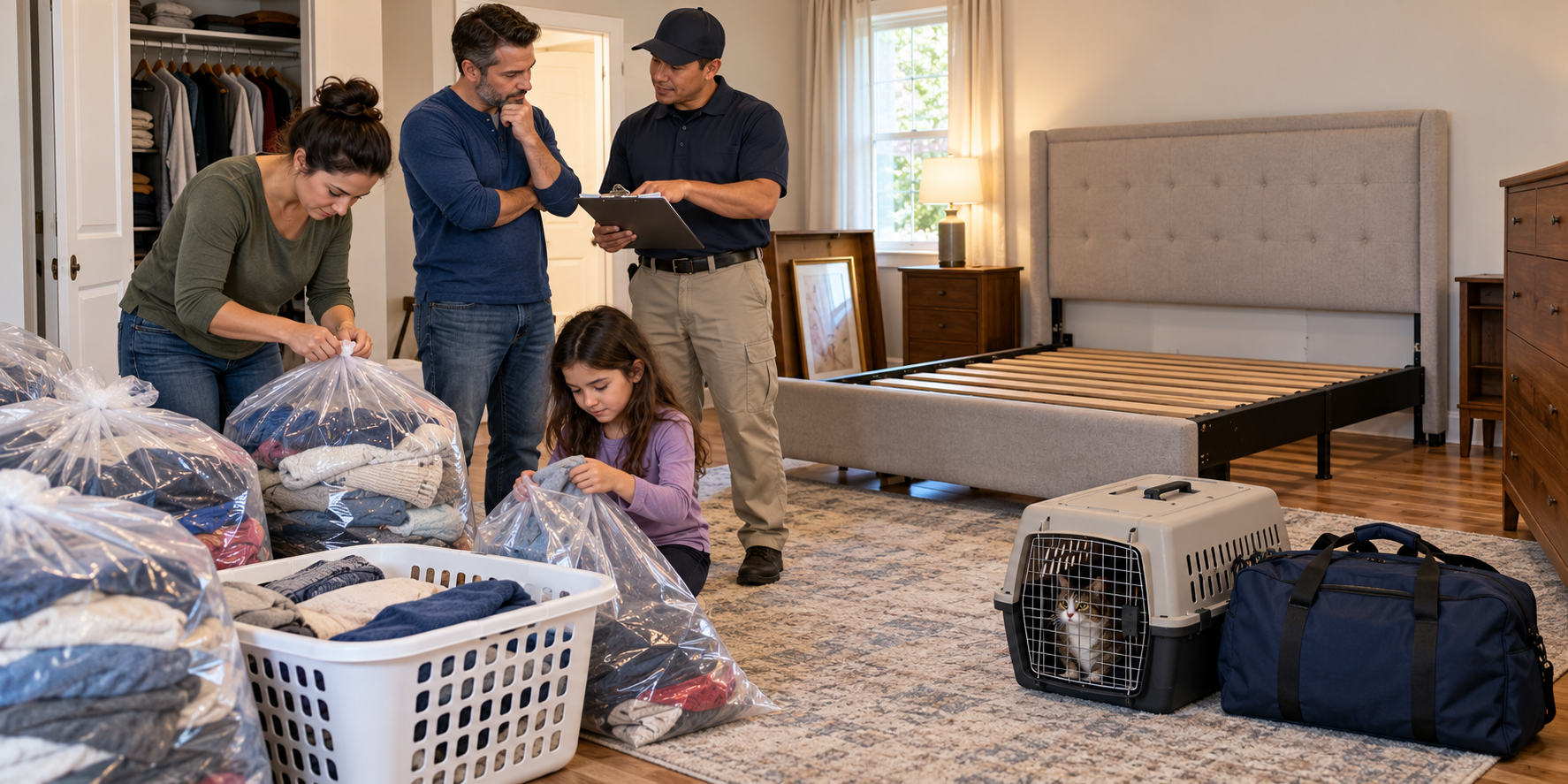
Professional treatment may require access to floors, baseboards, beds, closets, furniture, and stored items. Depending on the method, the provider may ask the household to reduce clutter, bag belongings, launder or dry textiles, move furniture, protect food, and arrange access to adjacent rooms. Health Canada and EPA guidance both describe resident participation as part of effective bed-bug management.
Ask for written instructions before scheduling. The instructions should distinguish what the provider does from what the household must do, what can remain in place, and what must be removed or protected. If preparation is incomplete, a failed visit may create another charge or delay treatment.
Household cost categories
| Cost outside the pest invoice | What can increase it |
|---|---|
| Laundry and drying | Number of occupants, bedding volume, repeat visits, laundromat use, and drying capacity |
| Bags and storage | Amount of clothing and belongings, storage duration, and whether items must stay sealed |
| Furniture handling | Heavy furniture, built-ins, disassembly, treatment access, and reassembly |
| Encasements and monitoring | Number and size of mattresses or box springs and the length of monitoring |
| Temporary accommodation | Treatment method, re-entry instructions, household size, pets, and repeat visits |
| Replacement items | Only items that cannot responsibly be treated or are damaged beyond use |
| Finish repair | Openings, damaged trim, disturbed flooring, or repairs after access |
The table is a budgeting checklist, not a prescription to buy every item. Ask the provider which items are actually necessary for the selected method.
Do not discard everything automatically
Throwing away furniture can add disposal, replacement, delivery, and bed-frame costs without solving the infestation. A professional may be able to inspect, treat, isolate, encase, or monitor an item. Disposal may be reasonable when an item cannot be treated safely or economically, but the decision should follow the provider’s plan and the item’s condition.
If an item is discarded, prevent it from becoming a source of spread. Ask about local disposal rules and how to mark or dismantle the item. Do not move suspect furniture through clean rooms without a plan.
Temporary relocation and re-entry
Some treatments require people or pets to leave temporarily. The length and cost depend on method, area, product instructions, ventilation, household needs, and whether follow-up visits are planned. Never infer re-entry time from an online description of a different product or treatment method. Follow the provider’s written instructions and the applicable label.
Temporary housing is not always required, but it should be considered when the treatment area cannot be occupied, when an occupant has special health needs, or when a building-wide response requires coordinated access. Pet boarding, transportation, meals, and lost work time can matter even when the out-of-pocket treatment quote looks manageable.
Repeat preparation can dominate the budget
If the treatment plan includes multiple visits, preparation may repeat. Count the labor and disruption for every planned visit, not just the first. Ask whether the provider includes a reinspection, monitoring, or retreatment visit and whether it requires the same household preparation.
Compare this burden with the alternative method. A higher contractor invoice may require one concentrated preparation period; a lower first invoice may require several rounds of laundry, access, and temporary storage. The economical option depends on the whole plan and the household’s ability to carry it out.
Shared buildings need a wider scope
Bed bugs can cross unit boundaries through belongings, walls, corridors, or shared furnishings. In an apartment, condominium, or other shared building, the household may not control inspection or treatment of adjacent areas. Responsibility for payment and coordination depends on the lease, governing documents, local law, and the building’s response plan.
Tell the provider whether the home is attached and whether nearby units have reported activity. A unit-only treatment can be incomplete if the actual scope is building-wide, but a broad treatment should also be supported by inspection rather than assumption.
Build a household budget
Make three columns before approving the work:
- Provider scope: inspection, method, treated rooms, visits, monitoring, guarantees, and any contents service.
- Household preparation: laundry, bags, storage, moving, cleaning, pet care, and time away.
- Follow-on exposure: replacement, finish repair, neighboring-unit coordination, and another visit if activity remains.
Use ranges for household costs rather than false precision. The provider should supply the site-specific preparation list; the household can then price only the actions that actually apply.
A simple household budget model
Start with the provider’s total planned treatment price. Add one line for each preparation cycle: laundry or drying, bags, storage, furniture movement, encasements, and time away. Add a separate line for contents or furniture that the provider says cannot be treated, but do not budget replacement until that decision is justified. Finally, add monitoring, pet care, travel, meals, and possible finish repair only when they apply.
This approach is more useful than assigning a universal “hidden cost” percentage. A lightly furnished apartment with one visit may have little out-of-pocket preparation. A full home with several bedrooms, children, pets, limited laundry capacity, and repeat visits can carry a much larger household burden even if the pest-company invoice is similar.
What to clarify before buying supplies
Ask the provider whether items need to be bagged, washed, dried, moved, encased, or simply left in place. Ask how long sealed storage lasts and whether a follow-up visit repeats the instruction. Do not buy large quantities of bags, monitoring devices, mattress covers, or replacement furniture until the treatment plan identifies them.
Preparation also should not create a new spread pathway. Moving an infested mattress, clothing, or upholstered item through clean rooms can increase the affected area. Follow the professional movement plan, and ask for a written direction if the instructions are unclear.
The cost of unfinished preparation
An incomplete preparation can cause a failed visit, a rescheduling fee, or a treatment boundary that does not match the original quote. Ask whether the provider checks preparation before starting and what happens if access is blocked. If the household cannot complete the requested work, discuss an alternate service scope instead of silently accepting a plan that cannot be delivered.
Temporary housing is not automatically required
Some methods require vacancy; others may require only restricted access for a stated period. The provider and label determine re-entry. A hotel, pet boarding, lost work time, or meal cost should be included only when the actual plan calls for it. Do not leave the home or move belongings based on a generic online timetable.
Keep the household plan aligned with the contractor plan
Ask the provider to put preparation dates, access areas, treatment dates, re-entry, and follow-up in writing. That schedule helps price laundry, storage, pet care, work disruption, and temporary housing without buying unnecessary supplies. If a household cannot complete a requested step, ask whether the provider can offer a different method or service boundary.
The treatment plan should also say who handles furniture, mattresses, box springs, clothing, and stored contents. A household should not infer that every item must be discarded or that every item is safe to move. Decisions should follow the professional assessment and the actual product or method.
Use the service date as the budget anchor
Once the provider states the preparation and follow-up dates, price the household work around those dates. That is more reliable than applying a fixed percentage to the contractor invoice and helps identify which burdens are optional, required, or unresolved.
Build a household work plan
Before approving treatment, list the rooms, contents, preparation tasks, pets, occupants, work disruption, and follow-up dates that the provider actually expects. Ask which preparation steps are required, which can be substituted, and who is responsible for moving or protecting belongings. Keep a written record of re-entry instructions and do not use foggers, extra pesticides, or disposal as a substitute for the agreed method. This turns hidden household burden into a visible project cost and reduces the chance that an incomplete preparation step creates a second visit.
Bottom line
Budget bed-bug treatment as a coordinated project, not just a service call. Preparation, repeat visits, contents handling, monitoring, temporary disruption, and replacement decisions can materially change the total. Do not discard furniture or add products automatically; follow the professional plan, current labels, and local requirements.