
Carpenter-bee work can be a small treatment or a combined control-and-repair project. The price depends on whether the insects are correctly identified, how many galleries are active, where the wood is located, how high the access is, and whether the affected fascia, trim, railing, deck, or siding needs protection or replacement. A single visible hole does not prove that structural repair is necessary.
Identify the decision before paying for treatment
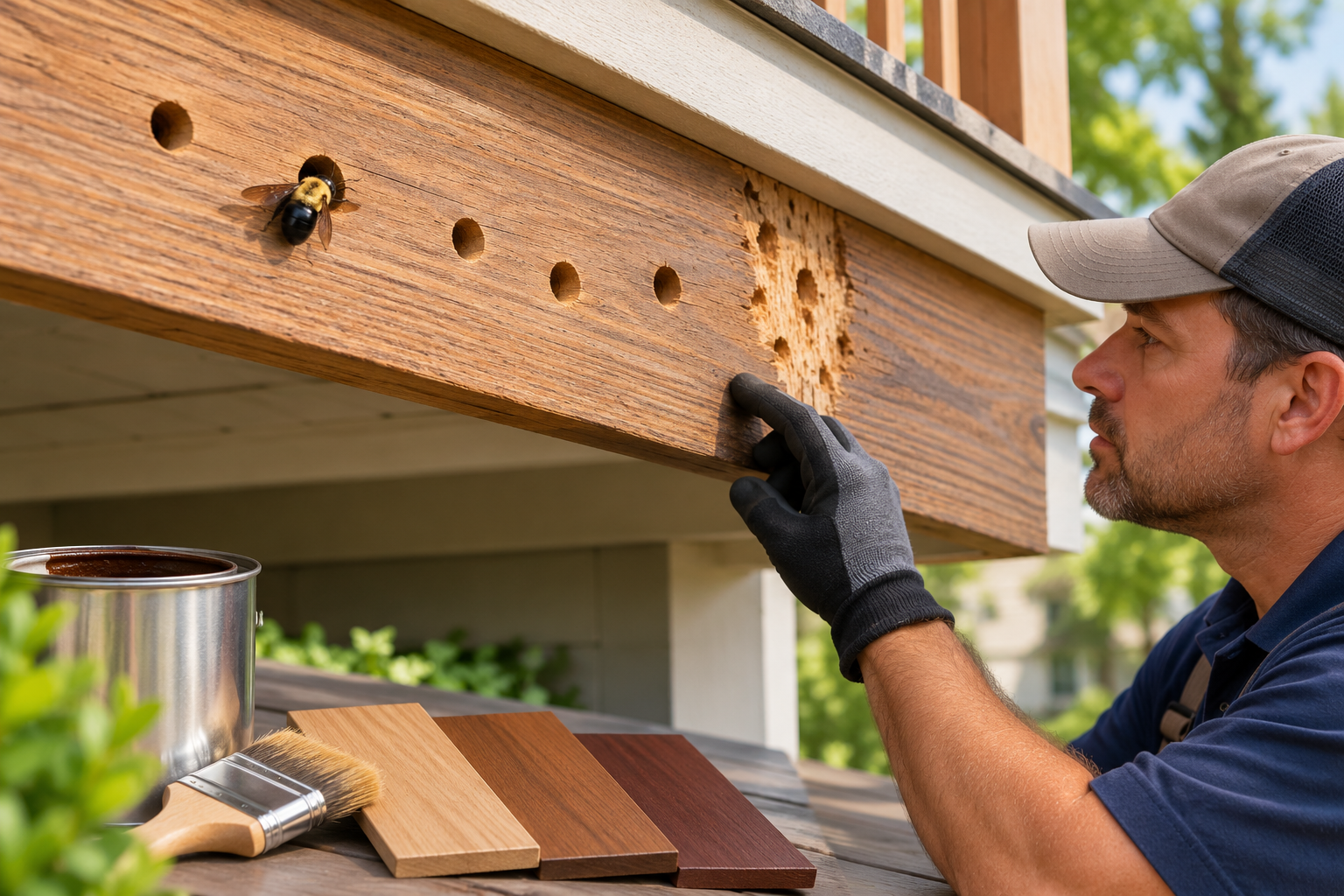
Carpenter bees excavate galleries in wood. Penn State Extension notes that repeated activity can enlarge damage and attract other organisms, but the economic significance depends on exposure, species, wood condition, and the site. Confirm carpenter bees rather than assuming every large bee is the same insect; bumble bees and other pollinators have different behavior and control considerations.
Ask whether the problem is one nest, annual reuse, many holes in one member, or widespread activity across exposed wood. Repeated nesting often matters more than an isolated gallery.
Break the project into scopes
| Scope | Possible cost driver |
|---|---|
| Inspection | Species, active galleries, height, and wood condition |
| Control | Treatment method, timing, access, and number of locations |
| Protection | Coating, paint, stain, or other site-appropriate finish |
| Exclusion | Closing or protecting galleries after the appropriate control step |
| Repair | Patching, replacing trim, or rebuilding a damaged wood member |
| Secondary damage | Woodpecker or moisture damage around galleries |
Control and repair should not be merged into one vague allowance. A carpenter or exterior contractor may own the replacement or finish work even when the pest professional identifies it.
What changes the price
Rooflines, fascia, upper siding, tall porches, and high decks add labor or access equipment. Repeated activity can require more inspection and follow-up than a one-time treatment. Paint or stain work may require surface preparation and color matching. If a wood member is soft, split, or extensively bored, replacement may be more economical than cosmetic patching—but that decision belongs to the person evaluating the material.
Do not assume a carpenter-bee gallery has weakened a load-bearing component. If a railing, beam, fascia support, deck member, or other structural element appears compromised, stop treating the hole as a pest-only repair and obtain the appropriate structural or building assessment.
Environmental and timing judgment
A provider should explain why treatment is warranted, what is being protected, and whether a preventive finish or repair is the better intervention. Avoid broad pesticide applications based only on the presence of pollinators. Product labels and local rules control any chemical use.
Request an itemized quote
Provide the location, height, number of holes, wood type if known, and photos from a safe position. Ask whether the price includes inspection, treatment, gallery closure, finish protection, follow-up, access equipment, and repair. Mark which faces and heights were inspected, and confirm who will warranty any deck, siding, roofing, or carpentry repair.
Compare control, protection, and repair
Ask whether the quote covers identification, current activity, treatment, gallery closure, surface preparation, protective finish, follow-up, access equipment, and material replacement. A small number of accessible galleries in sound wood may need a bounded control and protection plan; repeated use across high fascia or a deck may require access equipment and more finish work. Widespread boring, soft or split wood, or a potentially load-bearing member changes the repair question and may need a separate building or structural assessment.
Protective paint or stain has its own preparation and maintenance cost. Ask how the surface will be restored, what product and timing are appropriate, and what future upkeep remains. Avoid broad pesticide treatment around pollinators without a qualified, label-compliant reason.
| Project condition | Likely questions behind the price | Work that may remain separate |
|---|---|---|
| A few galleries in accessible sound wood | Is there current activity, and is treatment warranted? When can an old gallery be closed? | Surface preparation and a future paint or stain cycle. |
| Repeated galleries on fascia, a railing, or a deck | How many locations and elevations are included? Is lift or roof access needed? | Finish matching, carpentry, or weather-exposed assembly repair. |
| Soft, split, or load-bearing wood | Who assesses the material and what evidence supports replacement? | Structural evaluation and replacement by the responsible trade. |
The table is a way to compare assumptions, not a universal treatment recipe. A proposal should say whether it addresses present activity, reuse of existing galleries, or protection of the exposed wood over time.
Repeated use changes the ownership calculation
An isolated gallery in sound wood and recurring activity across several elevations can produce very different totals even when the visible hole count seems similar. Repeated activity may justify inspection of nearby exposed wood, a defined treatment where warranted, closing galleries after the appropriate control step, and protecting the surface. It does not automatically justify replacing every board or applying a broad pesticide treatment.
The future cost may include paint or stain preparation, surface maintenance, periodic inspection, or access equipment for elevated trim. Compare that ongoing work with selective replacement when the affected wood is already deteriorated or difficult to maintain. The right choice depends on the material, exposure, condition, appearance requirements, and access—not on a universal payback rule.
Make timing and pollinator concerns part of the scope
Ask the provider what activity it observed, whether the proposed visit is for identification or treatment, and why the method is appropriate at that stage. Do not assume that every large bee is a carpenter bee; a bumble bee or other pollinator can require a different response. The provider should identify the insect before recommending control and explain any local environmental restrictions or label requirements. A preventive finish or repair may be a better fit than pesticide treatment when no current activity is established.
If galleries are to be sealed, ask when that step occurs and whether the provider is addressing active insects or old openings. Do not copy a universal calendar from another property. A scope that identifies the sequence lets the homeowner coordinate control, closure, finish, and repair without trapping an insect or paying to refinish a surface that must be reopened.
Make the repair handoff clear
Request photographs of affected elevations, active or suspected galleries, adjacent wood condition, and any secondary damage. If a woodpecker has enlarged or damaged an area, include that material in the repair assessment rather than treating it as an ordinary small hole. Before a carpenter or deck contractor closes the work, confirm the pest provider has recorded what was treated and what remains uncertain. Each contractor should state whether its price includes access, surface preparation, disposal, and finish restoration.
For a load-bearing member, have a structural professional evaluate the material. The pest company can identify insect activity but does not establish that a beam, deck, or railing is safe. Keeping those roles separate makes a combined project estimate easier to understand and limits duplicate allowances.
Ask whether all elevations and repeated sites are included
A quote based on one photographed hole may omit nearby exposed trim, a deck rail, or the upper fascia where repeated activity occurs. Ask which faces, heights, and wood members were inspected, and whether the provider priced only observed galleries or a larger treatment area. If a lift or ladder access is needed, confirm setup, protection of landscaping or finishes, and whether the price changes for a return visit. A written location map makes a later inspection more useful and keeps a maintenance visit from being mistaken for repair of an unrelated board.
Ask whether a price is for one control visit, a return visit, gallery closure, or a longer surface-maintenance plan. If paint or stain is included, have the contractor state the preparation area, number of coats, matching assumptions, and future upkeep that remains with the owner. There is no useful comparison when one bid includes only treatment and another includes finish work across several elevations. Compare those outcomes separately, then decide whether preserving sound wood or replacing deteriorated material fits the building.
When bids include future maintenance, ask whether the quoted interval is a recommendation or a warranty condition. A product or finish does not create a universal inspection schedule, and a maintenance agreement may exclude new galleries or adjacent boards. Use the written scope to see which access and repair costs recur during ownership.
Bottom line
Carpenter-bee cost depends on repeat activity, difficult access, and the protection or repair that follows. Target current activity, preserve sound wood where appropriate, and keep pest control, finish maintenance, and structural decisions distinct.