
Professional bed-bug treatment can range from a few hundred dollars for a limited, accessible problem to several thousand dollars for a whole-home, severe, or multiunit response. Current U.S. specialist market observations place many projects somewhere in that broad span, but the number of rooms, treatment method, preparation, repeat visits, and contents work matter more than a national average. Canadian homeowners should request a local quote in CAD; a U.S. figure is not a Canadian estimate converted into dollars.
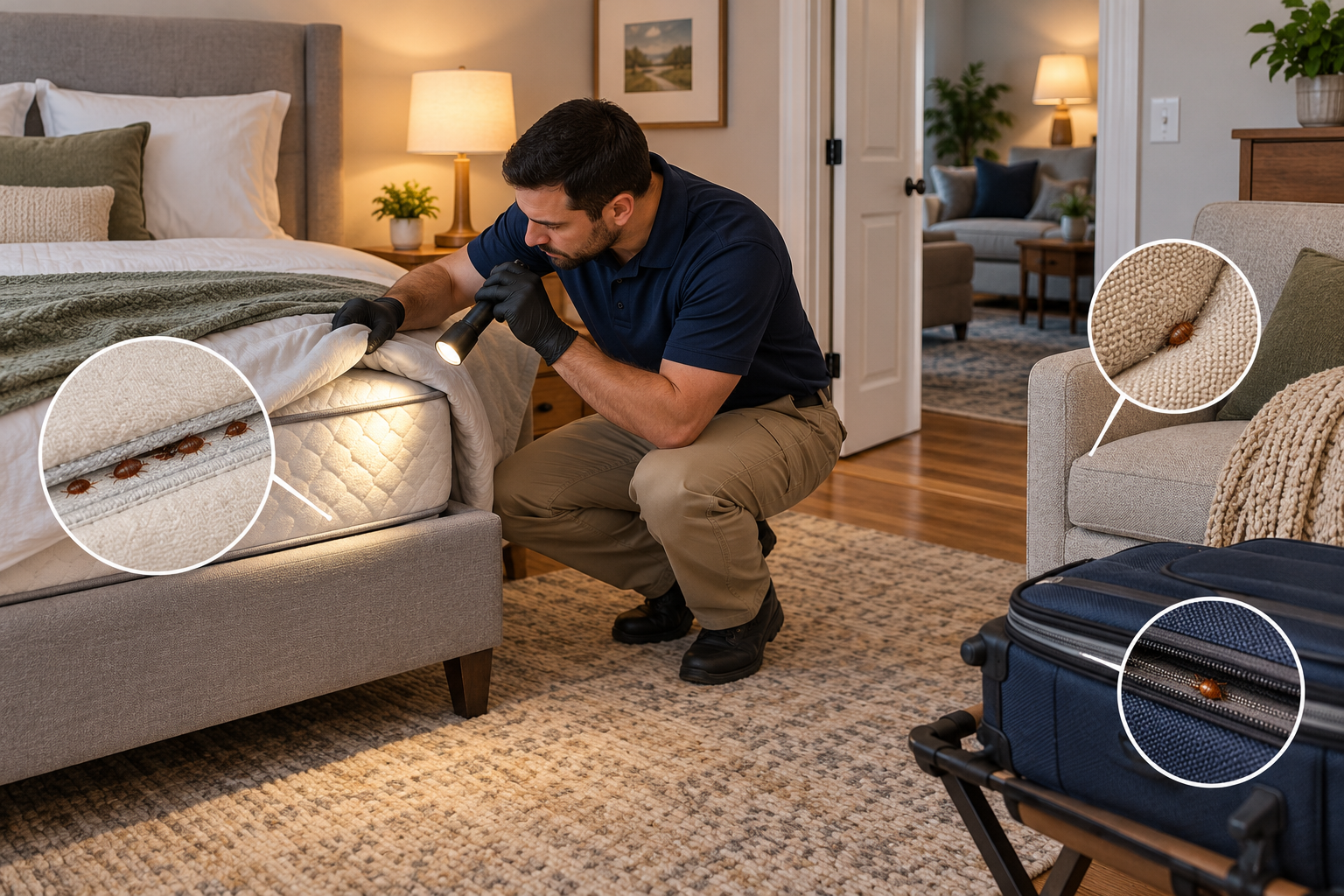
Why bed-bug quotes vary so widely
Bed bugs can move between rooms in clothing, luggage, furniture, and other belongings. A provider therefore needs to define the suspected area and the evidence behind the proposed treatment. A quote for one bedroom is not comparable with a plan that includes adjoining rooms, living areas, storage, shared walls, or a neighboring unit.
The first visit may be an inspection, a treatment, or both. Ask whether the price includes:
- inspection and written findings;
- the rooms and furnishings covered;
- preparation instructions and a preparation check;
- one treatment or a defined series of visits;
- monitoring or a reinspection;
- treatment of furniture and contents;
- follow-up if activity remains;
- a retreatment guarantee and its exclusions.
If the infestation is not confirmed, an inspection can be a better first purchase than a broad treatment. Bites alone do not identify bed bugs, and a treatment plan should not be based only on a symptom that has other possible causes.
Treatment method is a major cost driver
Professional bed-bug programs may combine inspection, physical controls, vacuuming, steam, heat, registered pesticide products, encasements, monitoring, and follow-up. Health Canada and the U.S. Environmental Protection Agency both emphasize that treatment should follow the applicable product label and a coordinated integrated pest-management plan.
Heat treatment can be a large whole-space operation with equipment, setup, monitoring, and careful protection of heat-sensitive items. Chemical or multi-method work may have a lower initial price in some situations but can require more preparation, targeted applications, and return visits. Neither approach is automatically the right choice. The provider should explain the proposed method, the area treated, what the homeowner must do, and how success will be checked.
Do not compare a one-visit quote with a multi-visit program by looking only at the first invoice. Put the total planned visits, preparation time, monitoring period, and retreatment terms beside the price.
Room count is not the whole scope
The same number of rooms can produce different costs when furnishings, clutter, built-ins, flooring, wall cavities, or access conditions differ. A furnished bedroom may require more preparation than an empty room. EPA notes that heavy infestations can extend to furniture seams and drawer joints, appliances or receptacles, loose wallpaper, and wall-ceiling junctions; these are examples, not a complete inspection checklist. A multiunit building may require coordination beyond the unit that first reported activity. A property with frequent turnover, vulnerable occupants, or difficult access may need a more detailed service plan.
Ask whether adjacent rooms are inspected even when they are not treated. A useful report should distinguish confirmed activity, suspected spread, inaccessible areas, and conditions that could reintroduce bed bugs. It should also state whether the provider expects the homeowner to move, bag, launder, or otherwise prepare belongings.
Costs outside the treatment invoice
The pest-company invoice may not include laundry, storage, encasements, monitoring devices, furniture disassembly, temporary accommodation, pet arrangements, or repair of damaged finishes. Those costs are discussed separately in the hidden-cost guide. Avoid automatically discarding furniture: whether an item can be treated depends on its condition, construction, infestation, and the professional plan.
Preparation also has a time cost. If a provider requires the same work before each follow-up visit, include that burden when comparing methods. A lower invoice can be less economical if it transfers extensive preparation to the household or leaves uncertainty about which items were covered.
Safety and re-entry questions
Do not improvise with foggers, unregistered products, excessive pesticide, or heat equipment. Ask the provider for written preparation and re-entry instructions that match the products and methods used. Keep children, pets, food, and sensitive occupants out of treated areas as instructed. The product label, applicator, and local requirements control the actual precautions.
Bed bugs do not create a universal rule about who pays in a rental, condominium, or shared-wall building. Treatment coordination and responsibility can involve leases, governing documents, local law, and neighboring units. Keep the pest scope separate from the payment-allocation question.
How to compare a bed-bug proposal
Ask each provider to price the same scenario: the rooms inspected, treatment area, method, number of visits, preparation, monitoring, furniture and contents, reinspection, guarantees, and exclusions. Ask what happens if activity is found outside the stated area or after the guarantee ends.
The most useful proposal explains what a successful result means and what evidence will trigger another visit. It also makes clear whether the company is treating the infestation, inspecting for spread, or helping coordinate a wider building response.
Three useful budget scenarios
An isolated, confirmed problem in one accessible room may stay toward the lower end of a broad market range when the inspection, preparation, treatment, and follow-up are all uncomplicated. A typical multi-room project costs more because the provider must inspect adjoining spaces, move or protect contents, and return to monitor the result. A whole-home, multiunit, or severe infestation can move into the thousands because the treated area, preparation, disruption, and coordination expand together.
These are scope scenarios, not promises. A provider may recommend treating a room that has no visible activity because it is adjacent to an affected room, while another may monitor it first. Ask for the reason behind the boundary. A larger area is not automatically more responsible, and a smaller area is not automatically inadequate.
What a useful report should leave you with
The treatment decision should produce more than a receipt. Ask for a written description of the inspected and treated areas, observed evidence, inaccessible areas, preparation completed, method used, and follow-up date or trigger. If the provider cannot say how activity will be judged after treatment, the price is difficult to evaluate.
The report should also distinguish bed bugs from other possible causes of bites or marks. A household may spend more by treating an unconfirmed problem than by first buying a focused inspection. Conversely, a very low inspection-only quote may not answer whether adjacent rooms or contents were checked.
If activity remains, EPA lists possible causes such as missed hiding places or nearby rooms, incomplete preparation, label misuse, eggs surviving until follow-up, and not allowing enough time for a slower-acting product. Resistance is one possibility, but EPA says it varies and requires laboratory testing to verify. Ask what the provider checked before authorizing a wider treatment or another paid visit; a callback alone does not establish resistance.
When the project becomes a building response
In an apartment, condo, townhouse, or other attached building, the treatment boundary may not be the same as the payment or responsibility boundary. Bed bugs can move through belongings and shared spaces, but local responsibility rules, leases, and governing documents determine who coordinates or pays. Tell the provider about shared walls, recent moves, furnished rentals, and reports from neighboring units.
If a provider recommends broad treatment, ask whether the recommendation is based on inspection evidence or on a standard package. EPA advises housing providers to inspect promptly, involve residents in preparation, monitor treated units, and consider adjacent-unit inspection. Some researchers recommend treatment of all adjacent units, but EPA does not state that as a universal requirement. If only one unit is treated, ask how reintroduction from adjacent areas will be assessed. These are coordination questions, not rules about who must pay.
A practical approval checklist
Before approving, write down the total planned contractor cost, household preparation, temporary disruption, contents work, monitoring, and possible follow-on repair. Confirm the affected and treated rooms, evidence for each boundary, method, visits, re-entry instructions, guarantee, and exclusions. Ask what happens when the provider finds signs in another room or neighboring unit.
If the provider gives a broad package, request the incremental cost for another room, another visit, furniture treatment, or a follow-up inspection. Those unit assumptions help you compare providers without treating a national market observation as a bid.
Bottom line
Use a broad U.S. planning range of hundreds to several thousand dollars only as orientation. Bed-bug cost is driven by treated area, method, preparation, repeat visits, monitoring, and household disruption. In Canada, obtain local CAD pricing and verify the products and service requirements that apply to the property. The lowest first invoice is not necessarily the lowest total cost.