
Professional bird removal or exclusion can cost a few hundred U.S. dollars for a limited, accessible entry and more than $1,000 when roofline access, active nests, cleanup, screening, repeated visits, or building repair are involved. The price is secondary to the legal and humane question: species, location, nest status, eggs or young, and jurisdiction can change what work is allowed.
Identify the building problem first
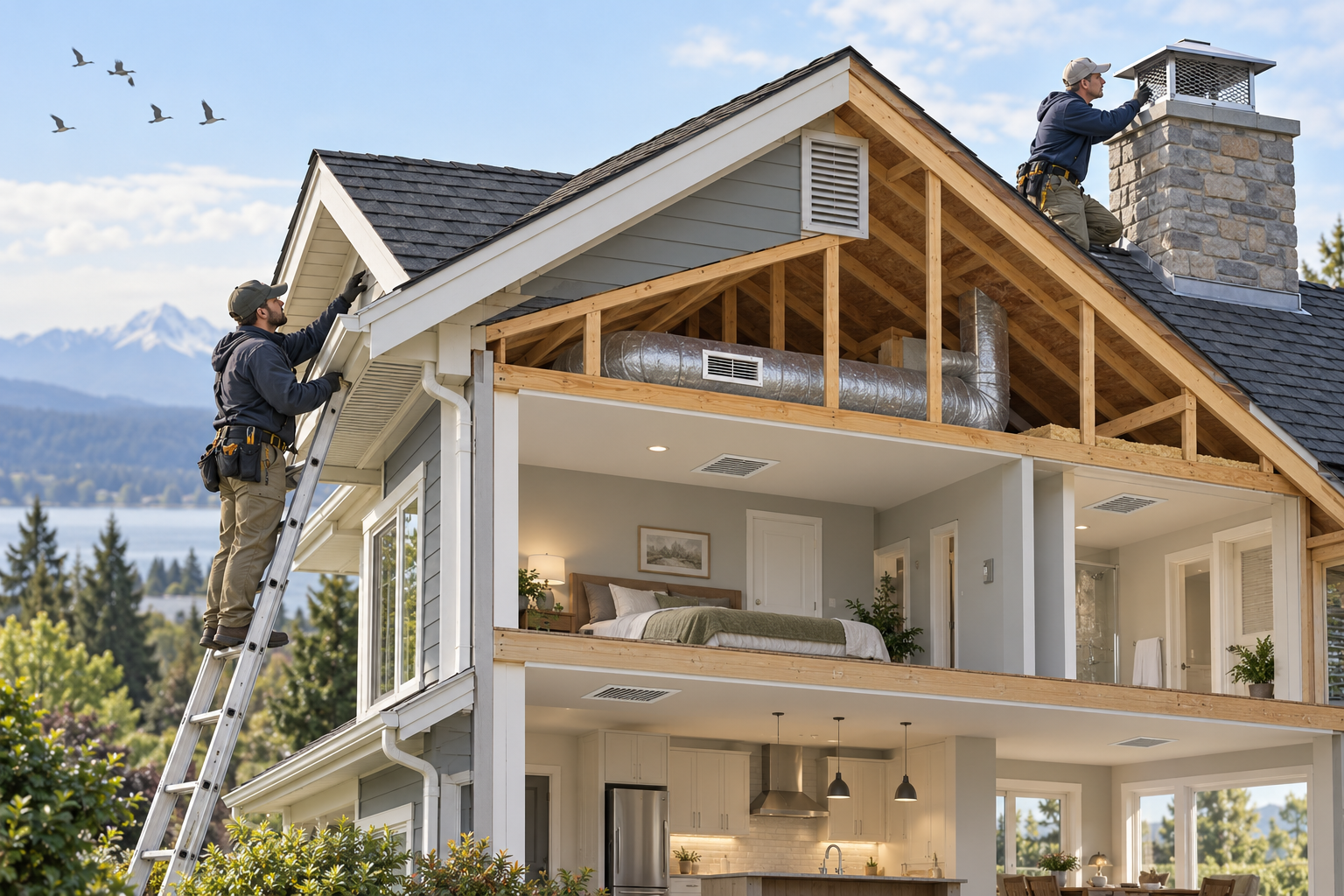
Birds may enter an attic, vent, chimney, garage, roof edge, or other cavity, or may build a nest on an exterior structure. The provider should identify the species if possible, where the birds enter, whether a nest is active, whether eggs or young are present, and what material has been affected.
An interior bird in a living space is a different response from an exterior nest on a roof or porch. A blocked vent, damaged screen, droppings, and nesting material can also create separate cleaning and repair work.
Nest status changes the decision
Under 50 CFR 21.14, U.S. Fish and Wildlife Service authorizes prompt removal of migratory birds, nests, eggs, and nestlings from building interiors in specified situations, such as disruption of normal use, health or safety risks, interior property damage, or risk of injury from entrapment. This federal authorization does not cover active nests on building exteriors, including eaves or bridges; other federal, state, local, and species-specific rules may still apply.
Canadian federal guidance distinguishes active nests and year-round protected Schedule 1 species from other nests, but additional protections may apply. When a federal Damage or Danger permit is required, the Canadian Wildlife Service says the permit is free and 90% of decisions are made within 35 calendar days; this is a service standard, not a promised project schedule. Incomplete applications pause that clock until the missing information is received. The owner, lessee, or land manager may apply for relevant permit types and may name nominees where allowed. Ask who handles the application and include any provider administration, delay, or return-visit charge separately from the free federal permit.
The Canadian service standard applies to the federal permit decision only; it does not guarantee when a provider can attend or replace any provincial, territorial, municipal, sanctuary, or species-at-risk approval. Keep the permit question and the service schedule as separate quote assumptions.
The decision can depend on species, eggs or dependent young, location, federal and provincial or state rules, municipal requirements, and species-at-risk protections. Ask a qualified local wildlife professional or authority before disturbing a nest or closing an opening. Do not seal a building while birds remain inside.
The cost structure
| Scope | Cost driver |
|---|---|
| Inspection | Species, nest status, entry route, inaccessible areas, and building height |
| Removal or eviction | Lawful method, timing, number of birds, and repeat visits |
| Exclusion | Screening, vent or chimney protection, roofline repair, and secondary openings |
| Cleanup | Droppings, nesting material, odor, and contaminated insulation or finishes |
| Repair | Roof, soffit, fascia, siding, masonry, drywall, or damaged screens |
| Follow-up | Monitoring, return visits, and confirmation that the route remains closed |
Bird-control providers may exclude roof, chimney, masonry, insulation, environmental cleanup, and finish work. Request separate line items and identify the trade responsible for each.
The location often determines which line items are missing from an initial removal price:
| Location | Confirm before comparing quotes |
|---|---|
| Vent or exhaust outlet | Species and nest status; whether a screen can be installed without blocking the appliance or airflow. |
| Chimney | Whether birds remain inside, whether a cap is appropriate, and which chimney professional checks the flue. |
| Attic or eave | Entry route, nest status, insulation or droppings, roof access, and weatherproof repair. |
| Garage or living space | Whether this is one bird indoors or a recurring route, and which door or screen repair closes it. |
| Solar-panel or roof interface | Nest status, safe access, and whether a qualified installer must preserve equipment clearances and roof flashing. |
The table does not imply that any nest can be removed. Identify the species and applicable local rule before choosing a method or date.
Building openings need a technical review
Vents, chimneys, exhaust outlets, and roof openings can have required functions. Screening must not create a blockage, backdraft, drainage problem, or maintenance hazard. If the entry is at a roof edge, chimney, masonry opening, or ventilation component, have the appropriate contractor confirm the repair.
Do not use netting, sealant, poison, smoke, or an improvised barrier without professional guidance. The correct material and installation depend on the opening, bird species, building function, and local law.
Cleanup can exceed removal
Bird droppings and nesting material may affect attic insulation, vents, decks, roof surfaces, or interior finishes. The amount, access, moisture, and surface determine whether cleaning, replacement, or environmental-health review is appropriate. A removal quote that excludes cleanup may not represent the complete project cost.
If the space is heavily contaminated or difficult to ventilate, use a qualified cleanup provider and follow local public-health guidance. Do not treat a wildlife-control price as a safe cleanup specification.
Compare proposals without assuming permission
Ask each provider to state the species and nest assumptions, the relevant jurisdictional verification, the proposed timing, access equipment, exclusion, cleanup, repair, follow-up, and what happens if eggs or young are found. Ask whether the price changes for an active nest, additional opening, or required permit. If status is unknown, price an inspection and authority check first, with a written trigger for any larger scope.
In Canada, federal guidance does not replace provincial, territorial, municipal, sanctuary, or species-at-risk requirements. In the United States, federal migratory-bird rules do not answer every state, tribal, local, or species-specific question. A quote should show where the provider’s legal confidence ends.
Compare a limited removal with a full building project
A low quote may price only a bird already inside one room. A larger proposal may include inspection of the entry, lawful nest timing, exclusion, cleanup, and repair. Ask what the price assumes and which findings change it.
| Project path | Evidence to confirm | Common cost additions |
|---|---|---|
| One bird in a garage or living space | Whether there is a recurring entry and which door, screen, or window is open | Follow-up and repair of the entry route. |
| Nest in a vent, chimney, or eave | Species, active/inactive status, eggs or young, and authority check | Roof or chimney access, permit or consultation, and an appropriately designed screen or cap. |
| Attic or multi-opening problem | Number of openings, nest material, affected insulation, and weather-exposed repairs | Multiple visits, cleanup, insulation, roofing, and follow-up inspection. |
| Repeated exterior nesting | Location, season, legal boundary, and non-harmful prevention options | Screening or surface repairs that preserve drainage and ventilation. |
These examples do not establish that any nest can be disturbed. The applicable law and species status must be checked before removal or sealing. If those facts are not yet known, price the inspection and authority check as the first stage.
Price repeat prevention as a building repair
If birds return to the same opening, ask whether the proposed screen, cap, or repair addresses the route and preserves the component’s function. A vent cannot simply be blocked; a chimney cap must be appropriate to the flue; a roof or solar-panel interface may need the relevant installer. Ask whether adjacent openings are included, how the repair is fastened, and what maintenance or cleaning remains. The wildlife provider can identify the conflict without certifying ventilation, drainage, or roof performance.
Where several trades are involved, ask for the order of work: confirm nest status and lawful timing, complete removal or exclusion, verify the birds are out, clean or replace affected material, then finish the building repair. Confirm who provides temporary protection if permanent closure must wait. That sequence prevents a restoration contractor from sealing an active nest and makes clear which quote includes the final weatherproof repair.
Bottom line
Use a few hundred to more than $1,000 U.S. only as broad orientation. Price the actual species, nest status, lawful timing, access, exclusion, cleanup, and repair, and confirm local requirements before disturbing a nest or closing an opening.