
Professional wasp, hornet, or yellowjacket work may cost roughly $100–$600 U.S. for an accessible, limited nest based on broad specialist pest-service observations. Concealed nests, roofline work, high access, after-hours response, repeat activity, or building repair can push the project above that range. Canadian pricing should be requested locally in CAD.
Identify the nest and its location
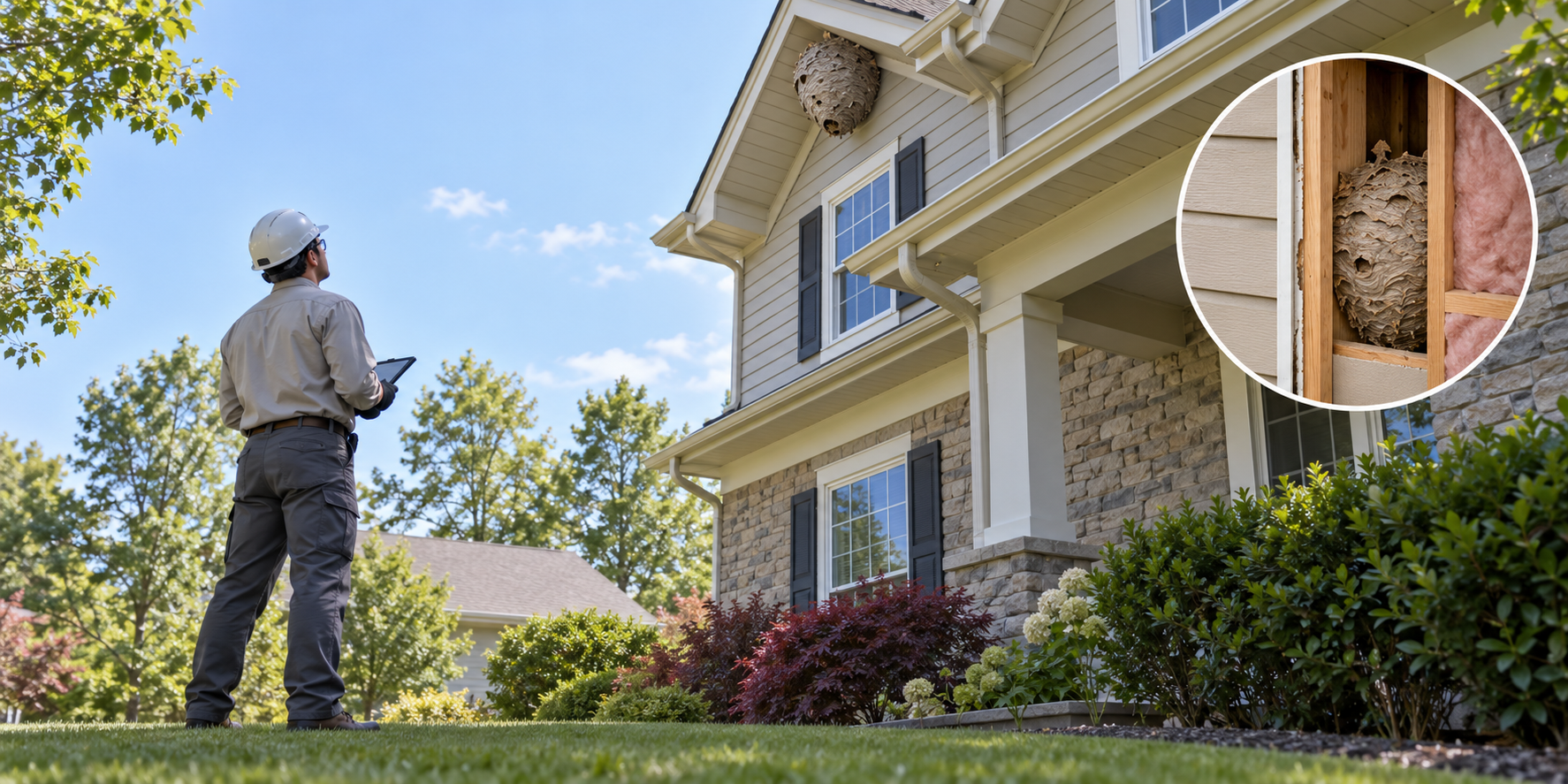
The everyday word “hornet” is used inconsistently, and a flying insect’s appearance does not by itself establish the species or safest service. Ask the provider to identify what can be determined, where the nest is, and whether the nest is exposed, in the ground, inside a wall, under an eave, or near a doorway or living area.
Location usually matters more than the number of insects seen. An exposed nest at reachable height can be a limited treatment scope. A nest inside a wall, roof edge, soffit, or chimney may require access, treatment, opening and closure, or a separate repair. A nest near an occupied entrance may also create an urgency premium.
Treatment is not always physical removal
The proposal should say whether it includes treatment, physical nest removal, inspection for additional nests, follow-up, or entry-point correction. Removing a visible nest does not necessarily correct the route by which insects entered. Conversely, a treated nest may not need immediate removal if the provider’s plan says it can remain safely and will be addressed as part of the service.
Do not climb, disturb, smoke, spray, or block a concealed nest based on a generic online instruction. Sting risk, allergies, height, and enclosed-space exposure make professional assessment appropriate when the nest is inaccessible or active around people.
What changes the price
Expect a higher quote when the job involves:
- ladders, lifts, roof access, or difficult staging;
- a nest inside a wall, attic, soffit, or other cavity;
- protective equipment and controlled access;
- evening, weekend, or urgent attendance;
- more than one nest or a large colony;
- opening and closing siding, trim, masonry, or interior finishes;
- a return visit to confirm inactivity;
- a suspected bee colony rather than a wasp nest.
The quote should identify whether access equipment and restoration are included. If a wall must be opened, the pest provider may treat the nest while another trade owns drywall, siding, roofing, or masonry repair.
Bees are a different decision
Do not assume that every flying-insect nest should receive the same treatment. A bee colony in a building cavity can involve live-colony removal, comb, honey or residue, opening the assembly, and long-term closure. That is a different project from an exposed wasp nest. Use the bee colony removal guide when the insect or building cavity is uncertain.
Compare quotes safely
Ask each provider to state the suspected species, nest location, treatment method, access assumptions, number of visits, re-entry instructions, and repair exclusions. Confirm whether the price changes if the nest is concealed or a second nest is found. Ask what to do with people, pets, and doors or windows during and after the service.
Pesticides must be used by qualified providers according to the applicable product label and local requirements. Do not mix products or apply an indoor product outdoors, or an outdoor product indoors, based on a forum or a product name alone.
How the nest location changes the project
An accessible exposed nest can be a short, clearly bounded service. A nest in a wall or roof edge may require inspection, a treatment plan, access protection, a return visit, and opening or closure. A nest near an occupied entrance may create an urgent response cost even if the physical nest is small. A nest high above a porch can require equipment and a separate access plan.
Ask whether the provider intends to remove the nest or only treat it, and whether activity will be monitored afterward. If the provider opens a wall, soffit, or roof assembly, the quote should identify temporary protection and the party responsible for restoration. Do not assume the pest company is a roofer, mason, or finish contractor.
Seasonal and recurrence questions
The quoted price may reflect current urgency, but a recurrence decision may involve a damaged screen, eave gap, wall cavity, or other condition. Ask whether the company found an entry route or is merely offering a treatment. A follow-up service can be valuable when the nest is concealed, but it should have a stated trigger and time period.
The everyday name “hornet” does not resolve species or legal questions. If the insect may be a bee or another protected pollinator, pause and obtain appropriate identification. Do not apply a general nest treatment to an uncertain insect based on a photograph alone.
Compare the real total
Put emergency attendance, treatment, nest removal, access equipment, follow-up, entry repair, and any after-hours premium in separate lines. Ask what happens if a second nest or concealed cavity is found. This makes a higher but complete quote comparable with a lower treatment-only proposal.
Emergency work still needs a written boundary
When a nest is near a doorway, sleeping area, child-care area, or person with a serious allergy, urgency can be real. Ask the provider what immediate service does and what later exclusion or repair remains. An emergency treatment may reduce the immediate hazard without removing a concealed nest or correcting the opening.
For a multi-visit proposal, confirm the first response, follow-up, nest removal, access equipment, and after-hours charges. If the insect is uncertain or may be a bee, pause before approving a method intended for wasps or hornets.
Ask whether the nest is active and where it is
An old, abandoned nest may not need the same intervention as an active nest near an occupied entrance. A concealed nest may require a different method from an exposed nest. Ask the provider to state what it has observed, whether the nest is in a wall or roof cavity, and what evidence would require a return visit.
The quote should also identify who controls access during work, how people and pets remain clear, what re-entry or ventilation instructions apply, and whether the provider will document the completed service. Those details matter when a treatment is performed inside or near an occupied home.
The building repair can outlast the insects
If a nest used a damaged screen, soffit, vent, roof edge, or wall opening, treating the colony does not correct the route. Ask for a separate exclusion or repair scope. A structural, roofing, masonry, siding, or finish contractor may need to restore the opening, and the repair should not block a functional vent or drainage path.
Avoid pricing a species you have not confirmed
If the provider cannot identify the insect or its location, pay for an assessment or request a conditional proposal. A wasp, hornet, yellowjacket, bee, and other flying insect may have different safety, ecological, legal, and building implications. That uncertainty should appear in the scope rather than being hidden by a generic nest price.
Put access and re-entry in the contract
Ask whether ladders, lifts, roof protection, interior access, cleanup, and a return visit are included. Confirm when people and pets can use the area and what product or method assumptions govern that instruction. An urgent price should still identify the work it does and does not complete.
Ask what happens after the nest is treated
Treatment may reduce immediate activity without repairing the opening, removing an inaccessible nest, or resolving attraction and recurrence. Ask whether the provider will remove the nest, inspect the entry, return if activity continues, or leave exclusion and repair to another trade. Confirm the boundary around wall cavities, roof penetrations, siding, landscaping, and paint. If the nest is near a doorway, occupied room, or sensitive person, describe that risk before the visit so the provider can set a safe sequence. A clear endpoint helps compare urgent treatment with a broader correction.
Confirm the area is safe to hand back
Ask whether the nest is removed, whether activity will be monitored, and whether an entry hole, wall cavity, soffit, or roof condition remains. Confirm cleanup, re-entry, ladders or lifts, and callback terms. If an insect is actually a bee or the nest status is uncertain, pause long enough to resolve the identification and any applicable protection. The completion note should state what was treated and what another trade must repair or exclude.
Bottom line
Use $100–$600 U.S. as a broad starting point for an accessible, limited nest, then widen the budget for height, concealment, urgency, access equipment, follow-up, and repair. The right quote identifies the insect and the building scope before it prices the treatment.