
Professional bed-bug treatment is not always a simple heat-versus-chemicals choice. Heat, steam, vacuuming, encasements, monitoring, and registered products may be combined. Heat projects often carry a large whole-space setup cost, while targeted or chemical programs may trade a lower first invoice for more preparation and follow-up. Compare the complete plan, not the method name.
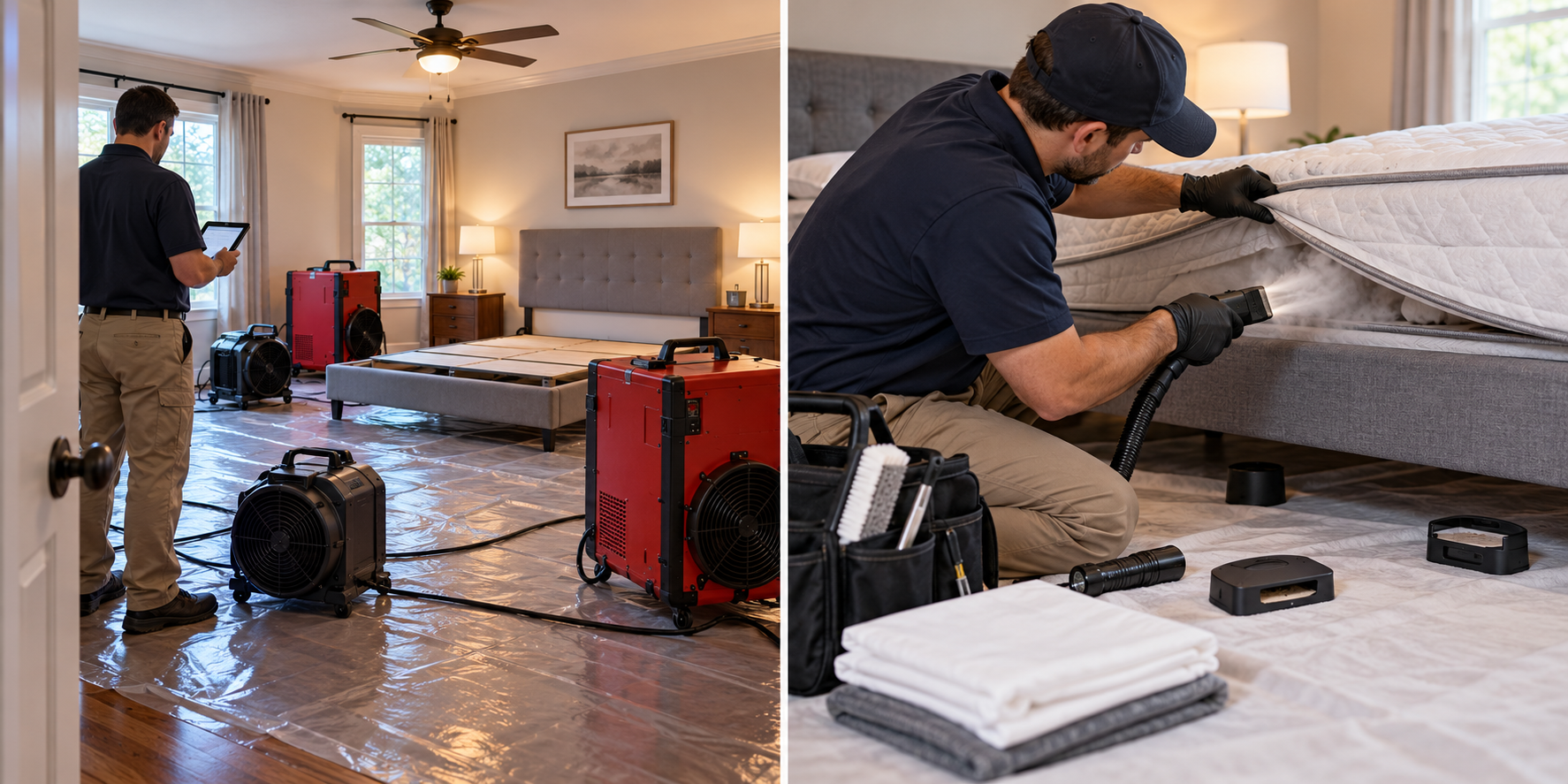
What the two broad approaches mean
Heat treatment uses professional equipment and a controlled plan for the treated space. The provider must define the area, monitor conditions, protect items that should not be exposed, and explain how preparation and re-entry work. The price is influenced by room count, building layout, contents, access, equipment, labor, and whether follow-up inspection is included.
Chemical or multi-method treatment may use inspection, physical controls, targeted application of registered products, steam or vacuuming, encasements, monitoring, and repeat visits. A chemical proposal is not automatically a one-visit proposal. Bed bugs can remain in protected locations or be reintroduced, so the number of planned visits and the criteria for retreatment matter.
The U.S. Environmental Protection Agency and Health Canada both frame bed-bug management as a coordinated process rather than a single product purchase. The exact product, application, re-entry, and safety instructions must come from the qualified provider and current label.
Compare total cost categories
| Cost category | Heat proposal | Chemical or multi-method proposal |
|---|---|---|
| Initial inspection | May be separate or included | May be separate or included |
| Treated area | Often defined as a whole room, group of rooms, or structure | May be room-by-room or targeted |
| Preparation | Protecting or removing heat-sensitive items and creating access | Bagging, laundering, moving contents, and exposing treatment areas may be required |
| Follow-up | Reinspection or monitoring may be separate | Additional visits may be part of the plan or billed separately |
| Contents | Some items need special handling | Furniture and contents may need inspection, treatment, or encasement |
| Disruption | May involve a concentrated vacancy period | May involve repeated preparation and access |
| Guarantee | Defined by provider | Defined by provider and often conditioned on preparation |
Do not use a per-room number unless every proposal defines rooms the same way. A room with heavy furniture, closets, wall penetrations, or adjacent activity is not the same scope as an empty, isolated room.
When heat can be attractive
Heat may appeal when the treatment area is clearly defined, rapid whole-space coverage matters, and the contents can be safely managed under the provider’s plan. It can also be easier to compare when the proposal states the entire treated area, equipment, monitoring, preparation, and follow-up.
Heat is not a universal answer. Sensitive materials, building configuration, inaccessible spaces, adjacent units, or uncertain infestation boundaries can change suitability. Ask what the provider will not treat, what must be removed, and what happens if activity is found outside the heated area.
When a multi-method plan can be practical
A multi-method plan can be useful when bed bugs are present in furnishings, cracks, rooms, or adjacent spaces that require several controls. It may combine physical measures with carefully selected products and monitoring. The economic advantage depends on the number of visits, preparation burden, and how clearly the provider defines the follow-up.
Do not accept a proposal that names a product but does not describe the treated area, preparation, re-entry, or success check. EPA says a total-release fogger should not be the sole bed-bug control method, and only products whose current labels list bed bugs are appropriate for that use. The label sets the number of foggers and the re-entry interval; there is no universal wait time. Do not add household products to a professional plan without the provider’s direction.
Preparation is part of the method cost
The household may need to launder or dry textiles, bag items, reduce clutter, move furniture, protect food and pets, or provide access to baseboards and storage. Those tasks can be repeated before return visits. A method with the lower contractor price may still cost more when household time, temporary storage, replacement items, or temporary accommodation are included.
Read the hidden-cost guide alongside the treatment proposal. The question is not only “Which method costs less?” but “Which plan can this household complete correctly, across the whole affected area, with a realistic follow-up path?”
Questions to ask before choosing
- What evidence confirms bed bugs, and which locations are included?
- Is the quote for inspection, treatment, or both?
- How many visits are planned, and what triggers another visit?
- What preparation is required, and who checks it?
- Which furniture, contents, closets, adjoining rooms, and wall areas are included?
- What items must be removed or protected?
- When may people and pets return?
- What does the guarantee cover, and what homeowner actions void it?
- Does the plan address neighboring units or shared walls where relevant?
How the cost decision changes by property
For a small, clearly bounded room, a targeted multi-method plan may be easier to stage than a whole-space heat project. In a larger home with several affected rooms, heat may provide a concentrated intervention, but the equipment, access, contents, and vacancy plan become more important. In an attached building, neither method should be compared without asking how adjacent spaces are inspected and how reintroduction is handled.
A heat quote can look high because it concentrates equipment and labor into one period. A multi-method quote can look low because preparation and return visits are distributed across the household. Put both proposals into the same worksheet: inspection, treated rooms, preparation, first visit, later visits, monitoring, temporary accommodation, contents, and guarantee. If a cost is not included, mark it as unknown rather than assuming it is free.
Questions about contents and building condition
Heat-sensitive items, aerosols, medicines, plants, electronics, waxes, and other contents may need specific handling. The provider—not a generic article—must identify what is removed or protected. Chemical or physical treatment may also require access behind furniture, into closets, along baseboards, or around fixtures. The method is only as complete as the areas the provider can safely reach.
Ask whether the building has wall cavities, fixed furniture, clutter, shared mechanical spaces, or inaccessible rooms. Those conditions can make a simple method comparison misleading. A proposal should state what happens when the provider finds activity outside the original boundary.
Reintroduction and follow-up economics
Neither heat nor chemical treatment prevents a new introduction through luggage, furniture, visitors, or a neighboring unit. Monitoring and follow-up therefore have economic value even after the initial treatment. Ask how long the provider expects to monitor, what evidence triggers a return, and whether the guarantee covers a new introduction or only residual activity within the treated area.
The household should also ask how preparation changes if a second visit is needed. Repeated laundry, moving, storage, and vacancy can outweigh an apparent first-visit saving. Include those burdens when choosing a method.
Avoid false method certainty
An article cannot choose the method for a particular building. Product labels, equipment, provider training, infestation boundaries, and local requirements control the actual plan. A quote that explains its limitations is more useful than one that promises universal elimination without describing inspection or follow-up.
A useful decision matrix
Score each proposal against five questions: Does it reach the suspected area? Can the household complete the preparation? Is the number of visits realistic? Are contents and re-entry clear? Does the follow-up define success? A method with a higher price may be the better value if it covers the actual infestation boundary and requires less repeated disruption. A lower price may be appropriate when the problem is genuinely limited and the scope is transparent.
Do not score claimed efficacy without checking applicability. The current product label, provider training, building conditions, infestation stage, and local rules control the treatment. The article can compare economic structure; it cannot choose the method for a specific property.
Record the assumptions before comparing
Write down the rooms, contents, preparation, number of visits, monitoring, re-entry, and guarantee for each method. If one proposal omits an item, mark it unknown rather than assuming it is included. That simple comparison prevents a concentrated heat price from being compared with a treatment-only first visit.
Bottom line
Heat, chemical, and multi-method treatments can all be responsible professional approaches when matched to the property and infestation. Price them by treated area, preparation, visits, monitoring, disruption, and guarantee—not by the method label or first invoice. Use local U.S. or Canadian proposals and follow current product and re-entry instructions.