
An exterior door that sticks, leaks, or will not latch may need a replacement, but the cause can also be settlement, a distorted opening, a wet floor, or damaged framing. Manufactured-home openings can have different wall thicknesses, trim, thresholds, and combination-door arrangements. Measure and diagnose the opening before choosing a unit.
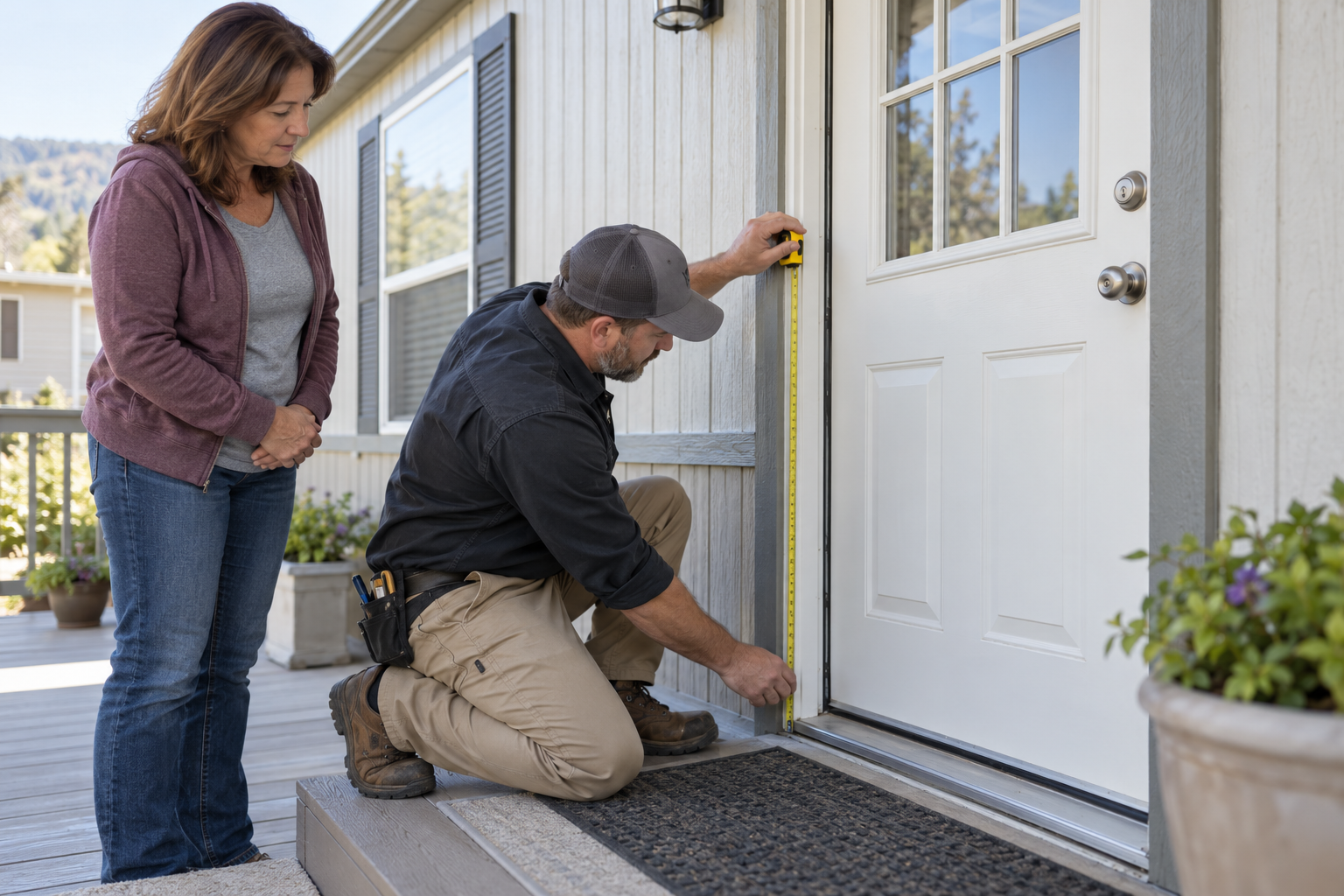
Rule out movement and water
Check whether the door problem is new, seasonal, or accompanied by sloped floors, sticking windows, section-joint cracks, or movement at piers and supports. Inspect the threshold, subfloor, wall, siding, flashing, and interior finish for water damage. A replacement door will not correct a foundation or drainage problem and may be damaged by one.
Record the actual opening, wall thickness, swing, threshold, frame, storm or combination door, lockset, exterior trim, and nearby utilities. A home’s label or data plate may help with its construction context, but it does not guarantee a standard replacement size.
Compare repair and replacement scopes
A limited scope may replace the slab, hardware, frame, or weather seal when the opening is sound. A full replacement may include removal, a new unit, threshold and sill work, flashing, siding or trim, interior finish, and adjustment. If the opening is resized, the project can add framing, water-management, egress, structural, and permit questions.
If settlement or moisture is the cause, price support, leveling, drainage, plumbing, subfloor, or framing work before the door finish. A quote that includes only the replacement unit is not comparable with one that corrects the surrounding assembly.
Make the quote comparable
Ask for separate lines for diagnosis, measurement, unit, removal, disposal, frame and sill repair, flashing, exterior and interior trim, wall or floor restoration, access, permits, and concealed damage. State the assumptions about opening size, level, dry materials, and reuse of trim. Keep U.S. and Canadian prices separate; there is no universal manufactured-home door replacement range.
Price the opening, not just the door
For a U.S. planning example, allow $800 for measurement and diagnosis, $1,500 for an appropriate door and frame, $1,200 for opening correction and flashing, and $600 for trim and disposal: $4,100. A separate Canadian model might use CAD 1,000 + CAD 2,000 + CAD 1,600 + CAD 800 = CAD 5,400. These are illustrative allowances, not universal installed prices. Distortion, rot, egress, water damage, or releveling can make the opening the larger cost.
Ask for the rough opening, frame, sill, flashing, threshold, weather seal, interior finish, disposal, and testing as separate scope lines. A standard door that does not fit the actual opening is not a lower-cost solution.
Confirm the safety boundary
Egress, safety glazing, weather sealing, and structural opening requirements depend on the exact home and jurisdiction. Use a qualified installer when the opening is altered or water-damaged. If the door cannot secure the home, use safe temporary protection while arranging the assessment rather than cutting the opening to fit an unverified unit.
Identify what prevents the door from working
Record the opening width and height, wall thickness, frame, threshold, swing, lockset, storm or combination door, and exterior/interior trim. Note whether the door sticks seasonally, after rain, or after a move or leveling change. Check the threshold and floor for moisture, and look for related symptoms such as a sloped floor, window binding, section-joint gap, or support movement. These observations help determine whether the repair is hardware, a door unit, a wet opening, or a broader movement problem.
Ask the installer to measure the actual rough opening and explain whether the existing frame can remain. A replacement slab, frame, prehung unit, threshold, flashing, or resized opening represent different scopes. A standard product may be economical if it fits the opening and meets the needed function. If the wall is unusually thick or the opening has been altered, custom work may be required. Do not cut or enlarge an opening before a qualified professional checks structural and egress implications.
Compare service, replacement, and opening repair
A latch or hinge adjustment can be a reasonable first step when the door and frame are sound and alignment is stable. A new slab or door set may be better when the unit is damaged or parts cannot be obtained. A full opening repair may require sill and framing work, water management, siding and interior restoration, releveling, or support assessment. Ask the contractor to price these options separately where the cause is uncertain.
Request a line-item quote for diagnosis and measurement, unit, frame and threshold, removal, disposal, flashing, exterior and interior trim, floor or wall repairs, access, permits, and testing. State what dimensions and dry/level conditions the price assumes. Ask how concealed rot or movement will be handled and whether the crew can stop after opening to obtain approval. This prevents a low door price from turning into an unplanned structural change.
Include security, weather, and use needs
The opening may need a certain swing, lock, storm door, accessibility clearance, weather seal, or emergency exit function. Tell the installer how the household uses it and whether it protects a frequently used entrance. Check the manufacturer instructions and local requirements for the exact home and jurisdiction. A door that closes but does not seal or secure the opening is not a completed repair.
Compare repair with replacement using expected service, maintenance, weather performance, warranty, and any energy or comfort improvement. A new door may not solve a wet sill or distorted frame. If the problem follows settlement, address support and movement before installing a finish unit. If the opening remains sound, replacing hardware or weatherstripping may be proportionate. No universal percentage or age rule determines which path is best.
Make the cost scenario match the finding
A simple case assumes a standard-size replacement in a dry, level, sound opening. A moderate case adds a frame, threshold, flashing, or interior restoration. A complex case includes rot, movement, custom sizing, structural review, egress change, or coordinated drainage and floor repair. These are work categories, not price ranges. Replace the article’s planning allowance with written local bids that identify the actual measured opening and included restoration.
Ask for an alternate if the installer cannot see the sill condition before removal. Agree on a price or approval process for a defined amount of concealed damage, then a separate quote for anything beyond it. If one bidder offers a replacement-only number and another includes opening correction, compare the scope instead of the total.
Preserve a record of the repair
Keep measurements, product and hardware details, photos before removal, concealed-condition photos, permit or inspection records, invoice, and warranty. Record whether the floor or wall was wet, whether the frame was reused, and which finish materials were replaced. If the opening binds again, that record can show whether the issue is new movement, failed flashing, hardware adjustment, or a unit problem.
The useful project price buys a door that fits the actual opening and performs its intended function. It should make clear who is responsible for source correction and what remains outside the job. That clarity is particularly important where the door symptom is one clue among several signs of water or movement.
Protect the opening while work is underway
Ask whether the home will remain lockable and weather-tight overnight if removal reveals rot or an incorrect rough opening. Clarify who provides a temporary door or secure barrier, whether it is included, and what happens if a custom unit is delayed. For a main exit, the household should know which entrance remains safe and usable during construction.
If the home is occupied, confirm the work hours, dust protection, pet or child access, and handling of alarms or locks. These practical arrangements can influence whether a one-day replacement or a longer opening repair is the lower-cost choice for the household.
Compare warranty and maintenance terms
Ask whether the door, frame, hardware, finish, and installation have separate warranties and who handles an adjustment after the home settles seasonally. Confirm required maintenance for weather seals, hinges, finishes, and threshold drainage. A product warranty may exclude movement or water that originates outside the installed assembly, so understand the boundary before relying on it.
Keep the warranty, product model, installer contact, and adjustment record together. The information makes a later sticking or leakage complaint easier to route to the responsible party.
Decide whether the opening must be protected during a delay
If a custom door or frame is ordered, ask how long the home will wait and how the opening will remain secure and weather-tight. Confirm whether an existing door can be rehung temporarily, whether a temporary barrier is included, and who checks it after wind or rain. Include a return visit if the custom unit requires adjustment after initial installation. A secure interim plan can be more important than ordering the first door that appears to fit.
Make the threshold work for the site
The landing, step, drainage, and weather exposure outside the door affect whether a replacement stays dry and usable. Ask whether the threshold height and swing work with existing stairs or a ramp and whether runoff is directed away from the opening. If the exterior landing must change, price that work separately and confirm any guardrail or egress requirements with the local authority.