
The marriage line, mate line, or section joint is where two manufactured-home sections meet. Cracks, gaps, uneven floors, drafts, water entry, roof discontinuity, or utility problems at that line can come from close-up materials, differential movement, support or leveling, or damage to a structural or service connection. Appearance alone cannot identify which one.
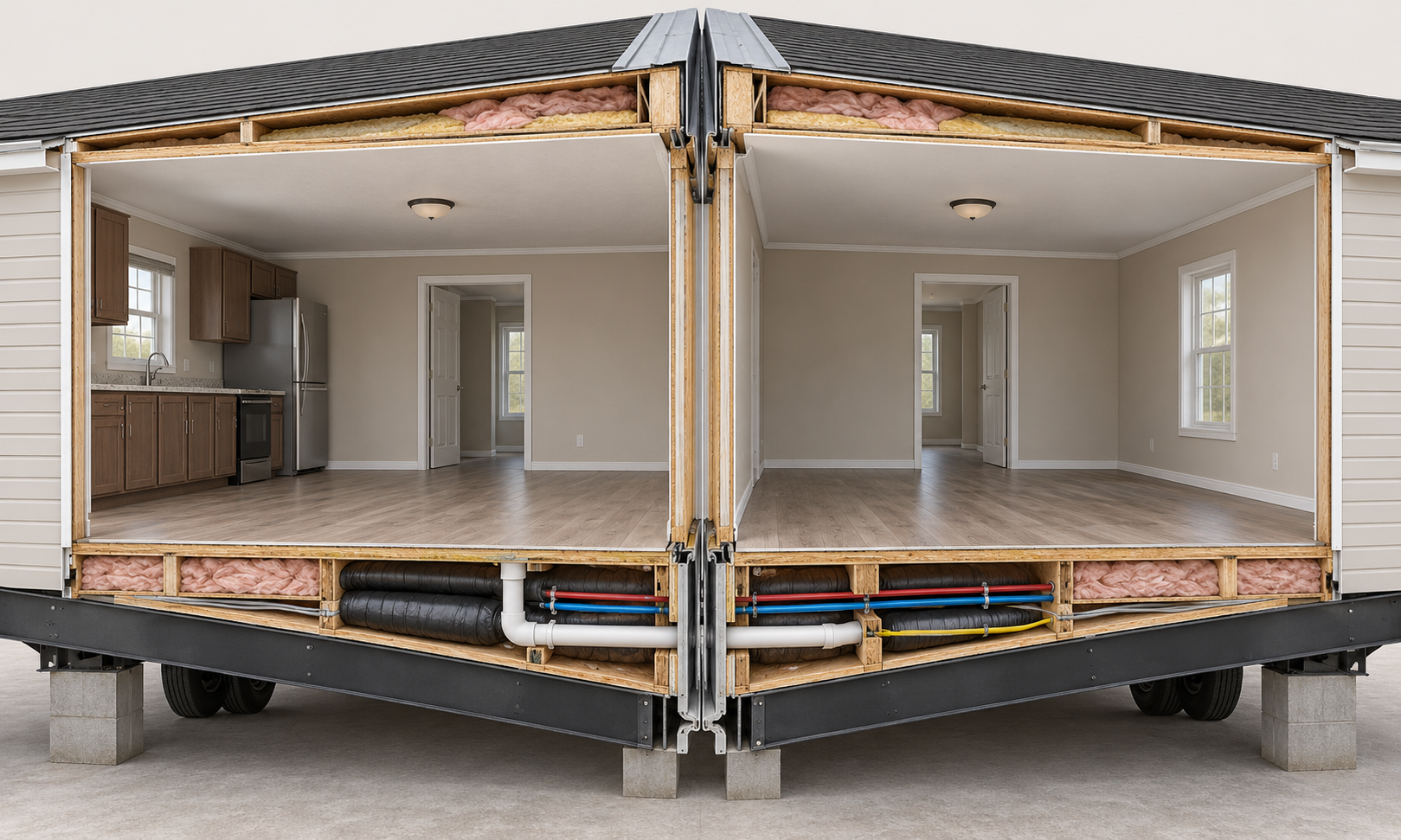
Read the symptoms together
Record whether the problem is in the floor, wall, ceiling, roof, exterior seal, duct, plumbing, or electrical crossover. Note when it appeared and whether it follows heavy rain, frost, a move, releveling, or a change in support. A recurring gap with sticking doors, sloped floors, shifted piers, or damaged anchors deserves a broader assessment than a finish crack by itself.
U.S. installation standards list structural interconnection of multi-section homes, exterior and interior close-up, bottom-board repair, utilities, foundations, and final leveling as distinct subjects. This supports a system assessment but does not authorize a homeowner to diagnose or reassemble a connection from generic instructions.
Possible scope levels
A limited scope may renew accessible weather seals or repair finish materials after movement has been ruled out. A broader scope may include releveling, support or footing work, roof and exterior close-up, duct or plumbing crossover repair, electrical work, interior restoration, or engineering. If the home was transported, the assessment should include damage from disassembly, handling, and reinstallation.
Ask the contractor to state whether the price addresses the cause, the connection, and the finish. A quote to drywall over a crack is not comparable with a quote that investigates settlement and restores the section interface.
Build a quote around access and uncertainty
Separate diagnosis, temporary protection, access through finishes or skirting, lifting or leveling, structural or foundation work, weather sealing, utility repairs, materials, engineering, permits, inspection, disposal, and restoration. Require assumptions about home sections, foundation, roof form, prior alterations, and accessible areas. Keep a contingency for hidden damage until the joint is opened.
There is no universal marriage-line repair price. Compare local U.S. and Canadian scopes independently, and use a qualified professional when structural movement, roof loads, fuel, electrical, plumbing, or water intrusion is involved.
Price the joint and the cause separately
For a U.S. planning example, a limited assessment and finish opening might be $1,000, a correction to accessible joint sealing or trim $2,000, and follow-up support or moisture work $3,000: $6,000. A separate Canadian model might use CAD 1,300 + CAD 2,600 + CAD 4,000 = CAD 7,900. These are scenario allowances, not a universal marriage-line repair price. Releveling, damaged supports, plumbing, ducts, or widespread water damage can be additional.
Ask whether the quote addresses movement, support, weather sealing, utilities, insulation, and finish restoration. A cosmetic patch is only comparable with another cosmetic patch; it is not comparable with a structural or moisture correction.
Do not confuse symptom repair with system repair
Cosmetic restoration has value only after the home is stable and dry. If the joint is moving, leaking, or affecting utilities, pause repeated finish repairs and have the support, connection, and water-management conditions assessed together.
Sort symptoms by the part of the joint they affect
Make a simple map of the observed problem: interior finish, ceiling, floor, roof, exterior weather seal, duct, plumbing, electrical crossover, or visible support. Record whether it appeared after a move, storm, freeze, roof work, releveling, or addition. A crack in drywall can be cosmetic, but the same location combined with a sloped floor, sticking doors, water entry, or shifted supports may indicate broader movement. Ask the inspector to describe the evidence without assuming the cause.
A finish-only repair can be reasonable after the professional rules out movement and moisture. A weather-seal repair may need roof or siding access. A section-alignment problem can involve support and leveling. A utility interruption can require an HVAC, plumbing, or electrical trade. More than one condition can coexist. Ask who will coordinate diagnosis when the suspected cause crosses trades and who is responsible for restoring the concealed joint after the repair.
Compare the likely scopes
A limited cosmetic scope may open and replace a finish, trim, or seal. A moderate project can add accessible releveling, weather protection, duct reconnection, or a local utility repair. A complex scope may require supporting the home, correcting piers or drainage, opening the roof or underbelly, repairing structure, reconnecting services, engineering, inspection, and finish restoration. These levels organize the quote; they do not supply price ranges or diagnose the home remotely.
Require each bid to state whether it includes investigation, temporary protection, lifting, support work, roof and exterior close-up, interior finish, plumbing or duct connections, electrical work, engineering, permits, testing, and disposal. Ask what sections and areas were inspected, which surfaces were opened, and which remain hidden. A drywall quote cannot be compared with a structural repair quote, even if both address a line at the same location.
Coordinate the repair sequence
If movement is suspected, check supports and cause before repairing finishes. If water entered through the roof or wall, stop water before replacing drywall or flooring. If the home was moved, inspect transport and reinstallation work as well as the joint. Where utility crossovers are involved, have the qualified trade test the connection after movement or repair. Agree which professional verifies each concealed step before the next contractor closes it.
Ask about the effect on stairs, skirting, decks, plumbing, ducts, electrical, and roof coverings. The work may require temporary disconnection or access through finished areas. Clarify who restores the opening and what temporary weather protection is used if work spans multiple days. Put the change-order trigger in writing for hidden damage, unstable supports, or wet insulation discovered after opening.
Decide whether repeated patching makes sense
A one-time finish repair may be the least disruptive option when the home is stable and dry. Repeated cracks, renewed leaks, recurring door or floor symptoms, or utility failures suggest that the cause may not have been corrected. Compare cumulative patch costs with a broader assessment and cause correction. Do not apply a simple ratio based on repair amount; consider the joint condition, support history, remaining materials, risk, and occupancy disruption.
If the problem is related to a foundation, title, sale, or lender requirement, request the acceptance criterion directly. A contractor’s term “marriage line repair” may not match the required structural report, inspection, or certification. Keep those transaction costs separate from construction and confirm that the proposed work and final paperwork satisfy the actual request before authorizing it.
Keep a record of the interface
Save dated photographs from both sides of the joint, contractor notes, test results, permit and inspection documents, materials, warranty, and drawings of replaced utility connections. Record any area that could not be seen. If another finish repair is needed, this information can help distinguish new movement from a recurring moisture problem and can prevent a future crew from damaging a crossover hidden behind the finish.
The goal is not to make every visible line disappear at any price. It is to identify whether the issue is cosmetic, weather-related, structural, or a service connection, then pay for the appropriate scope and close it out with evidence. That approach makes bids comparable and reduces the chance that a new finish only hides an unresolved interface problem.
Make temporary protection part of the work plan
Opening a roof, floor, wall, or belly at the section joint can expose the home to weather or leave utilities unavailable. Ask how the contractor protects the joint between workdays, whether temporary sealing is included, and what happens if rain or temperature prevents the planned finish. For an occupied home, identify affected rooms and services and set a safe access boundary.
If the work relies on a separate engineer or utility trade, confirm that each visit is scheduled before the finish crew returns. A missed inspection or unavailable connection can add remobilization and repeat access cost. Include this coordination in the timeline and contract roles.
Review prior repairs before repeating them
Collect invoices and photographs from earlier joint, roof, leveling, or utility work. Ask the current contractor whether the same location or component was repaired and whether the prior scope addressed movement, moisture, or only finish. A repeated failure may indicate an incomplete diagnosis, a new event, or normal wear in a different layer. The history helps distinguish those cases and makes the next estimate more focused.
If no records exist, describe the dates and conditions as accurately as possible. Do not infer that the same cause returned only because the symptom looks similar.
Consider weather and the timing of a repair
A leaking joint or roof connection may need temporary protection now and permanent work in a later suitable weather window. Ask the contractor what temporary measure is safe, how long it should remain, and what it does not solve. Price the stabilization and final repair separately. This prevents a temporary patch from being treated as a completed replacement or a permanent method from being rushed into unsuitable conditions.