
An unexplained wet spot, high water bill, hissing sound, low pressure, pooling, or poorly performing zone can justify an irrigation leak investigation. These signs identify a problem to investigate; they do not identify the cause. The cost depends on how much diagnostic work is needed before a buried line, valve, fitting, or head can be repaired.
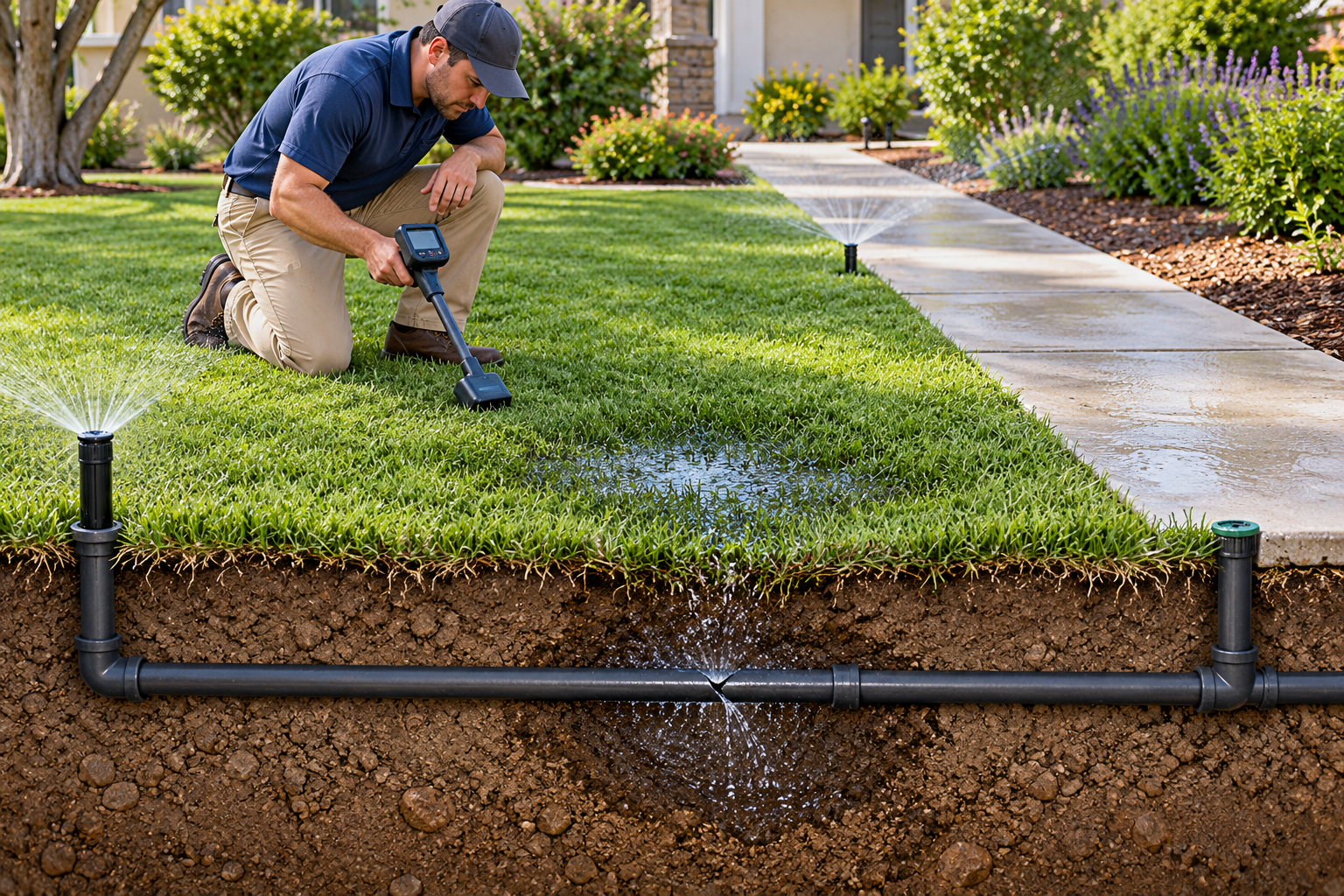
Diagnosis is a separate scope
Ask whether the first visit includes system isolation, zone testing, visible inspection, pressure or flow observations, and a written location or repair recommendation. A confirmed accessible fitting leak may be repaired during the visit. A buried lateral or main-line problem may require locating, careful access, repair, testing, and surface restoration.
EPA and Calgary guidance point to leaks, bill increases, soggy or dry spots, hissing, poor performance, and overspray as clues worth checking. A high bill can also reflect a changed schedule, a rate change, weather, a different meter reading, or indoor use. Avoid authorizing excavation on the assumption that one symptom proves a specific failure.
What drives underground repair cost
- the time needed to narrow the location and distinguish an irrigation problem from another water source;
- buried depth, soil, roots, slope, and the need to protect established planting;
- hardscape, walls, fences, or other surfaces that must be opened and restored;
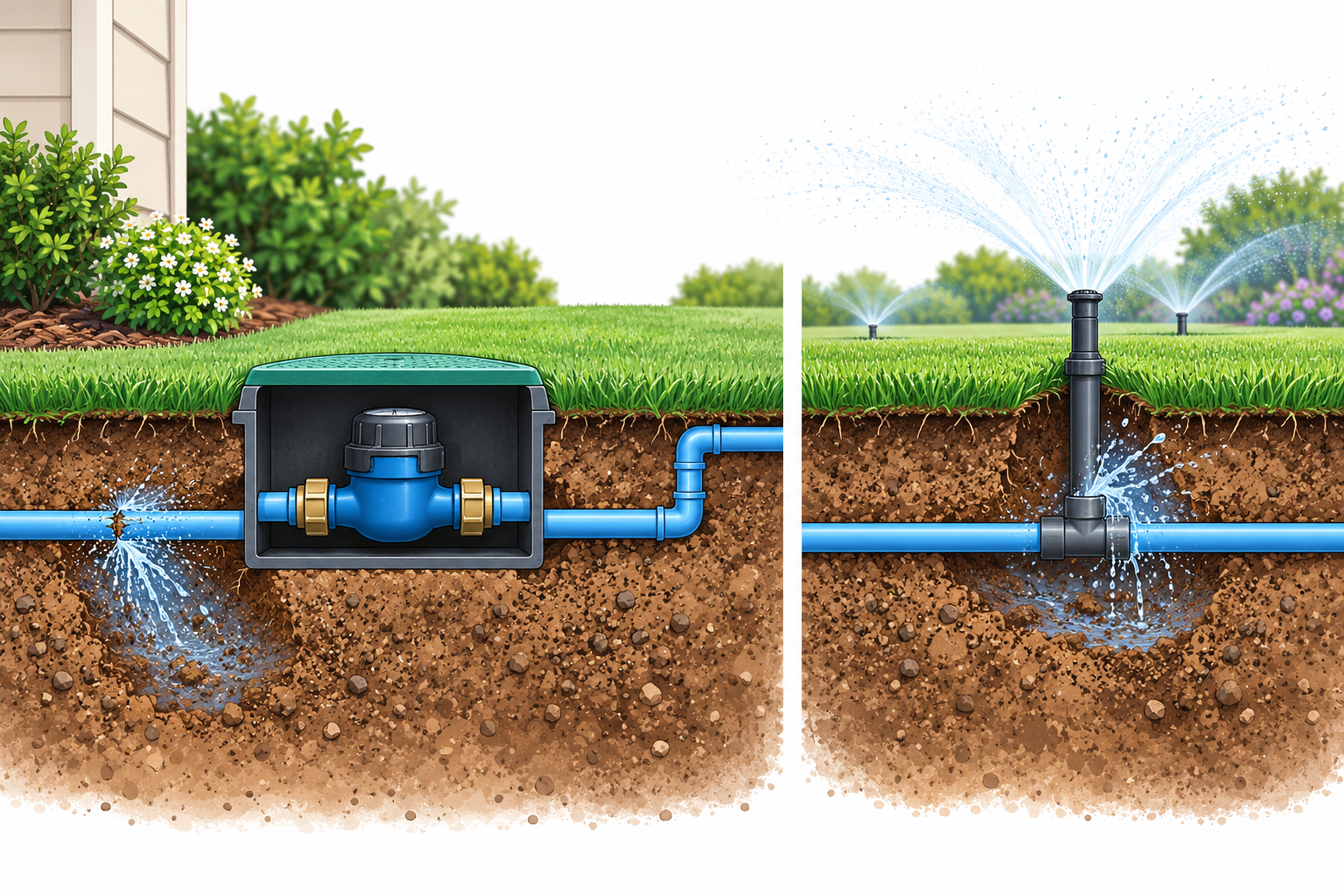
- whether the leak is in a main line, lateral, valve box, fitting, or control component;
- water shutoff, testing, and whether other deteriorated sections are found;
- disposal and finish restoration after access is closed.
The active evidence does not establish a comparable current price for leak location and underground-line repair in the United States and Canada. Ask for a diagnostic allowance, an authorization point before excavation, unit prices for additional access, and a clear restoration assumption. Keep the cost of wasted water separate from the service invoice; its effect depends on the local rate, billing structure, and time to repair.
Safety and utility boundaries
Buried irrigation lines can share crowded ground with electrical, gas, communications, drainage, or other utilities. The homeowner should use the applicable utility-locate process and the contractor’s site procedures before digging. This article does not provide excavation instructions. If the affected line is part of potable plumbing or another system, the responsible category and qualified trade may change.
When the leak reveals a larger decision
If several zones have failures, pressure is persistently poor, or repairs require repeated excavation, compare the repair with an audit, partial retrofit, or system redesign. A leak investigation is valuable because it reduces uncertainty; it is not proof that replacement is necessary.
A bounded quote example
For one wet area beside a walkway, request separate prices for zone testing, locating the suspected line, opening and repairing the access point, pressure testing, and replacing the walkway or planting surface. If the provider cannot locate the leak on the first visit, the quote should state the next diagnostic step instead of treating excavation as automatic.
Check for a utility bill adjustment
After a confirmed leak is repaired, keep the repair invoice, dated photos, and the high-bill dates, then ask the serving water utility promptly whether its policy covers this kind of loss. A bill adjustment is separate from the repair price and is never automatic. Policies can distinguish a buried supply pipe from a leaking head or valve, require proof of repair, limit how often a request can be made, or set a filing deadline.
The differences are local. Nanaimo, British Columbia, says underground irrigation piping may qualify while valves, manifolds, spray heads, and rotators do not; its FAQ describes an application and a once-per-property-in-ten-years limit. Cape Fear Public Utility Authority in North Carolina requires a repaired leak and applies account-history, billing, documentation, and meter/sewer rules before considering a courtesy partial credit. Santa Cruz, California, distinguishes a main line supplying an irrigation-only account from leaks inside the irrigation system, which its policy excludes. San Diego’s adjustment page excludes irrigation-related leaks. These examples are not portable rules, and none promises that a particular account will receive a credit.
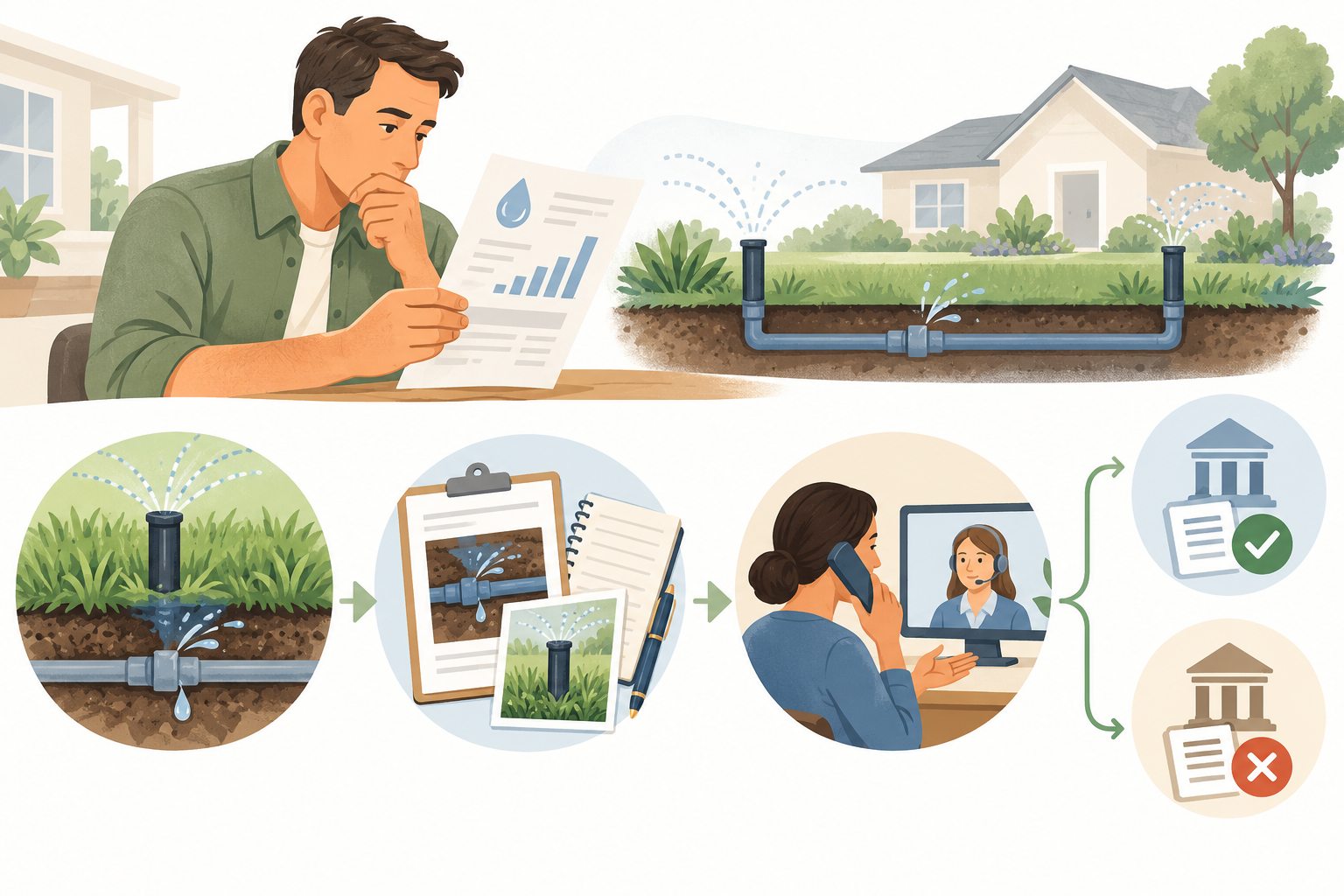
Before assuming a credit will reduce the project cost, confirm the current deadline, eligible leak location, required repair records, account conditions, and how the utility calculates any adjustment. Continue to budget the repair and water loss separately unless the utility approves an account-specific adjustment.