
An inspection and a mold test answer different questions. An inspection follows moisture, visible growth, hidden extent, affected materials, ventilation, and the likely project scope. Sampling collects air, surface, or material samples for analysis. Sampling can be useful, but it is not automatically a more authoritative or more complete version of an inspection.
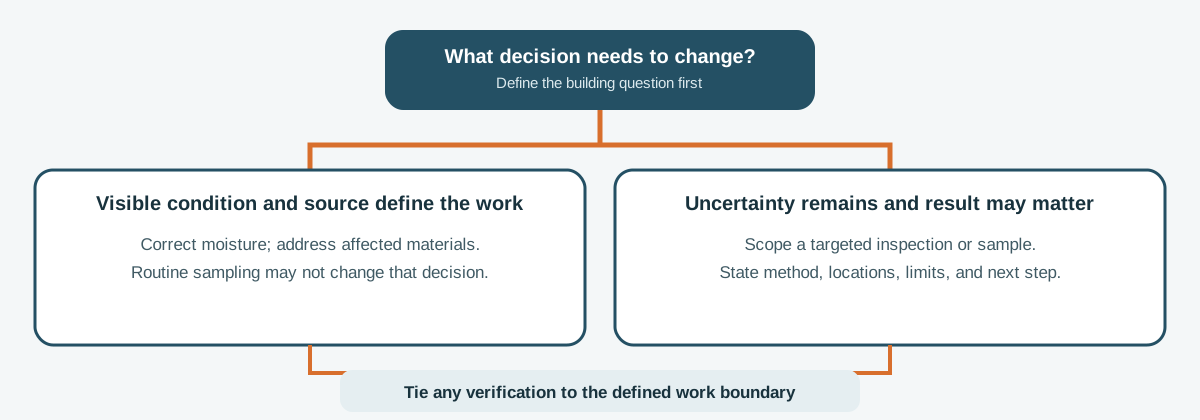
Start with the decision
Before ordering a test, write down what result would change your action. Examples include:
- deciding whether a suspected hidden area needs selective opening;
- comparing an occupied area with a reference area when the comparison has a defined purpose;
- evaluating a disputed source or project boundary;
- supporting a post-remediation verification plan;
- identifying a material or contaminant question that cannot be answered visually.
If the decision is already to correct an active moisture source and clean or remove visibly affected materials, a species list may not change the project. Spending on sampling can then delay the work that actually controls recurrence.
When visible mold may make sampling unnecessary
EPA says routine sampling is often unnecessary when visible mold is present and the cleanup decision is already clear. A sample cannot make a visible moisture source disappear, prove that an untested area is clean, or replace removal or cleaning appropriate to the affected material. It also cannot serve as a medical diagnosis.
There is no universal federal residential airborne-mold pass/fail number that turns one spore count into a safe or unsafe home. Be cautious when a provider sells a guaranteed clearance number without explaining its method, comparison, scope, and limitations.
This does not mean sampling is never useful. It means the sample should have a defined job in the decision rather than being ordered as a reflex.
What a good inspection investigates
A useful inspection connects the condition to a building story:
| Inspection question | Why it affects the project |
|---|---|
| Where did water or moisture come from? | An active source must be corrected or the contamination may return. |
| Is the source continuous or intermittent? | Weather, plumbing use, condensation, and seasonal conditions can change the investigation. |
| Is the growth visible or concealed? | Hidden extent may affect selective opening, containment, and reconstruction. |
| Which materials are affected? | Porous materials and cleanable hard surfaces may require different scope. |
| Has the area dried? | Cleaning or rebuilding before drying can trap the condition. |
| Which other building system owns the repair? | Roof, plumbing, foundation, enclosure, bathroom, or ventilation work may be separate. |
The inspection report should distinguish observation from conclusion. “The meter reading is higher here” is different from “mold is present here.” A thermal image or moisture meter can identify conditions consistent with moisture; neither automatically detects or identifies mold.
What sampling can answer
Sampling can characterize what was collected at the selected locations, times, and conditions. Depending on the method, it may help compare areas, support a dispute, evaluate a particular material, or document a targeted verification question. The laboratory and investigator should state the sample type, locations, duration or collection conditions, method, limitations, and interpretation.
Results are not a map of every wall, floor, ceiling, duct, or furnishing. A negative result may mean that the sampled location and method did not detect the target at that time; it does not prove the whole building is free of hidden growth. A positive result does not by itself identify the moisture source or determine the amount of demolition needed.
Turn the report into the next scope
Whether the work begins with inspection, sampling, or both, the report should make the next decision usable by someone who did not perform the assessment. Keep the stated question, observed conditions, sampled and unsampled locations, method limits, likely moisture source, affected-material uncertainty, and the recommendation’s boundary together. A contractor can then price investigation, source correction, remediation, or reconstruction without treating an isolated result as permission to open or close every similar-looking area.
If later water entry, a changed odor pattern, new visible growth, or renovation work changes the building condition, the old result may describe history without answering the new question. Give the earlier report and the changed work scope to the qualified assessor so they can decide whether the original boundary remains useful or needs focused investigation.
Health and terminology boundaries
Avoid “toxic mold” packages that imply a species label answers every health or building question. Occupants can have different sensitivities and symptoms; environmental sampling cannot diagnose or treat an individual. Discuss a health concern with an appropriate healthcare professional.
For the building, use plain descriptions: visible growth, moisture, affected materials, source correction, cleaning or removal, drying, and verification. These are more useful to a homeowner comparing a remediation proposal than a dramatic label that does not change the work.
Choosing an inspector or tester
Ask each provider:
- What decision is the inspection or sample intended to support?
- Why were these rooms, surfaces, or air locations selected?
- What will happen if the result is positive, negative, or inconclusive?
- What moisture, ventilation, or building conditions will be recorded?
- Which laboratory and method will be used, if sampling is included?
- Does the provider also sell remediation, and how is that conflict handled?
- What local licensing, credential, or reporting requirements apply?
Credentials and practices vary by jurisdiction. A certificate alone does not explain whether the scope matches the problem. An independent inspection can be useful when the next recommendation might involve extensive cleanup, demolition, or reconstruction.
Cost and value
Inspection and testing costs vary with travel, building size, inspection time, number of locations, laboratory analysis, report depth, selective openings, and repeat visits. Compare like-for-like quotes. A low sample price may exclude the moisture investigation and interpretation that make the result useful; a broad package may include tests that cannot change the decision.
Put the budget toward the stage that resolves the current uncertainty. If the source is unknown, start with a moisture and building investigation. If visible mold and an active source already define the work, budget for correction and remediation. If completion is the question, use a verification plan tied to the original scope.
What happens next
When sampling or inspection supports a remediation decision, mold remediation process explains containment, affected materials, cleaning, removal, drying, and reconstruction handoff. Mold remediation cost explains the quote layers. If the condition is concealed or the source is unclear, use hidden mold investigation.
The best test is not the one that produces the most numbers. It is the one whose method, limitations, and result can change a clearly stated building decision.
Decide when a sample earns its cost
Sampling has value when its result changes a decision that cannot be made from the building condition alone. Before approving it, ask what a positive result would add to the work scope and what a negative or inconclusive result would leave unresolved.
| Situation | Value to discuss |
|---|---|
| Visible growth and an active moisture source | Would a sample change the need to correct the source and address the affected material, or would it only identify mold already visible? |
| A musty odor with no visible condition | Would targeted investigation locate moisture or a hidden assembly before sampling is considered? |
| A defined dispute or comparison question | Are the comparison locations, timing, and method suited to the specific question? |
| Work is complete and release is being considered | Is sampling part of an agreed verification plan, or are visual, moisture, and work-scope checks the relevant evidence? |
Sampling adds laboratory and interpretation costs, and results may require follow-up rather than provide a simple pass/fail answer. A proposal should state the number and location of samples, the method, the laboratory, the comparison basis, and what the provider will recommend for each likely outcome.
Do not compare a laboratory result to a universal “safe mold” number. A homeowner’s useful decision is whether the inspection, source correction, remediation, or verification scope is adequately defined. If the test does not change any of those decisions, the budget may be better spent on the investigation or repair itself.
Keep the report tied to the work decision
If an inspection is being used to define a repair, give the contractor the same room plan and report that the assessor used. Ask whether the repair boundary includes the likely moisture pathway and any materials that were inaccessible during the visit. If a dispute is the reason for testing, agree on the comparison question and how each provider will interpret the result before samples are taken.
A report should distinguish visible observations, moisture evidence, laboratory results, and professional conclusions. That makes it easier to decide whether a second visit is necessary or whether source correction can proceed. It also helps a later verifier compare the finished work with the original condition.
When the result does not match the concern, do not automatically add more samples. Ask whether the location, timing, or method missed the condition and what alternative would change the next action. The owner can then budget an investigation that closes a gap rather than purchase a larger panel with no defined endpoint.