
An old chimney can be a historic feature, a water-entry point, and part of an active combustion system at the same time. Repointing the exterior does not establish that a flue is safe. A liner decision does not resolve unstable masonry. Start by separating the chimney’s structural, weatherproofing, preservation, and equipment functions.
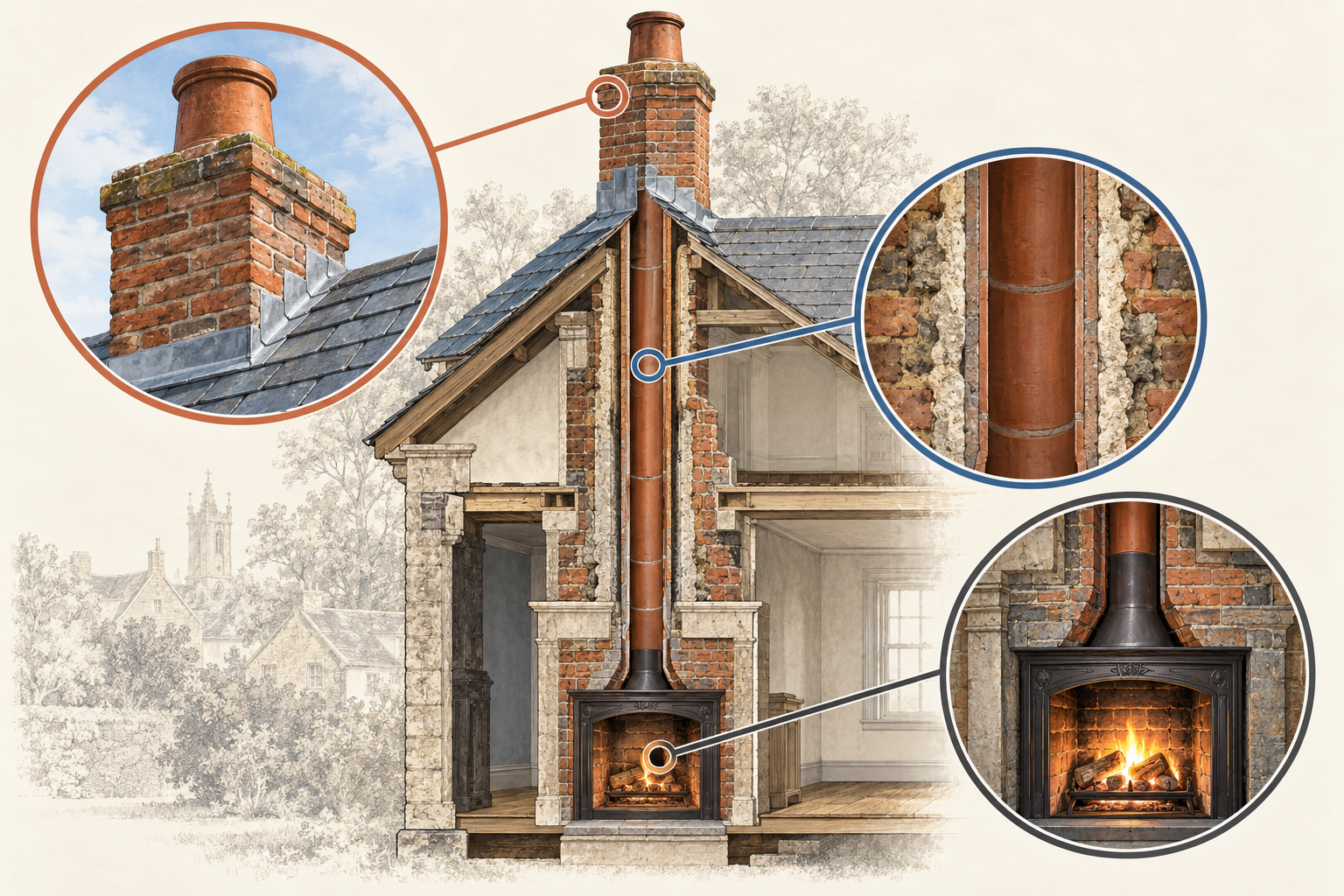
Establish whether the chimney is active
Begin by identifying every appliance or fireplace connected to the chimney, whether the flue is shared, and whether the chimney is active, intermittently used, abandoned, or altered. A masonry problem, liner problem, flashing problem, and appliance problem can overlap but do not have the same repair. An attractive exterior does not establish safe combustion or flue performance.
A qualified chimney, heating, or building professional should evaluate the current system under applicable local requirements. Do not make a re-line, rebuild, retirement, or appliance decision from a visual photo. If there is smoke spillage, carbon-monoxide concern, fire damage, unstable masonry, or water entering occupied space, address the immediate safety issue through qualified service before preservation planning.
Compare the possible scopes
Repointing or localized masonry repair may suit sound masonry with deteriorated joints after water entry and movement are understood. A partial rebuild may be needed where the crown, upper courses, or a localized section has lost stability. A full rebuild can be required when the stack is broadly unsafe or incompatible with its support. Relining or appliance work addresses the active flue and combustion system rather than the exterior appearance. Retirement or removal may be considered for an unused chimney, but it still affects roof, attic, walls, ventilation, and historic character.
These choices interact. A new liner may require access through the top or interior. Rebuilding the stack may disturb roof flashing or plaster. Retiring an appliance can change heating capacity, ventilation, and future equipment options. Preserve visible masonry only when the resulting assembly remains safe and maintainable.
Price the interfaces and sequence
Separate inspection, testing, access, scaffolding, temporary protection, masonry, flashing, crown or cap, liner or appliance work, interior protection, permits, debris, and finish restoration. State which professional makes the safety determination and which work is excluded. Include roof and attic access, weather protection, and repairs around the chimney.
If repointing is proposed, ask how the mortar will be matched to the existing masonry and how water will be controlled. If a coating or cap is proposed, ask what problem it solves and how the chimney will remain inspectable. If removal is proposed, price the resulting roof and interior work rather than treating the chimney as an isolated object.
Treat the chimney as three linked scopes
Ask the proposal to distinguish the exterior stack, the flue or liner, and the appliance or fireplace. The exterior scope may involve joints, masonry units, the crown, flashing, and water entry. The flue scope concerns the path serving combustion or exhaust. The appliance scope concerns the equipment, controls, fuel, and current operating requirements. One contractor may coordinate them, but the proposal should not make one scope appear to certify the others.
This separation makes the decision easier to explain. Repointing may preserve the visible stack while a separate flue assessment determines whether it can continue in service. A liner may address a flue condition while leaving unstable masonry or leaking flashing untouched. Retirement may remove an operating requirement but still leave a roof opening, interior finish, and historic feature to manage.
Use decision boundaries before approving work
Ask what finding would move the project from localized repair to rebuilding, from repair to a liner, or from continued use to retirement. The boundary might be active movement, concealed loss, an incompatible appliance, a failed inspection, or a condition that cannot be made maintainable. The appropriate professional should define the technical threshold; the homeowner’s job is to make sure the threshold and its budget consequence appear in writing.
Do not let an allowance hide every uncertainty. A useful allowance identifies the location, assumed quantity, inspection point, and approval required before it is spent. It also states whether the related roof, attic, plaster, or equipment work is included. That record protects the preservation goal without turning a safety question into an owner guess.
Questions for a comparable chimney quote
Ask who will inspect the masonry, who will evaluate the flue and appliance, and who will obtain any required permit or inspection. Ask how access and temporary weather protection will be handled, how retained masonry will be protected, and what finish restoration follows interior access. For a repair, request photographs or a marked-up elevation. For a rebuild or retirement, request the proposed new profile, flashing treatment, and treatment of the opening or abandoned connection.
If the chimney serves more than one appliance or flue, require the proposal to show those relationships. Keep carbon-monoxide, fire, structural, and combustion questions with qualified professionals and current local requirements. Preservation compatibility matters only after the resulting chimney is safe, inspectable, and maintainable.
Plan for water and weather during the work
Chimney work interrupts a roof and can expose the stack, flashing, attic, or interior. Ask for a temporary weather-protection plan, safe access, protection of retained masonry and finishes, and the point at which the roof is made watertight each day. Include interior evidence of leakage, drying, insulation or finish repair, and cleanup rather than assuming the masonry contractor owns every consequence.
If the work changes a cap, crown, flashing, liner, appliance, or roof penetration, show how the adjoining components will be inspected and maintained afterward. The objective is a complete weather and combustion handoff, not simply a new-looking upper stack.
State what can remain unknown
A quote may be based on visible masonry while concealed joints, supports, flues, or connections remain unconfirmed. Mark those limits and the opening or inspection that would change the scope. If the result is a rebuild, liner, retirement, or continued use, record the qualified professional and current local requirement that supports the choice.
Assign each determination to the right professional
Make the handoff explicit when several specialists are involved. The masonry professional can describe the visible stack and proposed masonry work; the chimney or heating professional can evaluate the flue and appliance relationship; the structural professional can address stability and support; and the authority can confirm permits or inspections. A preservation specialist can help document significant fabric and compatible treatment. One person may coordinate the project, but the responsibilities should not disappear into a single “chimney repair” allowance.
Ask for a written list of unresolved questions and the order in which they must be answered. This may show that a roof repair, flue evaluation, or temporary stabilization must precede repointing. It also gives the homeowner a defensible reason to defer cosmetic work when safety or water-entry information is incomplete.
Make continued use a documented choice
If the chimney remains active, record the appliances or fireplaces served, the inspections completed, the limits of the evaluation, and the maintenance or follow-up required. If it is retired, record how the roof, wall, attic, interior finish, ventilation, and historic appearance are treated. “Keep” and “remove” are not complete decisions until the resulting building condition is clear.
The final handoff should distinguish what was observed from what was designed or approved by a qualified professional. That distinction protects future owners from treating a preservation description as a safety certification.
Compare repair timing with interior risk
If water, smoke, combustion, or unstable masonry affects occupied space, ask how delay changes the risk and how temporary protection is handled. If the condition is stable and the scope is primarily preservation, a documented investigation or sample may be a sensible first phase. The choice should come from the qualified assessment and the actual symptoms, not from a generic promise that an old chimney must be rebuilt or can simply be left alone.
Include the attic, roof, flue, appliance, interior finish, and cleanup consequences in the sequence. That is how a chimney decision becomes a complete project rather than an isolated exterior repair.
Build a local estimate
No reliable national USD or CAD range applies to this specialized historic-home work. Request a dated local proposal that separates investigation, access, protection, materials, specialist labor, permits or review, restoration, and future maintenance. State the condition, area, and assumptions covered by each option.
Compare complete scopes in the market where the work will occur. Keep confirmed work, allowances, and owner-selected upgrades separate, and do not convert a price mechanically between U.S. and Canadian markets.